

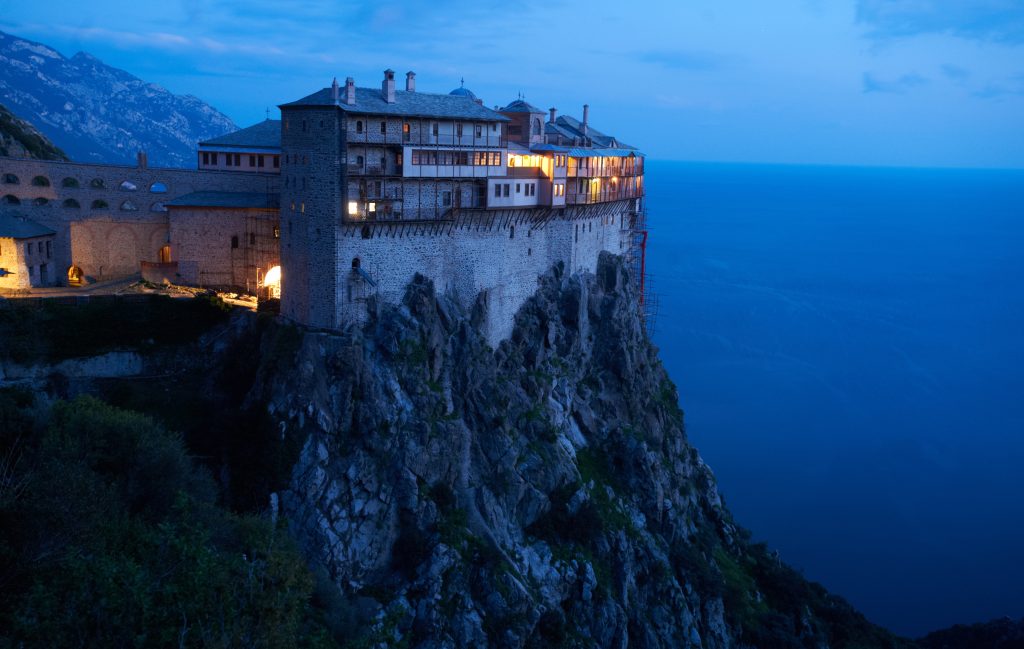
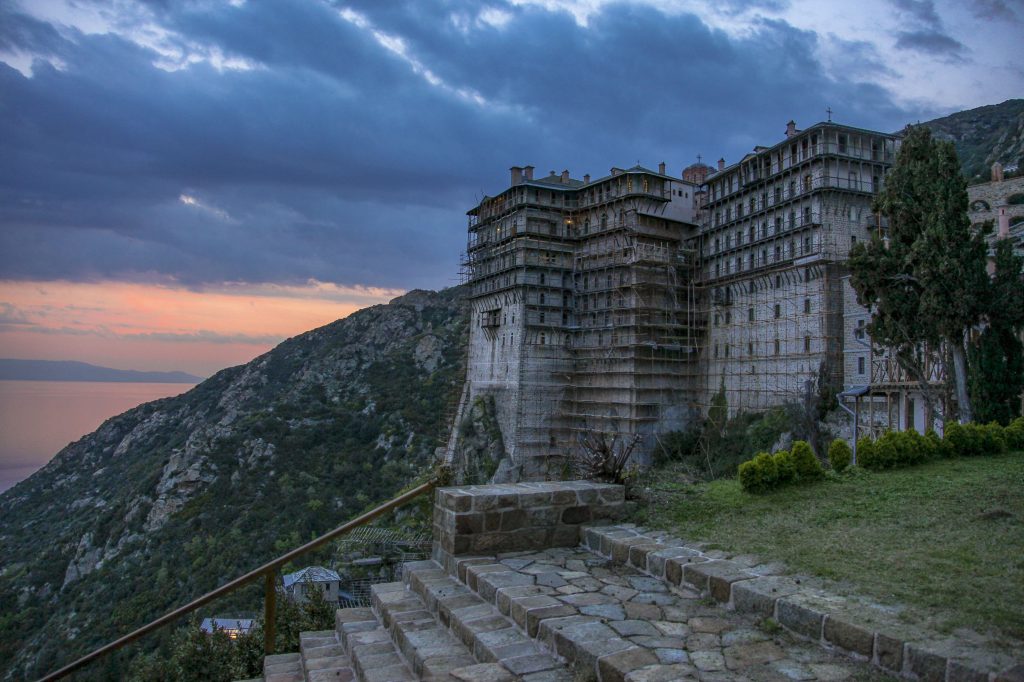
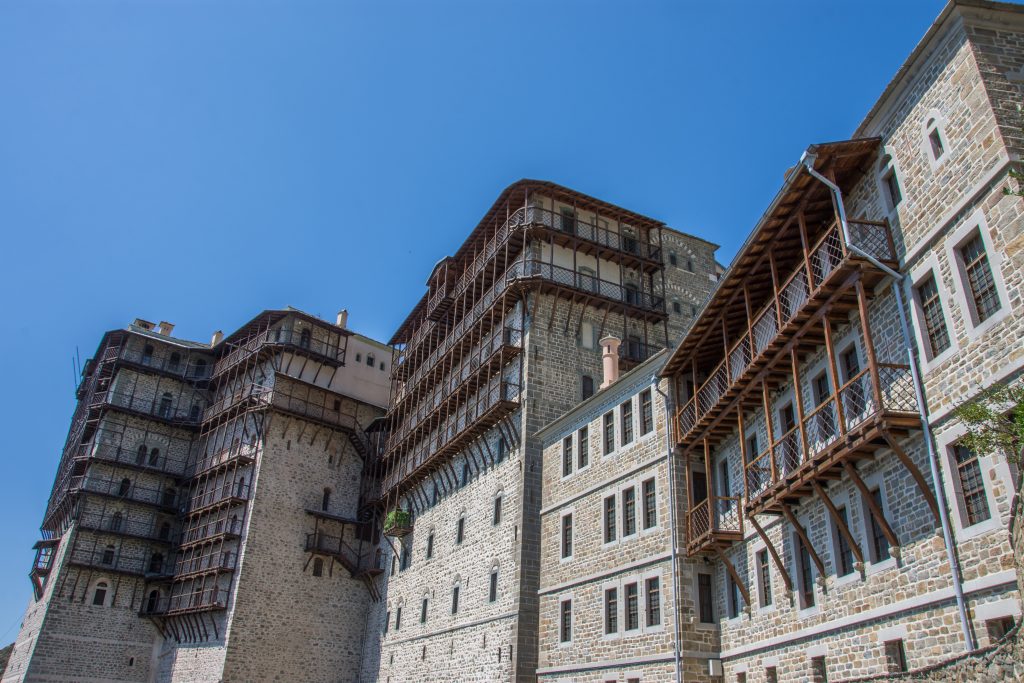
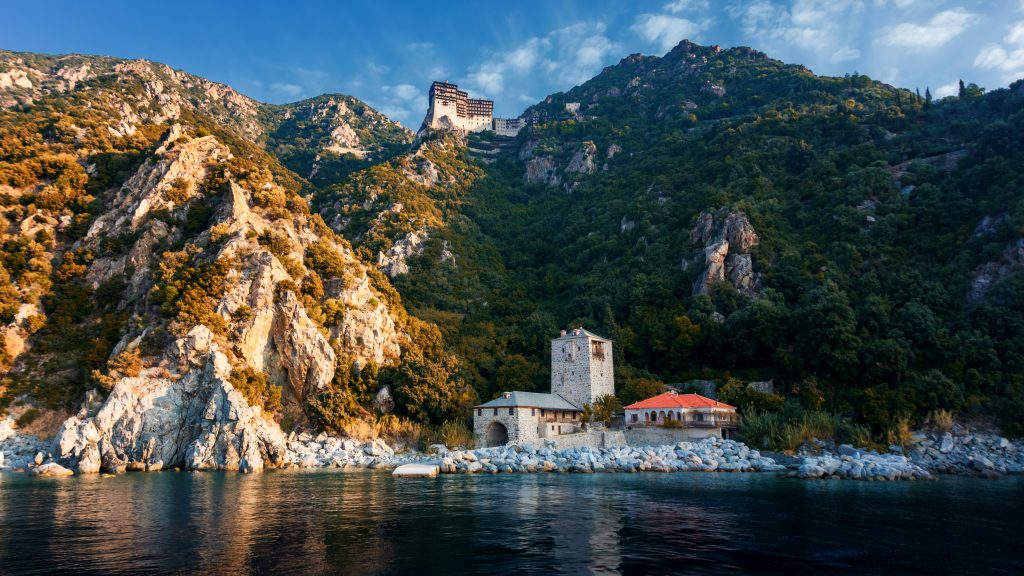
Simonopetra Monastery is one of the most visually striking landmarks of Mount Athos, instantly recognizable for its dramatic construction high above the sea. Known as a monastery built on a cliff, it appears almost suspended in the air, rising directly from the rock face and dominating the surrounding landscape.
This unique architectural position makes Simonopetra Monastery stand out among the monasteries visible from the sea, offering one of the most powerful and memorable views along the Mount Athos route.
Because access to Mount Athos is strictly regulated, Simonopetra Monastery is experienced by most visitors from the sea. During Mount Athos cruises, the monastery reveals its full scale and relationship with the coastline, something that cannot be fully understood from land-based descriptions alone.
Seen from the water, this monastery built on a cliff becomes a defining moment of the journey, highlighting why Simonopetra is considered one of the most iconic sea views of the Holy Mountain.
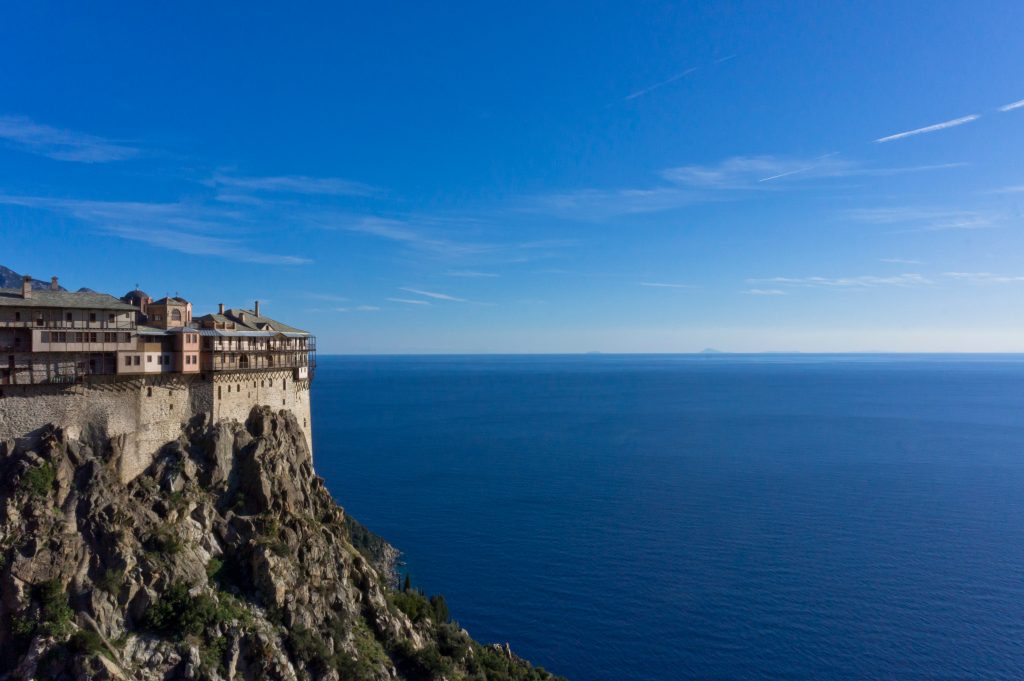
Table of Contents
Where Simonopetra Monastery appears on the Mount Athos sea route
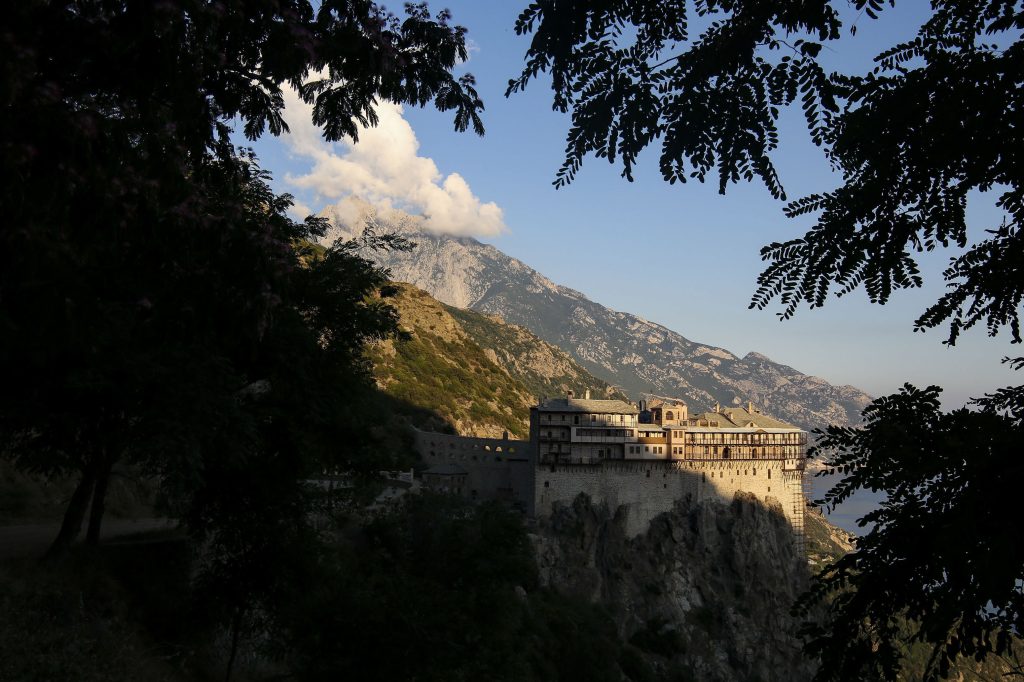
Simonopetra Monastery is located on the southwestern side of the Athonite peninsula, along the specific coastal route followed by all Mount Athos cruises. As vessels approach this section of the coastline, the monastery gradually comes into view high above the sea, built directly into the steep rock face.
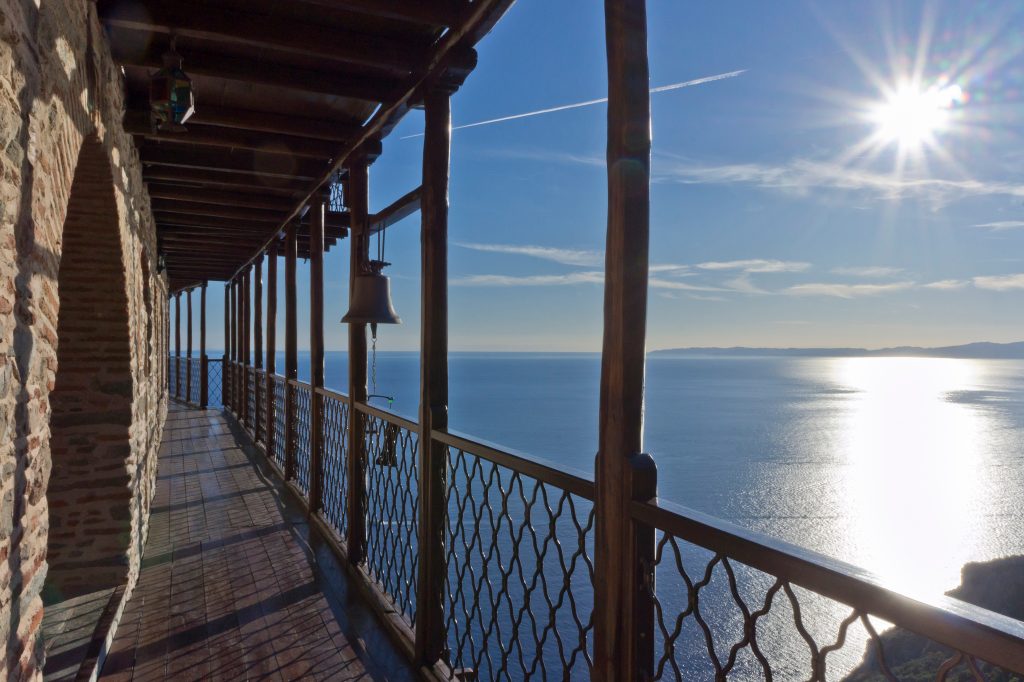
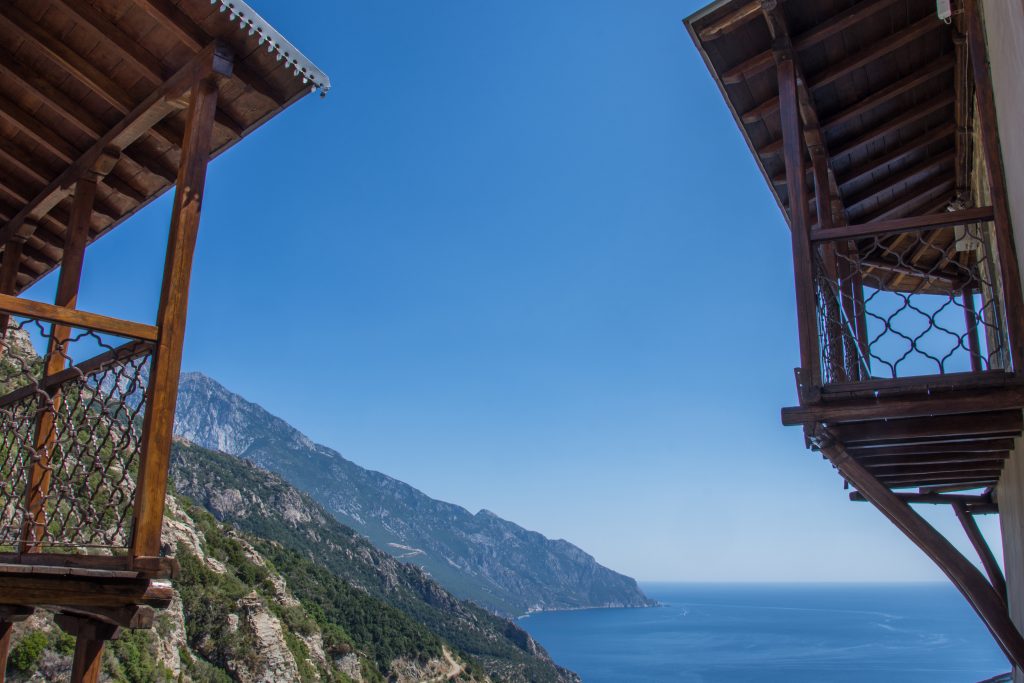
From the water, the position of this monastery built on a cliff becomes immediately clear. The dramatic elevation above the shoreline allows passengers to observe the monastery from multiple angles as the vessel passes, offering a continuous and uninterrupted view that highlights its scale and architectural daring.
This point of the route is widely considered one of the most visually impactful moments of Mount Athos cruises, as Simonopetra appears to emerge directly from the natural landscape rather than simply standing beside it.
Why Simonopetra Monastery is known as a monastery built on a cliff
The defining feature of Simonopetra Monastery is its extraordinary construction directly on a steep vertical cliff above the sea. Unlike other monasteries that sit closer to the shoreline or on gentler slopes, Simonopetra rises dramatically from the rock face, creating the impression that it is suspended between sky and water.
From the sea, this monastery built on a cliff reveals its full architectural boldness. The vertical drop beneath the structure, combined with its elevation, makes the monastery appear both imposing and fragile at the same time — a balance that captures the attention of every visitor passing along the route.
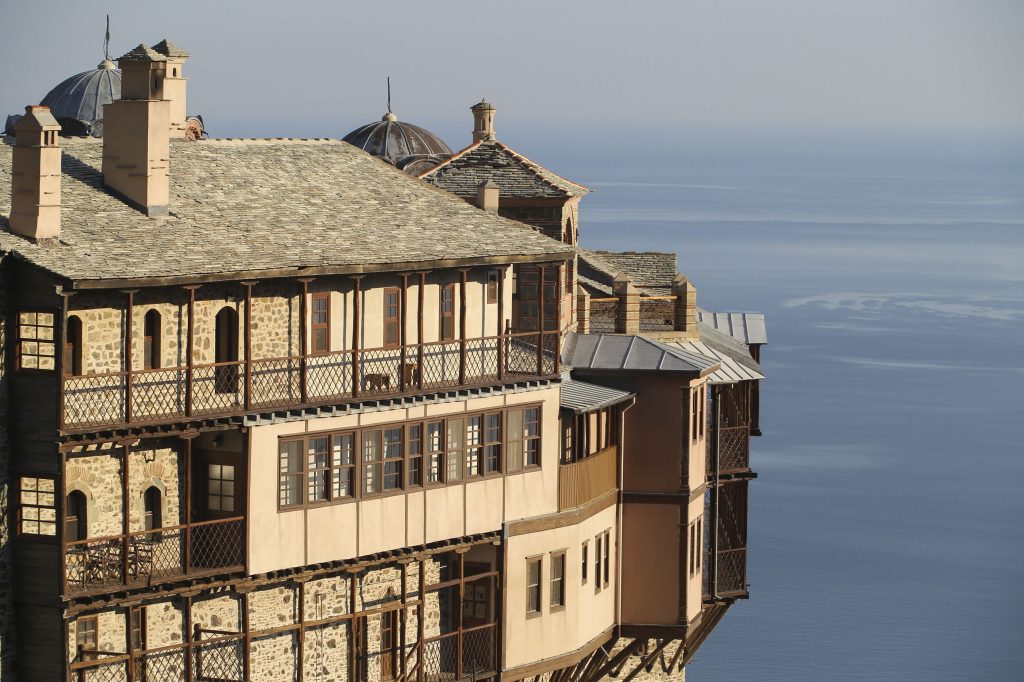
What distinguishes Simonopetra Monastery in comparison to other Athonite monasteries is not only its height, but the way it integrates into the natural rock formation. There is no clear separation between the cliff and the building itself; instead, the monastery seems to grow out of the stone, reinforcing its reputation as one of the most remarkable constructions visible during Mount Athos cruises.
What visitors notice when viewing the monastery from the sea
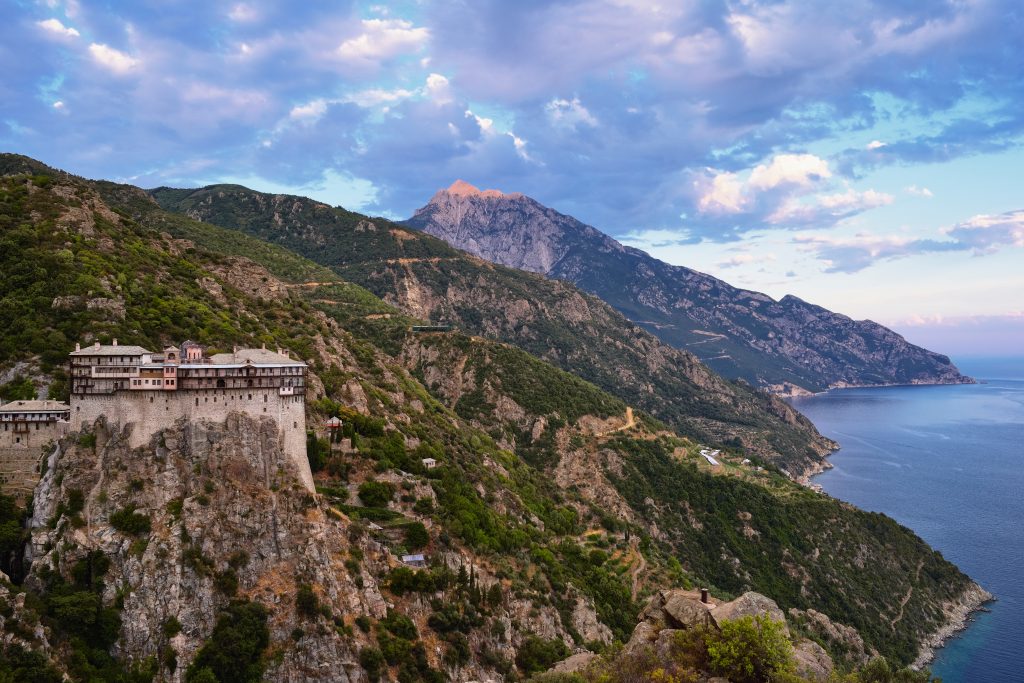
As the vessel moves along the route, the first thing most visitors notice is the sense of height. The structure dominates the surrounding landscape, rising sharply above the water and creating a strong visual contrast between the dark rock face and the lighter tones of the building.
From the sea, the eye is drawn upward rather than along the shoreline. The vertical lines of the construction emphasize its elevation, while the open space below reinforces the impression that the monastery stands apart from its surroundings.
Another striking element is how the building interacts with light throughout the journey. Depending on the time of day, shadows shift across the rock surface, changing the monastery’s appearance as the vessel passes. This constant transformation is one of the reasons why viewing the site from the water feels dynamic rather than static.
For many passengers, this moment becomes one of the most memorable points of the cruise — not because of scale alone, but because of the way the monastery appears to emerge naturally from the landscape.
How Simonopetra fits into the Mount Athos cruise experience
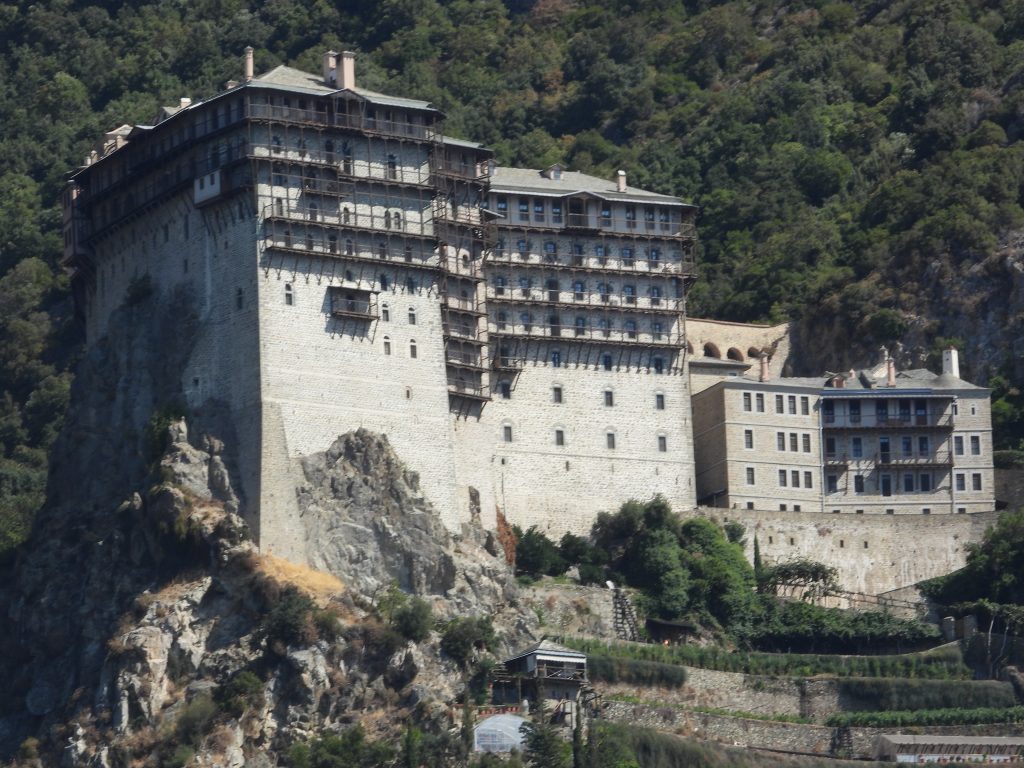
For many visitors, this part of the route marks a turning point in the overall experience. By the time the vessel reaches this section of the coastline, passengers have already observed several monastic landmarks, yet the visual impact here feels noticeably different.
The encounter with Simonopetra Monastery often reinforces why sea travel has always been essential to understanding Mount Athos. From the water, the relationship between the monasteries and the natural landscape becomes clearer, revealing how architecture, isolation and geography are deeply connected.
Within the context of Mount Athos cruises, this moment helps visitors better appreciate the rhythm of the journey. The pace slows, attention shifts outward, and the focus moves from simply “seeing” to observing and reflecting. It is often at this point that the experience becomes more contemplative rather than purely visual.
Visitors who wish to understand how this monastery fits into the broader coastal route can explore the complete overview of Mount Athos cruises, which explains the sequence of landmarks and the structure of the sea journey along the Holy Mountain.
The history and spiritual significance of Simonopetra
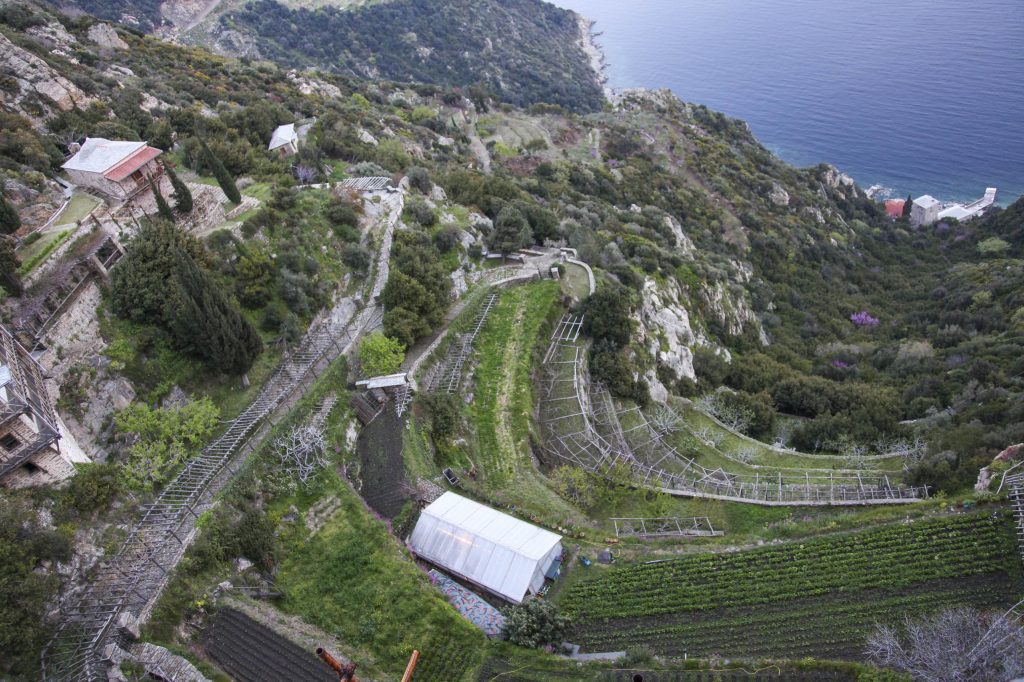
The foundation of Simonopetra Monastery dates back to the 13th century, a period during which monastic communities on Mount Athos developed some of the most remarkable architectural achievements of the medieval world. The monastery was founded in 1257 by Saint Simon the Myrrhbearer, who chose this dramatic and seemingly inaccessible location as a place of prayer and spiritual retreat.
The decision to construct a monastery at such height above the sea continues to impress visitors today. Even from a distance, it raises questions about how buildings of such complexity and scale were erected on steep cliffs centuries ago, using limited technology and relying almost entirely on human effort, faith and craftsmanship.
Monastic identity and daily life
Simonopetra is a Greek Orthodox monastery and remains an active monastic community. Today, it is home to a small but devoted brotherhood of monks, who continue the centuries-old rhythm of prayer, work and spiritual discipline.
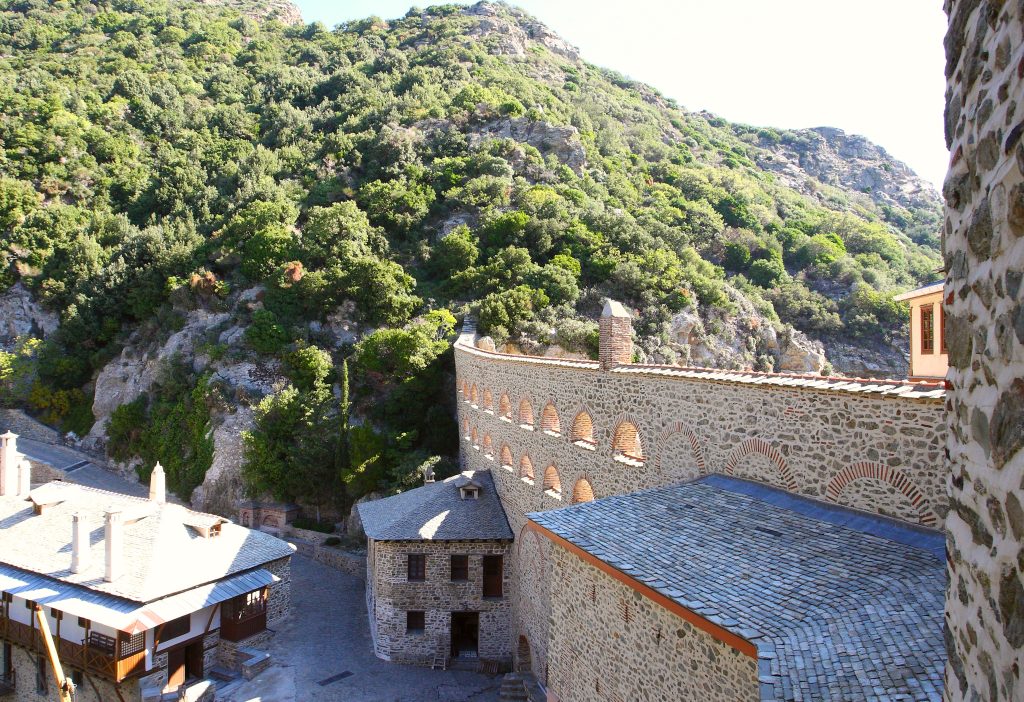
Although visitors observing from the sea cannot see the interior, the structure suggests an organized inner world: chapels, communal areas, cells for the monks and spaces dedicated to worship and reflection. This hidden interior life forms the spiritual core of the monastery, unseen yet deeply present in its outward appearance.
For readers interested in a broader understanding of Mount Athos, including its history, spiritual tradition and administrative structure, a detailed overview is available in our Visiting Mount Athos guide.
Sacred treasures and relics preserved at Simonopetra
Beyond its dramatic exterior, Simonopetra Monastery is known for preserving some of the most important spiritual treasures of Mount Athos. These sacred objects are not displayed for visitors during sea journeys, yet their presence defines the monastery’s historical and religious importance.
Holy relics of saints
Among the most revered treasures kept at Simonopetra are the holy relics of Saint Mary Magdalene, whose incorrupt left hand is preserved within the monastery. According to Orthodox tradition, the relic remains warm to the touch, a detail that has made it one of the most significant relics on Mount Athos.
In addition, the monastery safeguards relics of other saints, including fragments associated with:
- Saint Mary Magdalene – whose incorrupt left hand is one of the monastery’s most revered treasures
- Saint John Chrysostom – one of the greatest Fathers of the Orthodox Church
- Saint Basil the Great – foundational figure of Orthodox monasticism
- Saint Gregory the Theologian – central voice of early Christian doctrine
These relics form a central part of the monastery’s spiritual life and are deeply connected to its liturgical tradition.
Miracle-working icons
Simonopetra also houses several miracle-working icons, venerated by monks and pilgrims alike. Among the most important is the icon of Panagia Myrovlitissa, associated with accounts of myrrh-streaming and divine protection.
Such icons are not treated as artworks alone, but as living elements of worship, playing an active role in the spiritual identity of the monastery.
Manuscripts and historical documents
The monastery preserves a valuable collection of Byzantine manuscripts and historical texts, including:
- liturgical manuscripts
- theological writings
- historical documents dating back centuries
These texts contribute to Mount Athos’ long-standing role as a center of spiritual scholarship and preservation of Orthodox tradition. Many of these manuscripts are fragile and kept under strict conditions to ensure their survival for future generations.
Liturgical objects and sacred vessels
In addition to relics and manuscripts, Simonopetra holds important liturgical objects, such as:
- hand-crafted chalices
- crosses
- vestments used in major services
These items reflect the artistic and devotional craftsmanship of different historical periods and remain in active liturgical use rather than museum display.
Why these treasures matter to the visitor
Although none of these sacred treasures are visible from the sea, knowing what is preserved within the walls of Simonopetra Monastery adds depth to the visual experience. The imposing structure seen from afar is not an empty shell, but a living repository of faith, memory and continuity.
For many readers, this understanding transforms the monastery from a striking architectural landmark into a place of enduring spiritual significance.
Closing – Seeing Simonopetra with understanding
Viewing Simonopetra Monastery from the sea is an experience that goes beyond visual impact. The dramatic cliffside structure captures attention instantly, but understanding its history, spiritual role and the treasures preserved within its walls adds depth to what the eye alone cannot see.
For visitors following the Mount Athos sea route, this moment often becomes one of quiet reflection — a reminder that the monasteries of the Holy Mountain are not only architectural landmarks, but living centers of faith, continuity and tradition that have endured for centuries.
Seen from the water, Simonopetra remains both distant and deeply present, leaving a lasting impression long after the cruise continues along the coastline.
Readers interested in an overview of all monasteries of the Holy Mountain can explore a comprehensive guide covering the full monastic landscape of Mount Athos here.
How visitors can view Simonopetra from the sea
Visitors can observe Simonopetra Monastery from the sea by taking part in a coastal sightseeing cruise along the Holy Mountain. One of the established routes departs from Ouranoupoli and follows the traditional southwestern sea passage, offering clear views of the monastery as part of the journey.
More details about the route, sailing schedule and availability can be found on the Mount Athos coastal cruise from Ouranoupoli.
Can visitors enter Simonopetra Monastery during a cruise?
No. Cruises allow visitors to observe the monastery exclusively from the sea. Entry to the monastery is only possible for those holding the official Mount Athos access permit, which is not part of standard cruises.
Why is Simonopetra considered one of the most impressive monasteries on Mount Athos?
Its construction directly on a steep cliff above the sea makes it one of the most visually striking monasteries, creating a unique architectural relationship between rock, building and water.
Is Simonopetra a Greek Orthodox monastery?
Yes. Simonopetra is a Greek Orthodox monastery and remains an active monastic community following the traditions of Mount Athos.
What makes Simonopetra special beyond its exterior appearance?
Beyond its dramatic location, the monastery preserves important relics, miracle-working icons and historical manuscripts, forming a significant part of Mount Athos’ spiritual and cultural heritage.
Did you find our post helpful?
- Was this post helpfull?
- Rate us on TripAdvisor
This article made by https://lnk.bio/Rodokalakis
