

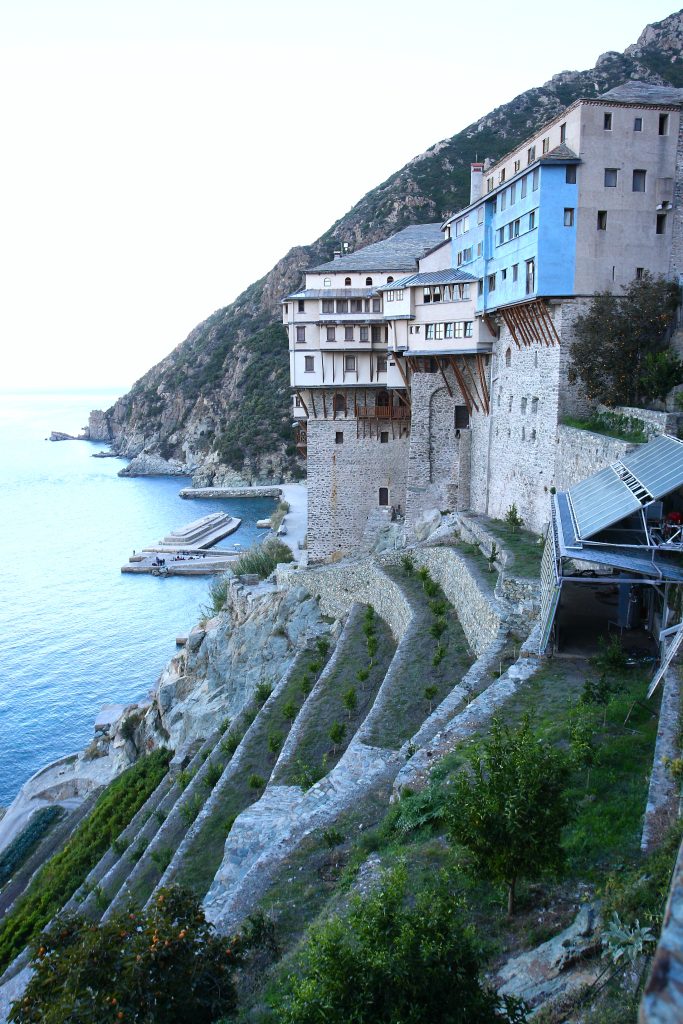
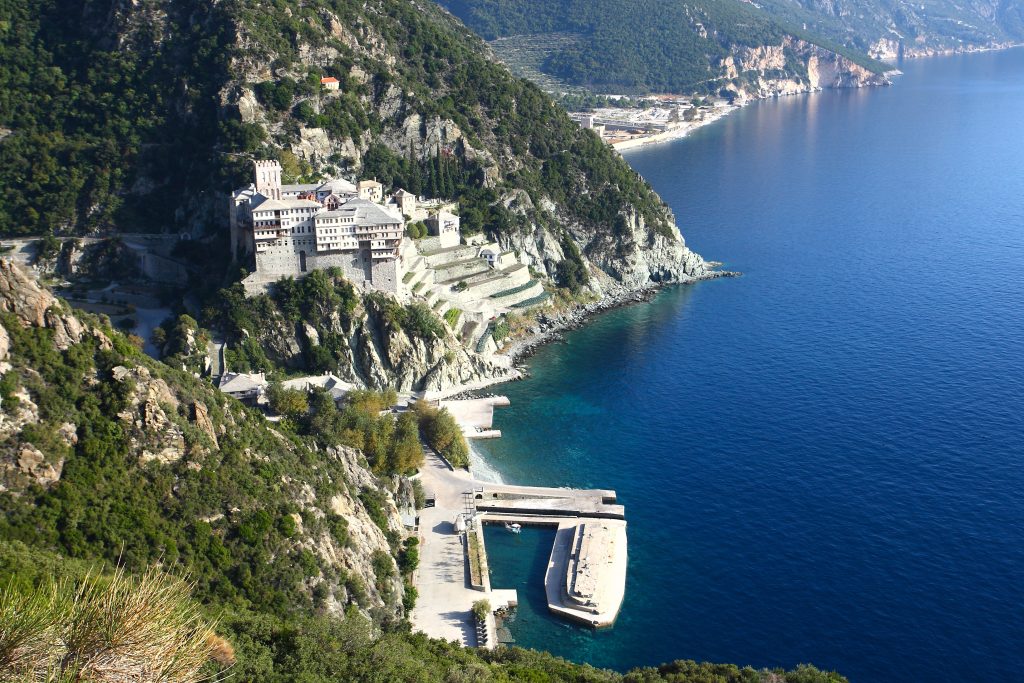
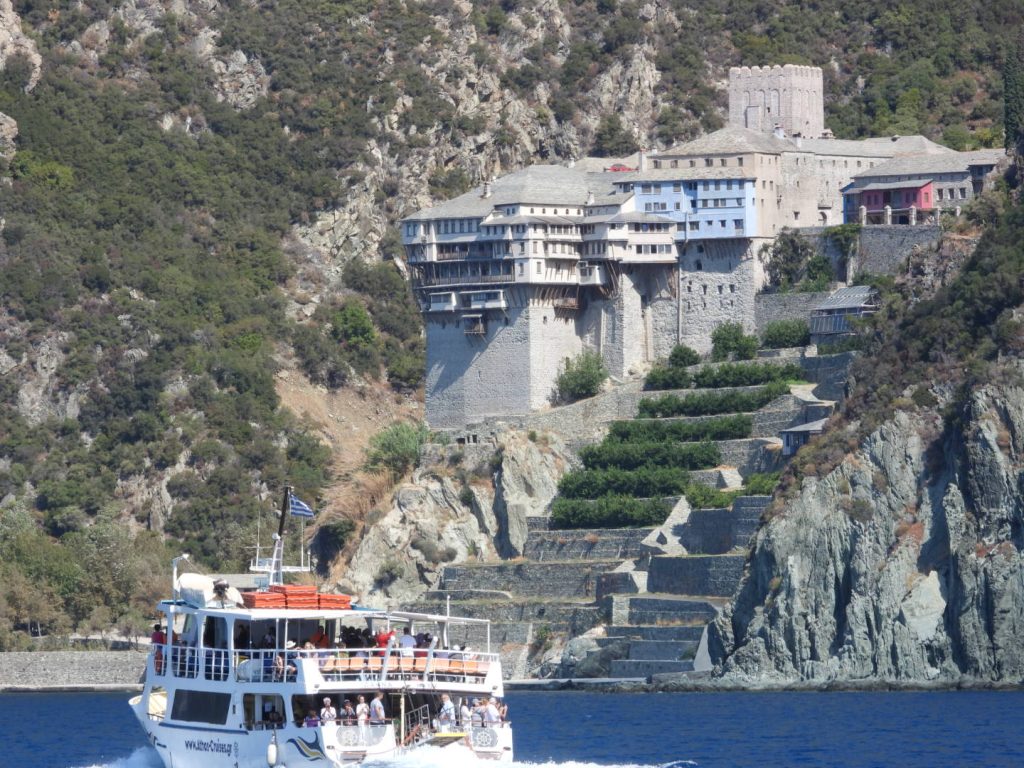
Dionysiou Monastery is one of the most imposing landmarks visible during Mount Athos sea journeys, distinguished by its strong defensive architecture and compact form. Often described as a fortified monastery by the sea, it rises directly above the coastline, projecting the image of a stone stronghold carefully positioned to dominate its surroundings.
From a distance, the monastery’s vertical walls and solid structure immediately convey a sense of strength and protection, setting it apart from other monastic buildings along the route.
Because access to Mount Athos is strictly regulated, Dionysiou Monastery is experienced by most visitors from the sea. During Mount Athos cruises, its fortress-like appearance becomes especially evident, as the monastery reveals its strategic placement above the water and its close relationship with the coastline.
Seen from the vessel, this fortified monastery by the sea reflects a historical need for protection, blending spiritual life with defensive design in a way that remains visually striking even today.
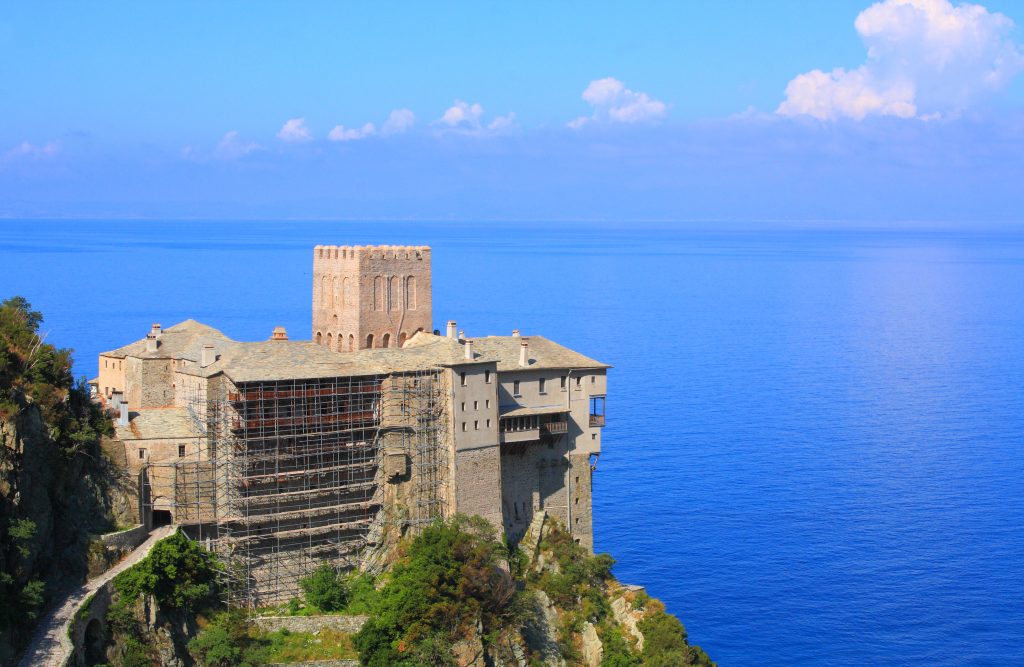
Table of Contents
Where Dionysiou Monastery appears on the Mount Athos sea route
During the coastal sea journey along Mount Athos, Dionysiou Monastery appears as the seventh monastery in sequence observed from the vessel. By this point in the route, passengers have already gained a clear sense of the Athonite landscape, making the encounter with this monastery particularly distinctive.
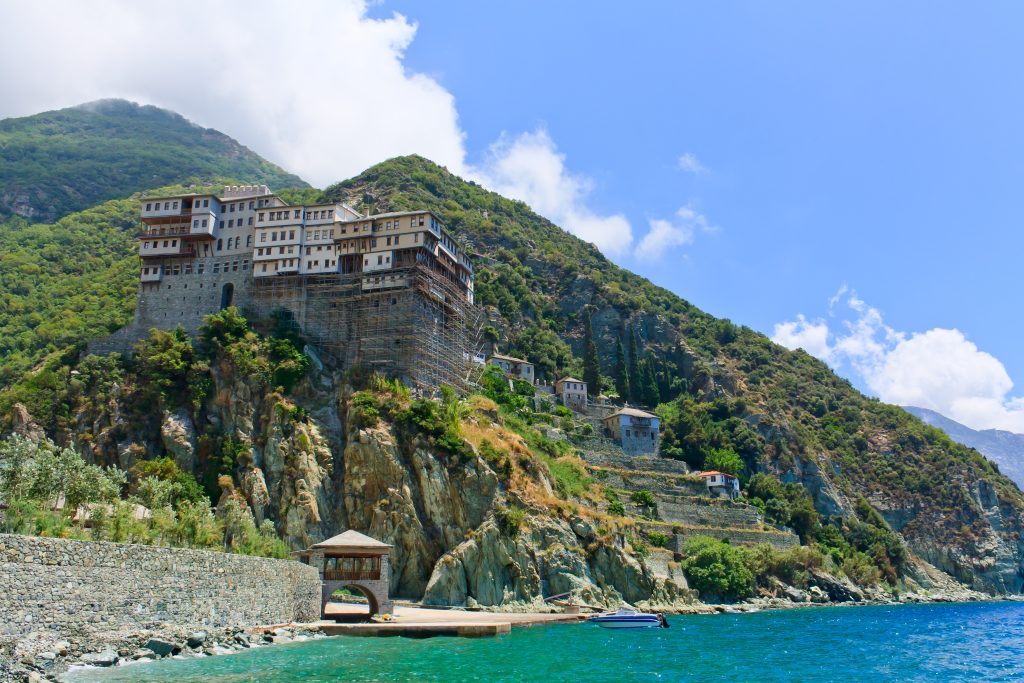
As the vessel approaches this section of the coastline, the monastery gradually comes into view rising directly above the sea. Its compact and fortified form stands out immediately, reinforcing its reputation as a fortified monastery by the sea. From the water, the vertical stone walls and enclosed structure emphasize its defensive character, clearly different from monasteries built on more open or elevated terrain.
The position of Dionysiou along the route allows passengers sufficient time to observe its relationship with the shoreline. Seen as the seventh landmark in the progression of monasteries, it often marks a moment where visitors begin to recognize the changing architectural styles and strategic choices that define each monastic settlement along the Holy Mountain.
Why Dionysiou Monastery is known as a fortified monastery by the sea
The defining characteristic of Dionysiou Monastery is its fortress-like construction, which becomes especially evident when viewed from the sea. Unlike monasteries that emphasize height or openness, this one presents itself as a compact and enclosed structure, designed with protection in mind.
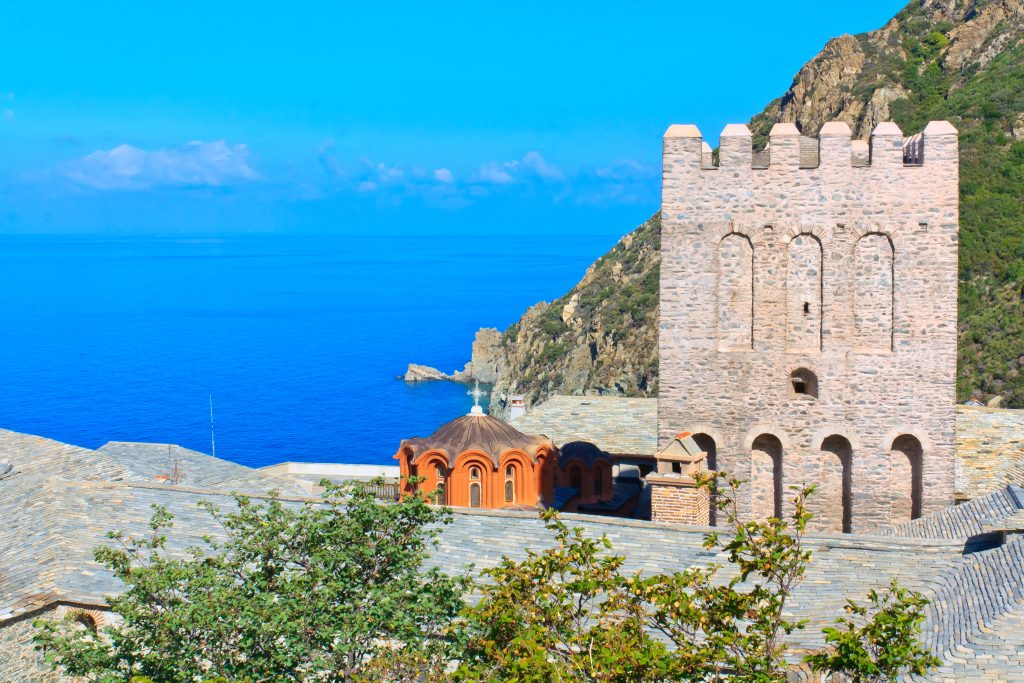
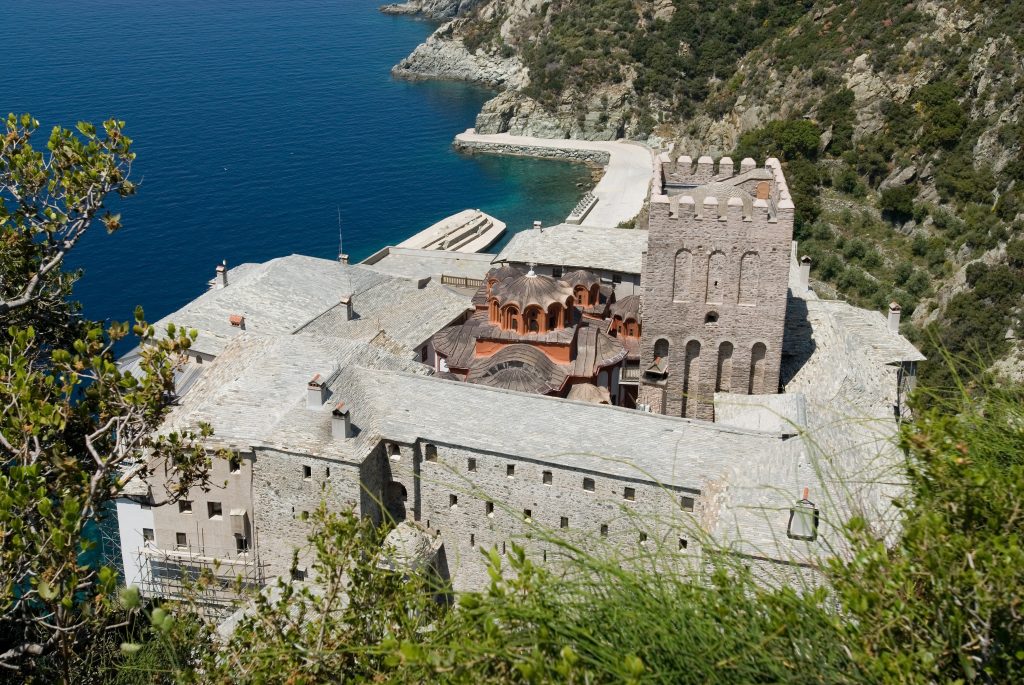
From the water, the monastery’s thick stone walls, narrow openings and solid mass give the impression of a coastal stronghold. This defensive design reflects historical realities, when monasteries along Mount Athos needed to protect both their communities and their treasures from piracy and external threats arriving by sea.
What reinforces the image of a fortified monastery by the sea is the way the building sits directly above the shoreline. There is little visual separation between the rock, the walls and the water below, creating a continuous vertical barrier that feels both deliberate and imposing. Seen in this context, the monastery appears less like an isolated spiritual retreat and more like a carefully positioned guardian of the coastline.
This architectural character sets Dionysiou apart within the sequence of monasteries observed during Mount Athos cruises, offering visitors a clear example of how faith, security and geography were once closely intertwined.
What visitors notice when viewing Dionysiou from the sea
As the vessel approaches this part of the coastline, the first impression many visitors have is a sense of solidity and enclosure. The monastery appears compact and unified, with its walls forming a continuous structure that feels deliberately closed to the outside world.
From the sea, attention is drawn to the contrast between the dark stone surfaces and the surrounding natural landscape. The building seems firmly anchored to the rock beneath it, with very little visual softness or openness. This reinforces the impression that the monastery was designed not only for spiritual life, but also for endurance.
Another element that stands out is the way the monastery’s shape becomes clearer as the vessel moves past it. Rather than revealing itself all at once, the structure unfolds gradually, allowing visitors to notice details such as the vertical alignment of the walls and the compact arrangement of its volumes.
For many passengers, this moment highlights how different each monastery feels when seen from the sea. Dionysiou’s strong and guarded appearance often leaves a lasting impression, offering a visual pause in the journey that feels grounded and restrained rather than dramatic.
How Dionysiou fits into the Mount Athos cruise experience
By the time the vessel reaches this point of the route, visitors have already observed several monasteries along the coastline. The encounter with Dionysiou introduces a noticeable shift in character, offering a more contained and defensive presence compared to earlier landmarks.
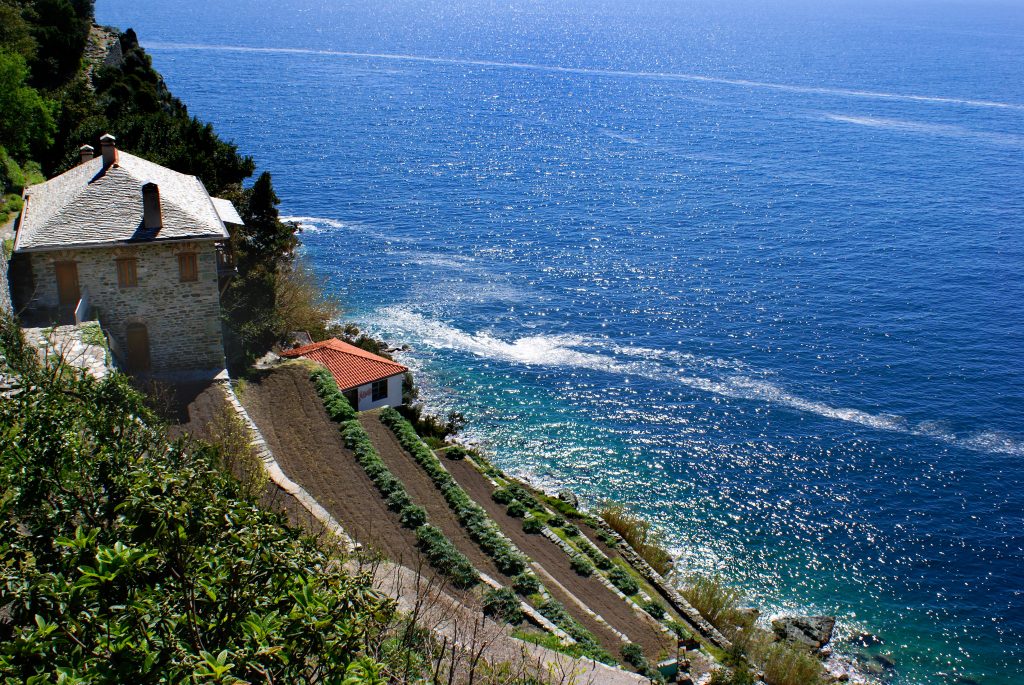
Within the broader flow of Mount Athos cruises, this moment helps passengers recognize how different monasteries responded to their environment and historical circumstances. The solid and guarded appearance of Dionysiou reflects a period when security and self-sufficiency were essential, especially for monasteries positioned close to the sea.
This part of the journey often encourages a quieter form of observation. Rather than focusing on dramatic height or open exposure, visitors tend to reflect on the sense of permanence and resilience conveyed by the monastery’s structure. It becomes a reminder that the Holy Mountain is not defined by a single architectural style, but by a collection of responses shaped by faith, geography and history.
Those wishing to understand how Dionysiou fits within the overall coastal route can explore the full overview of Mount Athos cruises, which explains the sequence of monasteries and the structure of the sea journey along Mount Athos.
The history and spiritual significance of Dionysiou Monastery
Dionysiou Monastery was founded in the 14th century, specifically in 1375, by Saint Dionysios of Korisos, a monk who sought a location that would combine spiritual isolation with access to the sea. The monastery developed during a period when Mount Athos was strengthening its organized monastic structure, and its position reflects both spiritual purpose and practical considerations.
The construction of such a solid and enclosed complex directly above the sea continues to impress modern visitors. Even today, it raises questions about how medieval builders managed to create a structure of such scale and strength in a location that appears challenging even by modern standards.
Monastic identity and daily life
Dionysiou is a Greek Orthodox monastery and remains an active spiritual community. It is home to a moderate-sized brotherhood of monks, who follow the traditional Athonite rhythm of prayer, communal worship and daily work.
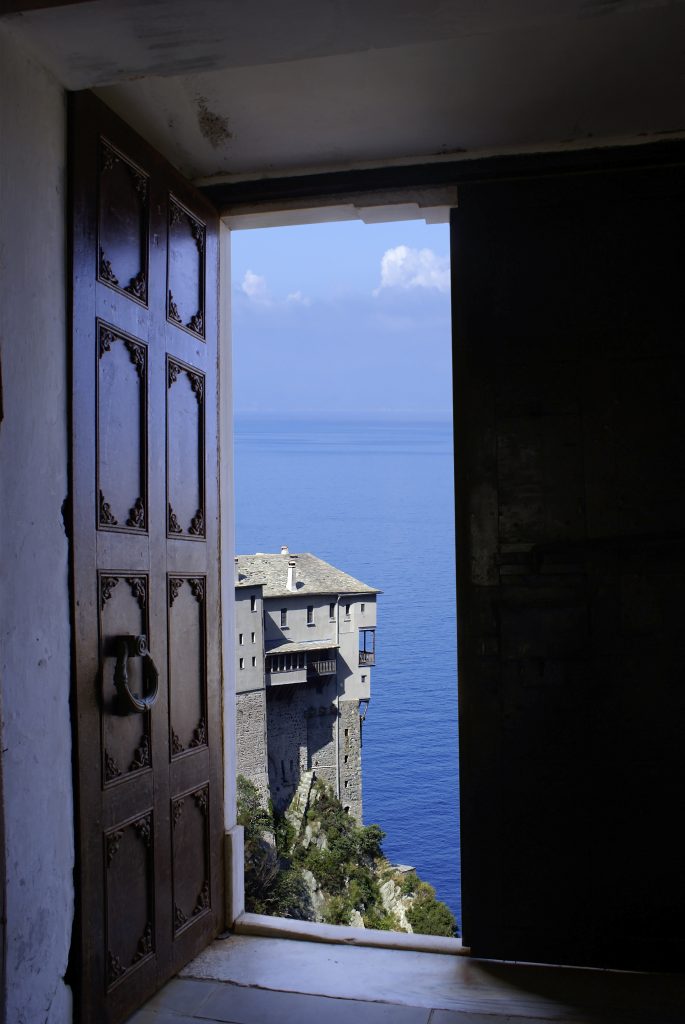
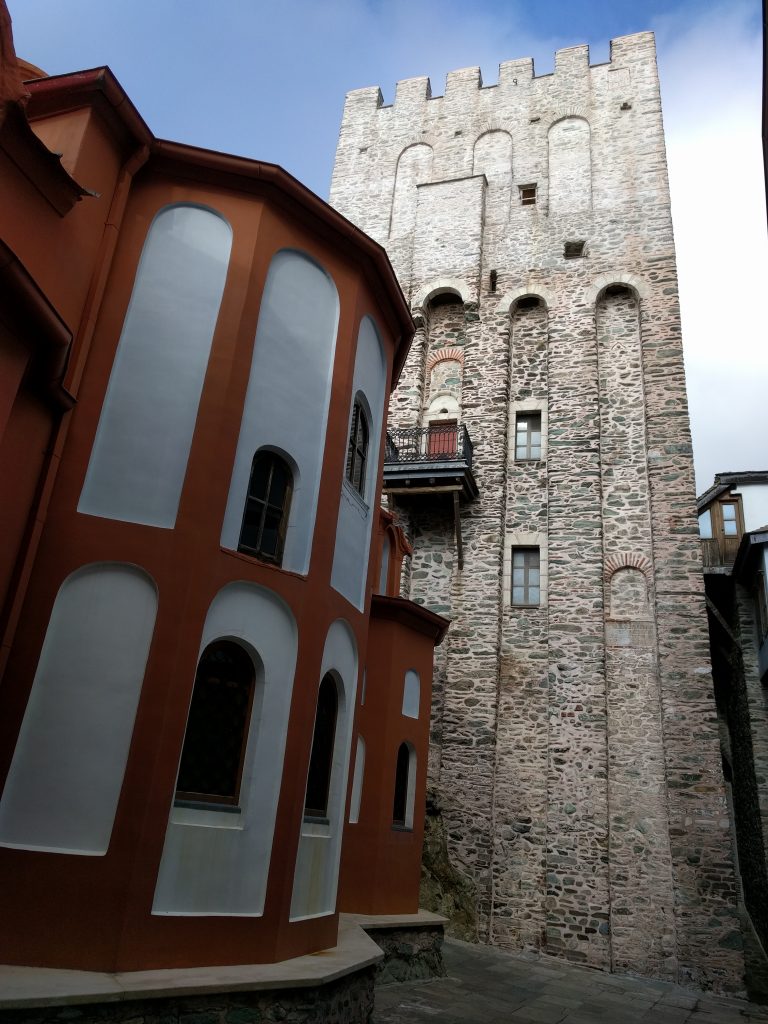
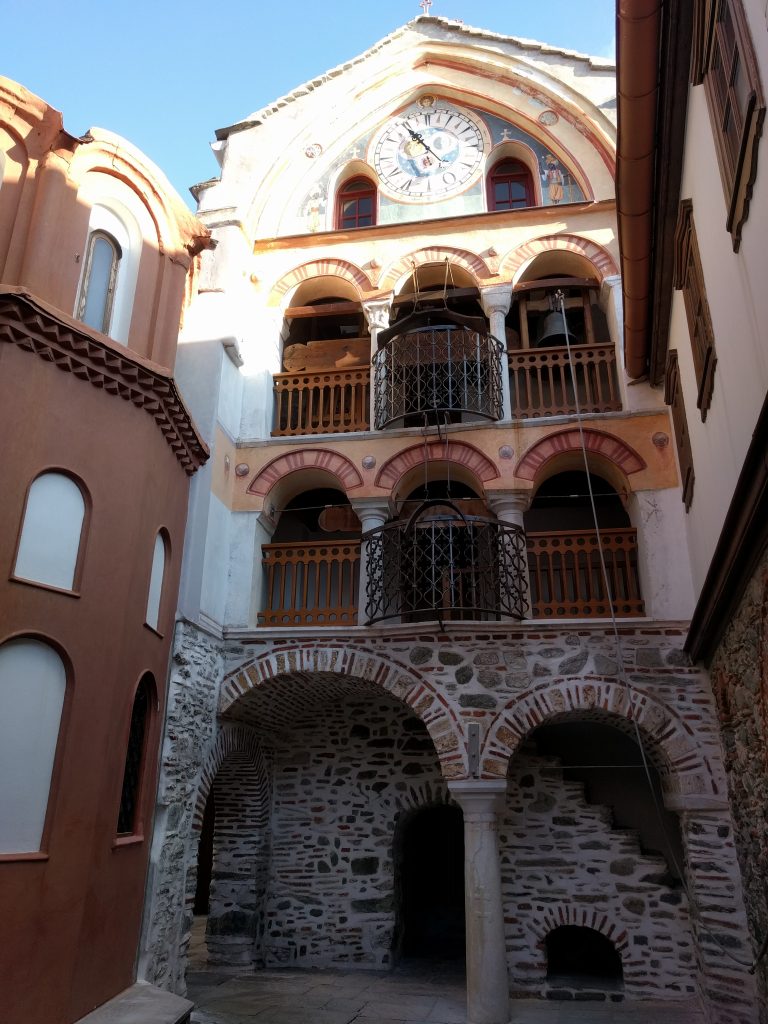
Although the interior of the monastery is not visible during sea journeys, its outward form suggests a carefully organized inner life. Behind the fortified walls lie chapels, communal spaces and monastic cells, arranged to support a disciplined and inward-focused way of living that has remained largely unchanged for centuries.
Sacred treasures and relics preserved at Dionysiou
Dionysiou Monastery holds a prominent place within Mount Athos due to the preservation of exceptionally important sacred relics and spiritual treasures, many of which are directly connected to the foundations of Orthodox Christian tradition. These treasures give the monastery a spiritual significance that extends far beyond its fortress-like appearance from the sea.ery from a powerful coastal landmark into a living spiritual center whose influence extends far beyond what can be seen from the water.
The right hand of Saint John the Baptist
Among the most revered treasures preserved at Dionysiou is the right hand of Saint John the Baptist, one of the most significant relics on Mount Athos and in Orthodox Christianity as a whole.
Saint John the Baptist occupies a central role in Christian faith, and the preservation of his relic places Dionysiou among the most spiritually important monasteries of the Holy Mountain. The relic is venerated with great reverence and plays a key role in the monastery’s liturgical life and major feast days.
While this article focuses on a specific location, a complete picture of Mount Athos—including its spiritual roots and daily rhythms—is available through a general visiting guide.
Holy relics of saints preserved at Dionysiou Monastery
In addition to its most renowned treasures, Dionysiou Monastery preserves important holy relics of saints, which form a central part of its liturgical and spiritual life.
Among the most significant relics safeguarded within the monastery are relics of:
- Saint John Chrysostom – one of the greatest Church Fathers and theologians of Orthodox Christianity
- Saint Basil the Great – foundational figure of monasticism and Orthodox theology
- Saint Gregory the Theologian – one of the Cappadocian Fathers and a key voice in early Christian doctrine
- Saint Stephen the Protomartyr – the first Christian martyr
These relics are venerated during major feast days and services, reinforcing Dionysiou’s role as a living center of Orthodox worship and continuity.
The presence of these saints’ relics connects the monastery directly to the formative centuries of Christian faith, complementing its most famous relic — the right hand of Saint John the Baptist — and enriching its spiritual heritage.
The Akathist Hymn manuscript
Dionysiou Monastery is also closely associated with the Akathist Hymn, one of the most important hymns in Orthodox worship dedicated to the Virgin Mary. The monastery preserves an early and highly significant manuscript of the Akathist, linking it directly to the hymn’s historical transmission and liturgical tradition.
This connection has established Dionysiou as a spiritual reference point for Orthodox hymnography and Marian devotion, reinforcing its importance within the Athonite spiritual landscape.
Sacred icons and devotional heritage
The monastery also preserves venerated icons, particularly icons of the Virgin Mary, which are deeply integrated into daily worship. These icons are not viewed merely as historical objects, but as living elements of prayer and devotion within the monastery.
Their presence strengthens Dionysiou’s identity as a place of continuous spiritual practice and Marian reverence.
Manuscripts and ecclesiastical heritage
Dionysiou holds an important collection of Byzantine manuscripts and ecclesiastical documents, including:
- liturgical texts
- theological writings
- historical records
These manuscripts reflect Mount Athos’ enduring role as a guardian of Orthodox learning, preserving texts that have been passed down through generations of monastic life.
Liturgical vessels and sacred objects
Among the monastery’s treasures are valuable liturgical objects, such as:
- chalices and censers
- sacred vessels used in major services
- embroidered vestments crafted for liturgical use
These items remain in active use, highlighting the monastery’s living spiritual character rather than a static historical role.
Why these treasures matter to the visitor
Although these sacred treasures are not visible during a sea journey, understanding what is preserved within Dionysiou Monastery adds depth to the visual encounter from the water. The strong and enclosed exterior seen during the cruise protects a rich spiritual heritage that connects directly to the foundations of Christian tradition.
For many readers, this knowledge transforms the monastery from a fortress-like landmark into a living guardian of faith, memory and continuity.
Closing – Seeing Dionysiou with understanding
Viewing Dionysiou from the sea leaves a different impression compared to other monasteries along the route. Its solid and enclosed form communicates a sense of protection, discipline and endurance, reminding visitors that life on the Holy Mountain has always balanced spiritual devotion with the realities of history and geography.
Seen from the water, the monastery stands as a symbol of resilience — a place where faith, security and tradition have coexisted for centuries along the rugged coastline of Mount Athos.
Readers interested in an overview of all monasteries of the Holy Mountain can explore a comprehensive guide covering the full monastic landscape of Mount Athos here.
How visitors can view Dionysiou Monastery from the sea
Visitors can observe Dionysiou as part of a coastal sightseeing journey along the Holy Mountain. One of the established sea routes departs from Ouranoupoli and follows the traditional southwestern passage, allowing clear views of the monastery from the water.
More details about the route, sailing schedule and availability are available on the Mount Athos coastal cruise from Ouranoupoli.
Frequently Asked Questions about Dionysiou Monastery
Where does Dionysiou appear during the Mount Athos cruise?
Dionysiou is the seventh monastery observed in sequence during the coastal sea journey along Mount Athos, appearing directly above the shoreline as the vessel passes this section of the route.
Why does Dionysiou look more fortified than other monasteries?
Its compact design and strong stone walls reflect historical needs for protection from threats arriving by sea, giving the monastery its distinctive fortress-like appearance.
Is Dionysiou an active monastic community today?
Yes. Dionysiou is a Greek Orthodox monastery with an active brotherhood of monks who continue the traditional Athonite way of life.
What important relics are kept at Dionysiou Monastery?
The monastery preserves significant sacred treasures, including the revered right hand of Saint John the Baptist, as well as important manuscripts and holy icons.
Did you find our post helpful?
- Was this post helpfull?
- Rate us on TripAdvisor
This article made by https://lnk.bio/Rodokalakis
