

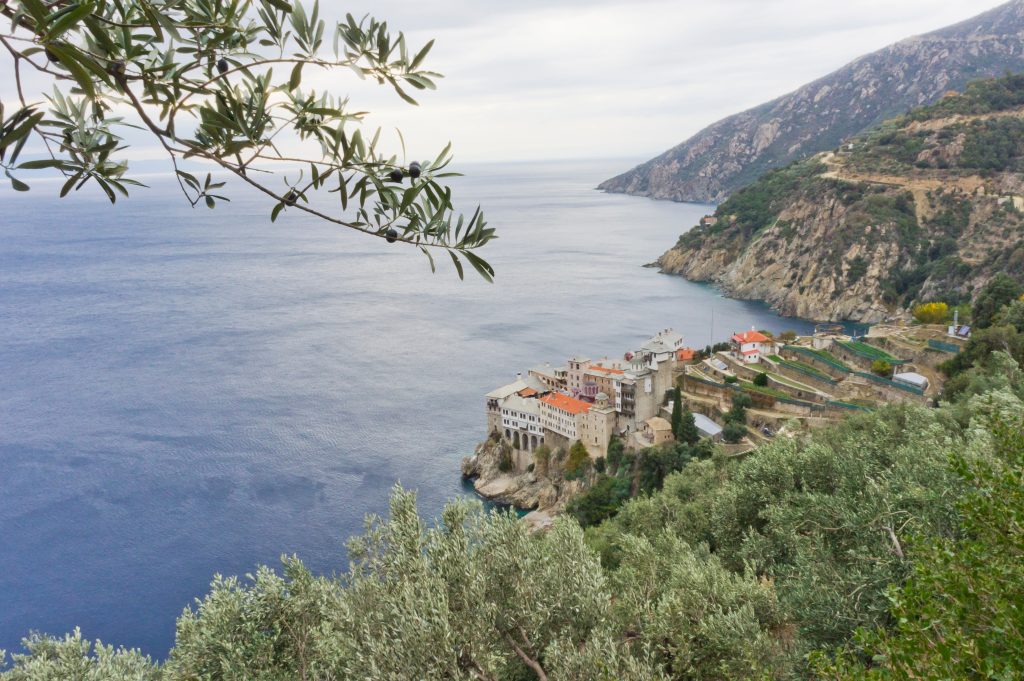
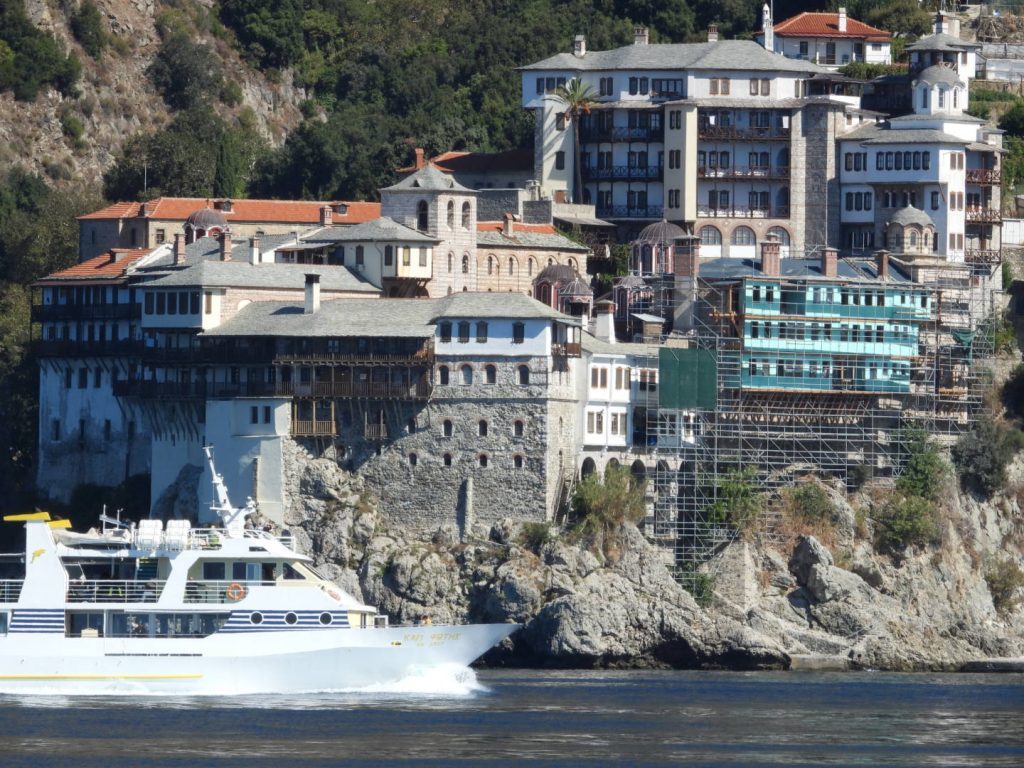
Gregoriou Monastery is one of the monasteries of Mount Athos that appears closest to the sea, immediately noticeable for its direct connection with the shoreline. Often described as a monastery close to the shoreline, it presents a more open and accessible visual character compared to other monastic complexes along the route.
Its lower elevation and proximity to the water give the monastery a distinct presence, allowing visitors to clearly observe its structure and layout as the vessel approaches.
Because access to Mount Athos is restricted, Gregoriou Monastery is experienced by most visitors from the sea. During Mount Athos cruises, its position near the shoreline becomes especially evident, highlighting how closely monastic life here has been shaped by the surrounding maritime environment.
Seen from the water, this monastery close to the shoreline creates a different impression — less dramatic in height, yet deeply connected to the rhythms of the sea and coastal life.
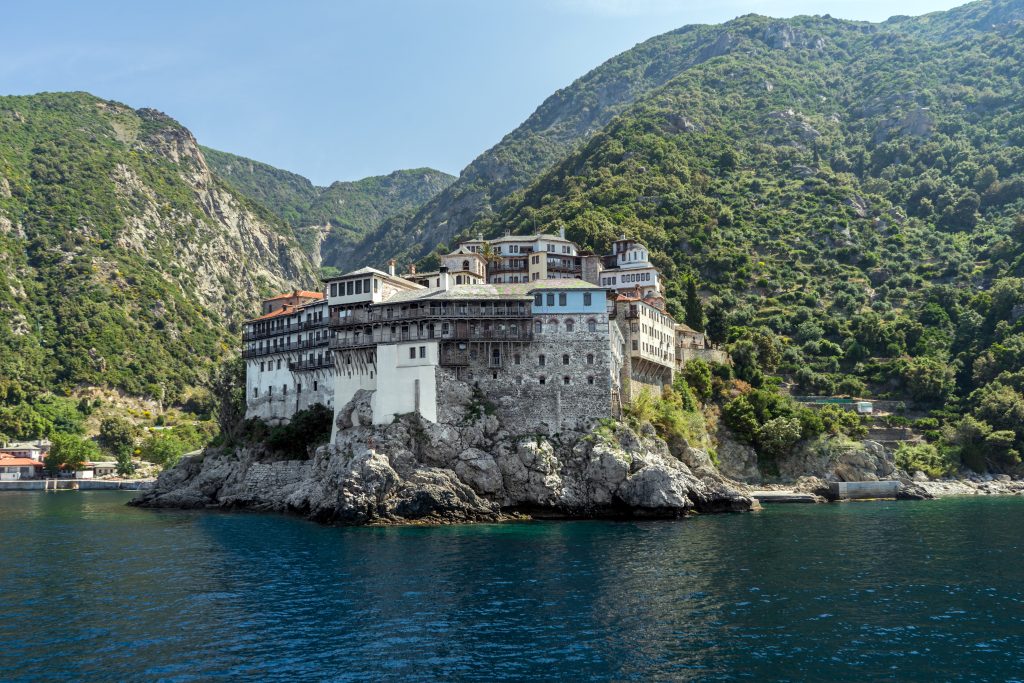
Table of Contents
Where Gregoriou Monastery appears on the Mount Athos sea route
During the coastal sea journey along Mount Athos, Gregoriou Monastery appears at a point where the coastline feels noticeably closer and more open to the water. As the vessel approaches this section of the route, the monastery comes into view almost immediately from sea level, reinforcing its reputation as a monastery close to the shoreline.
Its position allows passengers to observe the structure clearly without needing to look upward toward steep cliffs. Instead, the monastery unfolds horizontally along the coast, emphasizing its direct relationship with the sea. From the vessel, the proximity creates a sense of immediacy, as if the monastery is part of the coastal line rather than elevated above it.
This section of the route often stands out for visitors because it highlights how differently monasteries were placed depending on geography and purpose. Gregoriou’s location close to the shoreline offers a contrasting visual experience compared to monasteries built higher above the sea, adding variety and balance to the overall journey.
Why Gregoriou Monastery is considered a monastery close to the shoreline
What defines Gregoriou is not height or defensive mass, but proximity. The monastery is positioned just above sea level, with very little separation between the structure and the water below. This placement makes its relationship with the sea immediate and unmistakable.
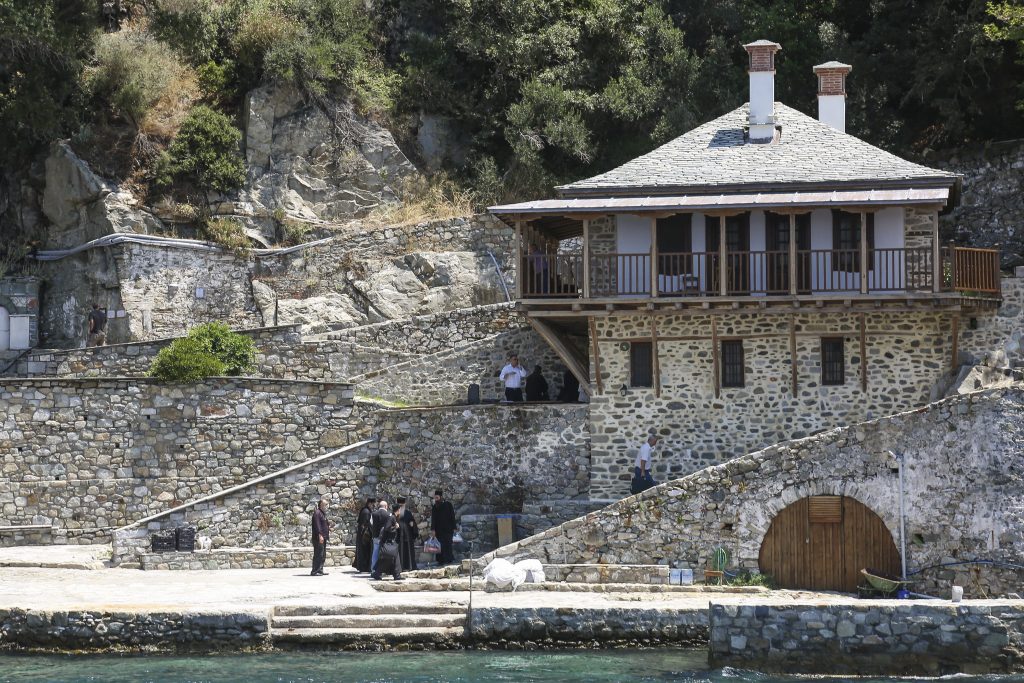
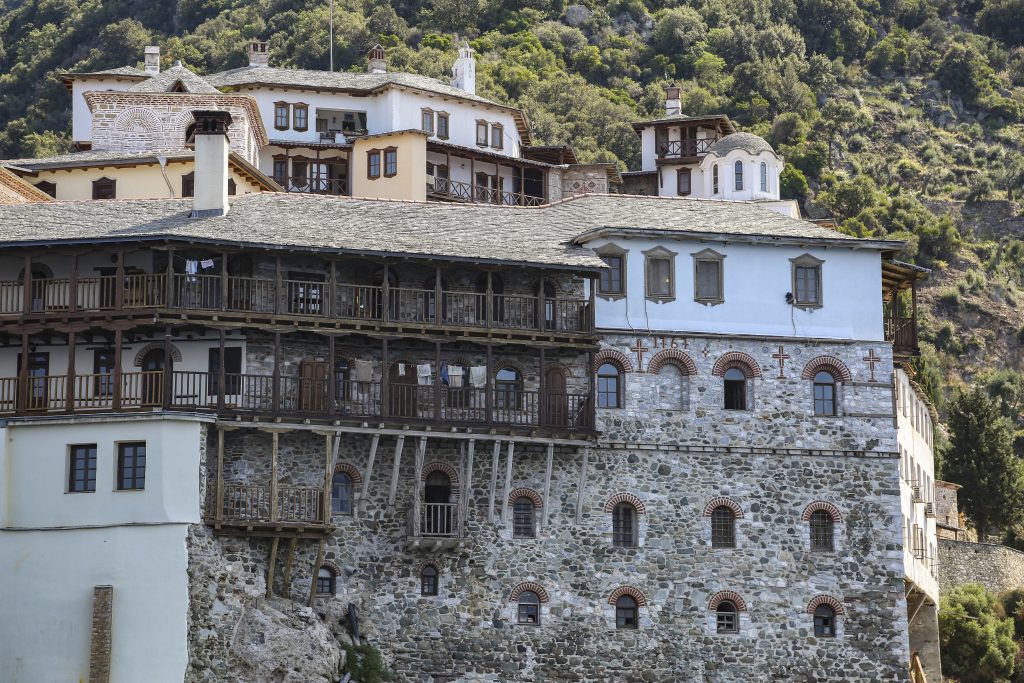
From the vessel, the shoreline feels almost continuous with the monastery itself. The lack of steep elevation allows visitors to clearly distinguish architectural details, balconies and openings that would otherwise be harder to observe at greater height. This closeness creates a sense of direct interaction between monastic life and the maritime environment.
The position also reflects practical considerations. Easy access to the sea historically supported communication, supplies and daily needs, shaping a monastic lifestyle that remained closely connected to maritime routes. Seen in this context, the monastery’s location is not incidental but deeply intentional.
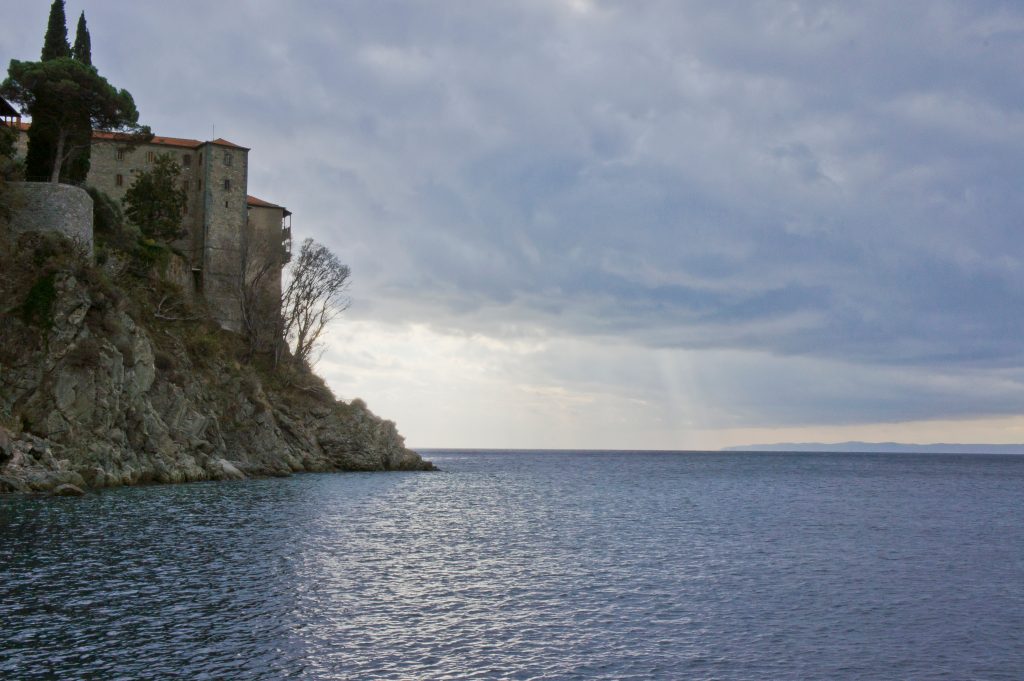
This coastal placement sets Gregoriou apart within the sequence of monasteries visible during Mount Athos cruises, offering a quieter, more grounded presence that contrasts with the dramatic cliffside or fortress-like structures encountered elsewhere along the route.
What visitors notice when viewing Gregoriou from the sea
As the vessel passes along this section of the coastline, many visitors immediately notice the sense of closeness. The monastery feels near, almost at eye level, creating a more intimate visual experience compared to monasteries positioned higher above the water.
From the sea, the structure appears calm and balanced, without the dramatic vertical emphasis seen elsewhere. The shoreline, the buildings and the water seem to flow into one another, giving the impression of continuity rather than separation. This visual harmony often makes the monastery feel approachable, even from a distance.
Another detail that stands out is how clearly the layout can be observed. Balconies, walls and exterior spaces are easier to distinguish, allowing visitors to imagine daily life unfolding within the complex. The slower reveal of details as the vessel moves past adds to the sense of quiet observation rather than spectacle.
For many passengers, this moment feels grounded and serene. Gregoriou does not dominate the landscape; instead, it blends into it, leaving an impression of stability and quiet presence along the Mount Athos route.
How Gregoriou fits into the Mount Athos cruise experience
By the time the vessel reaches this part of the route, visitors have already encountered monasteries with strong vertical presence or defensive character. The appearance of Gregoriou offers a different rhythm to the journey, introducing a moment of closeness and visual accessibility.
Within the flow of Mount Athos cruises, this monastery often feels more immediate and personal. Its position near the shoreline allows passengers to observe details with ease, shifting attention from dramatic landscapes to quieter forms of presence. The experience becomes less about scale and more about connection.
This section of the journey highlights the diversity of monastic placement along the Holy Mountain. Gregoriou’s coastal location demonstrates how geography influenced not only architecture, but also the daily interaction between monastic life and the sea.
Visitors who wish to understand how Gregoriou fits into the broader coastal route can explore the full overview of Mount Athos cruises, where the sequence of monasteries and the structure of the sea journey are explained in detail.
The history and spiritual significance of Gregoriou Monastery
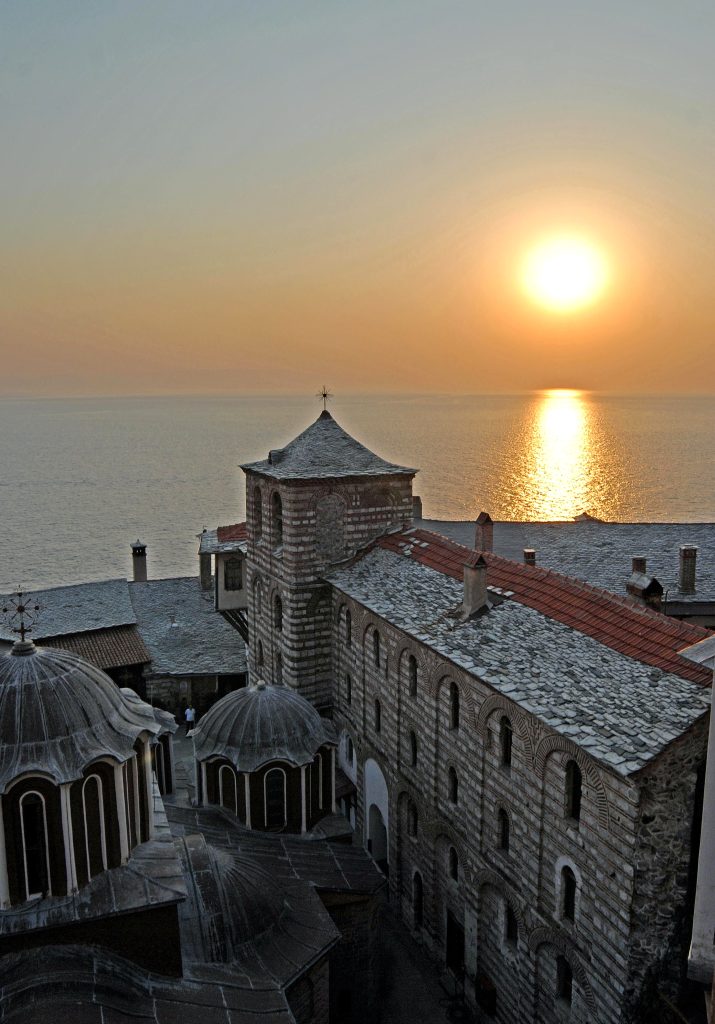
Gregoriou Monastery was founded in the 14th century, around 1310, by Saint Gregory of Sinai, a monk known for his ascetic life and spiritual teaching. The monastery developed during a period of renewal for Mount Athos, when monastic communities were expanding both spiritually and structurally.
Its location close to the sea was not accidental. The coastal position supported communication and supply routes, while still allowing the monks to live in relative isolation. This balance between accessibility and withdrawal shaped the character of the monastery and continues to define its presence today.
Monastic identity and daily life
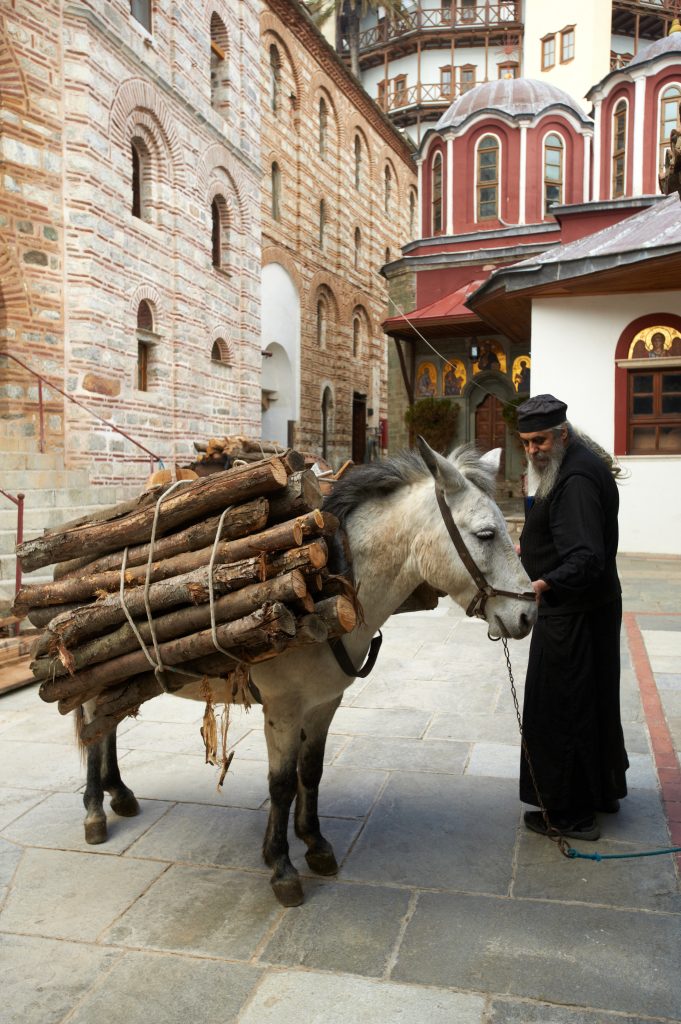
Gregoriou is a Greek Orthodox monastery and remains an active spiritual community. It is home to a small brotherhood of monks who follow the traditional Athonite rhythm of prayer, communal worship and manual work.
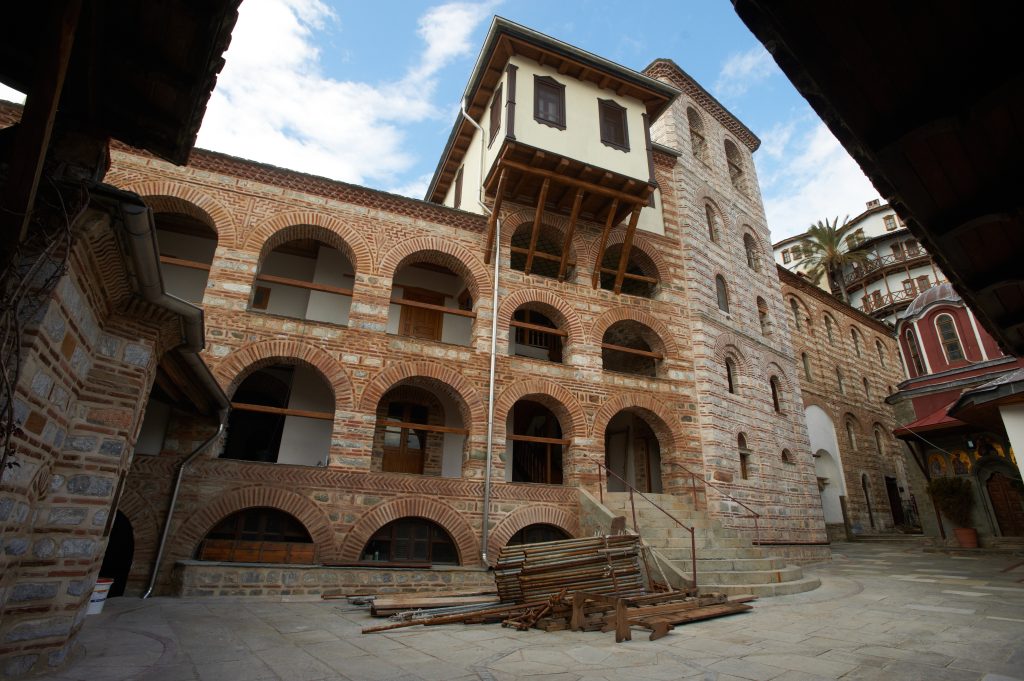
Although the interior is not visible from the sea, the monastery’s outward simplicity suggests an inward-focused way of life. Behind the walls lie chapels, communal areas and monastic cells designed to support a disciplined and contemplative daily routine.
Readers seeking background on how Mount Athos developed into its present monastic form can explore a broader historical and cultural overview of the Holy Mountain.
Sacred treasures and relics preserved at Gregoriou
Gregoriou Monastery preserves a collection of important sacred treasures and holy relics, reflecting its long-standing spiritual presence on Mount Athos. Despite its relatively compact size, the monastery holds relics of great theological and devotional significance.
Holy relics of saints
Among the most revered relics safeguarded at Gregoriou Monastery are relics of:
- Saint Gregory the Theologian – one of the Cappadocian Fathers and a foundational figure of Orthodox theology
- Saint Basil the Great – a key architect of monastic life and ecclesiastical organization
- Saint John Chrysostom – renowned Church Father and author of foundational liturgical texts
- Saint Charalambos – venerated for protection from illness and hardship
These relics are honored during major feast days and liturgical services, reinforcing the monastery’s role as a living center of prayer and continuity.
Venerated icons
Gregoriou preserves revered icons of the Virgin Mary and Christ, which play a central role in daily worship. These icons are deeply integrated into the monastery’s devotional life and are approached as living elements of prayer rather than historical artifacts.
Manuscripts and ecclesiastical heritage
The monastery safeguards a collection of Byzantine and post-Byzantine manuscripts, including:
- liturgical texts
- theological writings
- historical documents related to monastic administration
These manuscripts contribute to Mount Athos’ role as a guardian of Orthodox learning and spiritual tradition.
Liturgical vessels and sacred objects
Among the monastery’s sacred possessions are:
- chalices and censers
- sacred vessels used in major services
- embroidered vestments
These objects remain in active liturgical use, emphasizing the monastery’s living spiritual character.
Why these treasures matter to the visitor
Understanding the sacred heritage preserved at Gregoriou Monastery adds depth to the visual experience of observing the monastery from the sea. Behind its compact and serene exterior lies a spiritual tradition rooted in centuries of prayer and devotion.
Closing – Seeing Gregoriou Monastery with understanding
Viewing Gregoriou from the sea offers a calmer and more intimate experience compared to other monasteries along the route. Its close relationship with the shoreline creates a sense of immediacy, allowing visitors to observe the monastery not as a distant landmark, but as a living presence shaped by daily interaction with the sea.
This quiet and grounded impression reflects the character of the monastery itself — a place where spiritual life unfolds close to nature, following rhythms that have remained unchanged for centuries along the coast of Mount Athos.
Readers interested in an overview of all monasteries of the Holy Mountain can explore a comprehensive guide covering the full monastic landscape of Mount Athos here.
How visitors can view Gregoriou from the sea
Visitors can observe Gregoriou as part of a coastal sightseeing journey along the Holy Mountain. One of the established sea routes departs from Ouranoupoli and follows the traditional southwestern passage, offering clear views of the monastery directly from the water.
More information about the route, sailing schedule and availability can be found on the Mount Athos coastal cruise from Ouranoupoli.
Frequently Asked Questions about Gregoriou Monastery
Where does Gregoriou appear during the Mount Athos cruise?
Gregoriou appears along the coastal route at a point where the monastery lies very close to sea level, making it one of the most accessible-looking monasteries from the water.
Why is Gregoriou considered different from other Mount Athos monasteries?
Its proximity to the shoreline sets it apart, offering a quieter and more immediate visual experience compared to monasteries built higher on cliffs or designed with strong defensive features.
Is Gregoriou an active monastery today?
Yes. Gregoriou is a Greek Orthodox monastery with an active brotherhood of monks who continue the traditional Athonite way of life.
What kind of treasures are preserved at Gregoriou Monastery?
The monastery safeguards holy relics, sacred icons and important liturgical manuscripts that contribute to its spiritual and cultural heritage.
Did you find our post helpful?
- Was this post helpfull?
- Rate us on TripAdvisor
This article made by https://lnk.bio/Rodokalakis
