

Xeropotamou Monastery is one of the oldest monasteries visible along the southwestern coastline of Mount Athos, carrying a strong spiritual identity shaped by early monastic tradition. Closely associated with the monastery of the Forty Martyrs, it reflects a deep connection to Orthodox martyrdom and devotion.
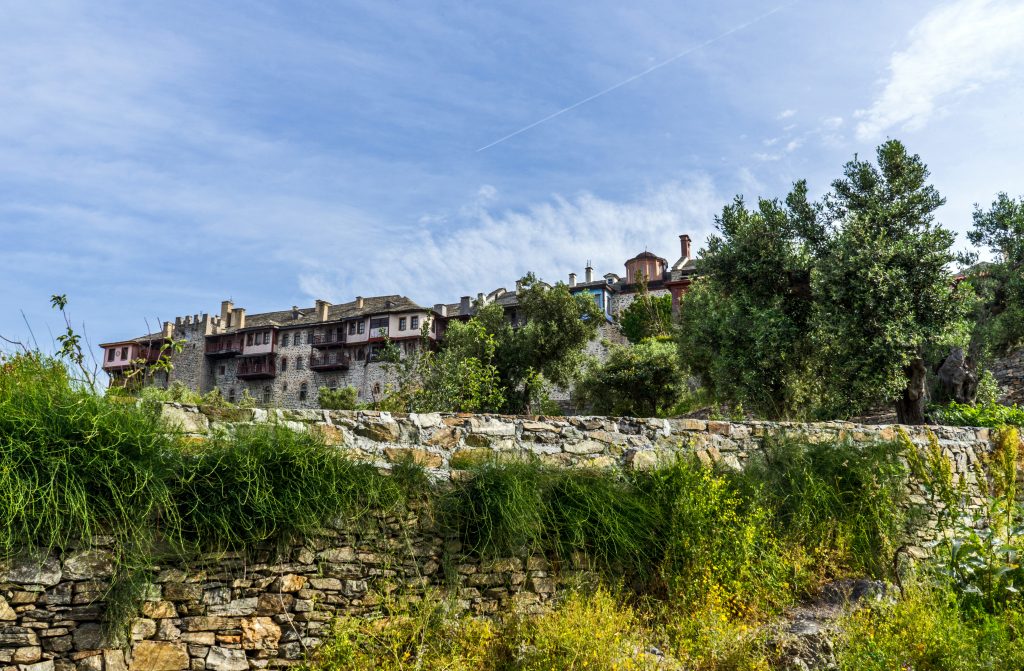
From the sea, the monastery presents a solid and grounded appearance. Its compact structure and restrained scale create a sense of stability, contrasting with the larger and more expansive monasteries nearby. This visual simplicity reflects the monastery’s long-standing emphasis on spiritual discipline rather than architectural display.
Because access to Mount Athos is restricted, Xeropotamou Monastery is experienced by most visitors exclusively from the sea. During Mount Athos cruises, its coastal position allows for a clear and steady view, giving passengers time to observe its form and placement along the shoreline.
Seen from the vessel, the monastery feels rooted and enduring. Its presence suggests continuity and tradition, offering a quieter visual moment within the broader sequence of southwestern monasteries.
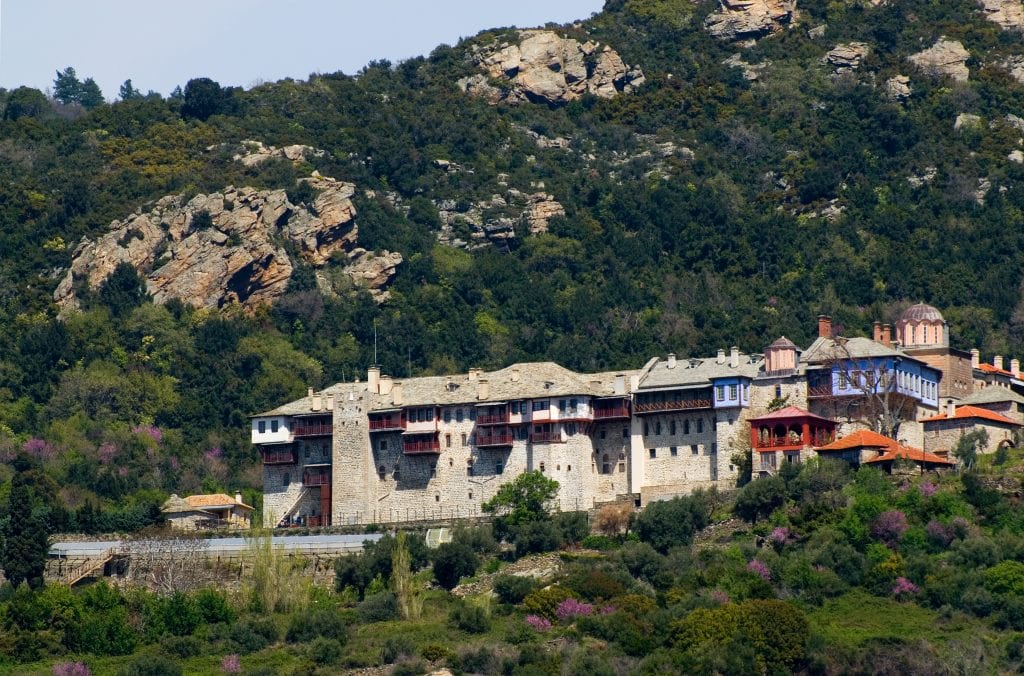
Table of Contents
Where Xeropotamou Monastery appears on the Mount Athos sea route
During the coastal sea journey along Mount Athos, Xeropotamou Monastery appears along the southwestern side of the peninsula, following Saint Panteleimonos and forming one of the final monastic landmarks visible before the route progresses further south.
From the sea, its position feels slightly set back compared to neighboring monasteries, giving it a more contained and inward-looking presence. This placement allows passengers to observe the monastery calmly, without the visual intensity created by larger or more expansive complexes nearby.
For many visitors, this point in the journey signals a subtle shift in atmosphere. The coastline becomes quieter and less dense, and the monastery’s modest scale reinforces the sense of approaching the southern limits of the southwestern route.
Why Xeropotamou is known as the monastery of the Forty Martyrs
Xeropotamou Monastery is closely associated with the Forty Martyrs of Sebaste, a group of early Christian soldiers who were martyred in the 4th century for refusing to renounce their faith. This dedication defines the monastery’s spiritual identity and places martyrdom and perseverance at the center of its tradition.
The monastery’s main katholikon is dedicated to the Forty Martyrs, and their commemoration holds a special place in the liturgical life of the community. This association reflects the monastery’s early origins and its strong connection to the formative centuries of Christian devotion.
From a spiritual perspective, the dedication to the Forty Martyrs emphasizes endurance, faithfulness and sacrifice. These values have shaped the monastery’s character over time, reinforcing its reputation as a place rooted in discipline and spiritual resilience rather than outward grandeur.
For visitors viewing the monastery from the sea, understanding this dedication adds meaning to its restrained and grounded appearance. What may seem visually modest becomes spiritually significant when seen through the lens of its dedication to the Forty Martyrs.
What visitors notice when viewing Xeropotamou from the sea
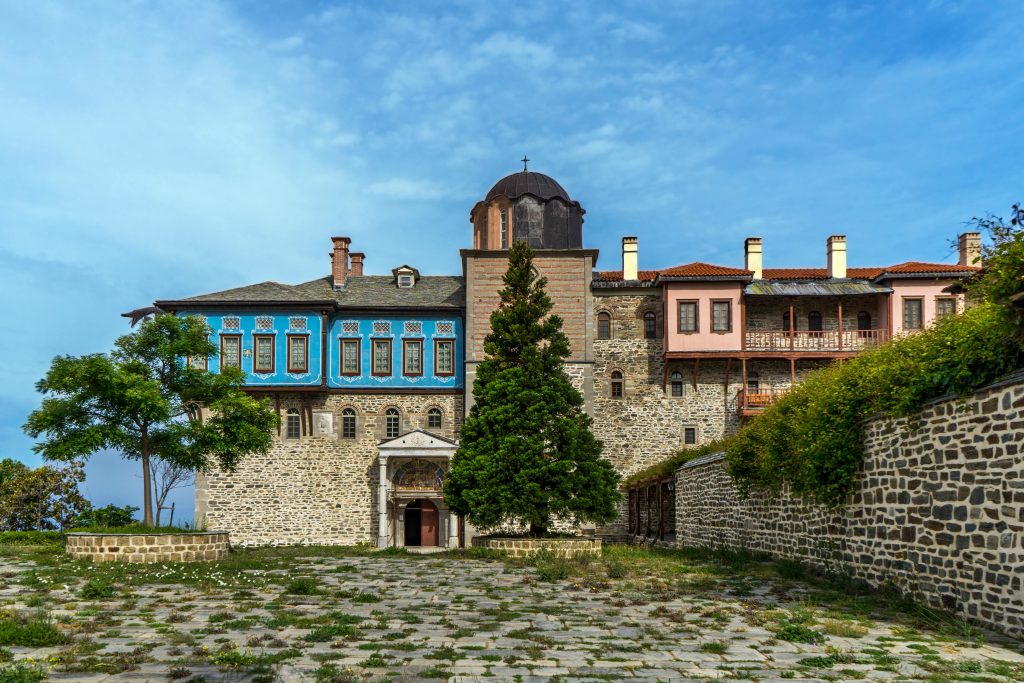
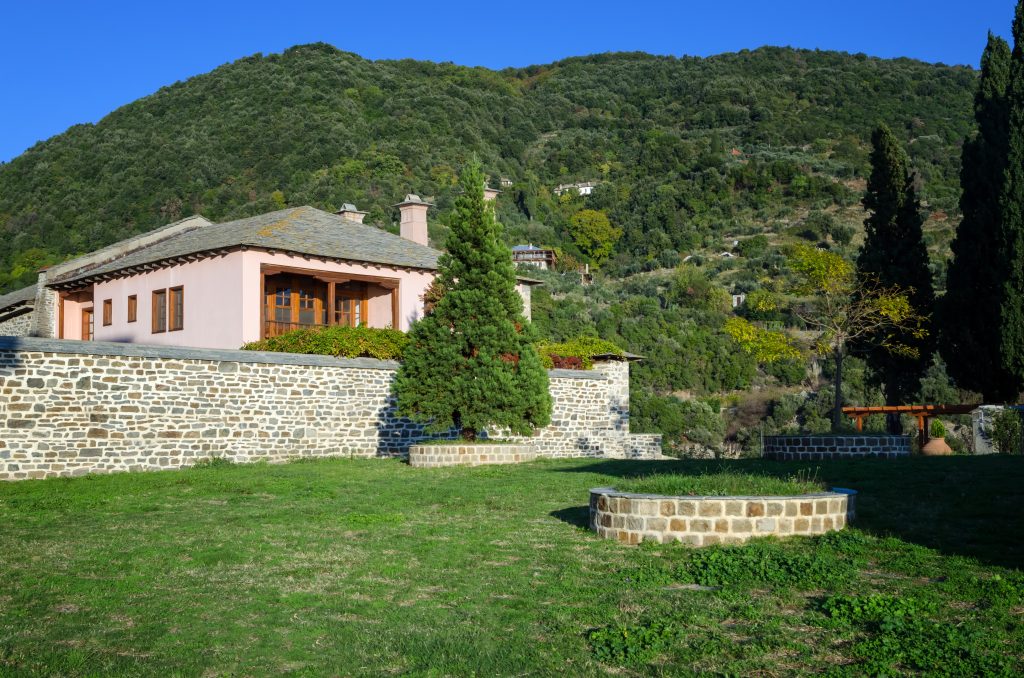
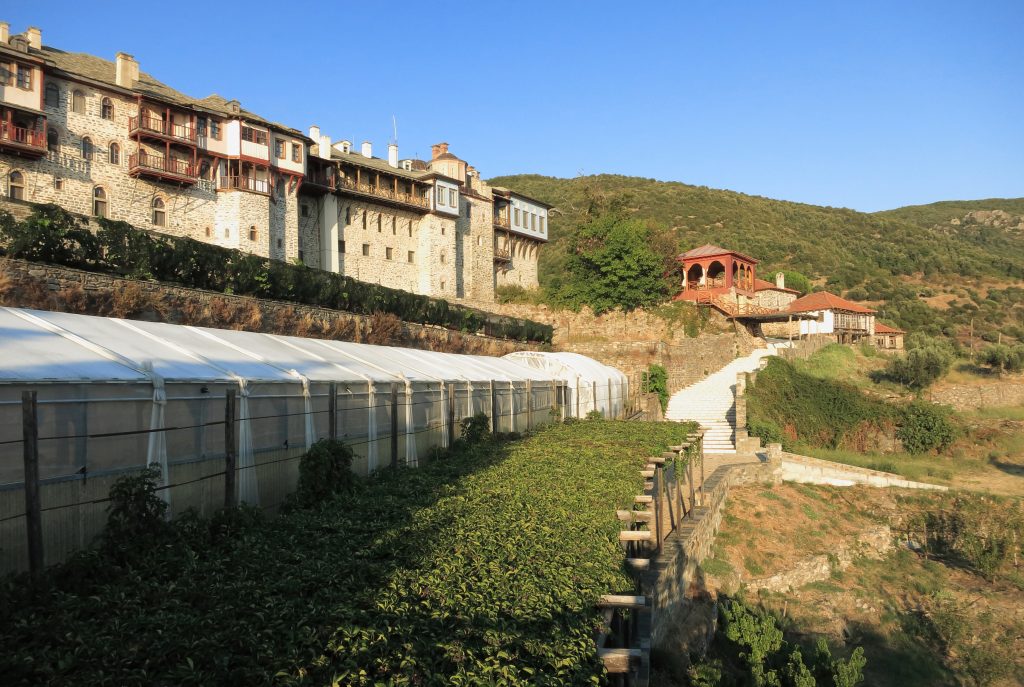
As the vessel approaches this section of the coastline, many visitors notice the simplicity and restraint that define Xeropotamou. Unlike larger monasteries nearby, it does not dominate the shoreline, but appears quietly integrated into its natural surroundings.
From the sea, the monastery’s compact form and clear lines give it a grounded and composed presence. There is little visual excess, and the focus shifts naturally toward proportion and placement rather than scale. This simplicity often creates a moment of calm observation along the route.
Another element that stands out is the monastery’s sense of enclosure. Its positioning slightly away from the open shoreline reinforces an inward-looking character, suggesting a monastic life centered on discipline and contemplation rather than outward expression.
For many passengers, this visual encounter feels understated yet meaningful. Xeropotamou’s appearance offers a subtle contrast to the more imposing monasteries along the route, reinforcing the diversity of spiritual expression found on Mount Athos.
How Xeropotamou fits into the Mount Athos cruise experience
Within the overall flow of the journey, Xeropotamou Monastery represents a moment of quiet transition. By the time the vessel reaches this point, visitors have already observed some of the most imposing monasteries of the southwestern side, making Xeropotamou’s restrained presence feel intentionally different.
In the context of Mount Athos cruises, this monastery often feels contemplative rather than dramatic. Its modest scale and inward orientation encourage a slower, more reflective form of observation, allowing passengers to absorb the atmosphere of the coastline without visual intensity.
This part of the route highlights an essential aspect of the Athonite experience: spiritual depth does not always manifest through size or grandeur. Xeropotamou’s role within the cruise journey reinforces the diversity of monastic expression on Mount Athos, reminding visitors that discipline and devotion can be conveyed through simplicity as much as through monumentality.
Visitors who wish to understand how Xeropotamou fits within the broader sequence of monasteries along the coast can explore the complete overview of Mount Athos cruises, which explains the structure of the route and the progression of landmarks visible from the sea.
The history and spiritual significance of Xeropotamou Monastery
Xeropotamou Monastery is regarded as one of the oldest monasteries on Mount Athos, with origins that trace back to the 10th century. According to Athonite tradition, its foundation is closely connected with Saint Paul of Xeropotamou, an early ascetic whose spiritual legacy shaped the monastery’s identity from its earliest years.
Throughout its history, Xeropotamou maintained a strong emphasis on ascetic discipline and spiritual focus. Unlike monasteries that expanded dramatically over time, Xeropotamou Monastery preserved a more restrained development, reflecting its dedication to simplicity and inner spiritual life rather than outward grandeur.
The monastery experienced periods of challenge and renewal, particularly during times of decline across Mount Athos. Yet it consistently retained its spiritual core, remaining faithful to its early monastic principles while adapting to historical circumstances.
Monastic identity and daily life
Xeropotamou is a Greek Orthodox monastery and remains an active monastic community today. The monks follow the traditional Athonite rhythm of life, centered on prayer, communal worship, silence and daily labor.
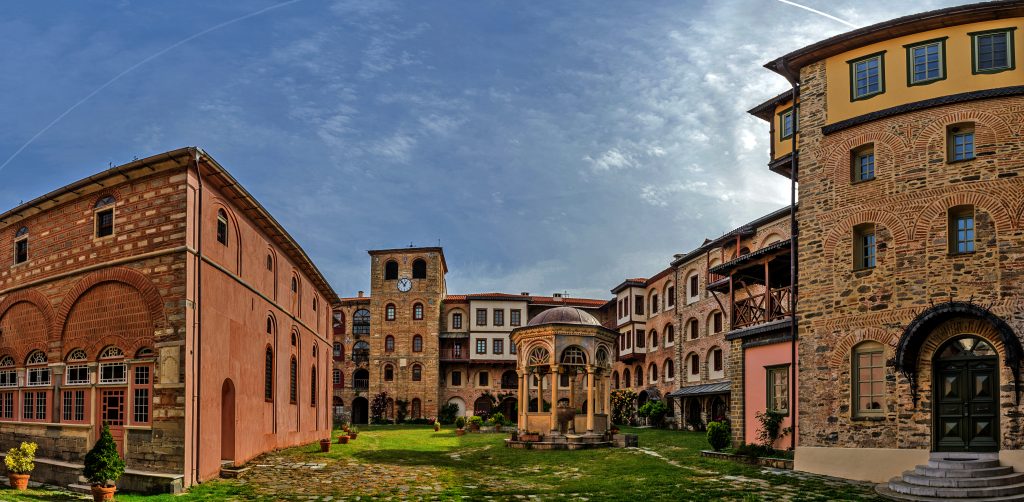
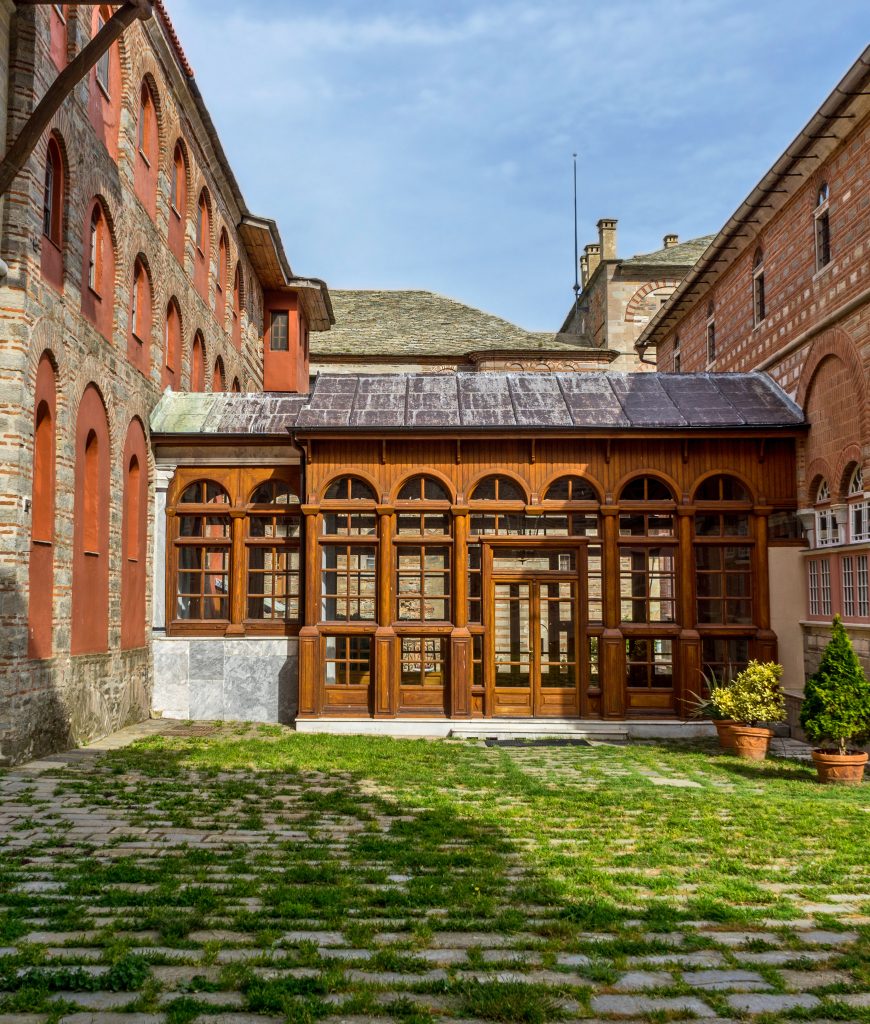
Life within the monastery is shaped by discipline and continuity. Although visitors observing from the sea cannot see the interior, the monastery’s modest exterior suggests an inward-focused spiritual world, where simplicity supports deep contemplation and devotion.
The spiritual meaning of the Forty Martyrs
The dedication of Xeropotamou Monastery to the Forty Martyrs of Sebaste defines its spiritual character. These early Christian martyrs symbolize endurance, unity and faith under persecution, values that resonate deeply within the monastery’s tradition.
This dedication influences both the monastery’s liturgical life and its spiritual ethos. The commemoration of the Forty Martyrs holds a central place in worship, reinforcing the monastery’s identity as a place rooted in perseverance and spiritual resilience.
Why this history matters to the visitor
Understanding the historical and spiritual background of Xeropotamou adds depth to the experience of seeing it from the sea. What may appear visually modest is, in reality, a monastery shaped by some of the earliest expressions of Athonite monastic life.
For many readers, this knowledge transforms the quiet coastal view into an encounter with one of Mount Athos’ foundational spiritual traditions.
Those wishing to understand how monasteries, sketes and ports coexist within Mount Athos may find additional context in a general guide to visiting the Holy Mountain.
Sacred treasures and holy relics preserved at Xeropotamou Monastery
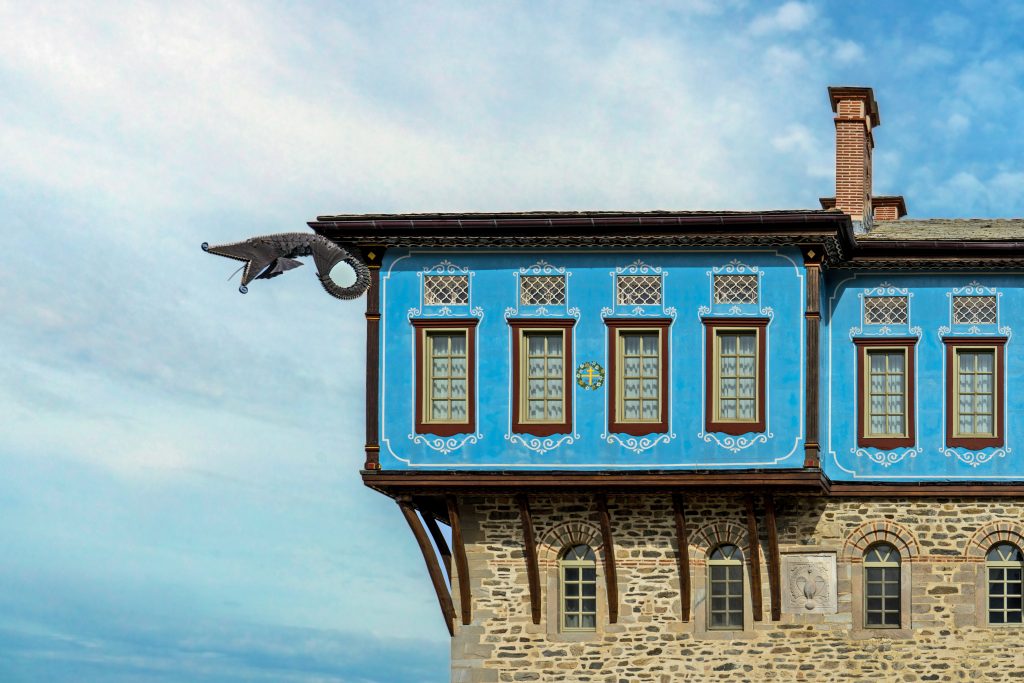
Xeropotamou Monastery preserves sacred treasures of particular spiritual significance, closely connected to the early history of Mount Athos and the veneration of the Forty Martyrs of Sebaste. Despite the monastery’s austere and restrained character, its spiritual heritage is profound and deeply rooted in Orthodox tradition.
Holy relics of saints
Among the most important holy relics preserved at Xeropotamou Monastery are relics of:
- The Forty Martyrs of Sebaste – the monastery’s patron saints, whose martyrdom defines its spiritual identity
- Saint Paul of Xeropotamou – early Athonite ascetic closely associated with the monastery’s foundation
- Saint Basil the Great – foundational figure of Orthodox monasticism
- Saint Gregory the Theologian – one of the Cappadocian Fathers and a pillar of Orthodox doctrine
These relics are venerated during major feast days and liturgical services, reinforcing the monastery’s character as a place of endurance, unity and faith under trial.
Venerated icons
Xeropotamou Monastery safeguards revered icons of Christ and the Virgin Mary, as well as iconographic representations of the Forty Martyrs. These icons play a central role in the monastery’s liturgical life and are approached as living expressions of faith rather than artistic objects.
The icon of the Forty Martyrs holds particular importance, reflecting the monastery’s dedication and spiritual focus on martyrdom and perseverance.
Manuscripts and ecclesiastical heritage
The monastery preserves a collection of Byzantine and post-Byzantine manuscripts, including:
- liturgical books
- theological writings
- early ecclesiastical texts
These manuscripts contribute to Mount Athos’ broader mission as a guardian of Orthodox spiritual knowledge and continuity.
Liturgical vessels and sacred objects
Among the monastery’s sacred possessions are:
- chalices and sacred vessels
- censers used in major services
- traditional embroidered vestments
These objects remain in active liturgical use, emphasizing the monastery’s living spiritual tradition rather than a purely historical role.
Why these treasures matter to the visitor
Although these sacred treasures are not visible during a sea journey, understanding what is preserved within Xeropotamou Monastery adds depth to the visual encounter from the water. Behind its restrained exterior lies a spiritual heritage rooted in some of the earliest expressions of Christian martyrdom and Athonite monastic life.
For many readers, this knowledge transforms the monastery’s quiet presence into a powerful symbol of endurance and faith.
Closing – Seeing Xeropotamou Monastery with understanding
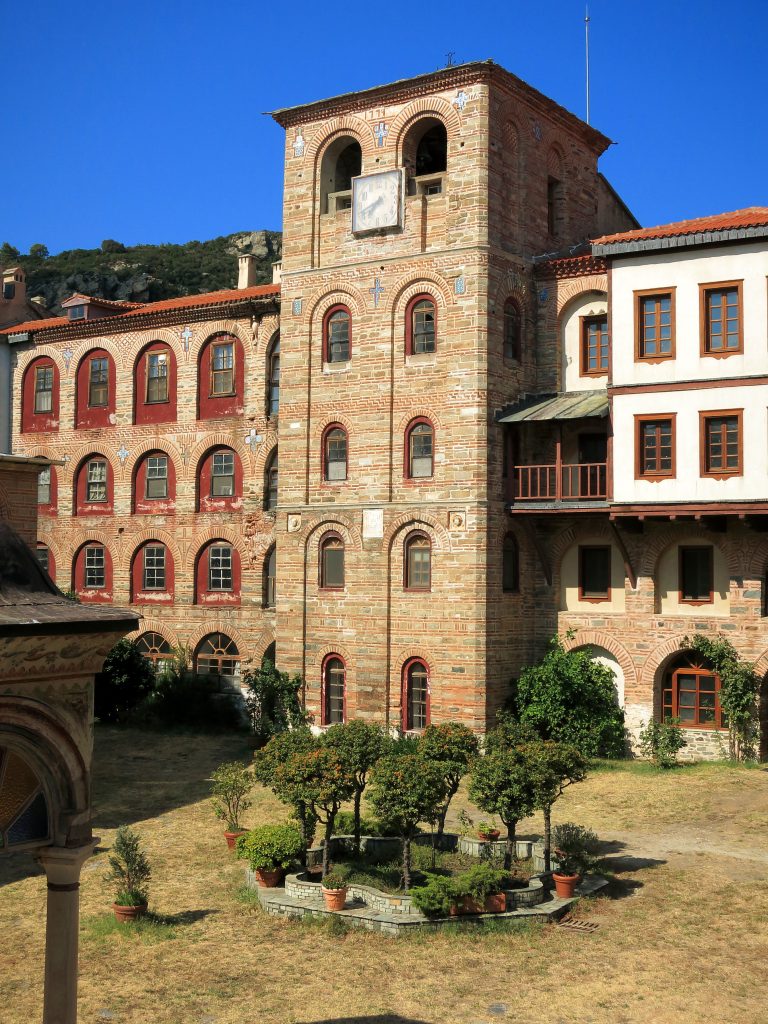
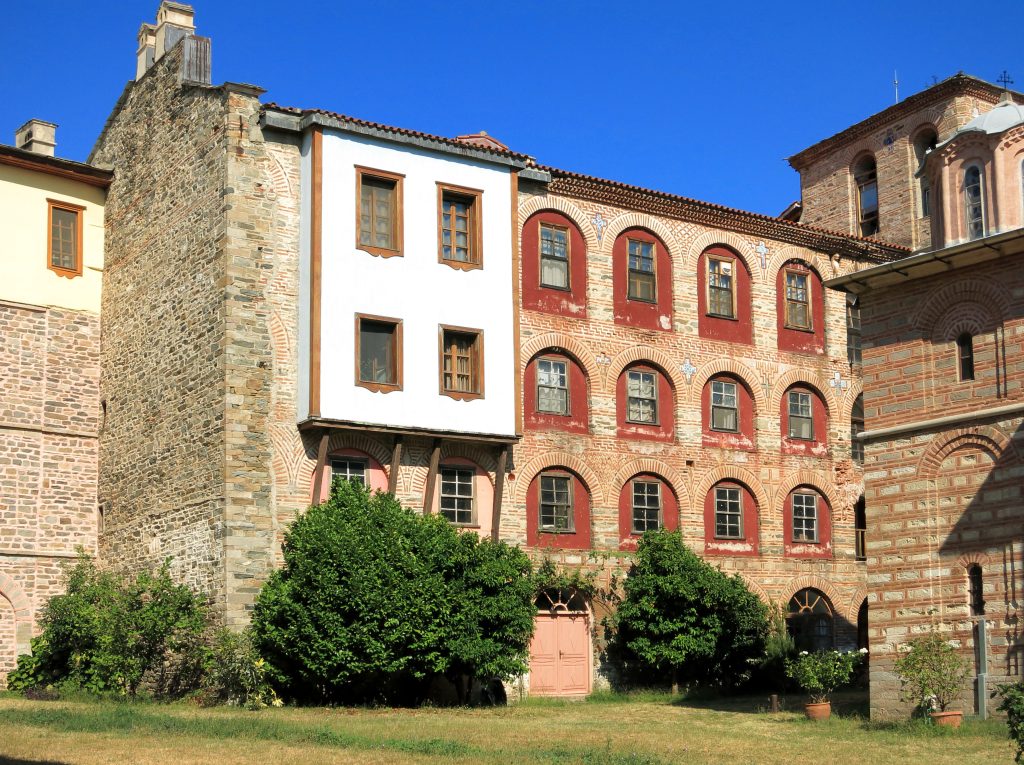
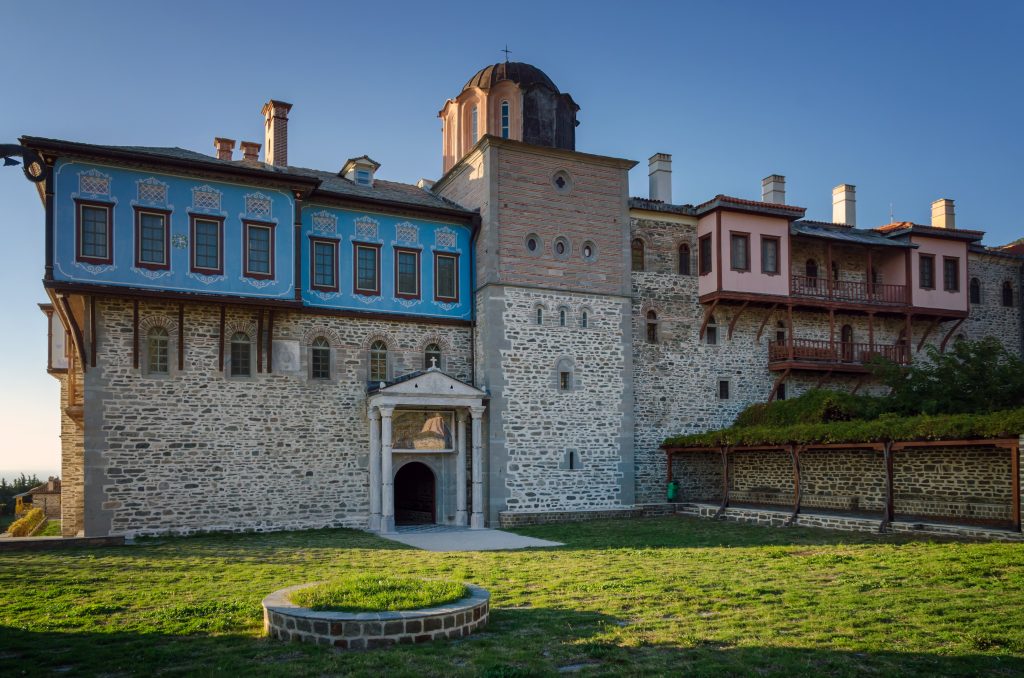
Viewing Xeropotamou from the sea offers a moment of quiet reflection. Its restrained architecture and modest scale stand in contrast to the larger monasteries along the southwestern coastline, highlighting a different expression of Athonite spirituality—one rooted in discipline, simplicity and endurance.
Beyond its calm exterior lies a spiritual heritage shaped by early monastic tradition and devotion to the Forty Martyrs of Sebaste. Understanding this background allows visitors to appreciate Xeropotamou not for grandeur, but for its deep spiritual continuity within the history of Mount Athos.
Readers interested in an overview of all monasteries of the Holy Mountain can explore a comprehensive guide covering the full monastic landscape of Mount Athos here.
How visitors can view Xeropotamou Monastery from the sea
Xeropotamou can be seen as part of a coastal sightseeing journey along the Holy Mountain. One of the established sea routes departs from Ouranoupoli and follows the traditional southwestern passage, offering clear views of the monastery directly from the water.
Details about the route, sailing schedule and availability are available on the Mount Athos coastal cruise from Ouranoupoli:
https://athos-cruises.gr/cruise-1-ouranoupolis-to-mount-athos/
Why is Xeropotamou associated with the Forty Martyrs?
The monastery’s main katholikon is dedicated to the Forty Martyrs of Sebaste, whose martyrdom defines its spiritual identity and liturgical focus.
Is Xeropotamou one of the oldest monasteries on Mount Athos?
Yes. Xeropotamou is considered one of the oldest Athonite monasteries, with origins dating back to the 10th century.
Can visitors enter Xeropotamou during a cruise?
No. Visitors observe the monastery exclusively from the sea. Entry to Mount Athos monasteries requires an official access permit.
What makes Xeropotamou stand out among southwestern monasteries?
Its austere character, early monastic origins and dedication to martyrdom distinguish it from larger and more architecturally elaborate monasteries nearby.
Did you find our post helpful?
- Was this post helpfull?
- Rate us on TripAdvisor
This article made by https://lnk.bio/Rodokalakis
