

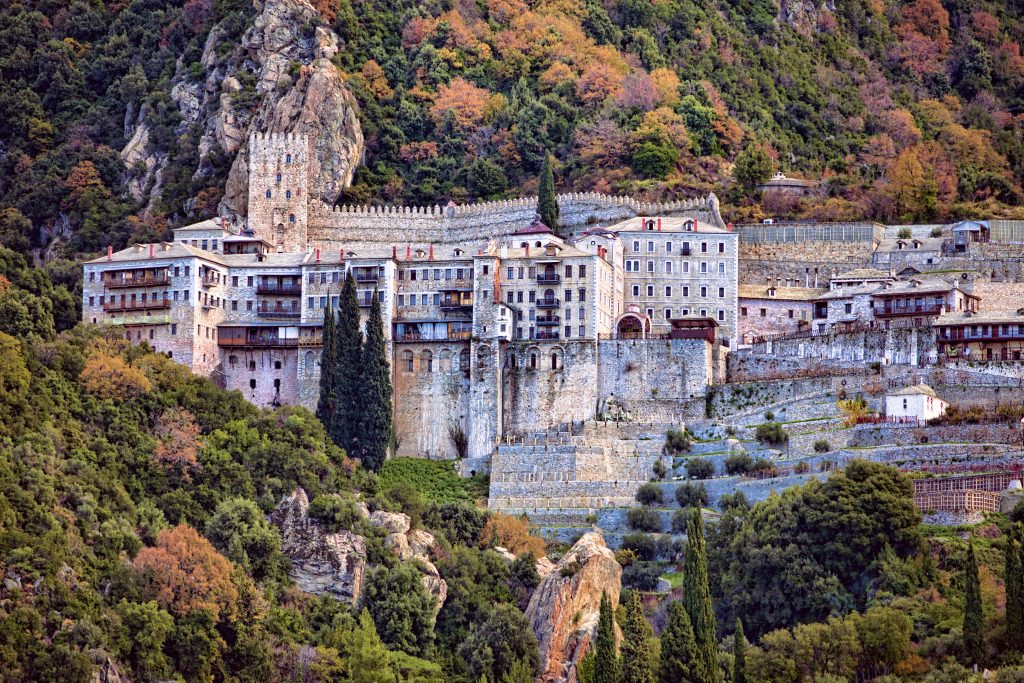
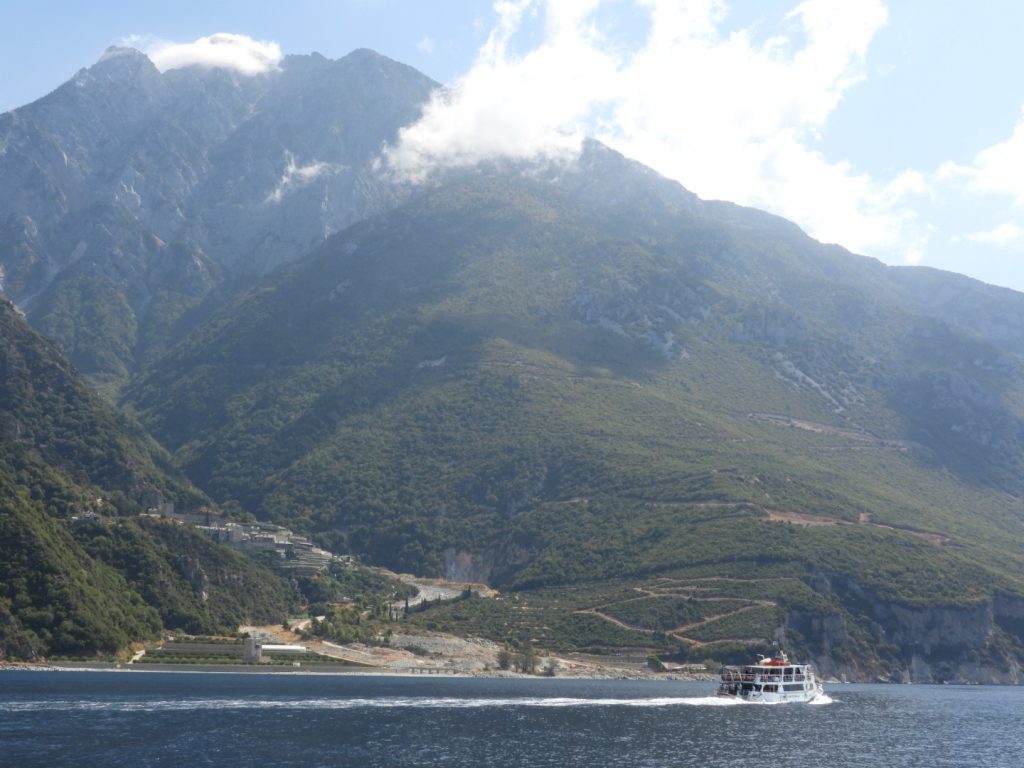
Agios Pavlos Monastery is one of the most distinctive landmarks visible during the coastal journey along Mount Athos, known for its position near the southern edge of the Athonite peninsula. Its setting between mountain slopes and the open sea gives it a balanced presence, neither elevated dramatically nor positioned directly at sea level.
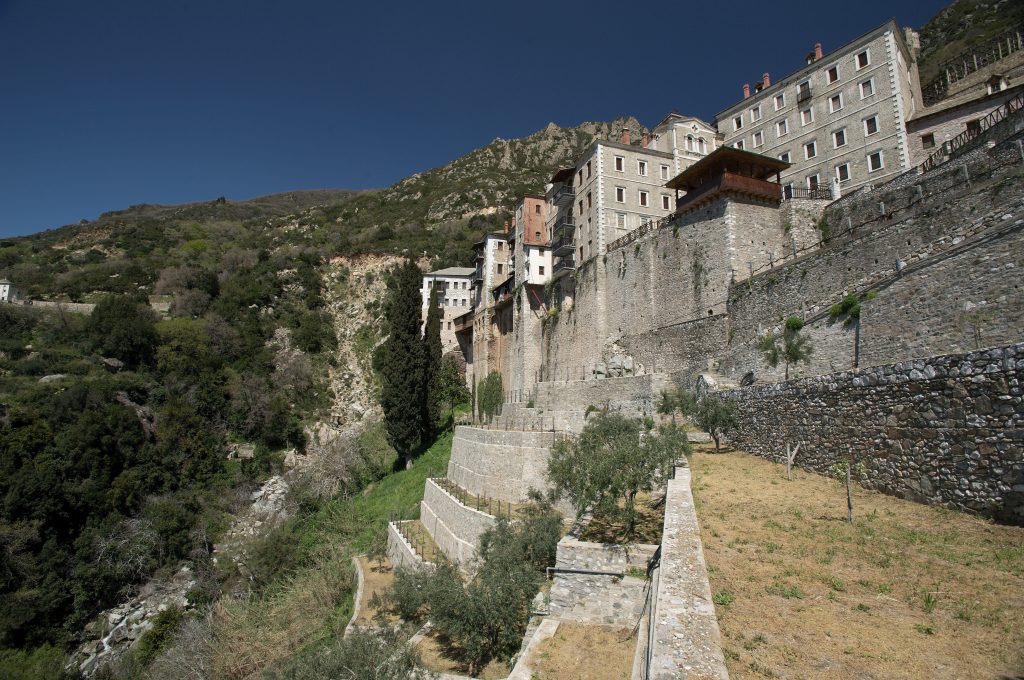
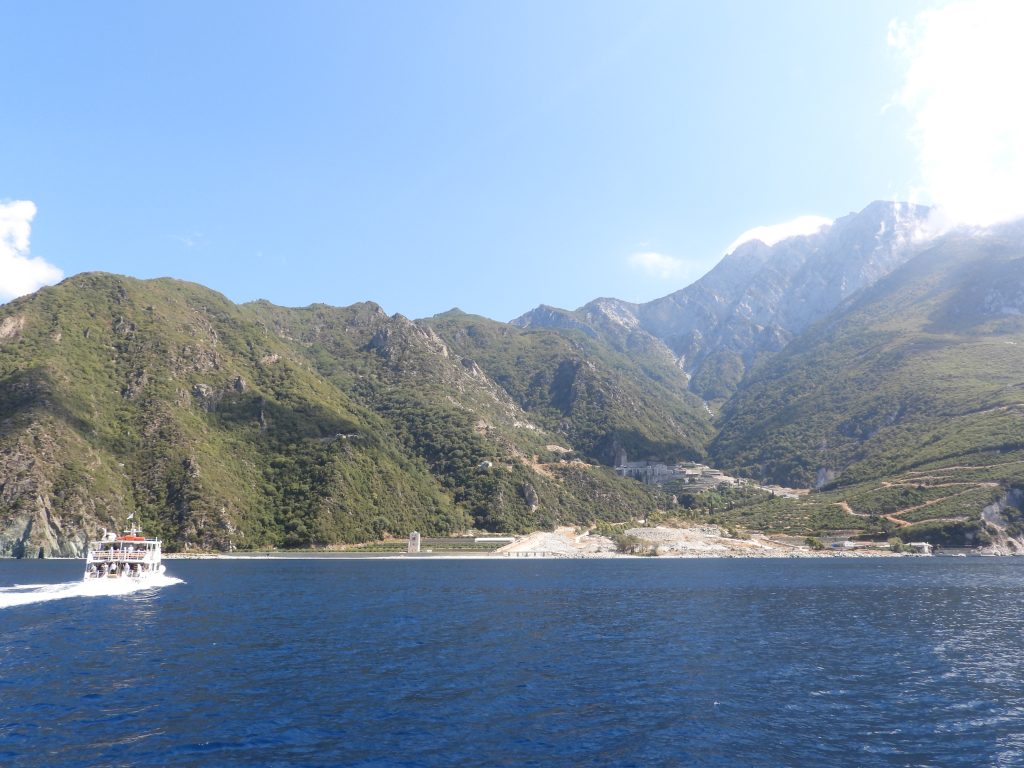
From the water, the monastery appears well integrated into its surroundings, with its structures unfolding naturally along the terrain rather than dominating it.
During Mount Athos cruises, Agios Pavlos Monastery marks a defining moment along the route. Known as the last monastery on the southwestern side, it represents the furthest point reached during the standard coastal sea journey before the vessel begins its return.
Seen from the sea, this position gives the monastery a particular significance. For many visitors, it naturally signals the completion of the outward journey and the transition toward the return passage along the coastline.
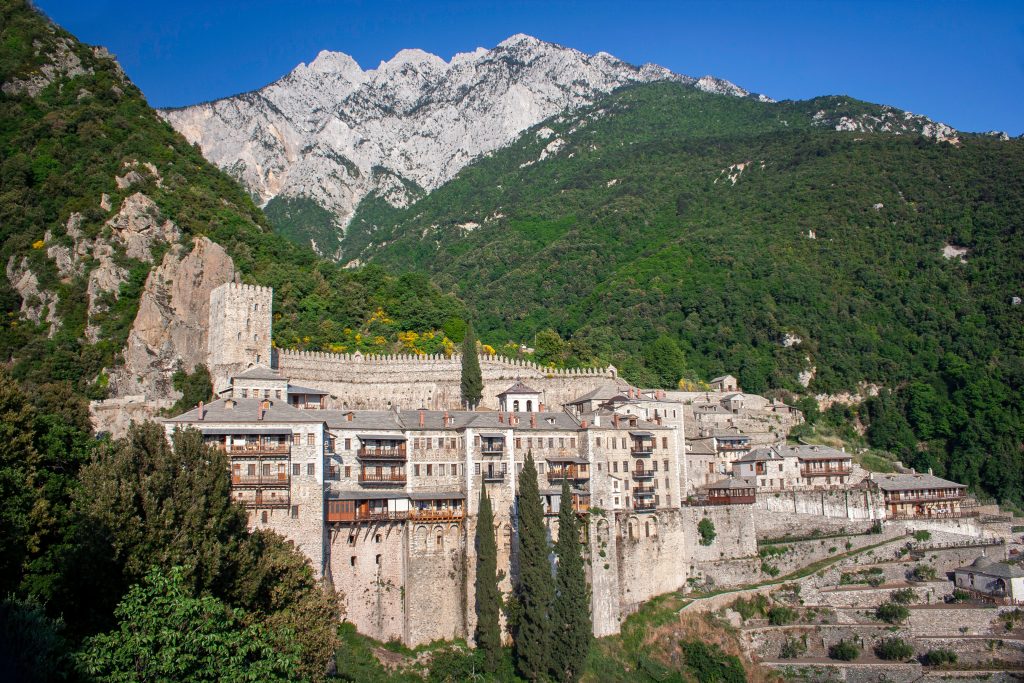
Table of Contents
Where Agios Pavlos Monastery appears on the Mount Athos sea route
During the coastal sea journey along Mount Athos, Agios Pavlos Monastery appears at the southern end of the southwestern route. At this point, the vessel has already passed the main sequence of monasteries visible from the sea, making this encounter feel both distinctive and conclusive.
Seen as the last monastery on the southwestern side, its position marks the furthest point reached during standard Mount Athos cruises before the vessel begins its return. From the water, the monastery is framed by the surrounding slopes of the Athonite landscape, creating a sense of openness compared to earlier sections of the route.
For many passengers, this moment is easy to recognize. The coastline subtly changes character, and the monastery’s placement signals a natural pause in the outward journey. It is here that observation often shifts from anticipation to reflection, as the cruise transitions toward the return passage along the same historic waters.
Why Agios Pavlos Monastery is considered the last monastery on the southwestern side
What defines Agios Pavlos Monastery along the coastal route is its geographical position. Located at the southern end of the southwestern coastline of Mount Athos, it marks the point where the visible sequence of monasteries comes to a natural conclusion.
From the sea, there is a clear sense that the landscape is opening rather than continuing further south. The monastery sits at a transition point between the dense monastic coastline and the broader maritime space beyond. This positioning explains why it is regarded as the last monastery on the southwestern side visible during standard sea journeys.
Unlike monasteries that appear one after another along the coast, Agios Pavlos stands slightly apart, giving it a distinct presence. Its placement signals a boundary rather than a continuation, making it easy for visitors to understand why the cruise changes direction shortly after passing this point.
This geographical role is not symbolic but practical. For centuries, this section of the coastline has marked the natural southern limit of coastal observation, reinforcing the monastery’s position as a defining landmark within the Mount Athos sea route.
What visitors notice when viewing Agios Pavlos from the sea
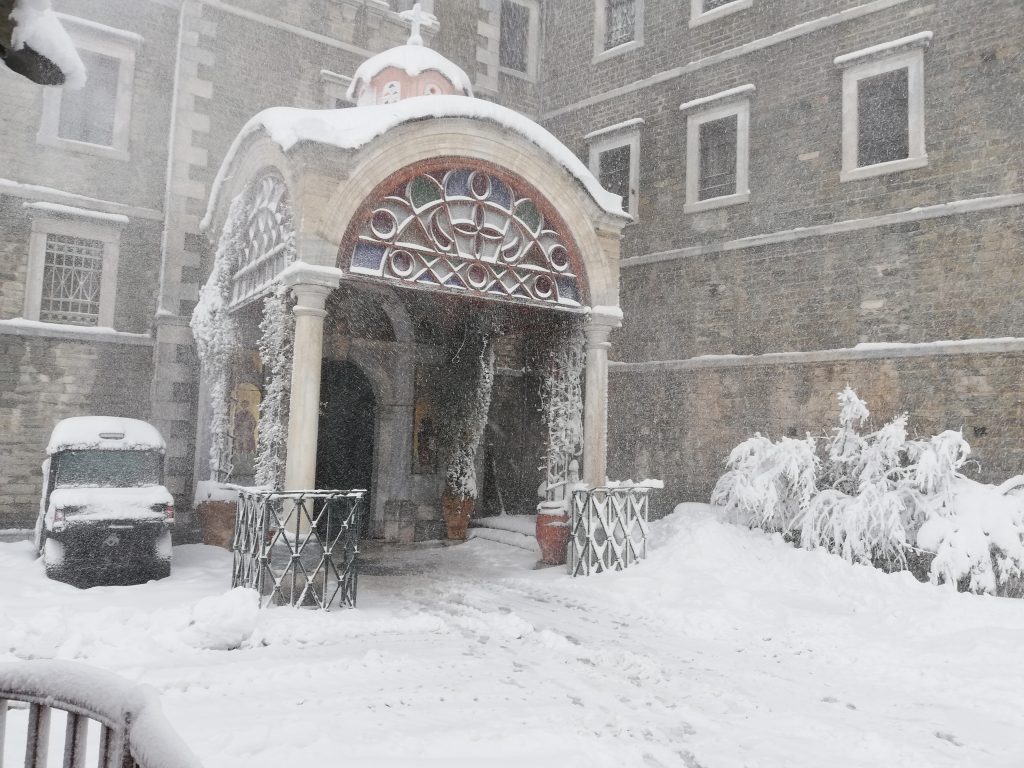
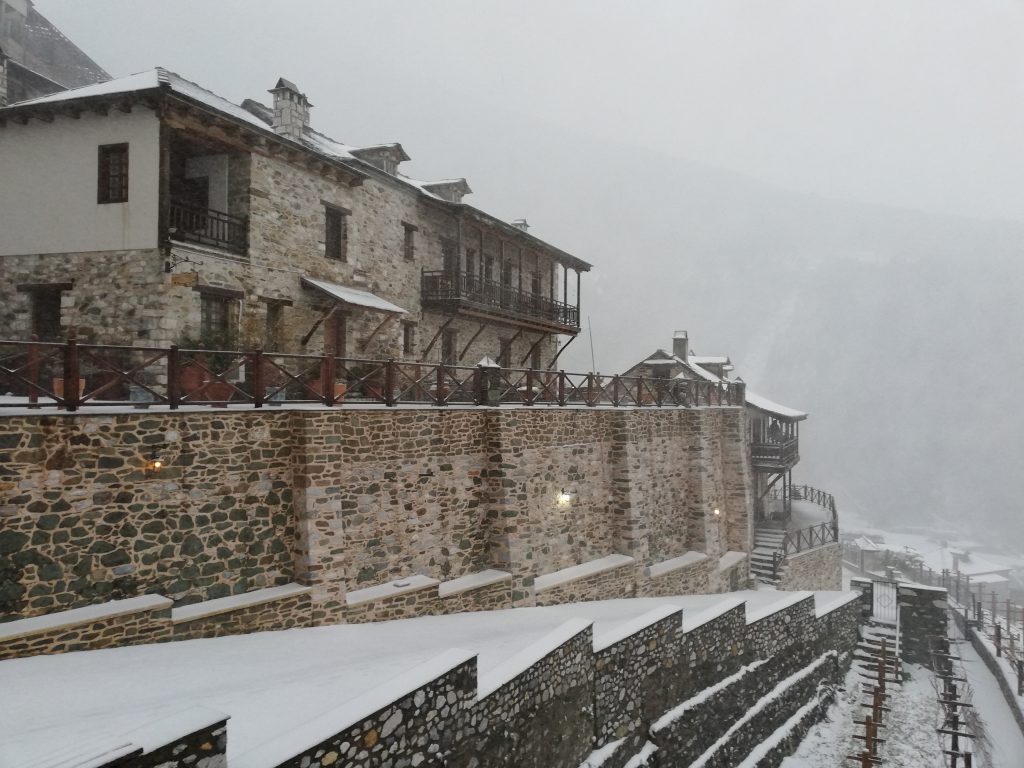
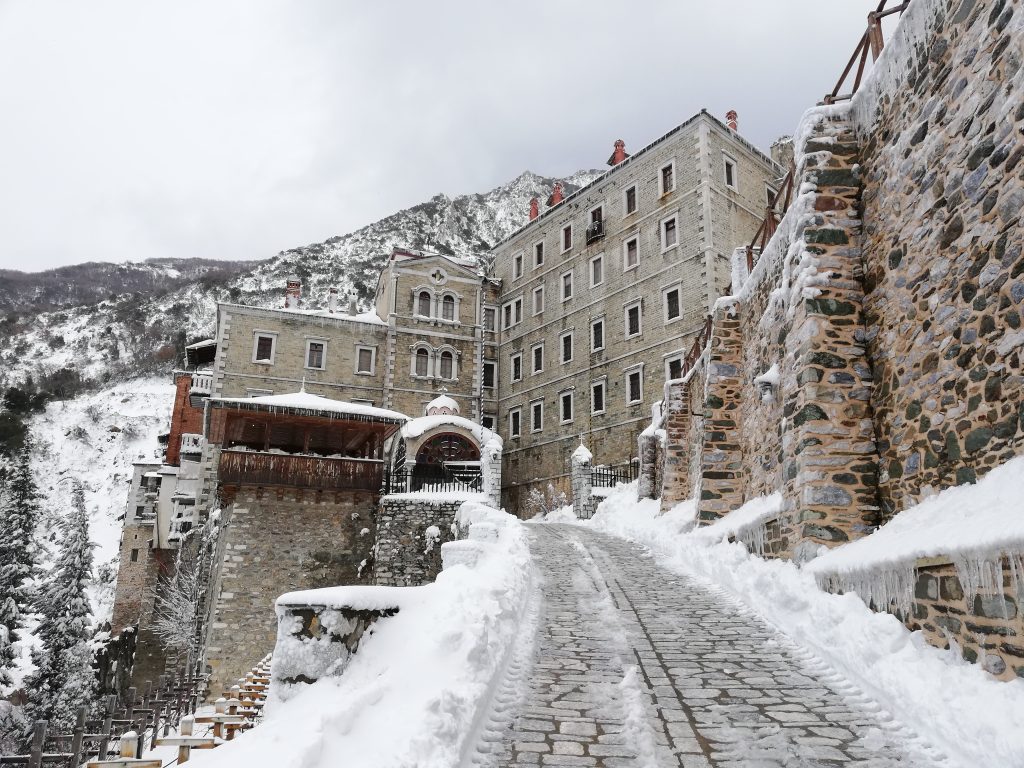
As the vessel approaches this part of the coastline, many visitors notice a sense of openness compared to earlier sections of the route. The monastery appears framed by wider natural surroundings, with the sea and the slopes of Mount Athos creating a more expansive visual field.
From the water, the structure feels balanced rather than imposing. It does not dominate the landscape, nor does it retreat into it. Instead, it sits naturally within its environment, allowing the eye to move easily between the monastery, the coastline and the open sea beyond.
Another detail that often stands out is the feeling of distance from the main monastic sequence. The spacing between landmarks becomes more noticeable here, reinforcing the idea that this is the final point of observation before the journey turns back. This visual pause gives visitors time to absorb what they have seen so far.
For many passengers, this moment feels quietly conclusive. Without dramatic architectural gestures, Agios Pavlos leaves an impression of calm presence and spatial clarity, marking the end of the outward journey along the southwestern side of Mount Athos.
How Agios Pavlos fits into the Mount Athos cruise experience
Within the overall flow of the journey, Agios Pavlos represents a natural point of completion. By the time the vessel reaches this section of the coastline, visitors have already observed the full sequence of monasteries along the southwestern side, making this moment feel calm and reflective rather than anticipatory.
In the context of Mount Athos cruises, this monastery often coincides with a shift in atmosphere. Attention moves away from discovering what comes next and toward absorbing what has already been seen. The landscape feels more open, and the pace of observation becomes slower and more contemplative.
This transition plays an important role in shaping the overall experience. Agios Pavlos does not stand out through dramatic height or defensive architecture, but through its position as a quiet marker of the route’s southern limit. It helps visitors understand the structure of the journey itself — an outward exploration followed by a gradual return along the same historic waters.
Those wishing to see how Agios Pavlos fits within the broader sequence of coastal landmarks can explore the complete overview of Mount Athos cruises, which explains the route and the progression of monasteries visible from the sea.
The history and spiritual significance of Agios Pavlos Monastery
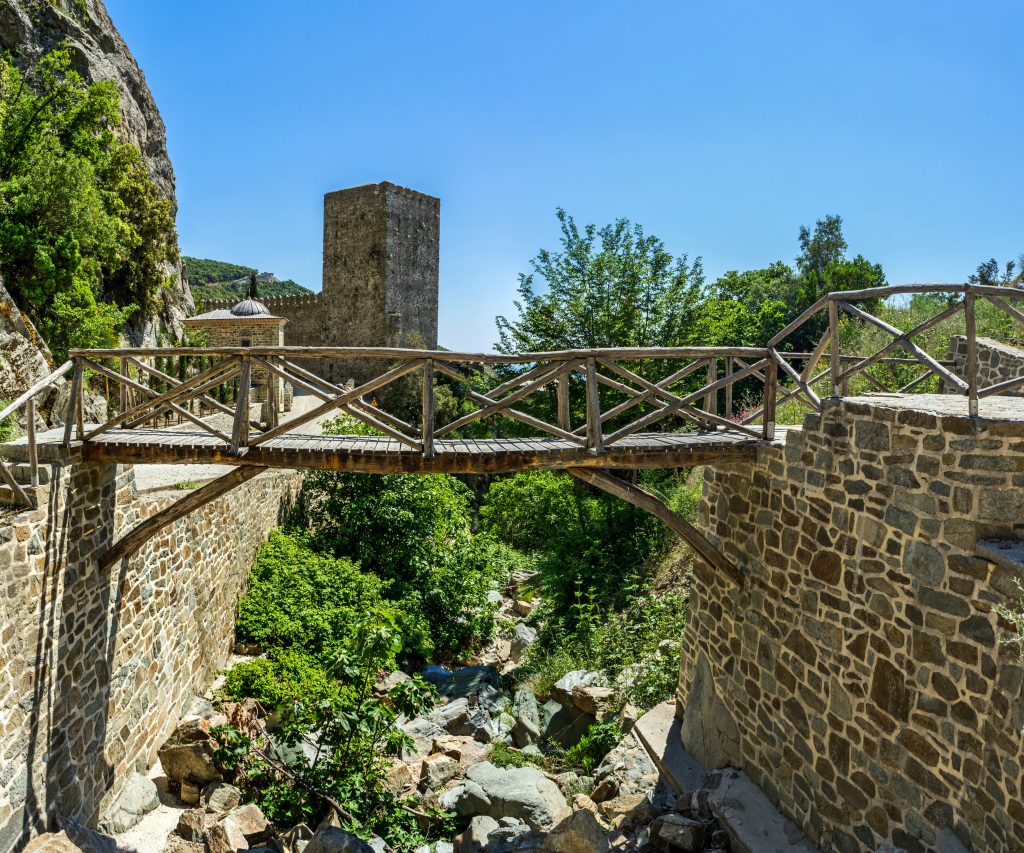
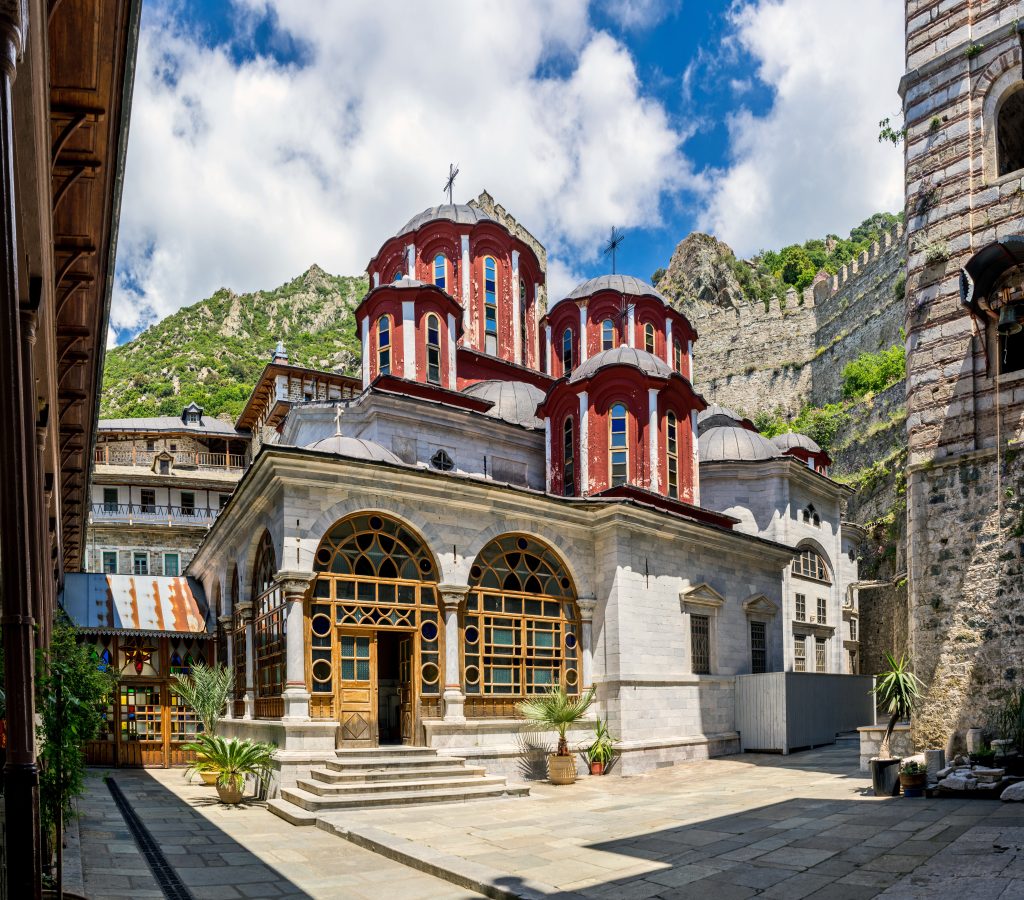
Agios Pavlos Monastery was founded in the 10th century by Saint Paul of Xeropotamou, a monk who sought a place of spiritual retreat at the southern edge of the Athonite peninsula. Over time, the monastery developed into an important spiritual center, benefiting from its position near the sea while maintaining a strong sense of isolation.
The monastery’s history is closely connected to periods of growth and rebuilding. Like many Athonite monasteries, it faced challenges from natural disasters and historical upheavals, yet it continued to evolve while preserving its spiritual identity. Its location at the southern end of the route reinforced its role as both a spiritual destination and a geographical reference point.
Monastic identity and daily life
Agios Pavlos is a Greek Orthodox monastery and remains an active monastic community today. It is home to a small brotherhood of monks who follow the traditional Athonite way of life, centered on prayer, communal worship and daily labor.
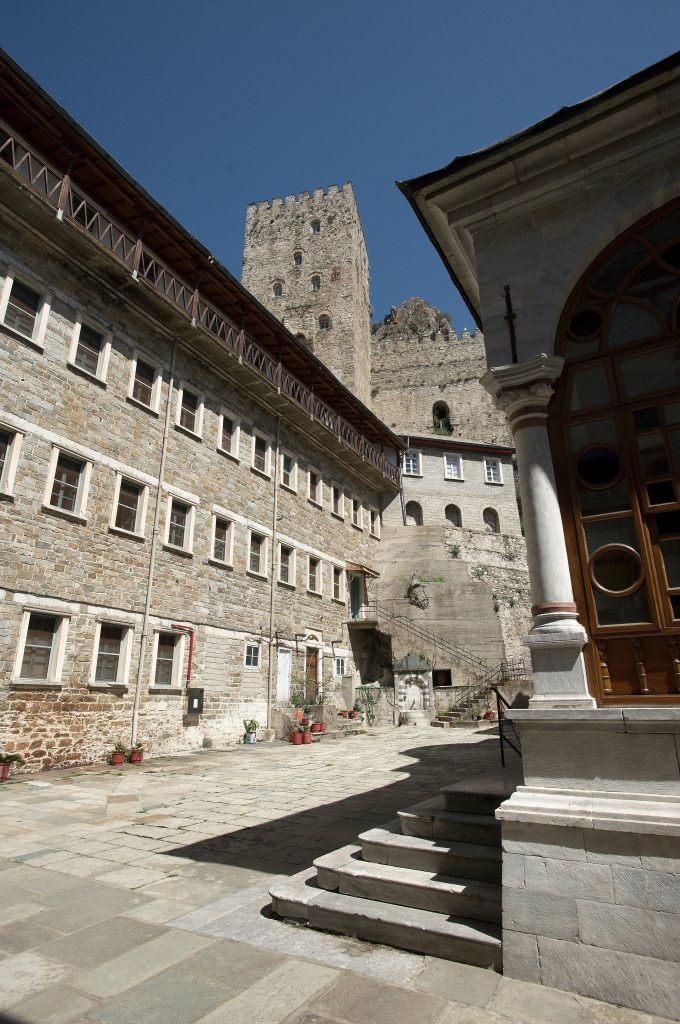
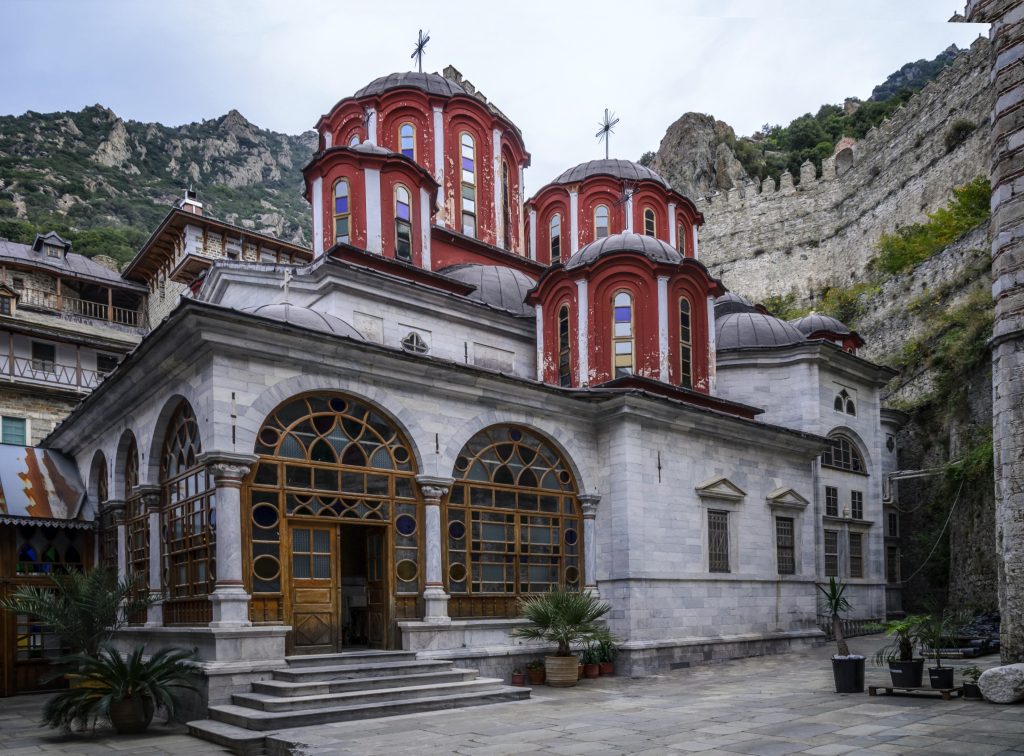
Although visitors observing from the sea cannot see the interior spaces, the monastery’s layout suggests a carefully organized inner world. Chapels, communal areas and monastic cells support a rhythm of life that emphasizes discipline, silence and spiritual focus, continuing a tradition that has endured for centuries.
Sacred treasures and relics preserved at Agios Pavlos
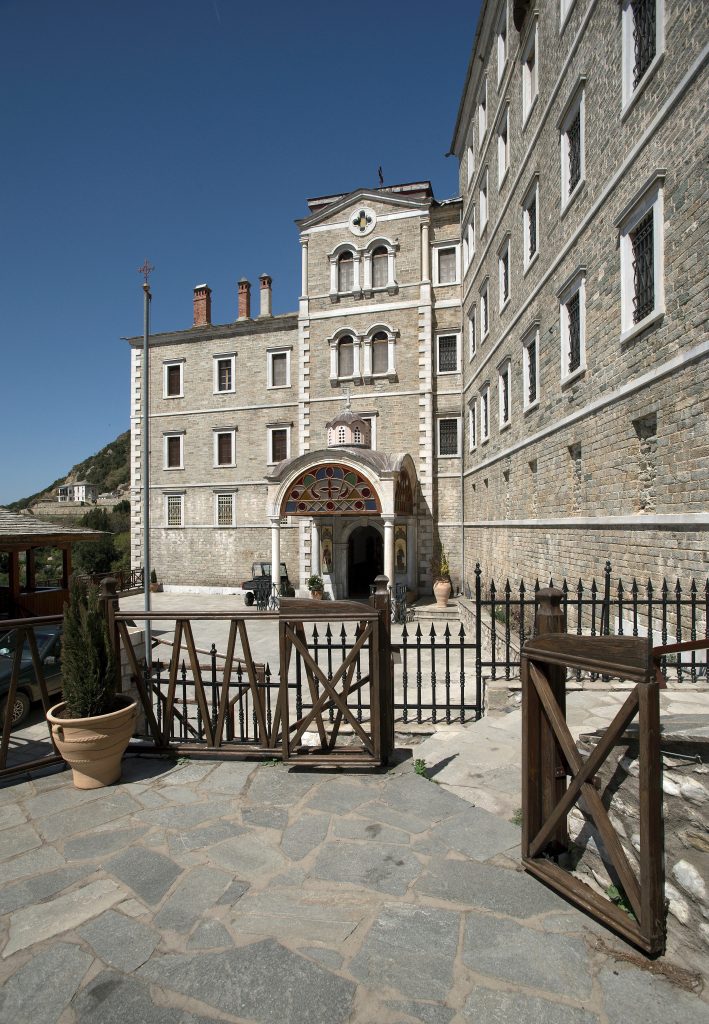
Agios Pavlos Monastery occupies a unique position within Mount Athos due to the preservation of some of the most significant sacred relics in Orthodox Christianity. These treasures define the monastery’s spiritual importance far beyond its coastal appearance.
The Gifts of the Magi
At the spiritual heart of Agios Pavlos lies the preservation of the Gifts of the Magi — gold, frankincense and myrrh — traditionally believed to have been offered to Christ at His Nativity. These sacred relics are among the most revered treasures of the Holy Mountain and are directly associated with one of the foundational moments of Christian tradition.
The Gifts of the Magi are preserved with great care and veneration, making Agios Pavlos a monastery of exceptional spiritual significance. Their presence has drawn monks, pilgrims and deep devotion for centuries, reinforcing the monastery’s role as a guardian of sacred heritagemonastery’s spiritual identity, linking it directly to foundational moments of Christian tradition.
Holy relics of saints preserved at Agios Pavlos
Beyond the preservation of the Gifts of the Magi, Agios Pavlos Monastery safeguards a significant collection of holy relics of saints, which form a vital part of its spiritual and liturgical life.
Among the most important relics preserved within the monastery are relics of:
- Saint John Chrysostom – one of the most influential Church Fathers, renowned for his theological writings and liturgical contribution
- Saint Gregory the Theologian – a central figure of Orthodox doctrine and one of the Cappadocian Fathers
- Saint Basil the Great – a foundational figure of monasticism and ecclesiastical organization
- Saint George the Trophy-Bearer – widely venerated as a protector and intercessor
- Saint Paraskevi – honored for healing and spiritual strength
These relics are venerated during major feast days and services, reinforcing the monastery’s role as a place of deep prayer and spiritual continuity. Their presence complements the monastery’s most renowned treasures and strengthens its position as one of the most spiritually significant monasteries on Mount Athos.
Sacred icons and devotional heritage
The monastery also safeguards venerated icons, particularly icons of the Virgin Mary, which play a central role in daily worship and monastic devotion. These icons are treated not as historical artifacts, but as living expressions of faith, deeply integrated into the spiritual rhythm of the monastery.
Their presence adds to the monastery’s identity as a place of quiet reverence and deep spiritual focus.
Manuscripts and ecclesiastical heritage
Agios Pavlos Monastery preserves a valuable collection of manuscripts and ecclesiastical documents, including:
- liturgical texts
- theological writings
- historical records related to the monastery
These manuscripts contribute to Mount Athos’ long-standing role as a center for the preservation of Orthodox learning and spiritual tradition.
Liturgical vessels and sacred objects
Among the monastery’s treasures are important liturgical objects, such as:
- sacred vessels used in major services
- crosses and censers
- embroidered vestments crafted for liturgical use
These items reflect centuries of devotional craftsmanship and remain in active use, reinforcing the monastery’s living spiritual character.
Why these treasures matter to the visitor
Although these sacred treasures are not visible during a sea journey, understanding what is preserved within the walls of Agios Pavlos adds depth to the coastal viewing experience. The monastery seen from the water shelters a spiritual heritage connected directly to the origins of Christian faith.
For many readers, this knowledge transforms the moment of observation into a deeper appreciation of Agios Pavlos as one of the most spiritually significant monasteries of Mount Athos.
This landmark belongs to a unique spiritual territory shaped by centuries of monastic presence, explored further in a comprehensive guide to Mount Athos.
Closing – Seeing Agios Pavlos Monastery with understanding
Viewing Agios Pavlos from the sea carries a distinct sense of completion. Positioned at the southern edge of the southwestern coastline, the monastery feels less like a passing landmark and more like a quiet conclusion to the outward journey.
Its balanced presence, framed by open sea and surrounding slopes, invites reflection rather than spectacle. For many visitors, this moment naturally marks the transition from discovery to contemplation, as the cruise begins its return along the same historic waters of Mount Athos.
Readers interested in an overview of all monasteries of the Holy Mountain can explore a comprehensive guide covering the full monastic landscape of Mount Athos here.
How visitors can view Agios Pavlos Monastery from the sea
Visitors can observe Agios Pavlos Monastery as part of a coastal sightseeing journey along the Holy Mountain. One of the established sea routes departs from Ouranoupoli and follows the traditional southwestern passage, reaching this monastery as the final landmark before the return.
More details about the route, sailing schedule and availability are available on the Mount Athos coastal cruise from Ouranoupoli.
Frequently Asked Questions about Agios Pavlos Monastery
Why is Agios Pavlos considered the last monastery on the southwestern side?
Its geographical position at the southern end of the visible coastal route makes it the final monastery observed during standard Mount Athos sea journeys.
Is Agios Pavlos an active monastery today?
Yes. Agios Pavlos is a Greek Orthodox monastery with an active monastic community following the traditional Athonite way of life.
What important relics are kept at Agios Pavlos Monastery?
The monastery preserves highly revered relics, including the Gifts of the Magi, as well as holy relics of saints and sacred icons.
Can visitors enter Agios Pavlos during a cruise?
No. Visitors observe the monastery exclusively from the sea. Entry to the monastery is only possible with the official Mount Athos access permit.
Did you find our post helpful?
- Was this post helpfull?
- Rate us on TripAdvisor
This article made by https://lnk.bio/Rodokalakis
