

The dafni port of mount athos is the main maritime gateway of the Holy Mountain and the central point through which Mount Athos connects with the outside world. Unlike the monasteries that line the coastline, Dafni functions as a working port, supporting the daily needs, transportation and logistics of the Athonite monastic state.
Seen from the sea, Dafni immediately feels different. Its harbor infrastructure, docked vessels and functional buildings clearly reflect its role as the operational heart of Mount Athos rather than a place of contemplation or worship.
The dafni port of mount athos is the main maritime gateway of the Holy Mountain and the central point through which Mount Athos connects with the outside world. Unlike the monasteries that line the coastline, Dafni functions as a working port, supporting the daily needs, transportation and logistics of the Athonite monastic state.
Seen from the sea, Dafni immediately feels different. Its harbor infrastructure, docked vessels and functional buildings clearly reflect its role as the operational heart of Mount Athos rather than a place of contemplation or worship.
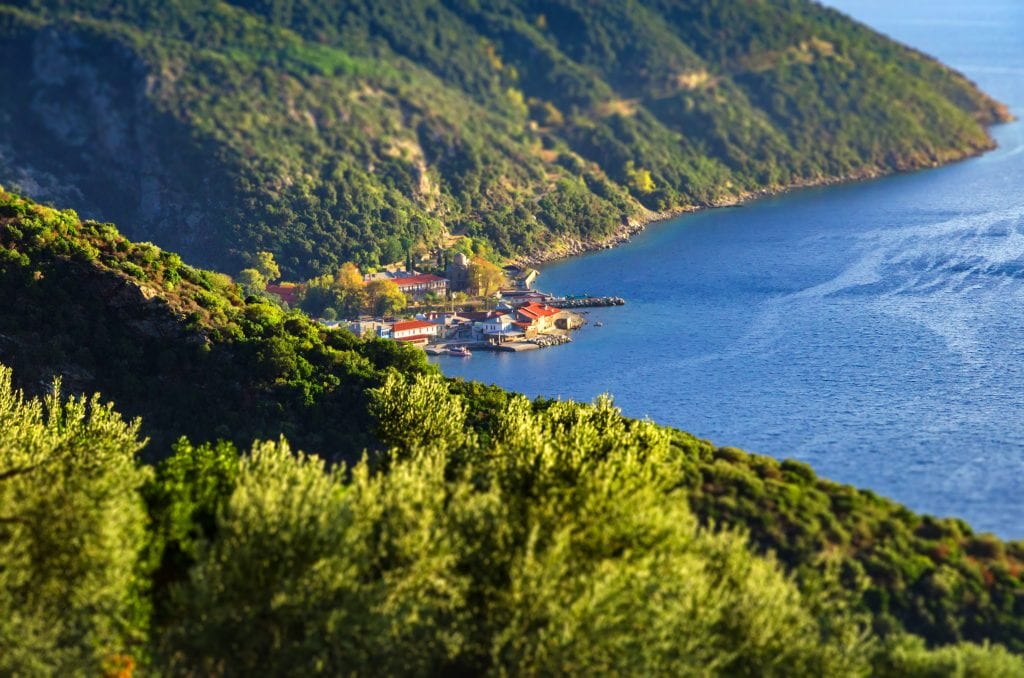
Table of Contents
The role of the dafni port of mount athos within the Athonite coastline
Geographically positioned along the western coastline of the peninsula, the dafni port of mount athos serves as the central maritime reference point of the Holy Mountain. Its location allows it to function as a natural hub between the monasteries of the southwestern coast and the wider Aegean Sea.
Unlike the monastic complexes that appear one after another along the shoreline, Dafni introduces a different layer of the Athonite landscape. It represents coordination, movement and supply rather than isolation. From a coastal perspective, this distinction is immediately visible, helping observers understand how the monastic world operates beyond prayer and contemplation.
As the mount athos main port, Dafni connects sea routes with inland paths leading to monasteries, sketes and administrative centers. This role makes it indispensable to the daily rhythm of Mount Athos, even though it remains visually and functionally separate from the spiritual landmarks seen during a cruise.
For visitors observing the coastline, Dafni acts as a reference point that ties together geography, logistics and monastic life, completing the narrative of Mount Athos as both a sacred and fully functioning community.
What visitors notice when viewing Dafni from the sea
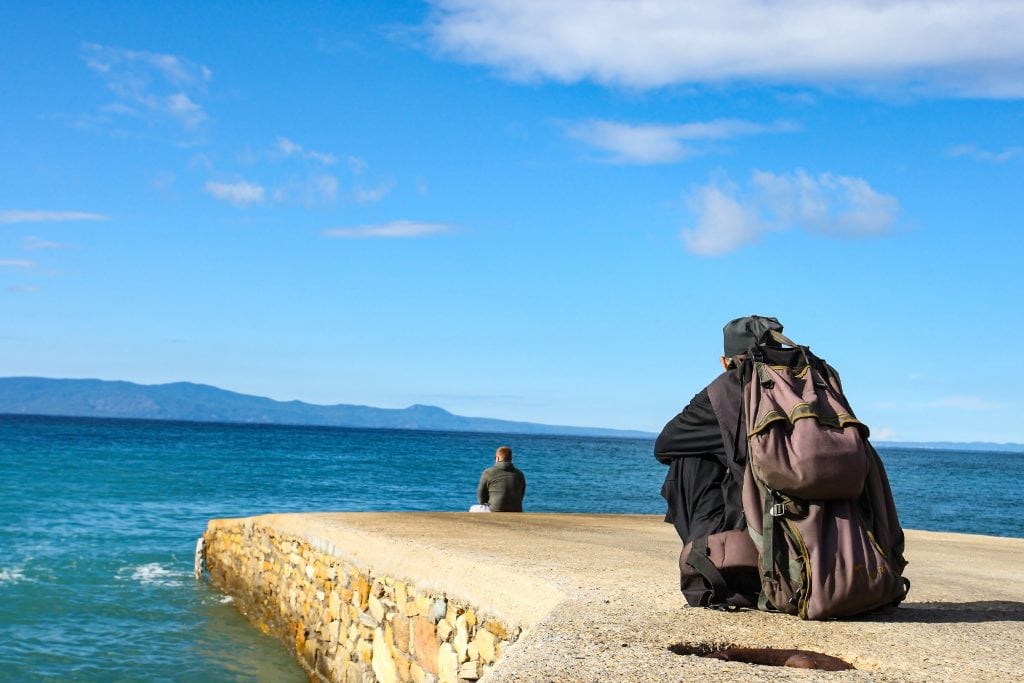
As the vessel approaches this part of the coastline, visitors immediately notice that Dafni looks fundamentally different from the monasteries observed along the route. Instead of fortified walls or monastic complexes, the scene is defined by a working harbor with docks, vessels and functional buildings.
From the sea, the activity of the port becomes apparent. Boats arrive and depart, supplies are unloaded, and the layout reflects efficiency rather than symbolism. This practical character often surprises visitors, especially after observing the quiet and self-contained monasteries that dominate the surrounding coastline.
Another element that stands out is the sense of scale and openness. Dafni does not rise above the sea or retreat into the landscape. Instead, it spreads horizontally, emphasizing accessibility and movement. This visual contrast helps underline its role as a place of connection rather than contemplation.
For many passengers, this moment provides clarity. Dafni reveals the operational side of Mount Athos, offering insight into how the monastic world sustains itself beyond its spiritual and architectural landmarks.
How the dafni port of mount athos fits into the Mount Athos cruise experience
Within the overall flow of the coastal journey, the dafni port of mount athos introduces an important shift in perspective. After observing a sequence of monasteries defined by silence, enclosure and spiritual focus, Dafni reveals the practical infrastructure that supports this unique monastic world.
In the context of Mount Athos cruises, Dafni is not a destination but a point of understanding. It helps visitors grasp how the monasteries they see from the sea are supplied, connected and sustained. This realization often deepens the overall experience, transforming the cruise from a purely visual journey into a more comprehensive narrative.
As the mount athos main port, Dafni ties together maritime routes, inland paths and administrative functions. Seeing it from the sea allows visitors to connect the spiritual and logistical dimensions of Mount Athos, completing the picture of the Holy Mountain as both a sacred and living community.
This moment along the route often acts as a bridge between observation and comprehension, helping passengers contextualize everything they have seen before and after along the Athonite coastline.
For travelers who wish to better understand how Dafni fits into the broader maritime experience of the Holy Mountain, an overview of the available Mount Athos cruises and sea tours provides helpful context about routes, perspectives and the overall structure of coastal journeys around Mount Athos.
Access and restrictions at the dafni port of mount athos
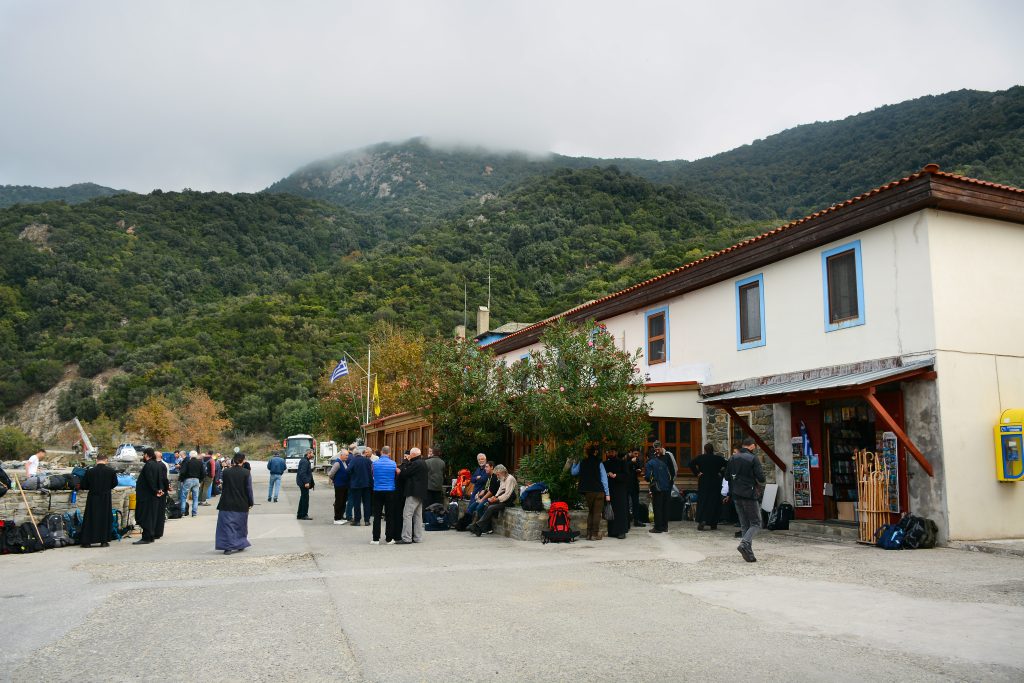
Access to the dafni port of mount athos is strictly regulated, reflecting the unique administrative and spiritual status of Mount Athos. Dafni is not a public port in the conventional sense, nor is it intended as a tourist destination. Entry is permitted only to individuals who hold the official Mount Athos access permit.
The port primarily serves monks, workers, authorized visitors and administrative personnel. All arrivals and departures are controlled, ensuring that the monastic life of the Holy Mountain remains protected from unrestricted access and external disruption.
For cruise passengers, Dafni remains a point of observation rather than entry. Vessels following the coastal sightseeing route pass by the port without stopping, allowing visitors to understand its role while respecting the restrictions that govern Mount Athos.
These access limitations are essential to preserving the spiritual and administrative integrity of the Athonite monastic state. Dafni’s regulated character reinforces its function as a gateway for those officially permitted, while maintaining distance from general tourism.
Dafni as a connecting point between monasteries and the sea
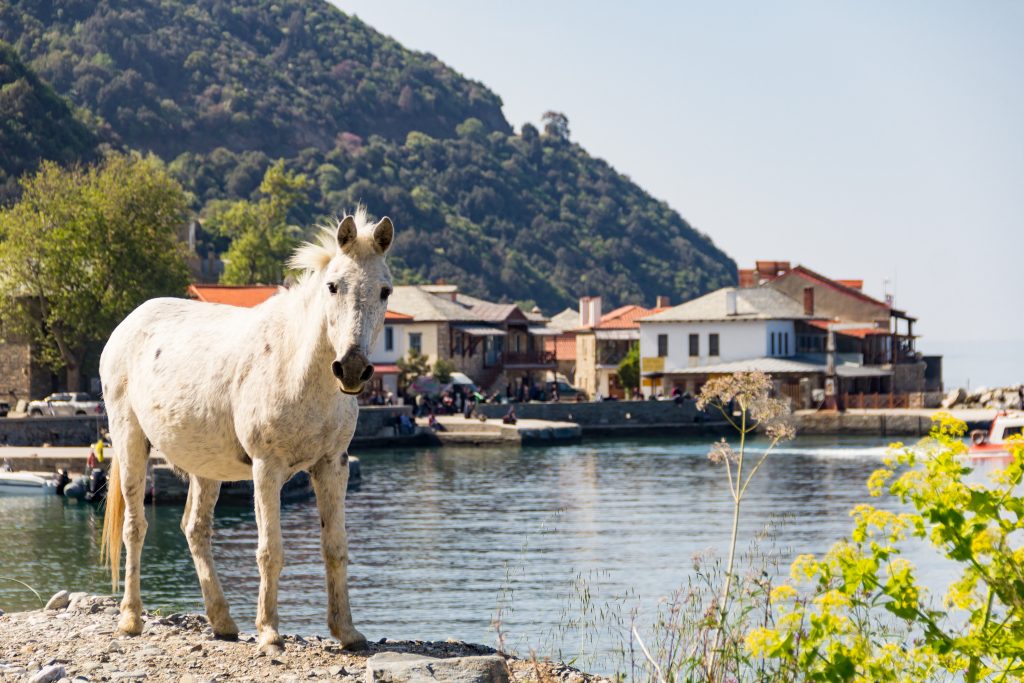
The dafni port of mount athos functions as the central link between the monasteries of the Holy Mountain and the surrounding maritime world. While the monasteries line the coastline as places of prayer and spiritual withdrawal, Dafni provides the practical connection that allows this monastic network to operate as a whole.
From the sea, Dafni visually connects everything the visitor observes during the journey. Supplies destined for monasteries, movements of monks and authorized visitors, and administrative coordination all pass through this port before dispersing inland. In this sense, Dafni acts as the logistical thread that binds the isolated monastic landscape into a functioning community.
For visitors following the coastal route, recognizing Dafni’s role helps complete the narrative of Mount Athos. The monasteries no longer appear as isolated landmarks, but as parts of a carefully organized system sustained by maritime access and coordination.
This understanding adds depth to the sea journey, transforming Dafni from a simple harbor into a key element of the Athonite story.
This location forms part of a much larger spiritual landscape, which is explored in more detail through a comprehensive overview of Mount Athos and its centuries-old monastic heritage.
Closing – Understanding the dafni port of mount athos
Seeing the dafni port of mount athos from the sea completes the picture of the Holy Mountain as both a sacred and fully functioning monastic community. While the monasteries embody spiritual devotion and centuries of tradition, Dafni represents the practical foundation that allows this unique world to exist uninterrupted.
Understanding Dafni’s role adds essential context to the coastal journey. It reveals how prayer, isolation and monastic discipline are supported by carefully organized maritime access, connecting the spiritual landscape of Mount Athos with the realities of daily life.
Readers interested in an overview of all monasteries of the Holy Mountain can explore a comprehensive guide covering the full monastic landscape of Mount Athos here.
How visitors encounter Dafni during a coastal cruise
The dafni port of mount athos is visible during the traditional coastal sea route that departs from Ouranoupoli and follows the southwestern passage of the Holy Mountain. This journey allows visitors to observe both the monasteries and the central port, offering a complete overview of the Athonite coastline.
Details about the route, sailing schedule and availability can be found on the Mount Athos coastal cruise from Ouranoupoli:
👉 https://athos-cruises.gr/cruise-1-ouranoupolis-to-mount-athos/
Frequently Asked Questions about Dafni
What is the dafni port of mount athos?
Dafni is the main maritime gateway and logistical hub of Mount Athos, supporting transportation, supplies and authorized access to the Holy Mountain.
Is Dafni a monastery?
No. Dafni is not a monastery. It is a working port that serves the administrative and logistical needs of the Athonite monastic community.
Can visitors enter Dafni during a cruise?
No. Cruise passengers observe Dafni from the sea only. Entry to the port is restricted to individuals holding the official Mount Athos access permit.
Why is Dafni important to Mount Athos?
Dafni connects the monasteries with the sea, ensuring the movement of people, goods and supplies while preserving the isolation and spiritual integrity of Mount Athos.
Did you find our post helpful?
- Was this post helpfull?
- Rate us on TripAdvisor
This article made by https://lnk.bio/Rodokalakis
