

Dochiariou Monastery is one of the most recognizable landmarks along the southwestern coastline of Mount Athos, closely associated with one of the most revered icons of the Holy Mountain. Known as the monastery of Panagia Gorgoepikoos, it carries a strong spiritual identity that is deeply rooted in Athonite tradition.
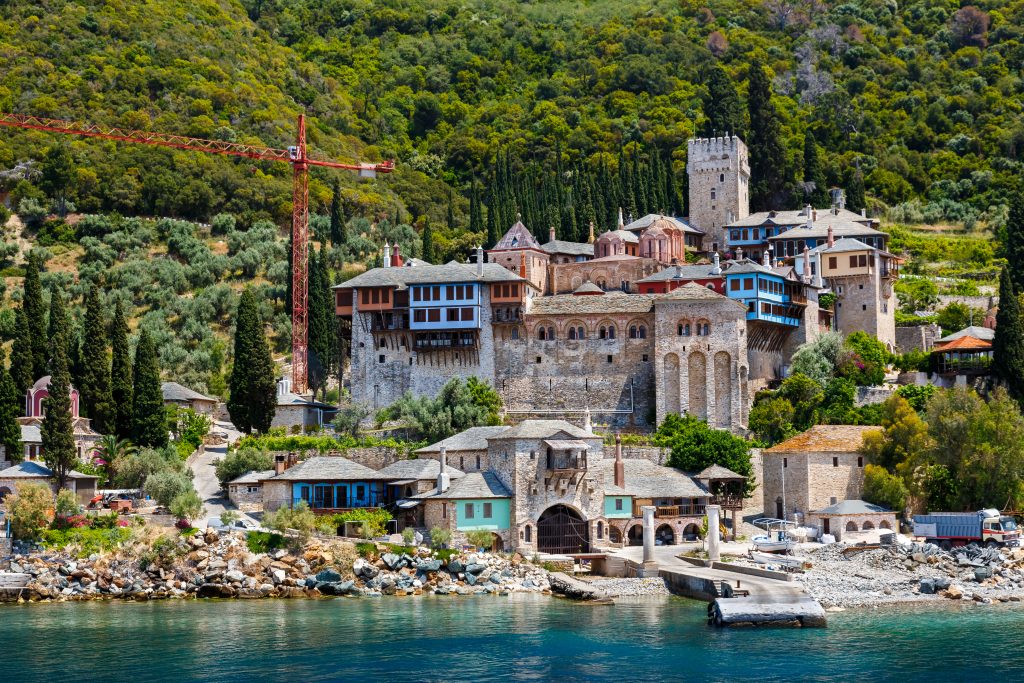
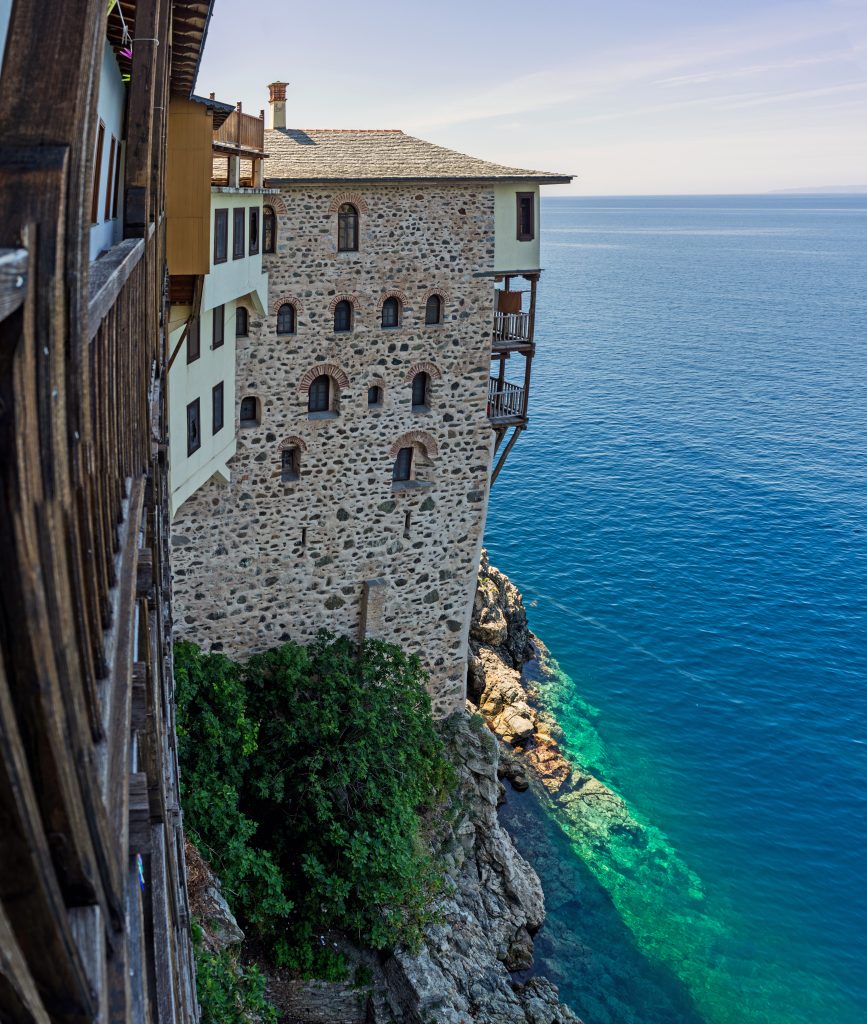
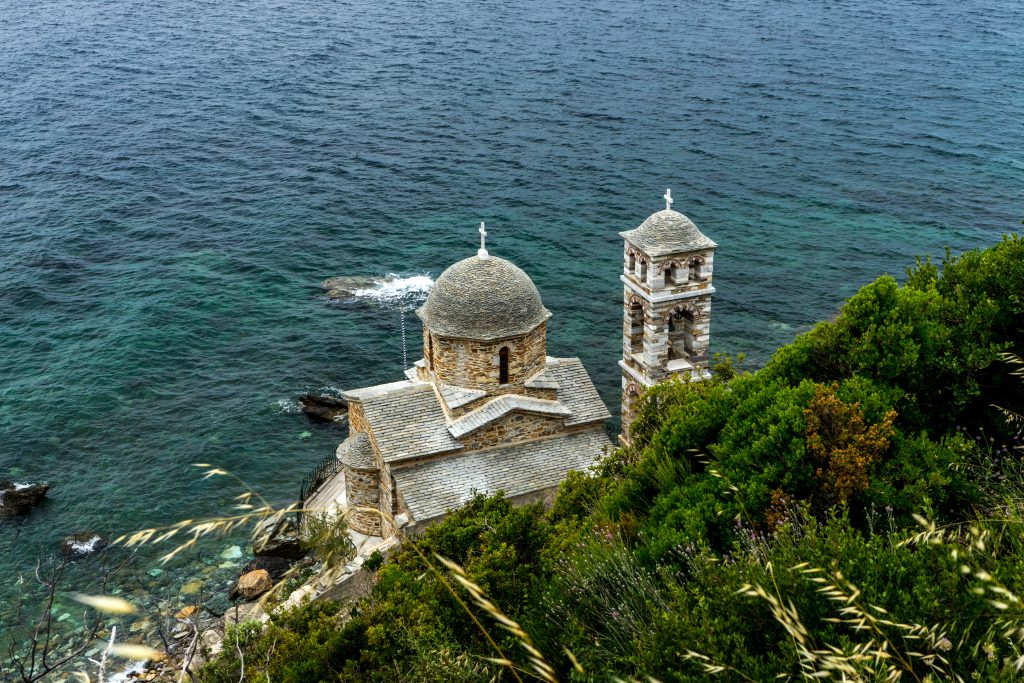
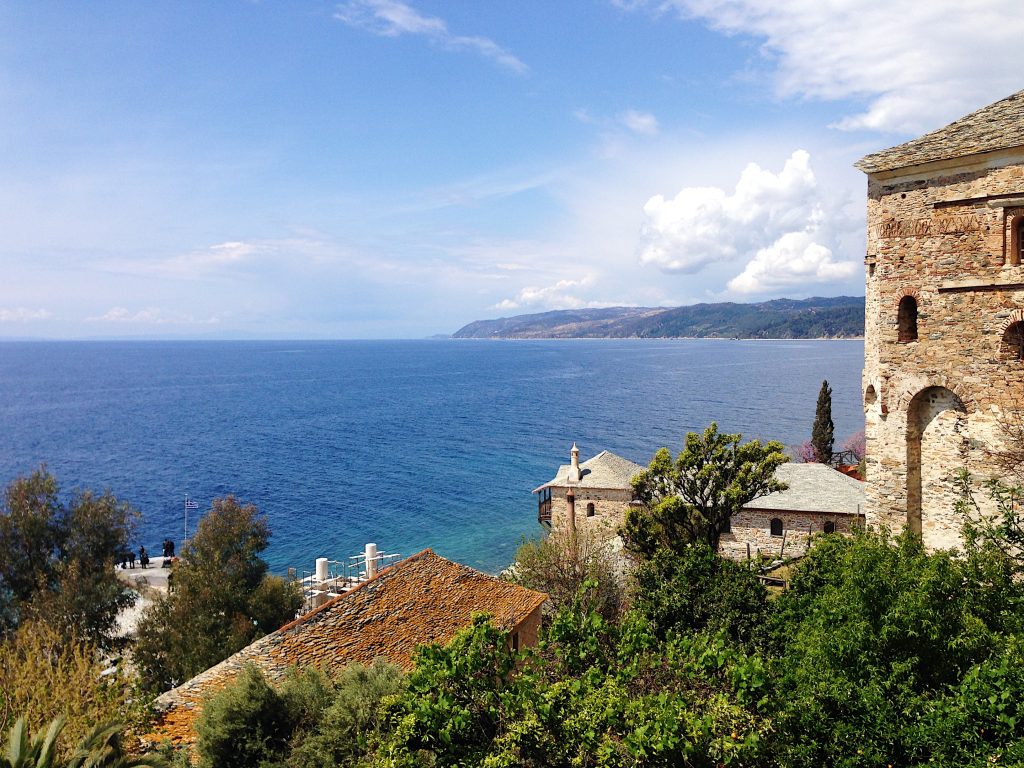
From the sea, the monastery presents a balanced and composed appearance. Its buildings extend naturally along the coastline, creating a clear visual connection between monastic life and the maritime environment that has supported it for centuries.
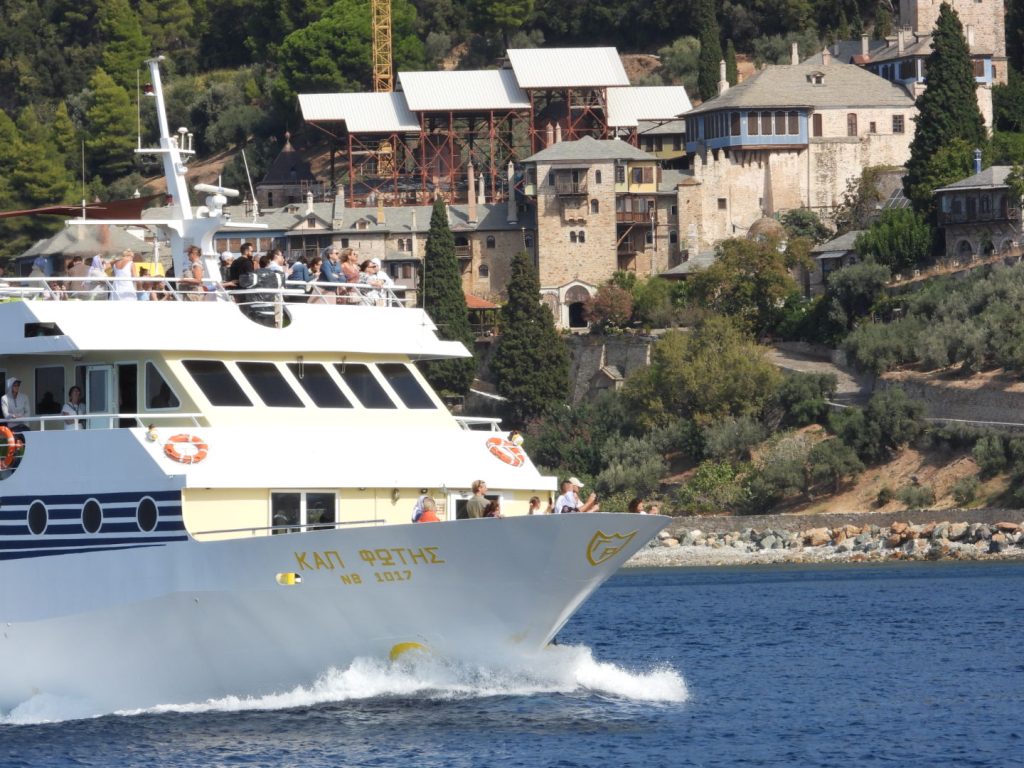
Because access to Mount Athos is limited, Dochiariou Monastery is experienced by most visitors from the water. During Mount Athos cruises, its position allows for a clear and steady view, giving passengers time to observe both the structure itself and its relationship with the surrounding shoreline.
Seen from the vessel, the presence of Panagia Gorgoepikoos adds a distinct spiritual dimension to the experience. Even without entering the monastery, visitors become aware that this is a place closely associated with prayer, devotion and one of the most beloved icons of Orthodox Christianity.
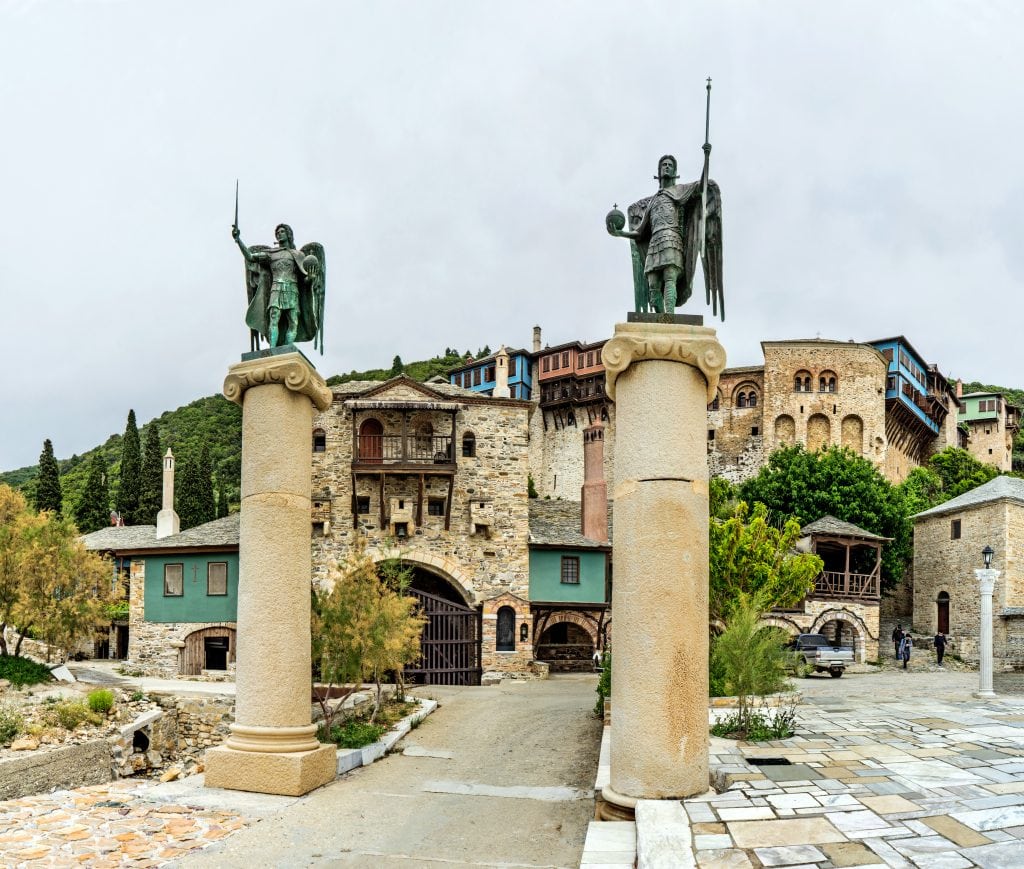
Table of Contents
Where Dochiariou Monastery appears on the Mount Athos sea route
During the coastal sea journey along Mount Athos, Dochiariou Monastery appears along the southwestern side of the peninsula, at a point where the coastline becomes more structured and clearly defined. As the vessel approaches this section of the route, the monastery gradually comes into view, positioned close enough to the sea to allow uninterrupted observation from the water.
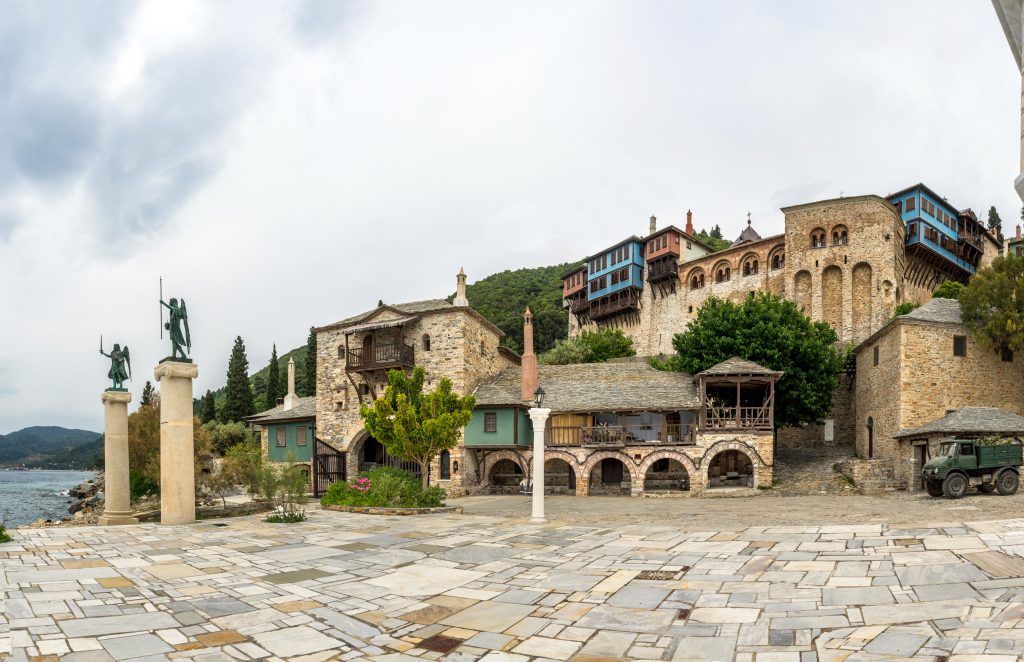
Its location offers passengers a stable and prolonged visual encounter. From the vessel, the monastery’s buildings unfold horizontally along the shoreline, emphasizing continuity rather than elevation. This positioning allows visitors to clearly distinguish architectural elements while maintaining a calm and steady pace along the route.
For many passengers, this point in the journey feels familiar and reassuring. The monastery’s accessible placement along the coast reinforces the sense of progression through the southwestern monasteries, preparing visitors for the sequence of landmarks that follow.
Why Dochiariou is known as the monastery of Panagia Gorgoepikoos
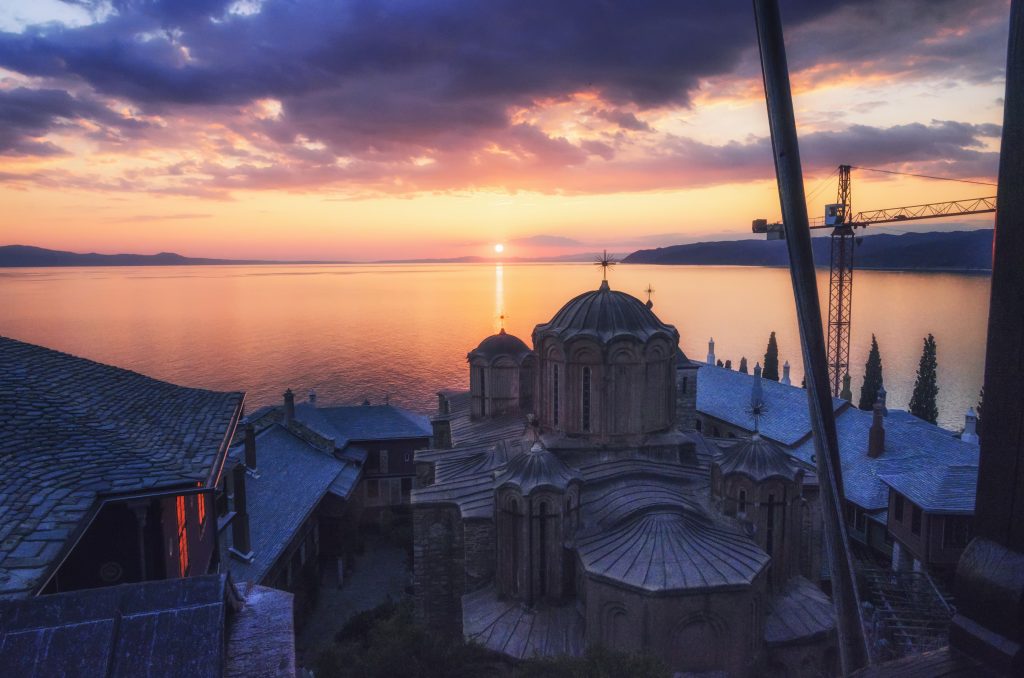
What truly defines Dochiariou Monastery is its deep association with the icon of Panagia Gorgoepikoos, one of the most venerated icons on Mount Athos. This spiritual connection has shaped the identity of the monastery for centuries, making it widely known not only by its name, but by the presence of this sacred image.
According to Athonite tradition, the icon received the name Gorgoepikoos, meaning “She who hears prayers swiftly,” following accounts of immediate divine response to prayer. This reputation transformed the monastery into a place of particular spiritual importance, drawing monks and pilgrims seeking comfort, guidance and healing.
Although the icon itself cannot be seen from the sea, its presence is central to the life of the monastery. For visitors observing from the vessel, knowing that Dochiariou is closely linked to Panagia Gorgoepikoos adds a deeper layer of meaning to the coastal view. The monastery’s calm exterior becomes a visual gateway to an inner spiritual tradition rooted in devotion and faith.
This association distinguishes Dochiariou from other monasteries along the route, giving it a spiritual identity that extends beyond architecture and geography.
What visitors notice when viewing Dochiariou from the sea
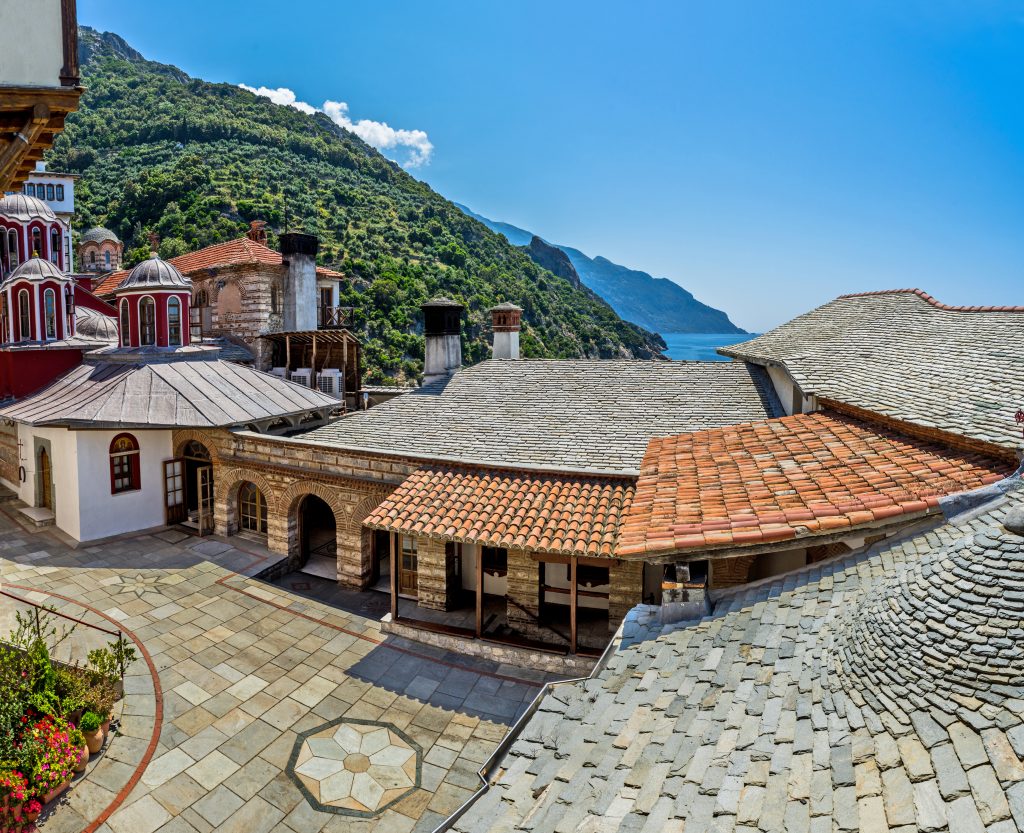
As the vessel passes this section of the coastline, many visitors notice the sense of balance and order that characterizes Dochiariou Monastery. The monastery appears well aligned with the shoreline, neither elevated dramatically nor withdrawn from the sea, creating a calm and composed visual presence.
From the water, the buildings feel approachable and clearly structured. The horizontal arrangement allows the eye to move naturally across the complex, making it easier to observe architectural details and the way the monastery relates to its immediate surroundings.
Another element that stands out is the feeling of continuity. Dochiariou does not impose itself on the landscape, but blends smoothly into it, reinforcing the impression of stability and long-standing presence. This visual harmony often gives passengers a moment of quiet observation, distinct from the more dramatic impressions offered by other monasteries along the route.
For many visitors, this encounter feels reassuring and grounded — a steady visual pause within the broader rhythm of the Mount Athos sea journey.
How Dochiariou Monastery fits into the Mount Athos cruise experience
Within the overall flow of the journey, Dochiariou represents a moment of spiritual familiarity and calm. By the time the vessel reaches this section of the coastline, visitors have already begun to recognize the rhythm of the Mount Athos sea route, and the monastery’s balanced presence reinforces that sense of continuity.
In the context of Mount Athos cruises, Dochiariou often feels like a point of reassurance. Its close association with Panagia Gorgoepikoos adds a spiritual dimension that many passengers are already aware of, even before encountering the monastery visually. This awareness subtly shapes the experience, encouraging a more reflective form of observation.
Rather than standing out through dramatic architecture or geographical extremes, Dochiariou contributes to the journey by grounding it. It highlights how Mount Athos is experienced not only through visual landmarks, but through layers of meaning, devotion and tradition that unfold gradually along the route.
Visitors who wish to understand how Dochiariou fits within the broader coastal sequence can explore the full overview of Mount Athos cruises, where the structure of the journey and the progression of monasteries are explained in detail.
The history and spiritual significance of Dochiariou Monastery
Dochiariou Monastery was founded in the 10th century by Saint Euthymios, a disciple of Saint Athanasios the Athonite. From its early years, the monastery developed as an important spiritual center along the southwestern side of Mount Athos, closely connected to the daily rhythm of monastic life shaped by prayer, work and obedience.
Its location near the sea supported communication and supply routes, allowing the monastery to remain active and self-sufficient throughout the centuries. Despite facing periods of hardship, natural wear and historical challenges, Dochiariou preserved its spiritual identity and continuity, remaining firmly rooted in Athonite tradition.
Monastic identity and daily life
Dochiariou is a Greek Orthodox monastery and continues to function as a living monastic community today. It is home to a brotherhood of monks who follow the traditional Athonite way of life, centered on communal worship, personal prayer and daily responsibilities within the monastery.
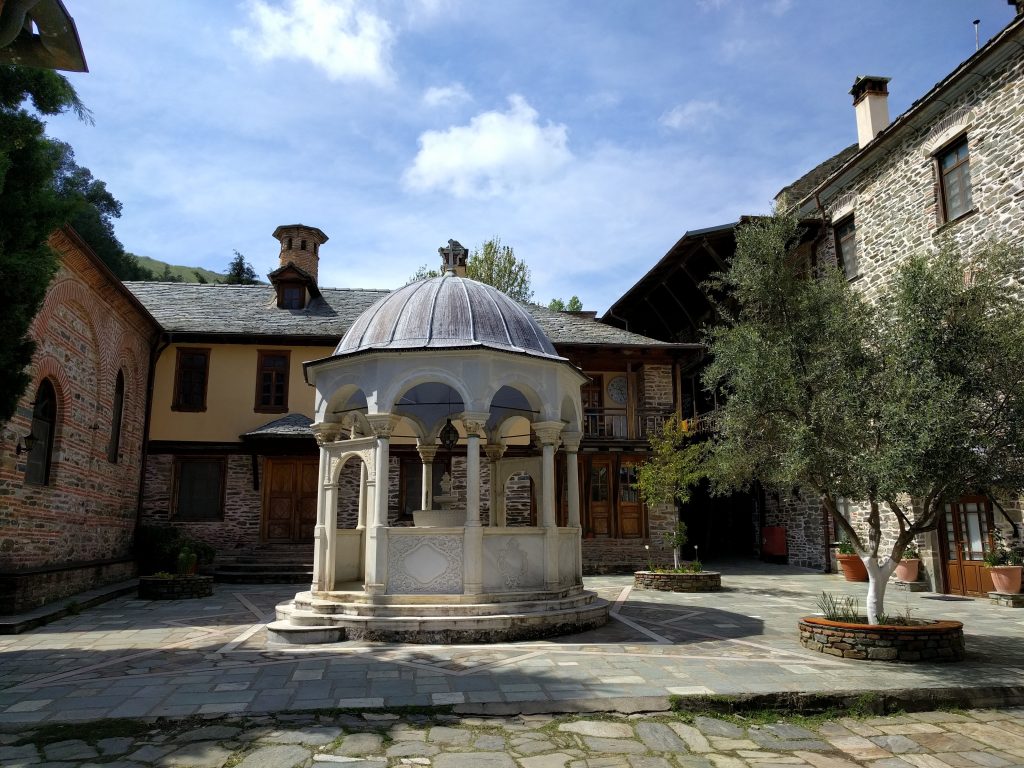
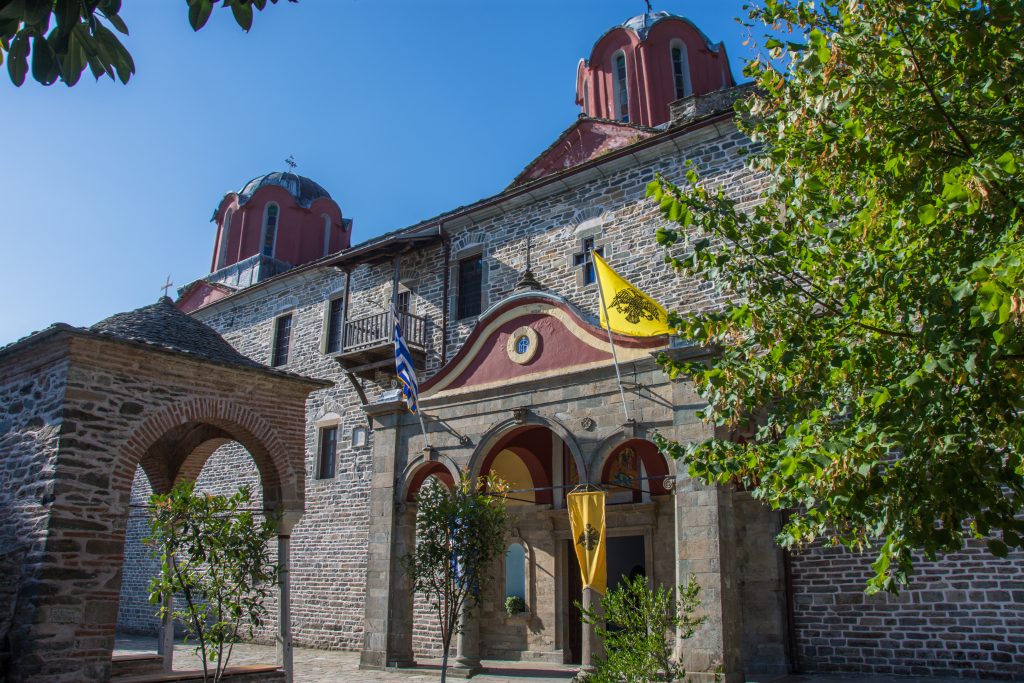
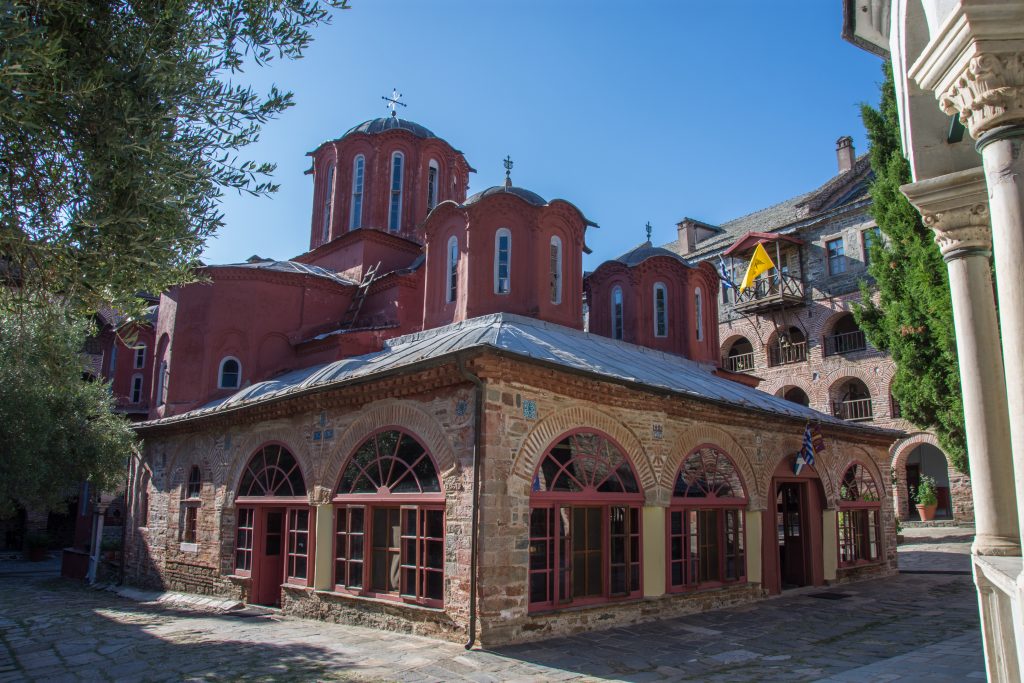
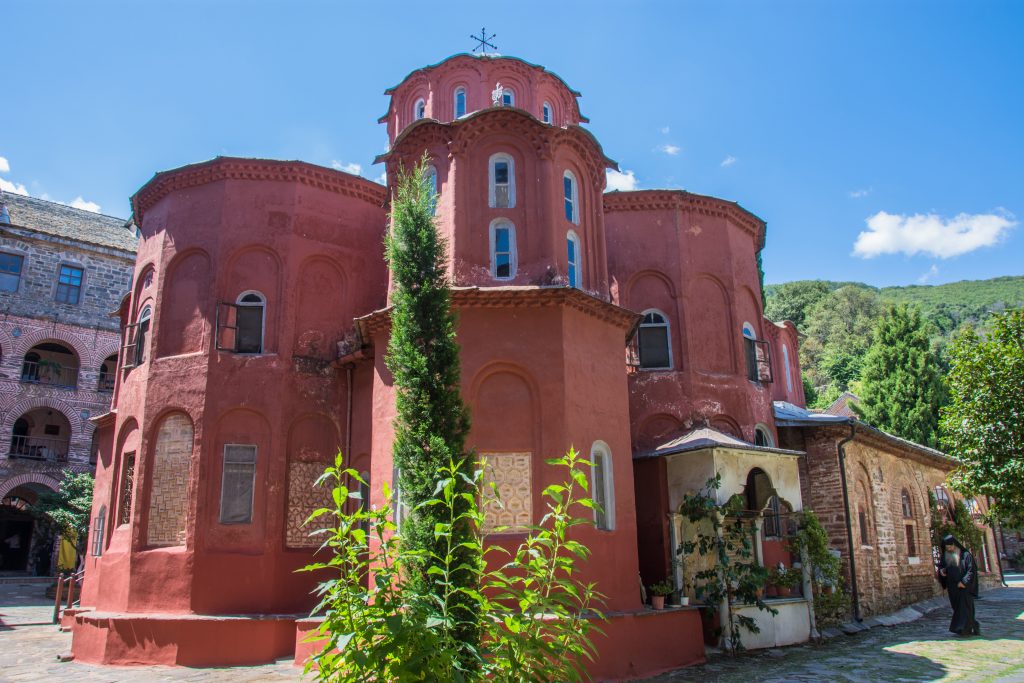
Although the interior spaces are not visible from the sea, the monastery’s outward calm suggests a disciplined and ordered inner life. Behind its walls lie chapels, communal halls, monastic cells and workspaces that support a rhythm of life focused on spiritual growth and continuity.
Sacred treasures and relics preserved at Dochiariou
Dochiariou Monastery holds a special place within Mount Athos due to the preservation of exceptionally revered sacred treasures, deeply connected with Orthodox spirituality and Athonite tradition. These treasures define the monastery’s identity far beyond its architectural presence along the coastline.
The icon of Panagia Gorgoepikoos
At the spiritual heart of Dochiariou lies the icon of Panagia Gorgoepikoos, one of the most famous and venerated icons of the Holy Mountain. According to Athonite tradition, the icon received its name—meaning “She who hears prayers swiftly”—after a miraculous event in which the Virgin Mary responded immediately to prayer, affirming her protective presence within the monastery.
The icon is regarded as miracle-working, and for centuries it has been a focal point of prayer for monks and pilgrims seeking guidance, healing and consolation. Its reputation extends well beyond Mount Athos, making Dochiariou a monastery closely associated with immediate divine intercession.
Holy relics of saints preserved at Dochiariou
In addition to the miracle-working icon of Panagia Gorgoepikoos, Dochiariou Monastery preserves important holy relics of saints, closely connected with its tradition of swift intercession and prayer.
Among the relics safeguarded within the monastery are relics of:
- Saint George the Trophy-Bearer – a central figure in the monastery’s devotional life
- Saint Panteleimon the Healer – venerated for healing and compassion
- Saint Charalambos – traditionally associated with protection from illness and hardship
- Saint Tryphon – honored for intercession and blessing
- Saint Marina – revered for spiritual courage and faith
These relics play an active role in the monastery’s liturgical life and are honored during significant services. Together with the icon of Panagia Gorgoepikoos, they reinforce Dochiariou’s reputation as a place of immediate spiritual support and deep Orthodox devotion.
Manuscripts and ecclesiastical heritage
Dochiariou Monastery also preserves a valuable collection of Byzantine and post-Byzantine manuscripts, including:
- liturgical texts
- theological writings
- historical ecclesiastical documents
These manuscripts contribute to Mount Athos’ long-standing mission as a guardian of Orthodox learning and spiritual continuity. Many of these texts are centuries old and are preserved under strict conditions to ensure their protection for future generations.
Liturgical vessels and sacred objects
Among the monastery’s sacred possessions are important liturgical objects, such as:
- hand-crafted chalices and censers
- crosses and sacred vessels
- embroidered vestments used in major liturgical celebrations
These items reflect centuries of devotional craftsmanship and remain in active liturgical use, underscoring the monastery’s living spiritual character rather than a purely historical one.
Why these treasures matter to the visitor
Although these sacred treasures are not visible during a sea journey, understanding what is preserved within Dochiariou’s walls adds depth to the experience of viewing the monastery from the water. The calm exterior seen along the coastline shelters a rich spiritual heritage shaped by prayer, devotion and continuity.
For many readers, this knowledge transforms the visual encounter into a more meaningful appreciation of Dochiariou as a place of enduring faith within the spiritual landscape of Mount Athos.
Understanding this site is easier when viewed as part of the greater Athonite world, which is outlined in a general overview of Mount Athos and its monastic life.
Closing – Seeing Dochiariou Monastery with understanding
Viewing Dochiariou Monastery from the sea leaves an impression of balance and spiritual calm. Its steady presence along the coastline reflects a long-standing relationship between monastic life and the maritime world, shaped by devotion, routine and continuity.
Beyond its architectural form, the monastery represents a place of prayer and spiritual reassurance, deeply connected to the veneration of Panagia Gorgoepikoos. For many visitors, this understanding adds depth to the moment of observation, transforming a simple coastal view into a meaningful encounter with Athonite tradition.
Readers interested in an overview of all monasteries of the Holy Mountain can explore a comprehensive guide covering the full monastic landscape of Mount Athos here.
How visitors can view Dochiariou from the sea
Visitors can observe Dochiariou Monastery as part of a coastal sightseeing journey along the Holy Mountain. One of the established sea routes departs from Ouranoupoli and follows the traditional southwestern passage, offering clear views of the monastery directly from the water.
More information about the route, sailing schedule and availability can be found on the Mount Athos coastal cruise from Ouranoupoli.
Frequently Asked Questions about Dochiariou Monastery
Why is Dochiariou closely associated with Panagia Gorgoepikoos?
The monastery preserves the revered icon of Panagia Gorgoepikoos, known in Athonite tradition for its swift response to prayer, which has shaped the monastery’s spiritual identity for centuries.
Is Dochiariou an active monastery today?
Yes. Dochiariou is a Greek Orthodox monastery with an active monastic community following the traditional Athonite way of life.
Can visitors enter Dochiariou during a cruise?
No. Visitors observe the monastery exclusively from the sea. Entry to Mount Athos monasteries requires an official access permit.
What kind of treasures are kept at Dochiariou Monastery?
The monastery preserves sacred icons, holy relics, liturgical vessels and historical manuscripts of spiritual and cultural significance.
Did you find our post helpful?
- Was this post helpfull?
- Rate us on TripAdvisor
This article made by https://lnk.bio/Rodokalakis
