

Esphigmenou Monastery is one of the twenty ruling monasteries of Mount Athos, set right on the shoreline of the Athonite peninsula’s northern coast. Dedicated to the Ascension of Christ, it carries a long monastic memory—shaped by centuries of prayer, rebuilding, and continuity—making it an essential stop for anyone seeking to understand the spiritual landscape of Athos beyond the headlines.
In this guide to Esphigmenou Monastery Mount Athos, you’ll find the essentials in a clear, pilgrimage-friendly way: where the monastery is located, what makes it distinctive, a concise historical timeline, and the main features of its church, architecture, and traditions—so you can place Esphigmenou Monastery accurately within the wider story of the Holy Mountain.
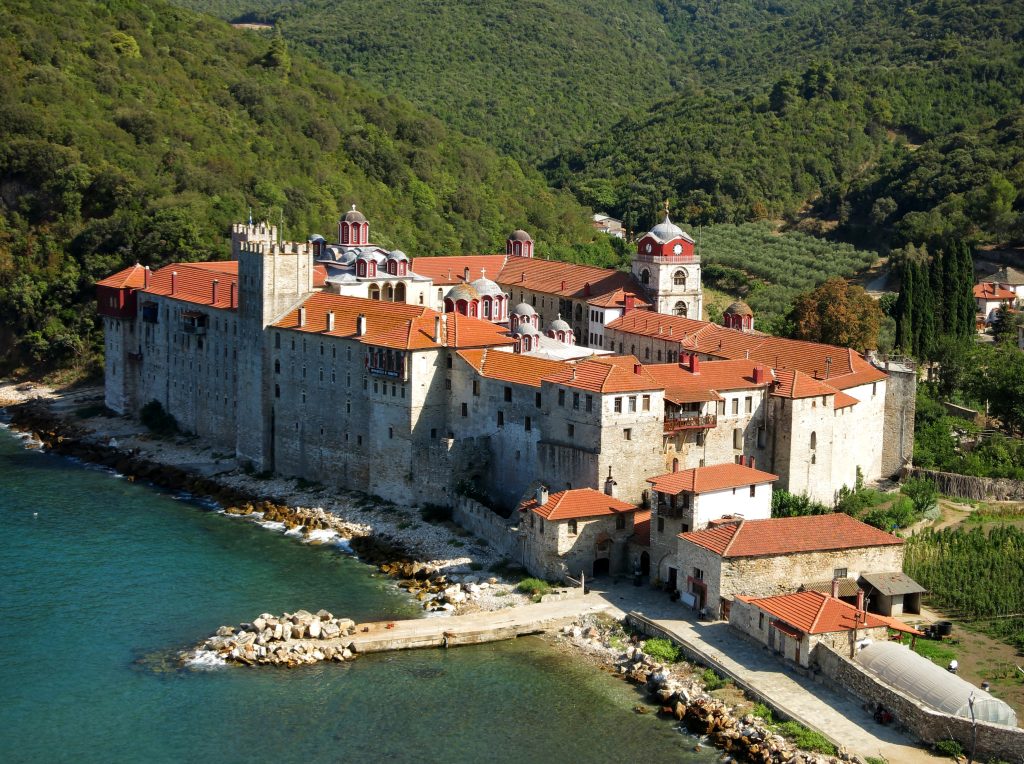
Table of Contents
Where Esphigmenou Monastery is located
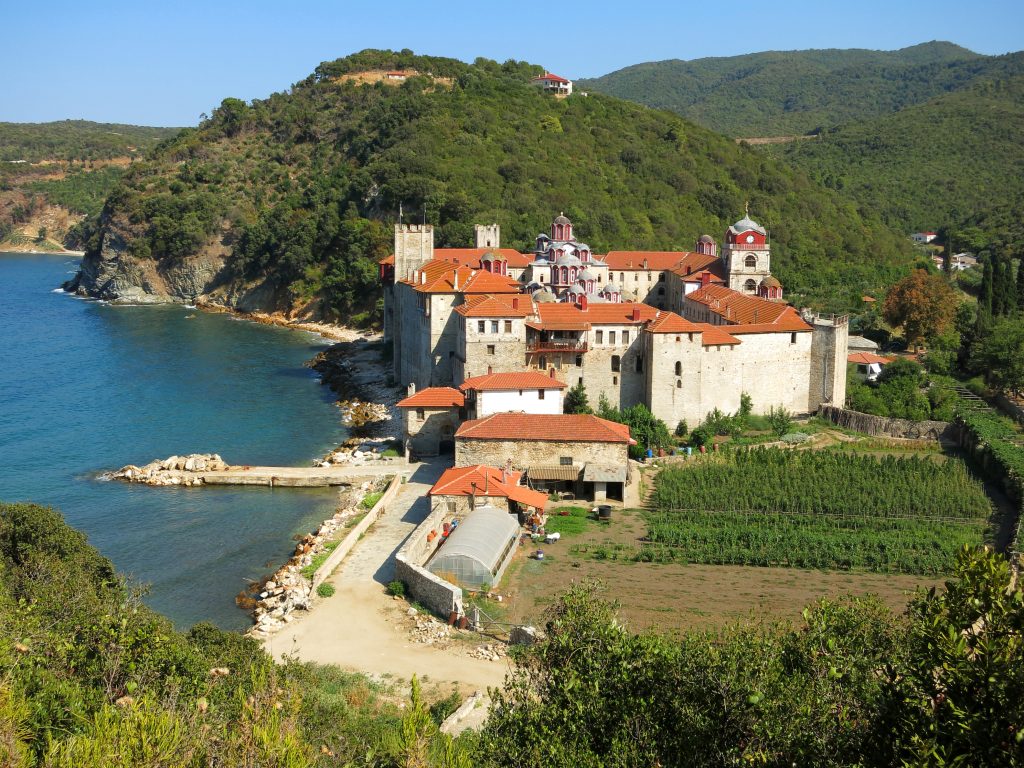
Esphigmenou Monastery stands on the northern coastline of Mount Athos, built close to the sea and positioned near the peninsula’s northern sector—an area that historically felt like a threshold between the Holy Mountain and the wider Aegean world. If you’re exploring Athonite geography in context, it helps to see how Esphigmenou Monastery Mount Athos fits into the wider map of communities and coastal houses across the peninsula (see the full overview of the Monasteries of Mount Athos here).
Why it is called “Esphigmenou”
The name Esphigmenou Monastery is often explained through Athonite tradition as meaning “tightened” or “constricted.” One common interpretation links the name to the monastery’s setting, where the landscape can feel naturally enclosed between hills and the sea. Another tradition connects it to an ascetic practice associated with an early monk of the community, said to have worn a tightly bound rope or belt as a sign of discipline. Either way, the name of Esphigmenou Monastery Mount Athos carries the typical Athonite blend of place and spiritual symbolism, where geography and inner life are often described in the same language.
A brief history of Esphigmenou Monastery (extra detail)
Athonite tradition connects Esphigmenou Monastery to an early foundation in the 5th century, yet the clearest documentary footprint places Esphigmenou Monastery Mount Athos firmly within the organized monastic landscape by the late 10th–early 11th century. Medieval references include an encyclical/letter associated with Saint Paul of Xeropotamou (1016), a monastic testament (1030), and its appearance in the second Athonite Typikon (1046)—a cluster of evidence that confirms the monastery’s established presence in that formative era.
Like many coastal houses, Esphigmenou Monastery also reflects the realities of the sea: periods of insecurity, damage, and rebuilding. Sources note destructive raids (including a pirate attack in the 16th century) followed by restoration, while the monastery’s most visible architectural “reset” belongs to the early 19th century—when key structures were built or renewed and the katholikon was constructed between 1806–1810 and consecrated in 1811. This layered pattern—early medieval roots, later trials, and modern-era rebuilding—is essential for understanding how Esphigmenou Monastery Mount Athos became what visitors recognize today.
The katholikon and architecture
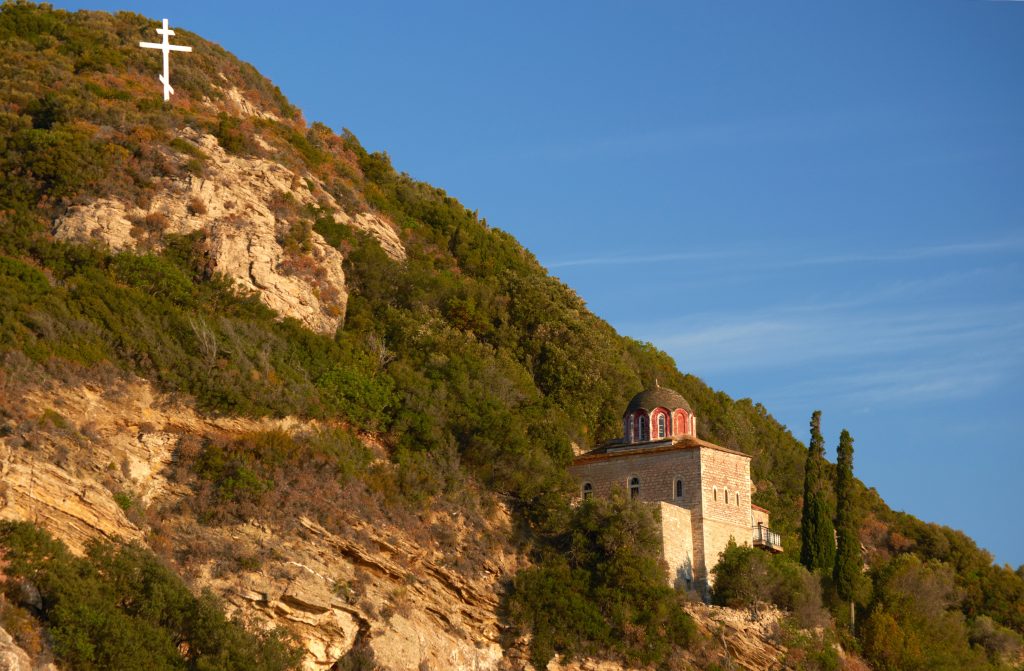
The katholikon (main church) of Esphigmenou Monastery is dedicated to the Ascension of Christ and belongs to the monastery’s major rebuilding phase in the early 19th century. It was built in 1806–1810 and consecrated in 1811, marking a key moment in the shaping of Esphigmenou Monastery Mount Athos as it is recognized today.
Architecturally, the monastery’s coastal position influenced its overall “fortified” character: the complex is compact and inward-facing, with functional defensive logic typical of Athonite houses that had to endure centuries of uncertainty. Even without focusing on fine details, a visitor can read the layout of Esphigmenou Monastery as a balance between protection and liturgical life—where the church stands as the spiritual center and the surrounding buildings support a strict daily rhythm.
Spiritual life and traditions
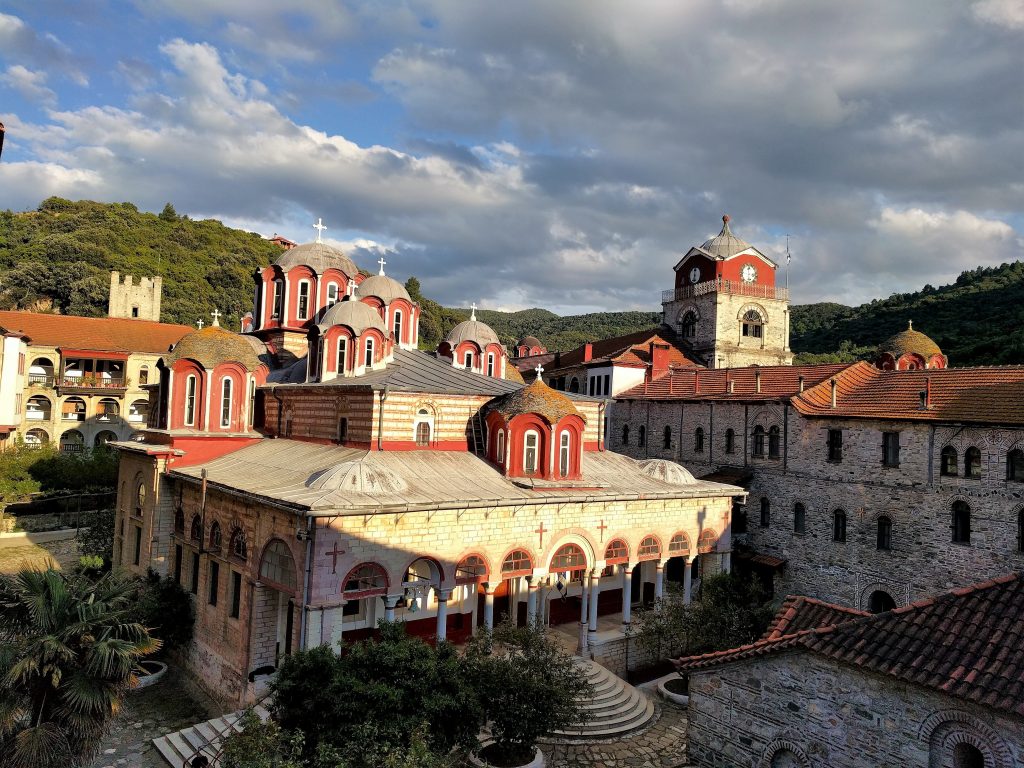
At its core, Esphigmenou Monastery follows the classic Athonite aim: a steady, communal rhythm shaped by prayer, work, and silence, with the liturgical cycle at the center of daily life. As with other houses on the Holy Mountain, the monastery’s identity is inseparable from its dedication to the Ascension of Christ, which frames both its main feasts and the spiritual “tone” of the community.
A helpful way to understand Athonite spirituality is to see it as a discipline of attention. The goal is not to gather experiences, but to refine the inner life through a stable routine: prayer services, manual work, reading, and a careful guarding of speech. Many visitors expect Athos to feel “historic” first; what surprises them is how strongly it feels “present.” The monastery is not performing the past—it is living a daily pattern that has outlasted political periods and cultural fashions.
This is also why Athonite tradition values discretion. Some things are intentionally not “marketed” or showcased, not because they lack importance, but because the monastic ethos resists turning sacred life into spectacle. When we write about Athos, this becomes a content-strategy advantage: we can offer clarity and respect—enough detail to guide a reader, without pretending to expose what is meant to remain interior.
In the modern era, Esphigmenou Monastery Mount Athos is also widely associated with a long-running ecclesiastical dispute, which has influenced how the monastery is described in contemporary sources. Without taking sides, it’s enough for visitors to know that this context exists and that it can affect practical realities and public references to the monastery—while the deeper Athonite purpose remains the same: a life oriented toward repentance, prayer, and continuity.
Treasures of Esphigmenou Monastery
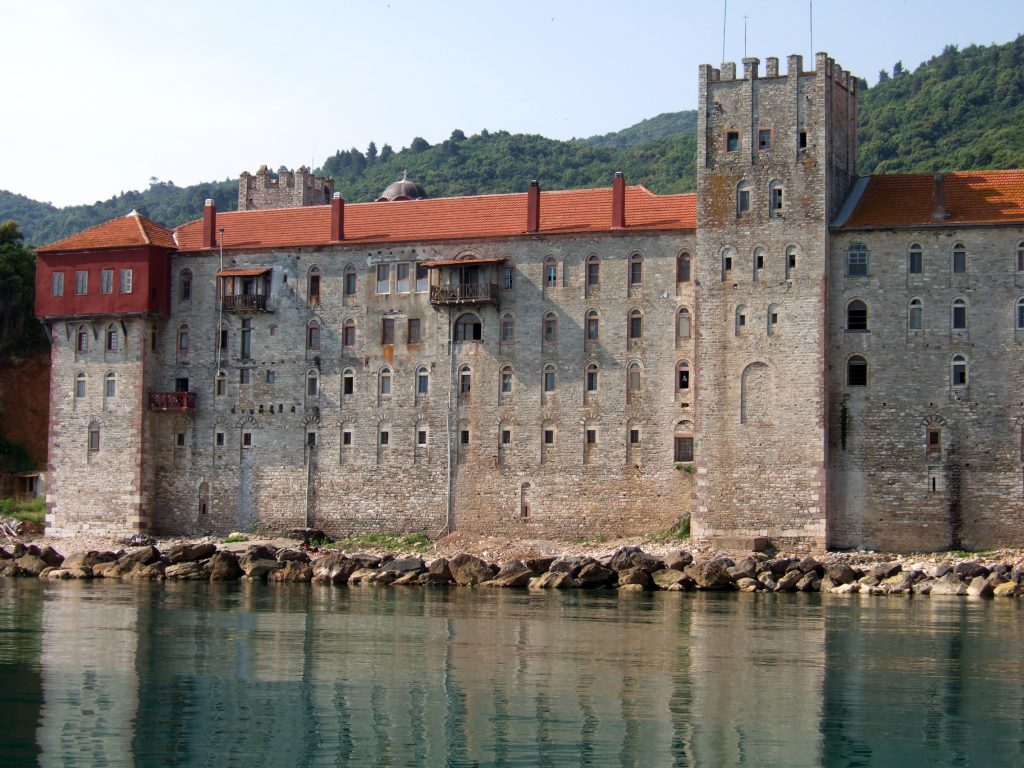
On Athos, a “treasury” is not a list of objects—it is a record of memory. Relics and icons are encountered as living points of prayer, while manuscripts and archives show how the community preserved worship, learning, and administration through centuries of change. When you frame treasures this way, the section becomes more than a catalogue: it explains why these things matter to pilgrims and careful readers alike. Use the H3 sections below as a clean structure (Relics / Icons / Manuscripts), then keep each sub-section focused and readable.
Holy relics
Among the best-documented relics connected with Esphigmenou Monastery are the relics of the Venerable Martyr Agathangelos, preserved in significant parts within the monastery’s treasury. This living presence of the saints is central to how Esphigmenou Monastery Mount Athos is experienced by pilgrims: not as an “exhibit,” but as a spiritual inheritance tied to prayer, intercession, and remembrance.
Venerated icons
A particularly famous icon associated with Esphigmenou Monastery is the Virgin Mary “Arsaniotissa” (“Of the Pier”), whose tradition is linked to the monastery’s dock area and a well-known 19th-century incident in local memory. For visitors, such icons are not simply works of art; they function as devotional centers that shape how Esphigmenou Monastery Mount Athos is narrated and remembered across generations.
(Other sources also highlight Esphigmenou’s treasured icon of the Theotokos Eleousa among its principal possessions.)
Manuscripts and the library
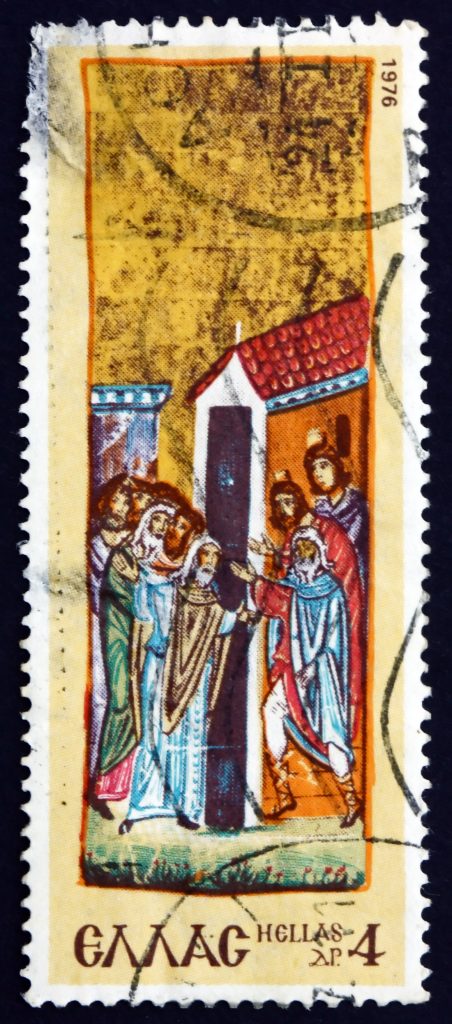
Esphigmenou’s library preserves a substantial manuscript heritage. Accounts commonly note around 372–400 manuscripts, including approximately 75 parchment codices, along with printed books and archival material—evidence of the monastery’s role in preserving Orthodox learning and liturgical tradition. Among the notable items mentioned is an illustrated Menologion (11th century) referenced in descriptions of the monastery’s holdings.
Practical notes for pilgrims
If you’re planning a pilgrimage that includes Esphigmenou Monastery, it helps to organize your trip around Athos’ core rules and logistics: the diamonitirion permit, entry procedures, and the practical routes used on the peninsula. For a step-by-step overview (permits, basic rules, and what to plan in advance), see our guide to Visiting Mount Athos.
Even when you are not staying overnight, approaching Esphigmenou Monastery Mount Athos with the right expectations matters: monasteries may have specific reception practices and timetables, and access can depend on day, season, and the monastery’s internal schedule. As a general rule, pilgrims should confirm arrangements through the official Athonite channels before building a fixed itinerary around Esphigmenou Monastery.
Seeing Mount Athos as a whole
To understand Esphigmenou Monastery in context, it helps to see where it sits within the larger Athonite “map” of communities—both geographically (north to south) and spiritually (how each monastery developed its own character through time). If you’re building a broader picture, our overview of the Monasteries of Mount Athos makes it easier to connect Esphigmenou Monastery Mount Athos with the neighboring houses and the rest of the eastern coastline.
It’s also worth remembering that many people first encounter Athos visually from the sea, even if their main interest is the monasteries themselves. Our page on Mount Athos cruises & sea tours explains how coastal viewing works in practice and why not every monastery is typically part of standard sea-route sightseeing—so you can set realistic expectations while still appreciating the wider Athonite landscape around Esphigmenou Monastery.
Closing
Esphigmenou Monastery stands as a northern coastal witness to Mount Athos—rooted in early medieval Athonite history and shaped by centuries of renewal. Whether you approach Esphigmenou Monastery Mount Athos as a pilgrim or a careful reader of Athonite tradition, its setting, dedication, and spiritual continuity help complete the wider picture of the Holy Mountain. For deeper orientation, continue with our guides on Visiting Mount Athos and the full list of Monasteries of Mount Athos.
FAQ about Esphigmenou Monastery
Where is Esphigmenou Monastery located?
Esphigmenou Monastery lies on the northern coastline of Mount Athos, close to the sea, in the peninsula’s northern sector. This location helps explain why Esphigmenou Monastery Mount Athos is often described as a northern coastal landmark.
What is Esphigmenou Monastery dedicated to?
The katholikon (main church) of Esphigmenou Monastery is dedicated to the Ascension of Christ, which shapes the monastery’s principal feast and spiritual focus.
How old is Esphigmenou Monastery?
While Athonite tradition points to very early origins, Esphigmenou Monastery Mount Athos is securely attested in medieval sources by the late 10th to early 11th century, confirming its established presence during the formative period of Athonite organization.
What are the main treasures of Esphigmenou Monastery?
Visitors commonly associate Esphigmenou Monastery with a treasury that includes holy relics, venerated icons, and a historically significant library of manuscripts—a typical Athonite combination of devotion and preservation.
Is Esphigmenou Monastery usually included in standard sea-view sightseeing routes?
Not typically. Esphigmenou Monastery Mount Athos is not commonly part of standard coastal viewing routes, and a broader explanation of how sea-view routes work is covered in our Mount Athos cruises & sea tours page.
Did you find our post helpful?
- Was this post helpfull?
- Rate us on TripAdvisor
This article made by https://lnk.bio/Rodokalakis
