

Karyes Mount Athos is the administrative and spiritual heart of the Holy Mountain. While Mount Athos is widely known for its monasteries and ascetic communities scattered along the coastline, Karyes functions as the central point where governance, coordination and spiritual authority converge.
As the capital of Mount Athos, Karyes is not a city in the conventional sense. Instead, it is a small monastic settlement that serves as the seat of the Holy Community, the governing body representing the twenty ruling monasteries of Mount Athos. Its role is essential in maintaining order, continuity and unity across the Athonite peninsula.
Unlike monasteries and sketes, Karyes Mount Athos is defined by function rather than isolation. It is a place of administration, communication and shared responsibility, where decisions affecting the entire Holy Mountain are discussed and implemented. This unique role places Karyes at the center of Athonite life, even though it remains largely unseen by visitors observing Mount Athos from the sea.
Understanding Karyes allows readers to grasp how Mount Athos operates as a living monastic state—one that balances spiritual devotion with practical governance, tradition with continuity.
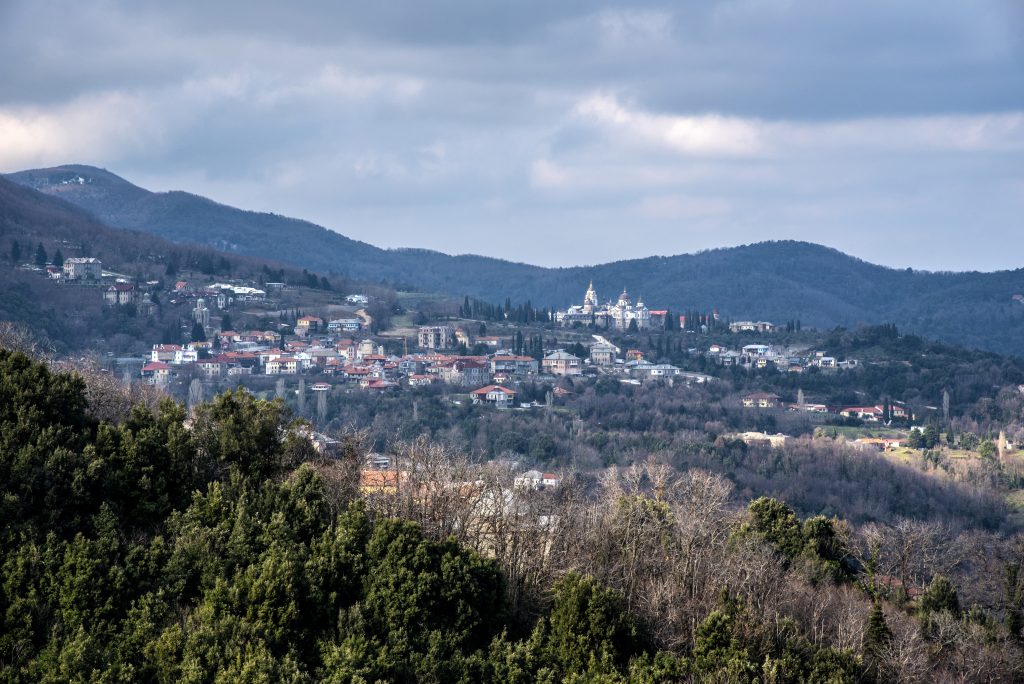
Karyes Mount Athos – The Administrative and Spiritual Capital of the Holy Mountain
Karyes Mount Athos is the administrative and spiritual heart of the Holy Mountain. While Mount Athos is widely known for its monasteries and ascetic communities scattered along the coastline, Karyes functions as the central point where governance, coordination and spiritual authority converge.
As the capital of Mount Athos, Karyes is not a city in the conventional sense. Instead, it is a small monastic settlement that serves as the seat of the Holy Community, the governing body representing the twenty ruling monasteries of Mount Athos. Its role is essential in maintaining order, continuity and unity across the Athonite peninsula.
Unlike monasteries and sketes, Karyes Mount Athos is defined by function rather than isolation. It is a place of administration, communication and shared responsibility, where decisions affecting the entire Holy Mountain are discussed and implemented. This unique role places Karyes at the center of Athonite life, even though it remains largely unseen by visitors observing Mount Athos from the sea.
Understanding Karyes allows readers to grasp how Mount Athos operates as a living monastic state—one that balances spiritual devotion with practical governance, tradition with continuity.
Table of Contents
What is Karyes Mount Athos and why it exists
Karyes Mount Athos exists to serve a role that no monastery or skete could fulfill on its own: the collective administration of the Holy Mountain. From its earliest organization, Mount Athos required a central location where representatives of the monasteries could meet, coordinate and govern shared matters affecting the entire Athonite community.
Rather than developing organically as a monastic settlement, Karyes was established with a functional purpose. It became the fixed meeting point for decision-making, legal matters and spiritual coordination, ensuring that Mount Athos operates as a unified monastic state rather than a collection of independent institutions.
A neutral ground for the monasteries
As the capital of Mount Athos, Karyes functions as neutral territory. Each of the twenty ruling monasteries maintains representation there through the Holy Community, allowing governance to be exercised collectively rather than centrally imposed.
This structure preserves:
- the autonomy of individual monasteries
- the unity of the Athonite tradition
- the continuity of spiritual and administrative life
Karyes therefore exists not to dominate Athonite life, but to protect balance and order across the Holy Mountain.
Why Karyes is essential to Mount Athos
Without Karyes Mount Athos, Mount Athos would lack a stable center for coordination and continuity. The Holy Mountain’s unique status depends on careful governance, and Karyes provides the framework through which centuries-old traditions are upheld.
For readers and visitors alike, understanding why Karyes exists offers insight into how Mount Athos has remained spiritually consistent while adapting to historical, political and practical challenges over time.
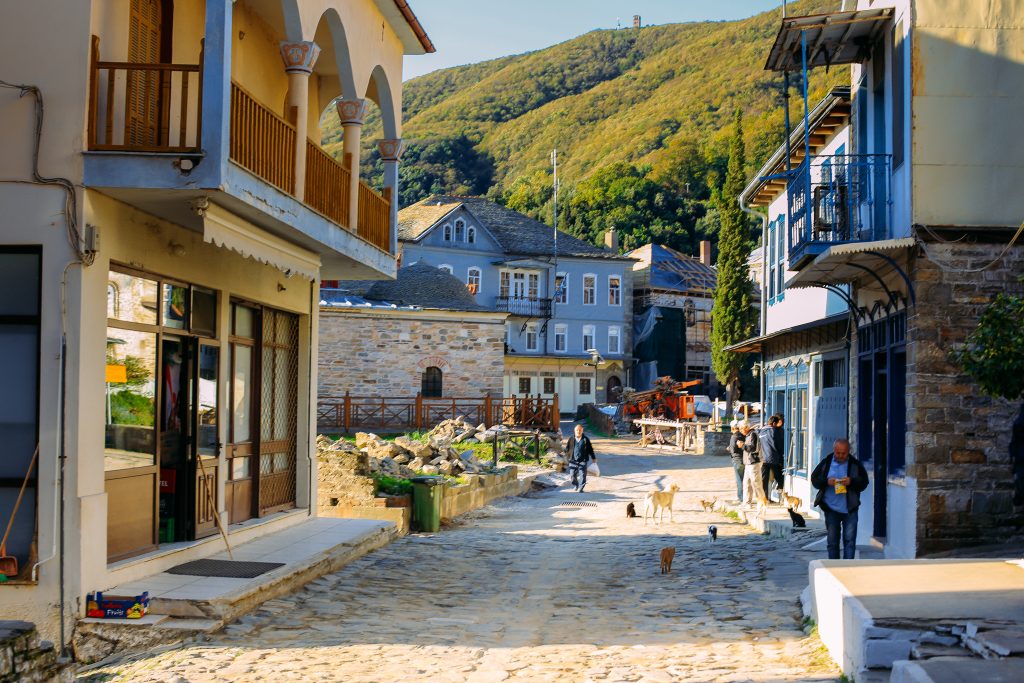
The role of Karyes Mount Athos as the capital of Mount Athos
As the capital of Mount Athos, Karyes Mount Athos serves as the seat of the Holy Community, the highest administrative authority of the Holy Mountain. This governing body is composed of representatives from each of the twenty ruling monasteries, ensuring that all major decisions are made collectively.
The Holy Community meets regularly in Karyes to address matters related to:
- administration and governance
- spiritual order and discipline
- external relations
- preservation of Athonite traditions
Through this system, Mount Athos maintains its unique status as a self-governed monastic territory rooted in centuries-old Orthodox tradition.
The Holy Community and collective governance
Unlike centralized religious institutions, Mount Athos operates through shared authority. Each monastery retains its autonomy while participating in the collective governance exercised in Karyes. This balance prevents dominance by any single monastery and safeguards the unity of the Athonite community.
Karyes therefore functions not as a place of power, but as a space of responsibility and coordination, where decisions are guided by consensus and spiritual continuity rather than hierarchy alone.
Administrative life beyond governance
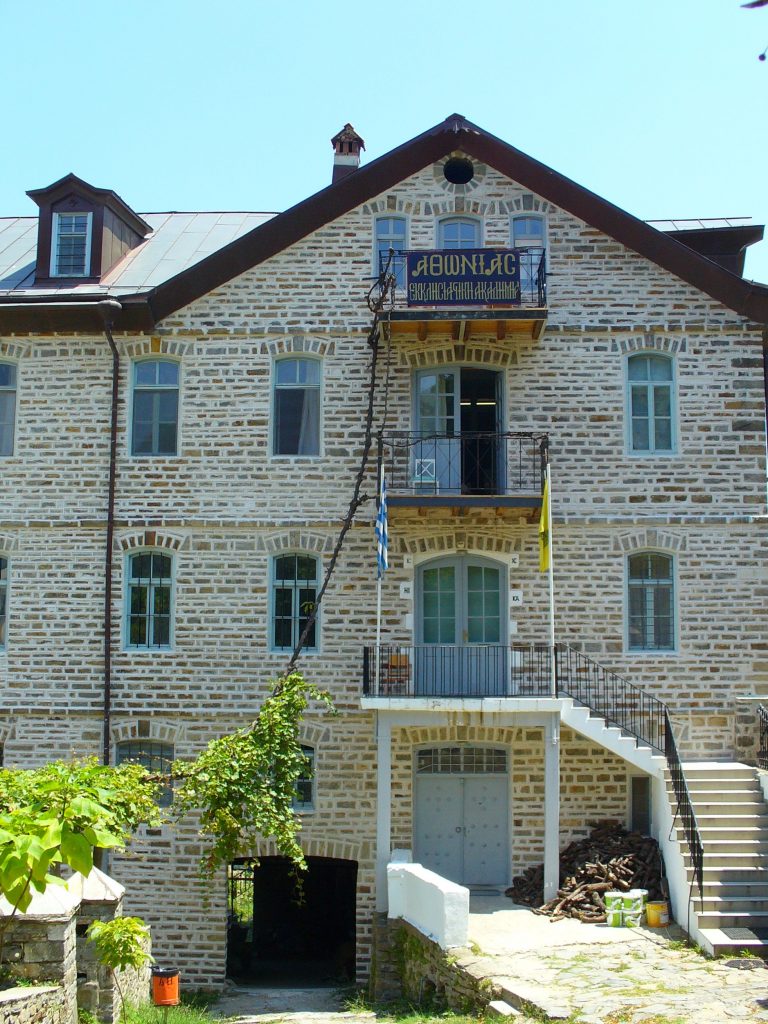
In addition to its governing role, Karyes Mount Athos hosts essential administrative services that support daily life across the Holy Mountain. These include offices, archives and facilities that allow monasteries and sketes to function smoothly within the broader Athonite framework.
This practical dimension highlights why Karyes is indispensable. While largely unseen by visitors, it ensures that Mount Athos remains stable, organized and faithful to its spiritual mission.
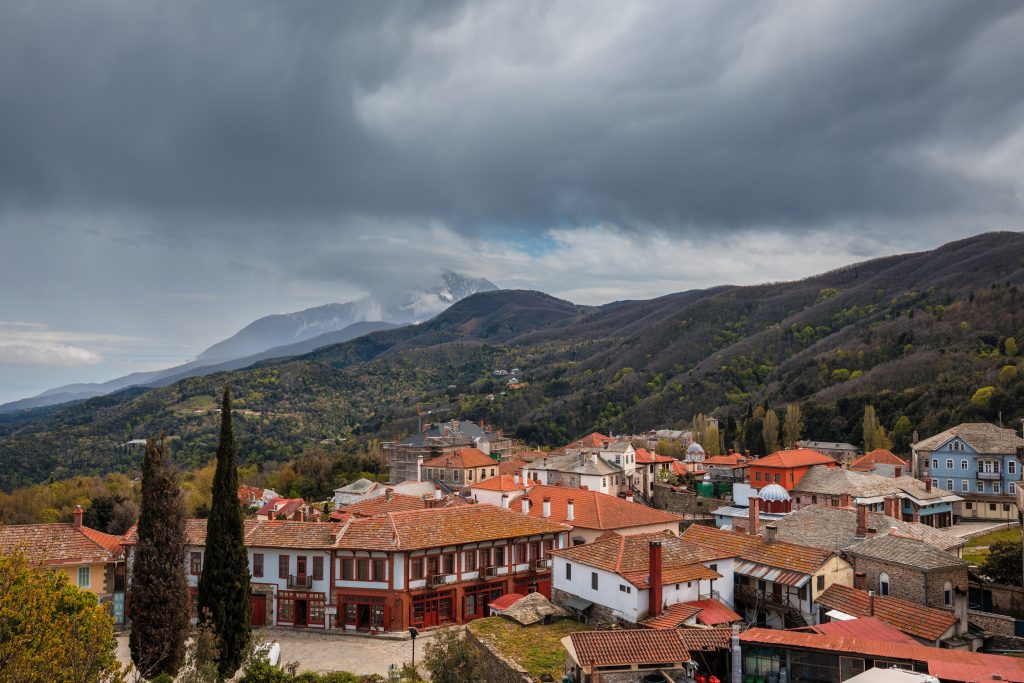
Spiritual landmarks in Karyes Mount Athos
Despite its administrative role, Karyes Mount Athos is also a place of profound spiritual importance. At its center stands the Protaton Church, the most significant ecclesiastical building in Karyes and one of the oldest churches on the Holy Mountain.
The Protaton is dedicated to the Dormition of the Virgin Mary and serves as the spiritual heart of the Athonite administration. Major liturgical services connected to the Holy Community are held here, reinforcing the close relationship between governance and prayer within Mount Athos.
The Protaton Church
The Protaton Church holds a unique position in Athonite tradition. Unlike monastery katholika, it belongs to the entire Holy Mountain rather than a single monastic institution. This collective ownership reflects the role of Karyes as a shared spiritual and administrative center.
Inside the Protaton, visitors encounter Byzantine frescoes of exceptional historical and artistic value, traditionally attributed to the painter Manuel Panselinos, one of the most important figures in Byzantine iconography.
The icon of Axion Estin
One of the most revered treasures of Karyes Mount Athos is the icon of the Virgin Mary “Axion Estin”. According to Athonite tradition, this icon is directly connected to the revelation of the hymn “Axion Estin,” which holds a central place in Orthodox liturgical life.
The icon is venerated not only on Mount Athos but throughout the Orthodox world, making Karyes a spiritual reference point far beyond the boundaries of the Holy Mountain.
A spiritual center beyond administration
These spiritual landmarks demonstrate that Karyes is not merely a place of governance. It is a living spiritual center where prayer, tradition and administration coexist. The presence of the Protaton and the icon of Axion Estin ensures that all administrative activity on Mount Athos remains firmly grounded in worship and spiritual continuity.
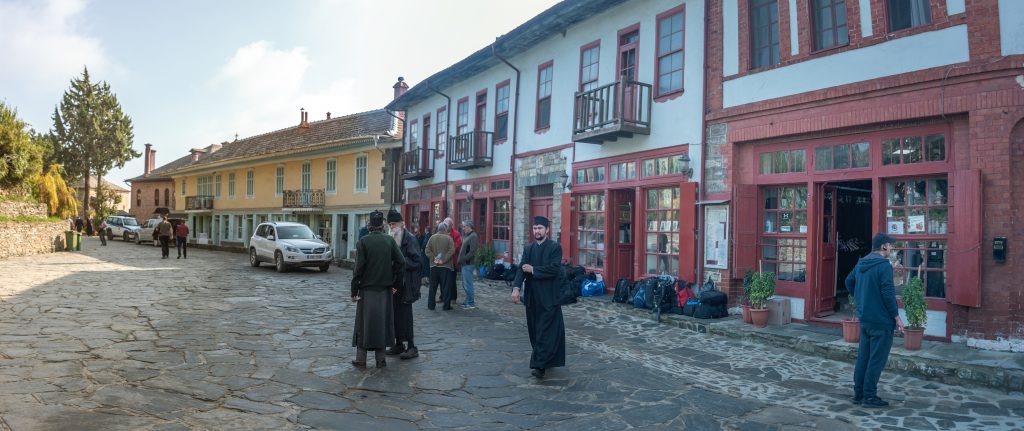
Daily life and function in Karyes Mount Athos
Daily life in Karyes Mount Athos differs noticeably from that of monasteries and sketes. While prayer remains central, Karyes is shaped by movement, coordination and responsibility. Monks, representatives of monasteries and authorized visitors pass through regularly, making it the most active settlement on the Holy Mountain.
As the capital of Mount Athos, Karyes hosts administrative meetings, official correspondence and essential services that support the entire Athonite peninsula. Monks serving in Karyes often combine spiritual duties with administrative tasks, reflecting the unique balance between contemplation and responsibility that defines this place.
Despite its activity, Karyes retains a quiet and disciplined rhythm. The presence of chapels, daily services at the Protaton and a strong sense of order ensure that spiritual life remains at the center of all functions.
How Karyes Mount Athos fits into the Mount Athos experience
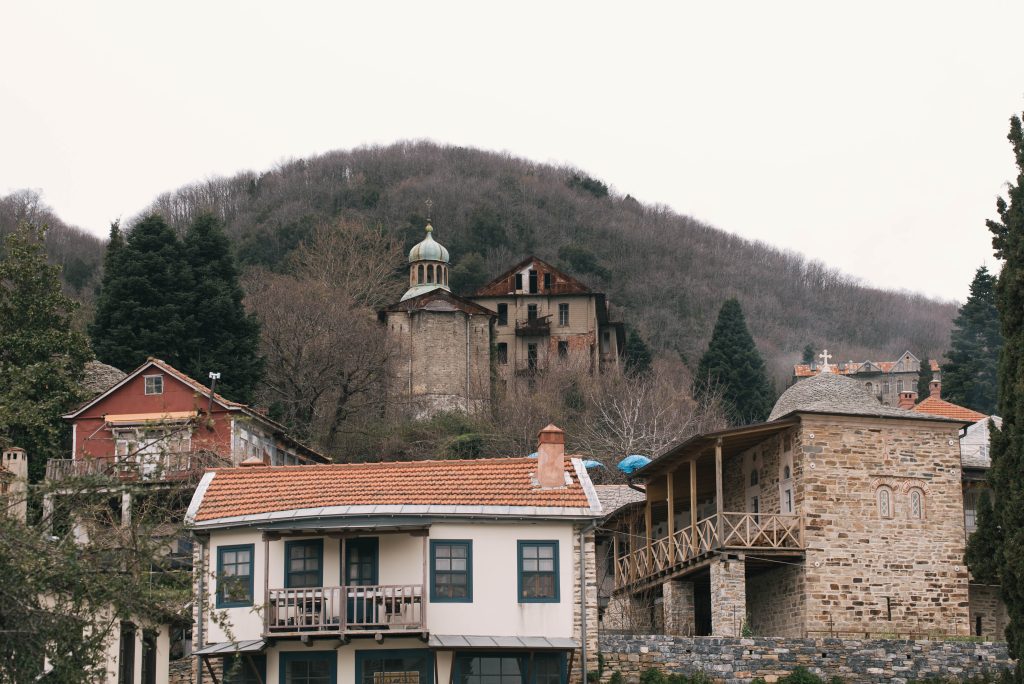
Although Karyes Mount Athos is located inland and cannot be seen directly from the sea, it plays a crucial role in shaping the overall Athonite experience. The monasteries, sketes and ports observed along the coastline all operate within the administrative and spiritual framework centered in Karyes.
Understanding the role of Karyes allows visitors to see Mount Athos not merely as a collection of isolated landmarks, but as a unified monastic territory governed through shared tradition and collective responsibility.
Readers who wish to explore the broader historical, spiritual and administrative background of the Holy Mountain can consult our Visiting Mount Athos guide, which offers an introduction to Athonite tradition, daily life and the unique structure of Mount Athos as a monastic state.
For readers seeking a broader overview of how coastal routes, monasteries, sketes and administrative centers connect, the Mount Athos cruises and sea tours guide provides structured insight into the overall seafaring perspective of the Holy Mountain.
Contextual reference to the coastal route
While Karyes itself lies away from the shoreline, many of the monasteries governed through its institutions can be observed during the Mount Athos coastal cruise from Ouranoupoli, which follows the traditional southwestern sea passage and highlights the key monastic landmarks visible from the water.
This connection helps place Karyes within the broader Mount Athos narrative without altering its administrative and spiritual character.
Closing – Understanding Karyes Mount Athos
Karyes Mount Athos stands as the quiet center of the Holy Mountain’s life. Though less visible than the monasteries and sketes along the coast, its role as the administrative and spiritual capital is essential to the continuity of Athonite tradition.
Through the Holy Community, the Protaton Church and the veneration of the icon of Axion Estin, Karyes ensures that Mount Athos remains unified in faith, governance and spiritual purpose. Understanding Karyes completes the picture of the Holy Mountain, revealing how prayer, tradition and responsibility coexist within this unique monastic world.
Frequently Asked Questions about Karyes Mount Athos
What is Karyes Mount Athos?
Karyes is the administrative and spiritual capital of Mount Athos, serving as the seat of the Holy Community.
Is Karyes a monastery?
No. Karyes is a central settlement where the governing institutions of Mount Athos are based.
Can visitors access Karyes?
Access to Karyes is permitted only to those holding an official Mount Athos entry permit.
Why is Karyes important?
Karyes ensures the unity, governance and spiritual continuity of Mount Athos as a self-governed monastic territory.
Did you find our post helpful?
- Was this post helpfull?
- Rate us on TripAdvisor
This article made by https://lnk.bio/Rodokalakis
