

Nea Skete Mount Athos represents a distinctive form of monastic life on the Holy Mountain, positioned between the structure of a monastery and the solitude of individual hermitages. As a skete of Mount Athos, it reflects a quieter, more personal expression of Orthodox monasticism, shaped by prayer, simplicity and close connection to the natural landscape.
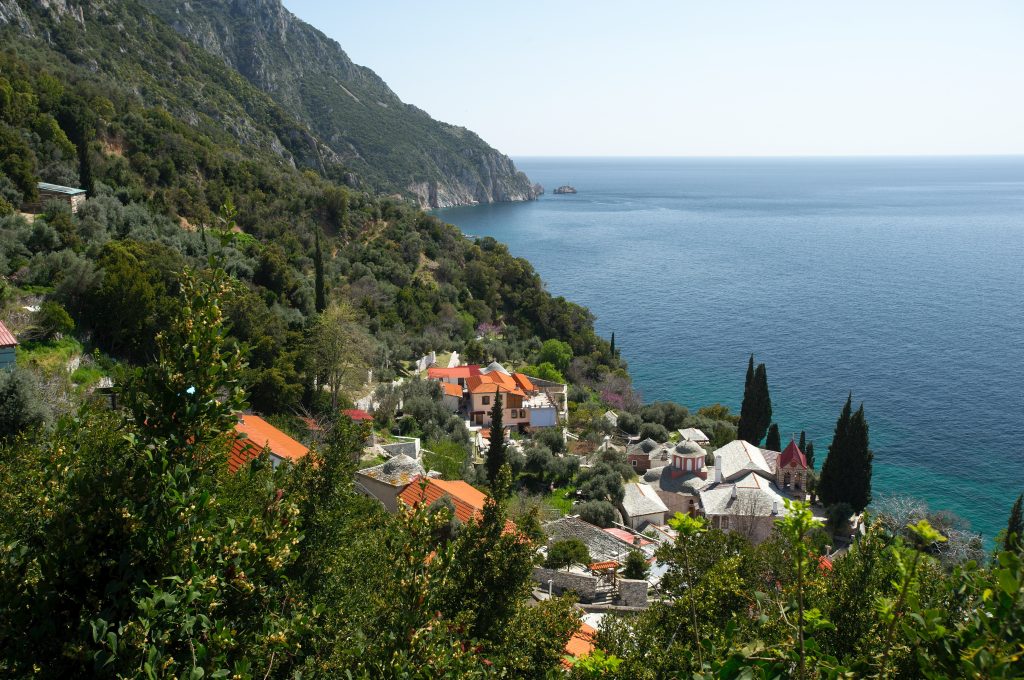
Unlike the fortified monasteries along the coastline, Nea Skete unfolds as a dispersed monastic settlement. Individual dwellings, chapels and small monastic houses extend across the hillside, creating a sense of continuity between spiritual life and the surrounding environment rather than separation from it.
Seen from the sea, Nea Skete Mount Athos appears as a gentle transition within the southwestern coastline. Its presence signals a shift away from monumental architecture toward a more intimate and contemplative form of Athonite life, offering visitors a deeper understanding of the diversity that defines Mount Athos.
For many observers, Nea Skete introduces a different rhythm—one that emphasizes silence, humility and personal devotion, while remaining firmly rooted in the broader Athonite tradition.
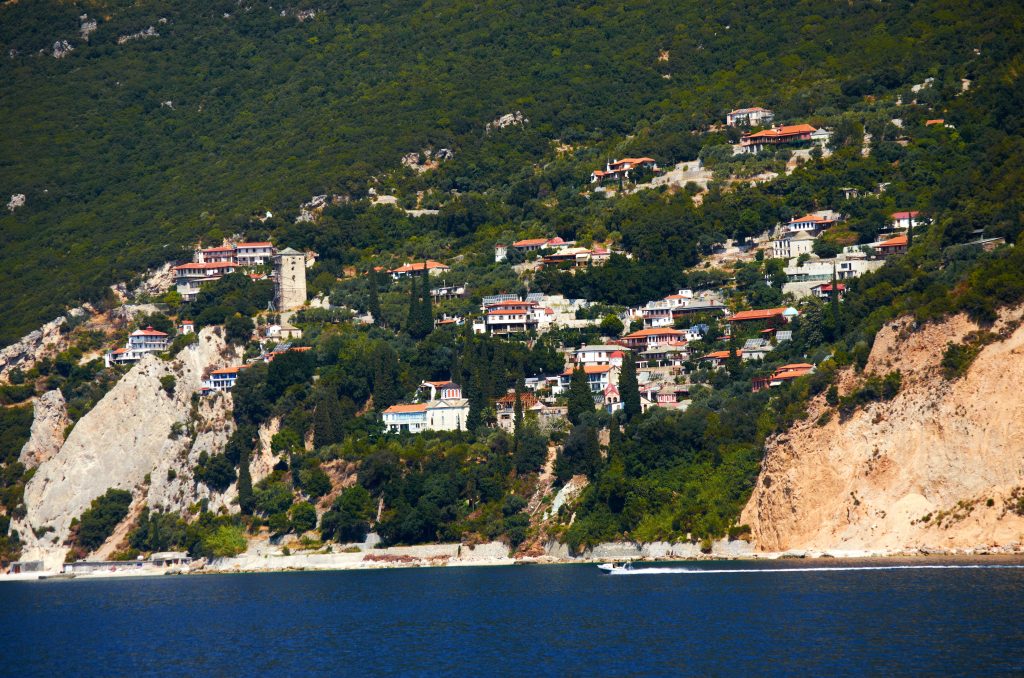
Table of Contents
Where Nea Skete Mount Athos appears on the Mount Athos sea route
Along the southwestern coastline of the Holy Mountain, Nea Skete Mount Athos appears after the sequence of major monasteries and before the landscape transitions further south toward more secluded monastic areas. Its position marks a clear shift in the coastal narrative, both visually and spiritually.
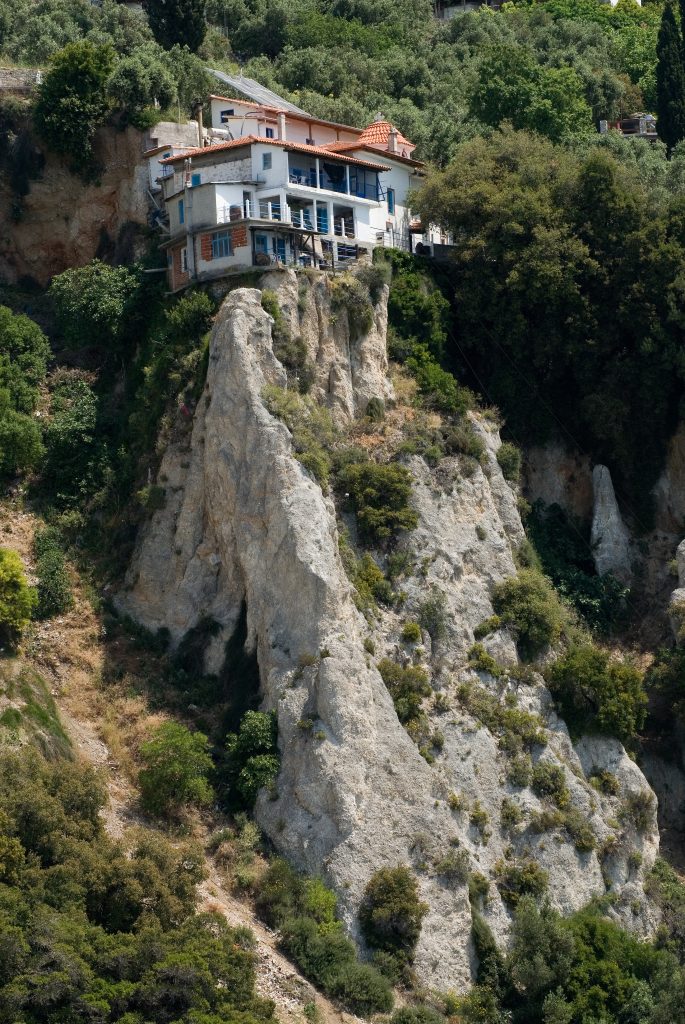
From the sea, Nea Skete does not present a single architectural mass. Instead, it unfolds gradually across the hillside, with small structures and chapels appearing one after another. This dispersed layout distinguishes it immediately from the monasteries that precede it along the route.
For visitors following the coastal journey, this point along the route feels calmer and less imposing. The coastline opens up, and the monastic presence becomes more subtle, signaling the transition from communal monastic centers to more personal and contemplative forms of Athonite life.
What visitors notice when viewing Nea Skete from the sea
As the vessel approaches this part of the coastline, visitors immediately notice that Nea Skete Mount Athos lacks the visual dominance of the large monasteries seen earlier along the route. There are no fortified walls or continuous facades. Instead, the skete appears as a series of modest structures scattered across the slope.
From the sea, the eye follows a natural rhythm. Small chapels, individual dwellings and narrow paths emerge gradually from the landscape, blending into the hillside rather than standing apart from it. This dispersed arrangement creates a softer visual experience, one that feels calm and unforced.
Another striking element is the silence implied by the setting. Even without hearing it, the absence of monumental architecture suggests a quieter way of life. For many visitors, this moment feels intimate, offering a glimpse into a form of monasticism centered on personal prayer and solitude rather than collective presence.
This visual encounter often leaves a lasting impression, precisely because it contrasts so strongly with the architectural intensity of the monasteries that precede it along the Mount Athos coastline.
The history and spiritual life of Nea Skete Mount Athos
Nea Skete Mount Athos was established in the 18th century as a response to the growing need for a form of monastic life that balanced communal structure with personal solitude. Unlike large monasteries, a skete allows monks to live semi-independently while remaining spiritually connected through shared worship and obedience.
Nea Skete belongs administratively to Saint Paul’s Monastery, which provides spiritual oversight while allowing the skete to preserve its distinctive rhythm of life. This relationship reflects a long-standing Athonite tradition, where sketes function as extensions of major monasteries while maintaining their own identity.
Daily life within the skete
Life in Nea Skete is defined by simplicity, prayer and personal discipline. Monks reside in individual dwellings or small houses, each typically centered around a chapel. Daily routines emphasize personal prayer, manual labor and silence, with communal services held at designated times.
This way of life encourages deep contemplation and spiritual focus. The absence of large communal structures reinforces the inward nature of the skete, where faith is practiced quietly and consistently rather than through visible grandeur.
Spiritual meaning within Mount Athos
As a skete of Mount Athos, Nea Skete represents an intermediate form of monasticism. It bridges the structured communal life of monasteries with the solitary existence of hermits, offering a path that emphasizes humility and inner spiritual growth.
For Mount Athos as a whole, Nea Skete plays a vital role in preserving this diversity of monastic expression. Its presence demonstrates that the Athonite tradition accommodates multiple paths toward the same spiritual goal.
Why this history matters to the visitor
Understanding the history and spiritual life of Nea Skete adds depth to the experience of seeing it from the sea. What appears as a scattered group of modest structures becomes a living community shaped by centuries of prayer and discipline.
For many readers, this knowledge transforms a quiet coastal view into an appreciation of one of the most intimate expressions of monastic life on Mount Athos.
To place this site within the wider context of the Holy Mountain, readers may explore a general introduction to Mount Athos covering its monastic tradition and daily life.
Sacred treasures and holy relics preserved at Nea Skete Mount Athos
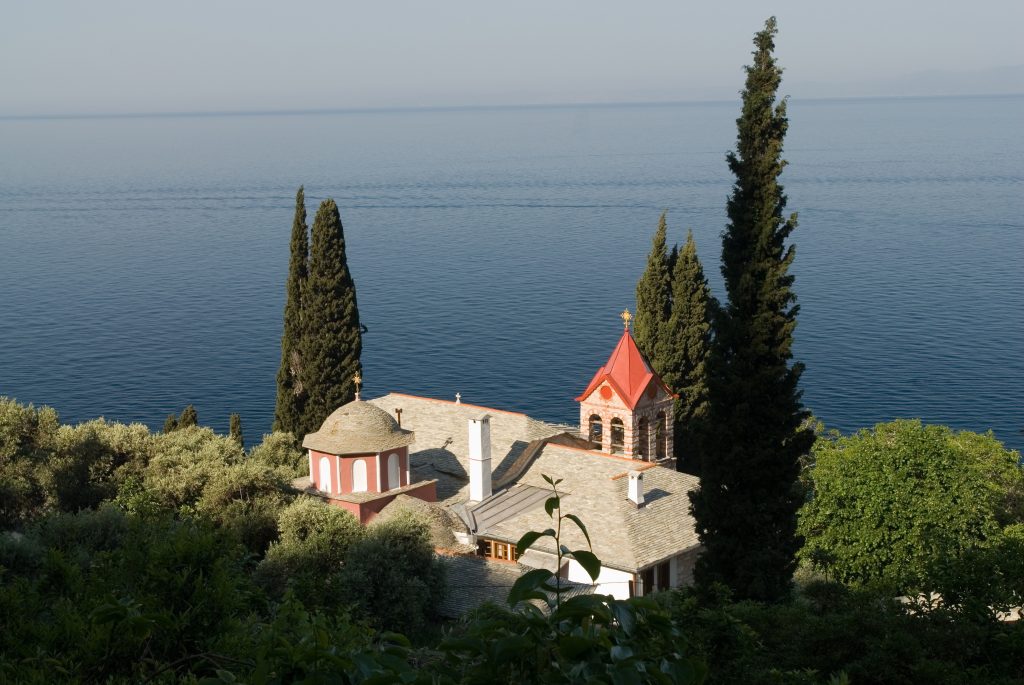
Although Nea Skete Mount Athos does not possess the large centralized treasuries found in major monasteries, it preserves a spiritual wealth that is deeply rooted in personal devotion, ascetic tradition and centuries of continuous prayer. Its sacred treasures are distributed among chapels and individual monastic dwellings, reflecting the skete’s intimate and inward-focused character.
Venerated and wonder-working icons
Nea Skete is particularly associated with icons of the Virgin Mary preserved within its chapels, several of which are traditionally regarded by the monastic community as wonder-working through long-standing prayer and spiritual experience.
Among the most venerated iconographic themes within the skete are:
- the Virgin Mary as intercessor and protector
- Christ Pantocrator, central to hesychastic prayer
- saints closely connected to Athonite ascetic tradition
These icons are not displayed for public veneration but remain integral to the private devotional life of the monks, reinforcing the skete’s deeply personal spiritual atmosphere.
Holy relics of saints preserved at Nea Skete Mount Athos
Within the chapels and monastic dwellings of Nea Skete Mount Athos, a number of specific holy relics of saints are preserved, reflecting the skete’s close spiritual relationship with Saint Paul’s Monastery and the broader Athonite tradition.
Traditionally venerated relics within Nea Skete include fragments of relics associated with:
- Saint Paul of Xeropotamou, whose spiritual legacy is closely linked to the region and the monastery overseeing the skete
- Saint John Chrysostom, one of the most revered Church Fathers within Athonite monastic life
- Saint Basil the Great, foundational figure of Orthodox monasticism
- Saint Gregory the Theologian, central voice of early Orthodox theology
These relics are typically kept within chapels rather than a centralized treasury and are approached through quiet veneration and prayer, in keeping with the skete’s inward-focused spiritual character.
Manuscripts and handwritten spiritual texts
Rather than maintaining a formal library, Nea Skete preserves handwritten prayer books, ascetic texts and copied patristic writings within individual dwellings. These manuscripts often include:
- personal prayer compilations
- excerpts from the Philokalia
- handwritten copies of patristic teachings used for daily spiritual reading
This decentralized preservation reflects the skete’s emphasis on personal spiritual labor rather than institutional scholarship.
A different form of spiritual treasure
The greatest treasure of Nea Skete lies not in visible artifacts, but in its living ascetic tradition. The combination of silence, personal prayer and devotion has shaped a spiritual atmosphere that remains largely unchanged for centuries.
For visitors observing the skete from the sea, understanding this hidden spiritual wealth adds depth to its modest appearance. What seems simple from a distance conceals a rich inner world of faith and discipline.
How Nea Skete Mount Athos fits into the Mount Athos cruise experience
Within the broader Mount Athos sea journey, Nea Skete Mount Athos offers a moment of calm and reflection. After observing a sequence of large and architecturally dominant monasteries, the appearance of the skete introduces a quieter and more intimate dimension of Athonite life.
For passengers following the coastal route, Nea Skete highlights the diversity of monastic expression found on the Holy Mountain. Its dispersed layout and modest scale encourage a different way of observing—one that focuses less on monumentality and more on atmosphere, landscape and spiritual intent.
As a skete of Mount Athos, Nea Skete helps complete the narrative of the journey. It shows that Mount Athos is not defined solely by large monasteries, but also by smaller communities devoted to personal prayer and solitude, all coexisting within the same spiritual ecosystem.
Visitors who want to understand the full southwestern coastal sequence—from major monasteries to sketes like Nea Skete—can refer to the Mount Athos coastal cruise from Ouranoupoli, which outlines the traditional sea route and the key landmarks observed from the water.
Closing – Understanding Nea Skete Mount Athos
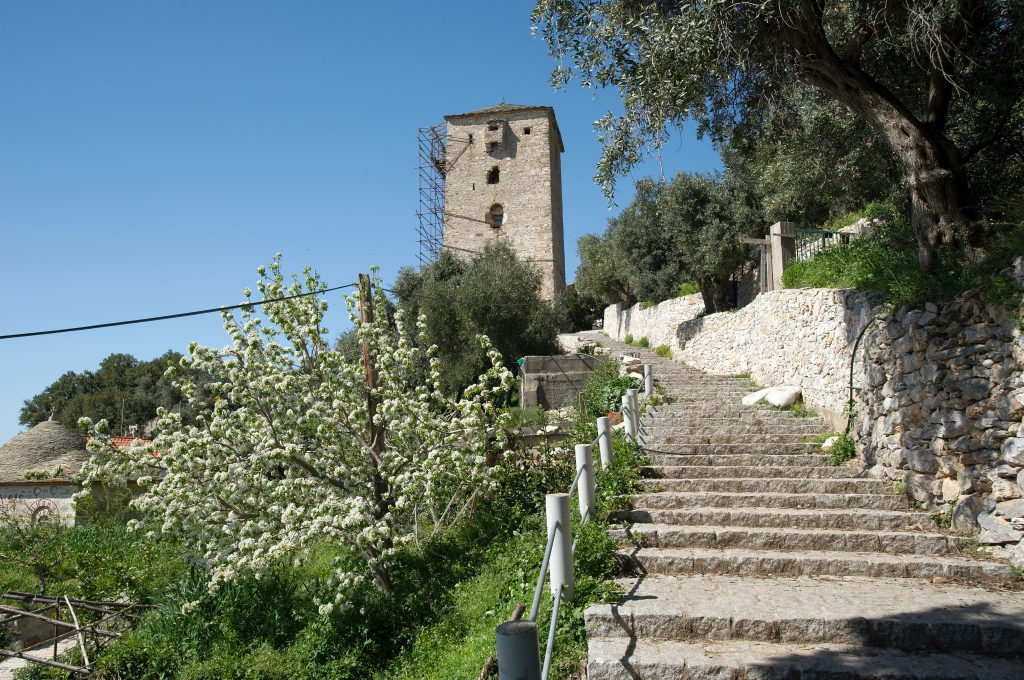
Seeing Nea Skete from the sea offers a rare glimpse into one of the most personal forms of Athonite monastic life. Its quiet presence, scattered dwellings and close relationship with the natural landscape reflect a tradition rooted in humility, discipline and prayer.
Understanding the role of Nea Skete enriches the overall experience of Mount Athos, revealing a spiritual depth that goes beyond architectural landmarks. It reminds visitors that the Holy Mountain is shaped as much by silence and simplicity as by history and monumentality.
How visitors can view Nea Skete from the sea
Nea Skete can be observed during the coastal sightseeing journey along Mount Athos that departs from Ouranoupoli and follows the traditional southwestern passage. This route allows visitors to see monasteries, sketes and the wider Athonite landscape directly from the sea.
More details about routes, schedules and availability are available on the Mount Athos cruises and sea tours page:
👉 https://athos-cruises.gr/mount-athos-cruises-sea-tours/
Frequently Asked Questions about Nea Skete Mount Athos
What is Nea Skete Mount Athos?
Nea Skete is a monastic settlement on Mount Athos consisting of small dwellings and chapels, offering a semi-eremitic form of Orthodox monastic life.
Is Nea Skete a monastery?
No. Nea Skete is not a monastery. It is a skete, administratively connected to Saint Paul’s Monastery.
Can visitors enter Nea Skete during a cruise?
No. Visitors observe Nea Skete from the sea only. Entry to Mount Athos requires an official access permit.
Why is Nea Skete important within Mount Athos?
Nea Skete represents a balance between communal and solitary monastic life, preserving one of the most intimate expressions of Athonite spirituality.
Did you find our post helpful?
- Was this post helpfull?
- Rate us on TripAdvisor
This article made by https://lnk.bio/Rodokalakis
