

Pantokrator Monastery is one of the prominent monastic communities of the Holy Mountain, known for its enduring tradition and its distinctive presence along the eastern coastline of Mount Athos. Set in a rugged coastal setting, Pantokrator Monastery Mount Athos combines the Athonite rhythm of prayer with a long historical memory—offering a clear sense of how this peninsula has preserved spiritual life across centuries.
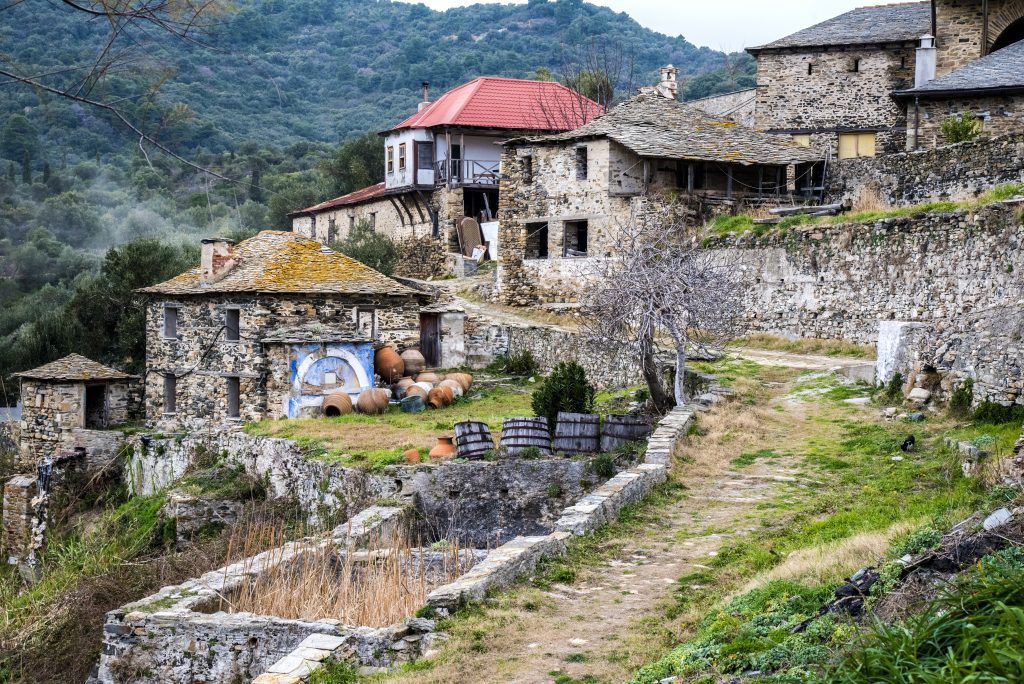
Table of Contents
Where Pantokrator Monastery is located
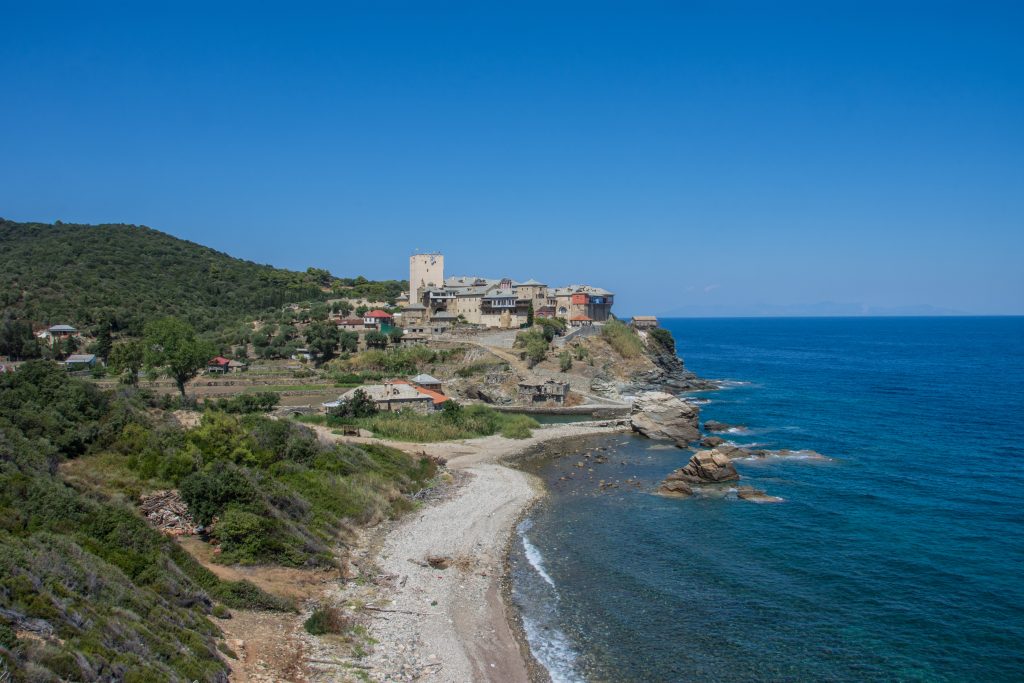
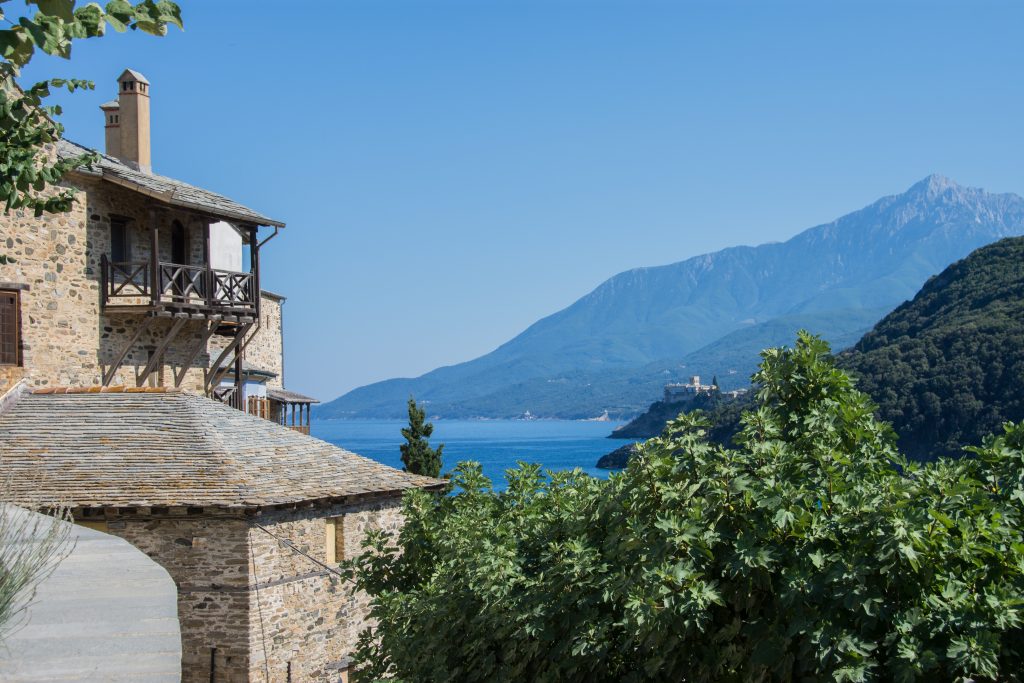
Pantokrator Monastery is positioned on the eastern coastline of the Athonite peninsula, facing the Aegean in a setting that feels both secluded and strongly defined by the sea. The monastery’s placement along this shore helps explain its “coastal character”: the complex is shaped by steep terrain, open horizons, and the practical need for clear boundaries that protect monastic quiet.
For readers following the eastern side from north to south, Pantokrator Monastery Mount Athos sits naturally within the same coastal sequence as other major houses—each separated by distance, landscape, and history, yet connected through the shared Athonite rhythm of worship.
What visitors notice first
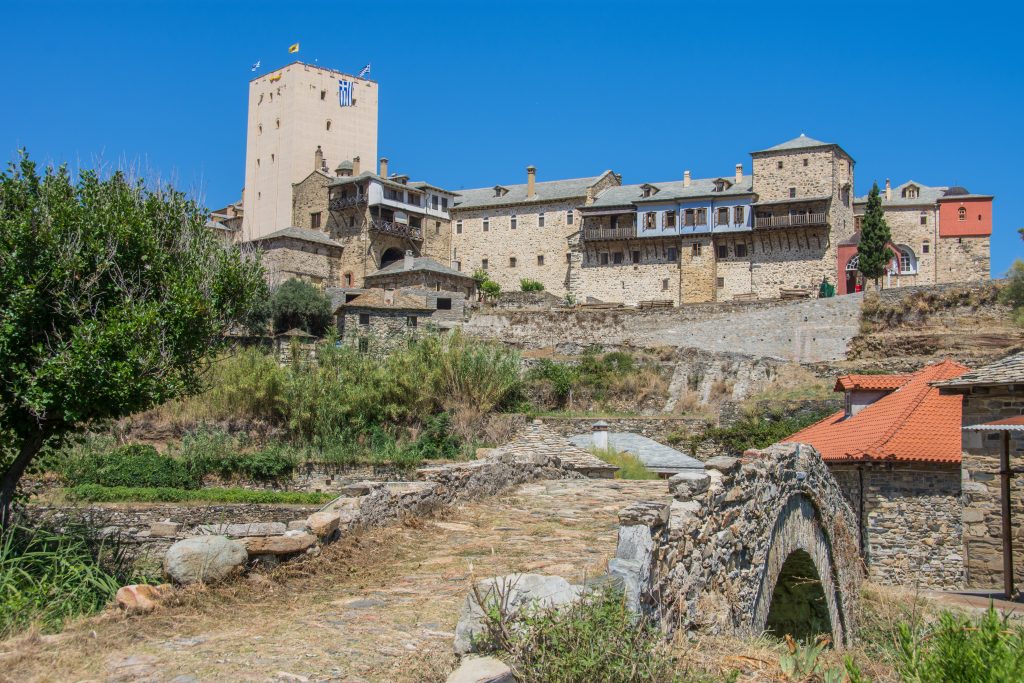
The first impression of Pantokrator Monastery is often its strong coastal silhouette: a self-contained complex that feels firmly anchored to the landscape, with the sea stretching wide in front of it. There’s a quiet “gravity” to the setting—less about grandeur, more about a concentrated monastic presence shaped by terrain, wind, and long continuity.
A second thing many visitors sense quickly is how Athonite space guides behavior. Movement tends to slow down, voices naturally drop, and attention shifts toward the daily rhythm rather than sightseeing. In Pantokrator Monastery Mount Athos, that shift is part of the experience: the monastery doesn’t invite you to consume it—it invites you to observe, respect, and listen.
A brief history of Pantokrator Monastery
Pantokrator Monastery was founded in the mid-14th century, with its establishment commonly dated to 1357–1363, tied to the founders Alexios and John under imperial support during the Palaiologan era. The monastery is dedicated to the Transfiguration of Our Lord and holds the 7th place in the hierarchy of the Athonite monasteries—an indicator of its longstanding standing within Mount Athos.
Like many coastal houses, Pantokrator Monastery Mount Athos carries a history marked by trials and renewals—fires, pressures of different historical periods, and repeated rebuilding—yet it remained a stable monastic presence on the eastern coast. In modern times, a key milestone was its transition to the coenobitic (communal) system in 1992, a change that reshaped daily organization and made it the last Athonite monastery to move from idiorrhythmic life back to cenobitism.
The katholikon and architecture
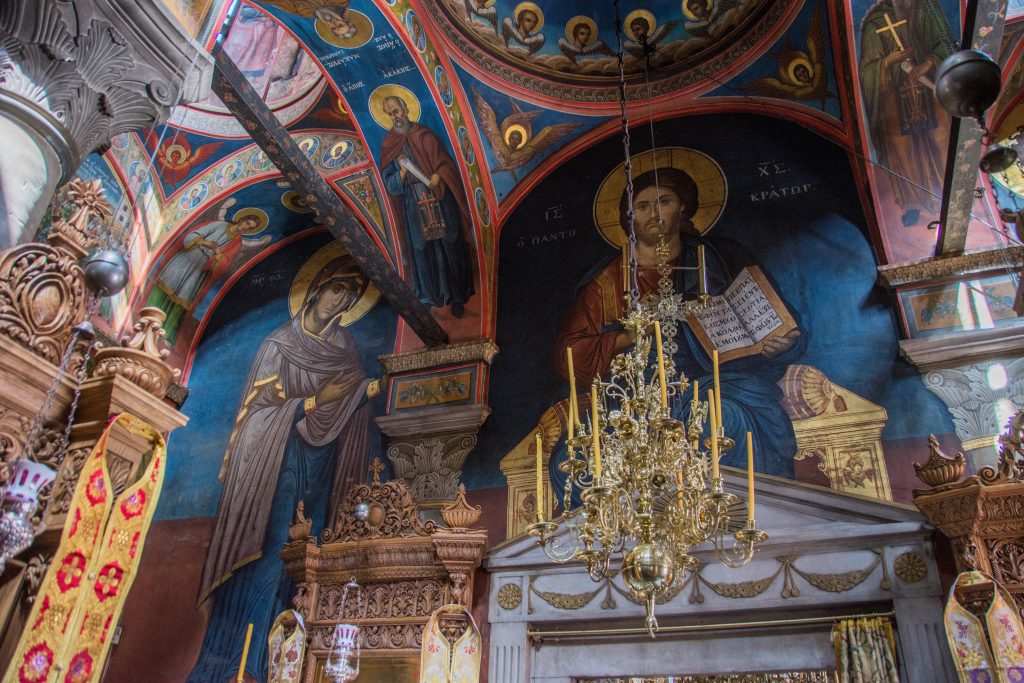
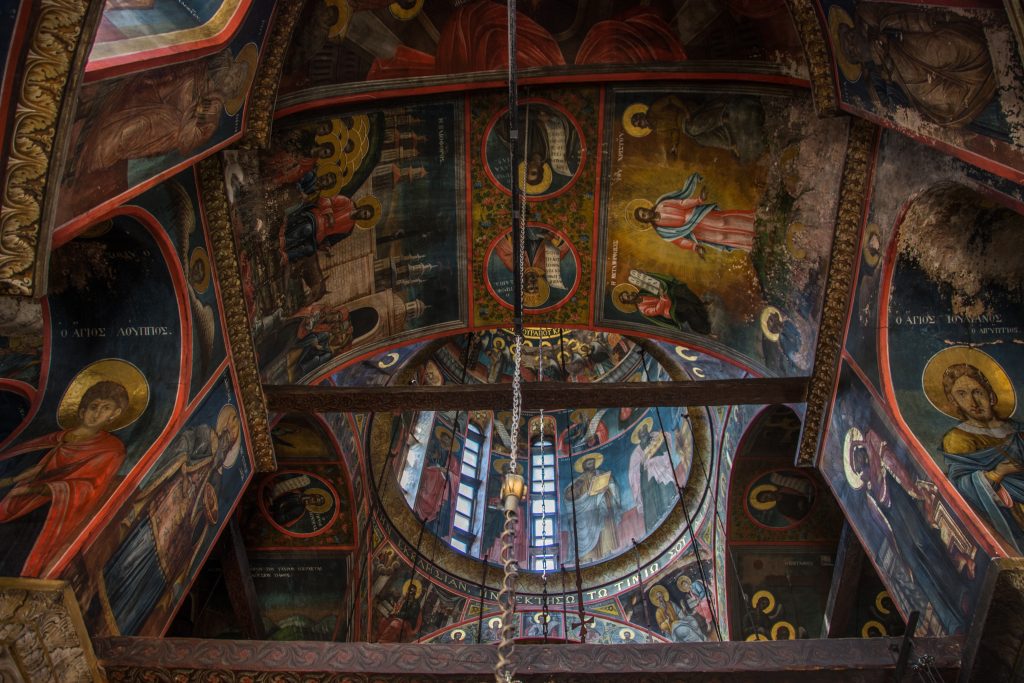
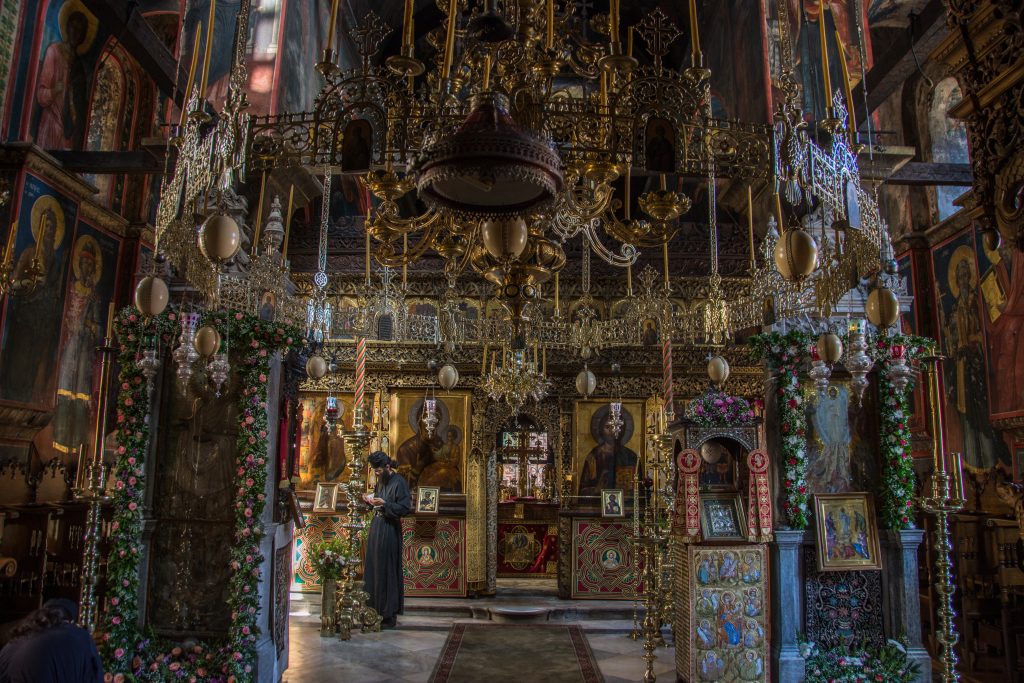
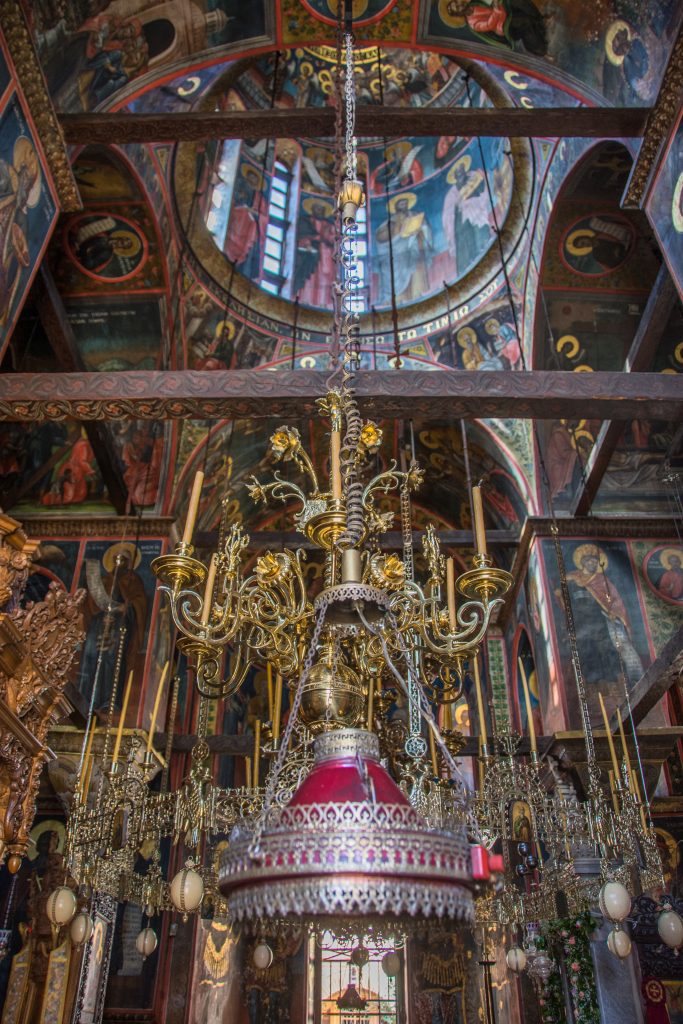
At the center of Pantokrator Monastery stands its katholikon (main church), dedicated to the Transfiguration of Christ—a dedication that frames the monastery’s principal feast and much of its liturgical identity. The architectural logic is distinctly Athonite: the church functions as the spiritual “axis,” while the surrounding buildings form a protected monastic world designed for order, silence, and continuity.
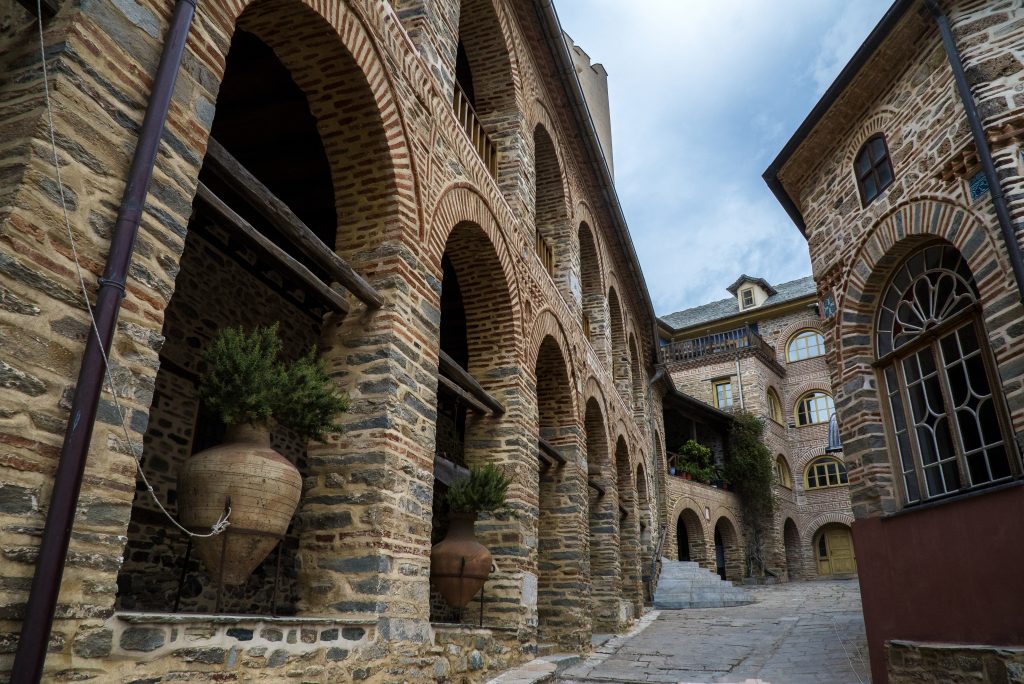
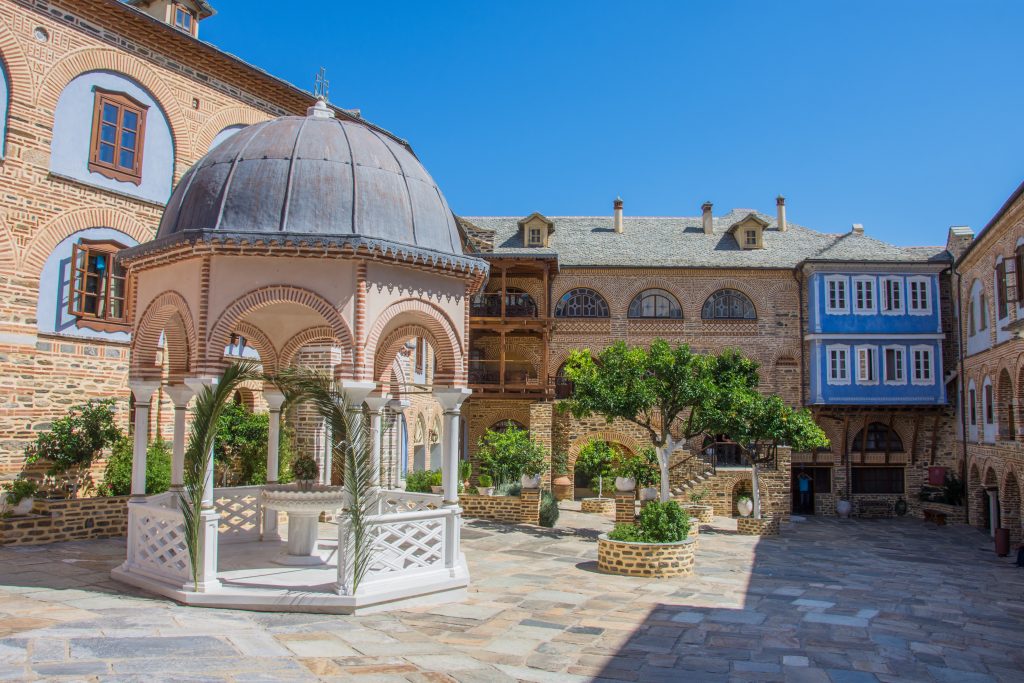
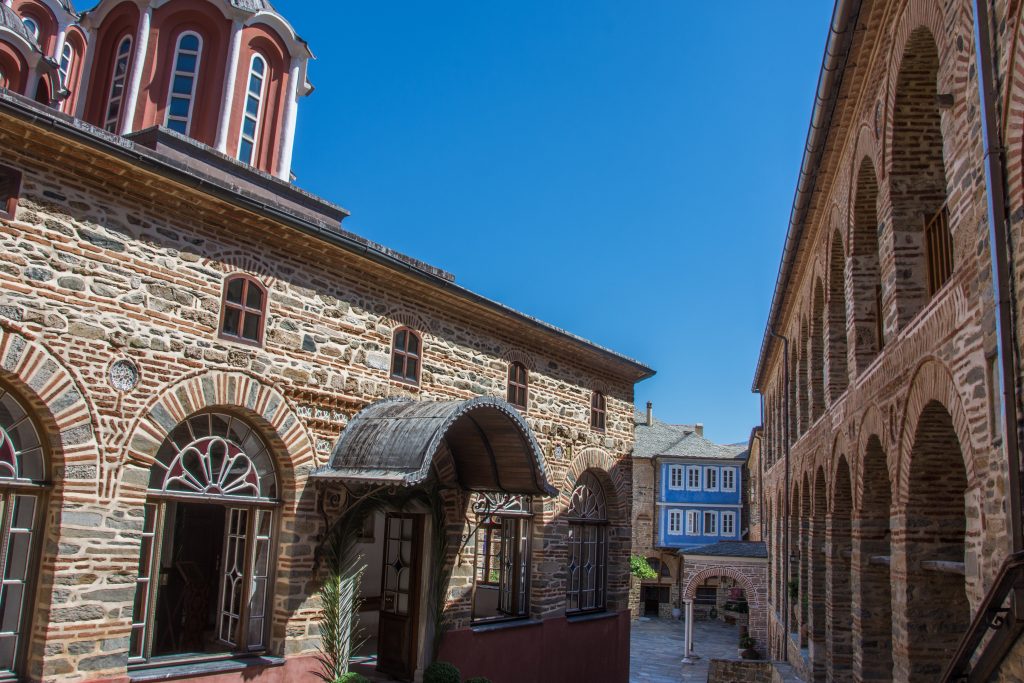
Because Pantokrator Monastery Mount Athos is built in a rugged coastal setting, the overall complex often feels compact and strongly enclosed, reflecting both landscape constraints and the older need for protection. Chapels and smaller devotional spaces add liturgical depth, while courtyards and enclosed passages shape movement in a way that keeps the monastery inward-
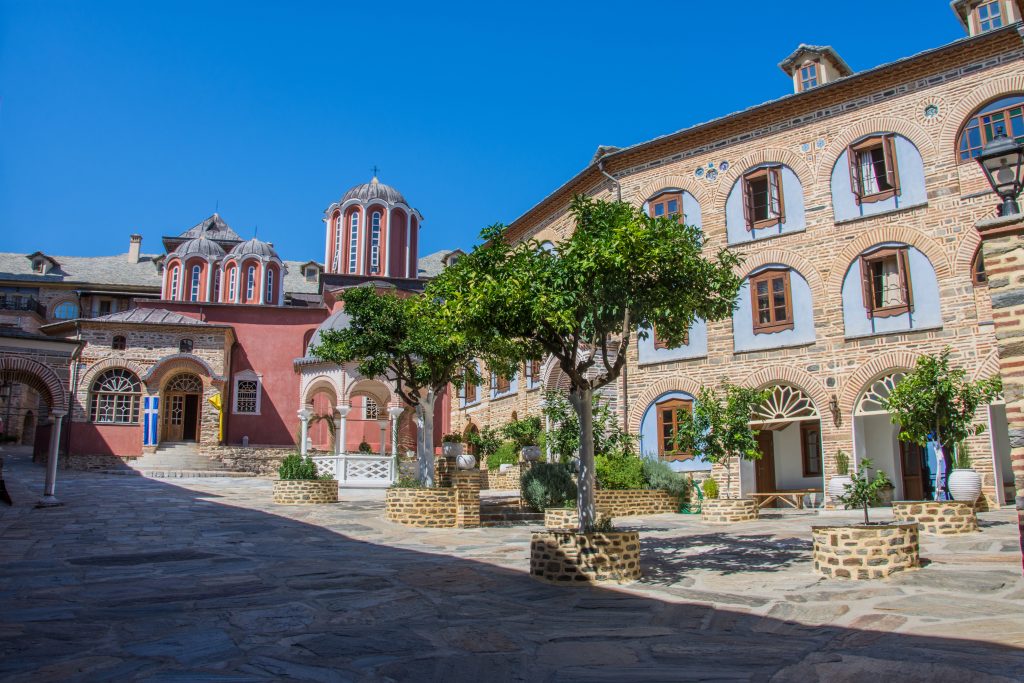
Treasures of Pantokrator Monasteryfacing—focused on prayer rather than outward display.
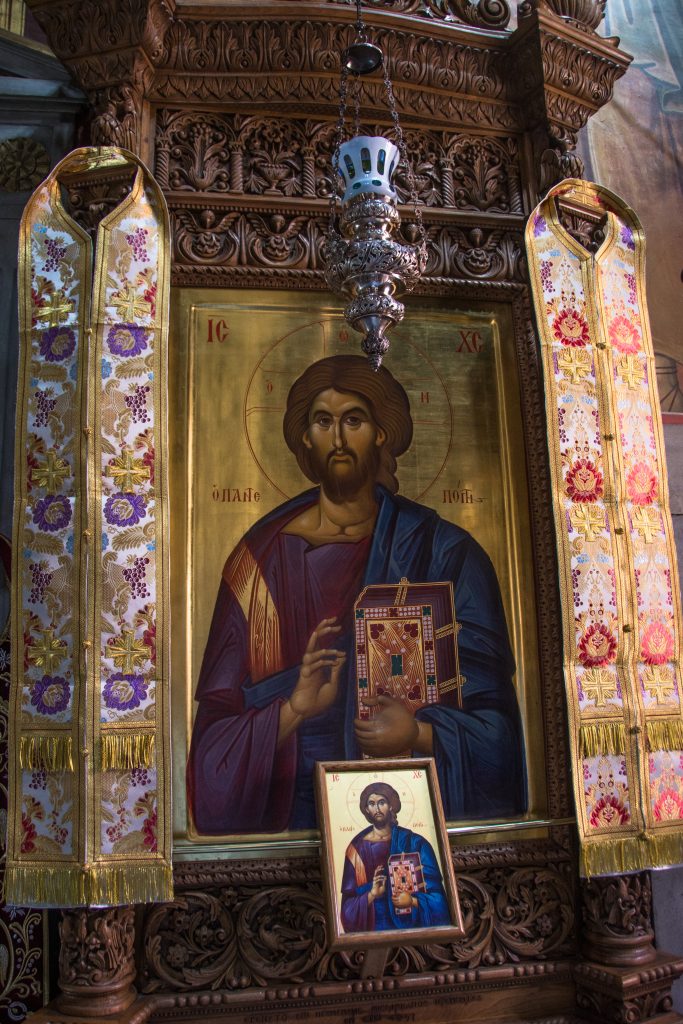
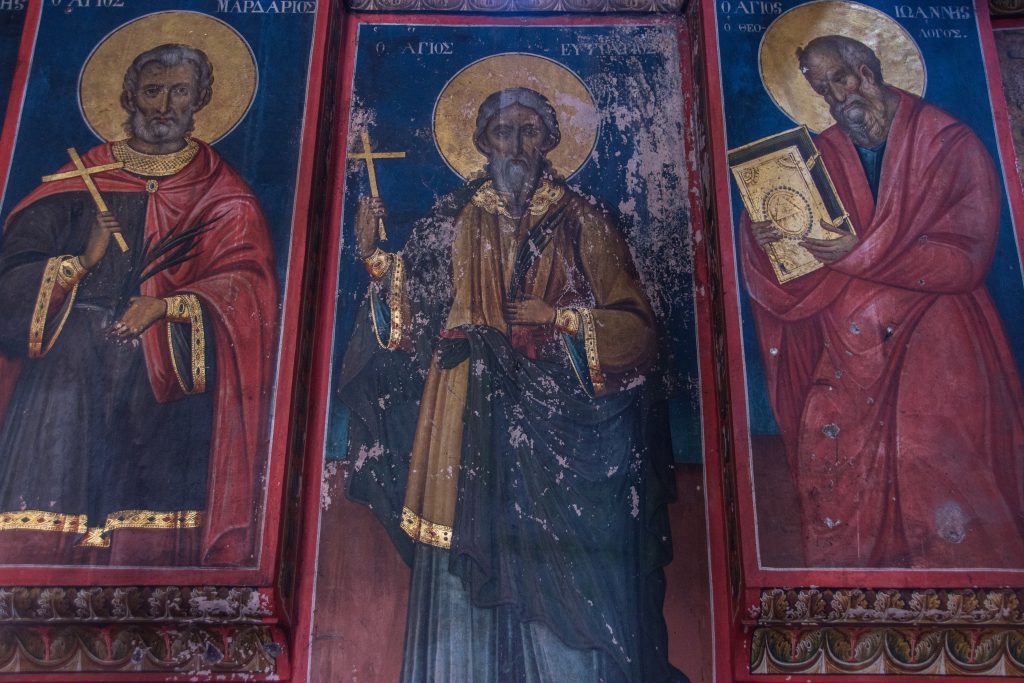
Pantokrator is often remembered for a small number of highly distinctive sacred possessions that shape its identity on Athos: a renowned wonderworking icon, a focused set of revered relics, and a library that preserves the monastery’s textual memory. In Pantokrator Monastery Mount Athos—these treasures are not “display pieces”; they belong to the monastery’s living worship and are approached through veneration and prayer.
Holy relics
The sacristy of Pantokrator Monastery preserves a collection of saintly relics that are repeatedly mentioned in modern descriptions of the monastery. These include relics associated with Saint Ioannikios of Olympus, Saint Theodore (commonly referenced as the Soldier/General in sources), and Saints Cosmas and Damian. In addition, the monastery is known for keeping a piece of Holy Wood (a fragment of the True Cross tradition) and a notable historical relic described as part of the shield of Saint Mercurius—items that are often highlighted together as representative treasures of Pantokrator Monastery Mount Athos.
Venerated icons
The signature icon of Pantokrator Monastery is the wonderworking icon of the Theotokos known as “Gerontissa” (“the Eldress”). Athonite tradition connects the icon with specific miracles remembered at the monastery—most famously the account linked with oil jars and the icon’s protective role for the community. This is why Pantokrator Monastery Mount Athos is frequently associated with the name “Gerontissa” in icon-related references to the Holy Mountain.
Manuscripts and the library
The library of Pantokrator Monastery is commonly described as holding about 350 manuscript codices and around 3,500 printed books. The most important codices are often noted as being kept with the monastery’s treasury and icon repository, reflecting the Athonite approach to books as sacred memory—texts preserved not only for scholarship, but for the continuity of worship and tradition in Pantokrator Monastery Mount Athos.
Spiritual life and traditions
At the heart of Pantokrator Monastery is the Athonite discipline of stability: prayer that shapes the day, quiet work that supports the community, and a steady rhythm that keeps attention focused. This is the “hidden structure” behind everything visitors see—architecture, icons, and history all make the most sense when read as expressions of a living monastic rule.
A distinctive element in Pantokrator Monastery Mount Athos is the deep devotional bond around the icon of the Theotokos Gerontissa. In Athonite life, a wonderworking icon is not treated as a symbol for admiration, but as a personal point of prayer—linked to repentance, consolation, and the everyday needs of a community that lives far from modern distractions.
More broadly, Pantokrator’s spiritual identity reflects a classic Athonite balance: firmness without harshness, and reverence without display. For readers, this matters because it explains why Athos can feel both inaccessible and profoundly human at the same time—its monasteries are not built for visitors first, but for a life of prayer that continues regardless of outside attention.
Practical notes for pilgrims
If you are planning a pilgrimage that includes Pantokrator Monastery, begin with the practical framework of Mount Athos: the diamonitirion permit, entry rules, and the normal procedures that shape movement and overnight stays on the peninsula. Our guide to Visiting Mount Athos explains the steps clearly so you can prepare in advance and avoid common misunderstandings.
As with most Athonite communities, it’s wise to keep your plan flexible. Reception hours, visiting windows, and internal timetables can change with seasons and feast days, and the monastery’s liturgical schedule always comes first. In Pantokrator Monastery Mount Athos, the best approach is to confirm arrangements through the official channels before building a fixed itinerary around a specific day.
Finally, remember that Athos is not a conventional cultural site: respectful clothing, quiet behavior, and patience are part of the “unwritten rules.” Approached with the right mindset, Pantokrator is experienced less as a destination and more as a living spiritual environment.
Seeing Mount Athos as a whole
To understand Pantokrator Monastery in context, it helps to step back and view Athos as a connected landscape: monasteries along the coast, paths and ridges inland, and a shared spiritual culture expressed in different local traditions. If you’re following the eastern side from north to south, Pantokrator Monastery Mount Athos sits within a sequence of major houses whose differences become clearer when you compare them side by side—our overview of the Monasteries of Mount Athos helps you build that wider map.
It’s also common for many people to form their first visual impression of Athos from the sea, even when their deeper interest is the monasteries themselves. Our page on Mount Athos cruises & sea tours explains how sea-view routes work in practice and why some monasteries are not typically included in standard coastal viewing routes—useful background that complements a monastery-focused guide to Pantokrator Monastery without turning this article into a “tour” piece.
Closing
Pantokrator holds a distinctive place on the eastern coastline of the Holy Mountain: founded in the 14th century, shaped by a rugged coastal setting, and remembered for a focused spiritual tradition centered on worship and quiet continuity. For many readers, Pantokrator Monastery Mount Athos becomes especially meaningful through its veneration of the Theotokos Gerontissa, which reflects how Athos preserves devotion not as history, but as living prayer.
FAQ about Pantokrator Monastery
Where is Pantokrator Monastery located?
Pantokrator Monastery is located on the eastern coastline of Mount Athos, in a rugged coastal setting facing the Aegean Sea.
When was Pantokrator Monastery founded?
Pantokrator Monastery Mount Athos is generally dated to the mid-14th century, commonly associated with the period 1357–1363.
What is Pantokrator Monastery dedicated to?
The katholikon of Pantokrator Monastery is dedicated to the Transfiguration of Christ.
Which icon is Pantokrator Monastery best known for?
Pantokrator Monastery Mount Athos is especially associated with the wonderworking icon of the Theotokos known as Gerontissa.
What are notable treasures kept at Pantokrator Monastery?
Pantokrator Monastery is known for revered relics, a respected manuscript tradition, and its famous icon heritage—especially the icon of Gerontissa.
Did you find our post helpful?
- Was this post helpfull?
- Rate us on TripAdvisor
This article made by https://lnk.bio/Rodokalakis
