

The Skete of Saint Anna Mount Athos is one of the most dramatic and spiritually intense monastic settlements on the Holy Mountain. Built along steep cliffs above the sea, the skete represents an extreme expression of Orthodox ascetic life, where prayer, endurance and physical effort are inseparable from daily existence.
As an Agia Anna Skete Mount Athos, it differs fundamentally from both monasteries and more gently structured sketes. Its dwellings, chapels and paths are carved into the mountainside, forming a vertical monastic landscape that reflects a life shaped by discipline, humility and uninterrupted prayer.
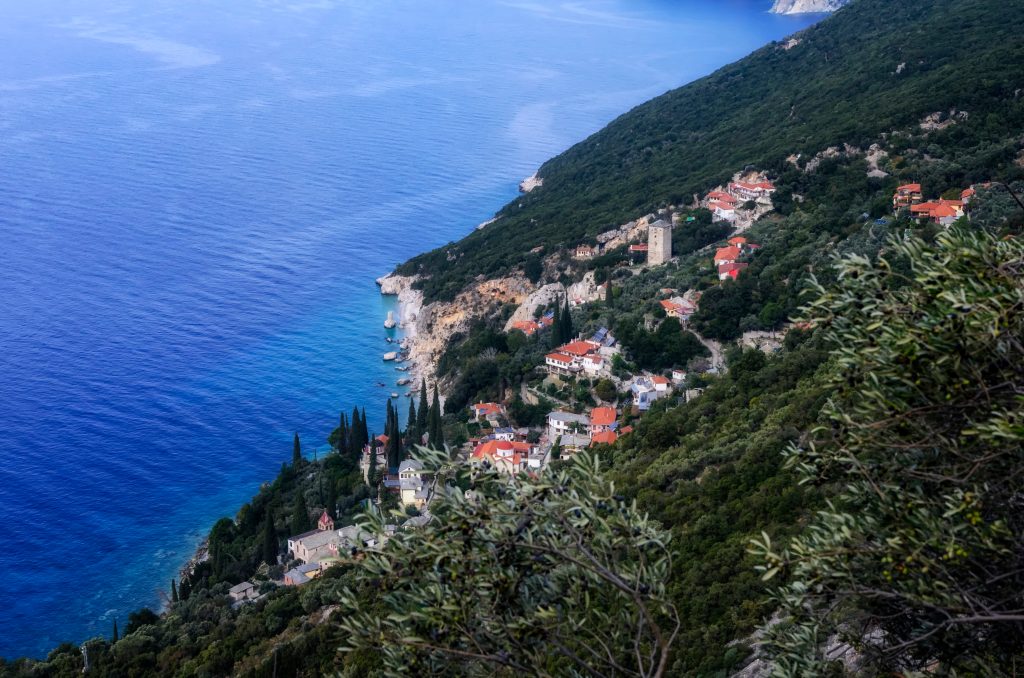
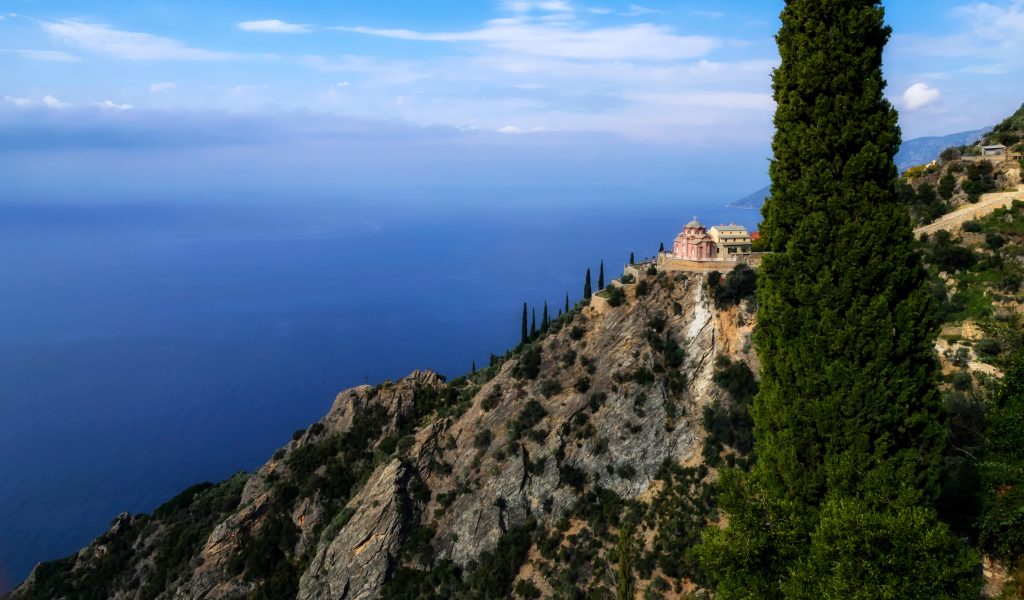
Seen from the sea, the Skete of Saint Anna Mount Athos leaves a powerful impression. White structures cling to the cliffs, rising above the water in layered formations connected by narrow stairways. This striking visual presence immediately communicates the demanding nature of life within the skete.
For many visitors, Agia Anna represents the most vivid example of Athonite asceticism visible from the coastline—a place where the spiritual pursuit is written directly into the landscape itself.
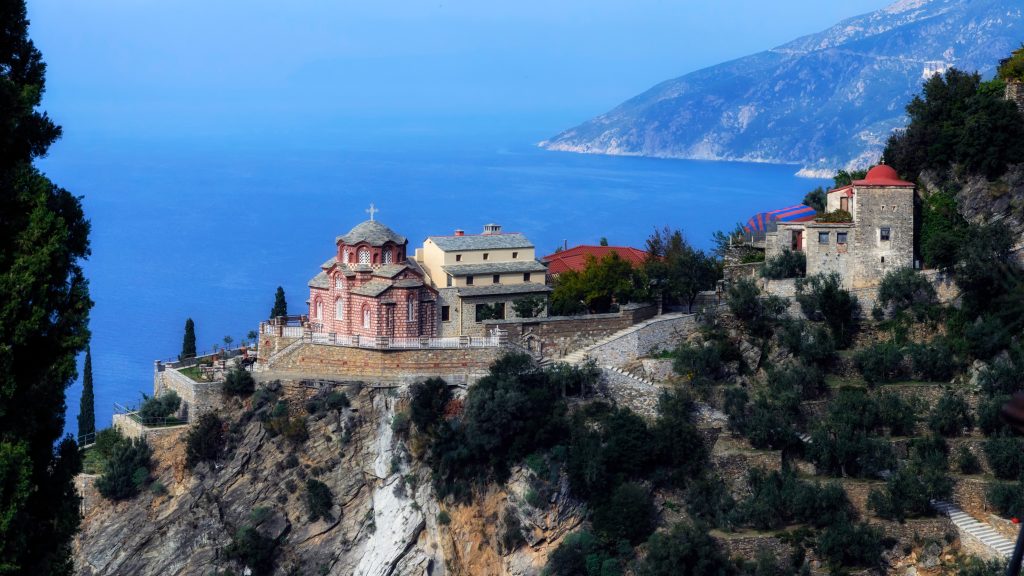
Table of Contents
Where the Skete of Saint Anna Mount Athos appears on the Mount Athos sea route
Along the southwestern coastline of the Holy Mountain, the Skete of Saint Anna Mount Athos appears after the sequence of major monasteries and just beyond the point where the landscape becomes markedly steeper and more rugged. Its position signals a transition into one of the most ascetic and demanding monastic zones of Mount Athos.
From the sea, the skete is immediately recognizable due to its vertical layout. Unlike monasteries built along the shoreline or sketes spread gently across hillsides, Agia Anna rises sharply from the cliffs, forming a layered settlement that follows the natural contours of the mountain.
For visitors following the coastal route, this moment often feels striking. The combination of height, narrow paths and dense construction creates a sense of intensity, clearly distinguishing the Skete of Saint Anna from every other monastic community visible along the route.
What visitors notice when viewing the Skete of Saint Anna from the sea
As the vessel approaches this section of the coastline, visitors immediately notice the dramatic verticality of the Skete of Saint Anna Mount Athos. Unlike monasteries or sketes built close to sea level, the structures here appear stacked high above the water, clinging to steep cliffs that rise sharply from the shoreline.
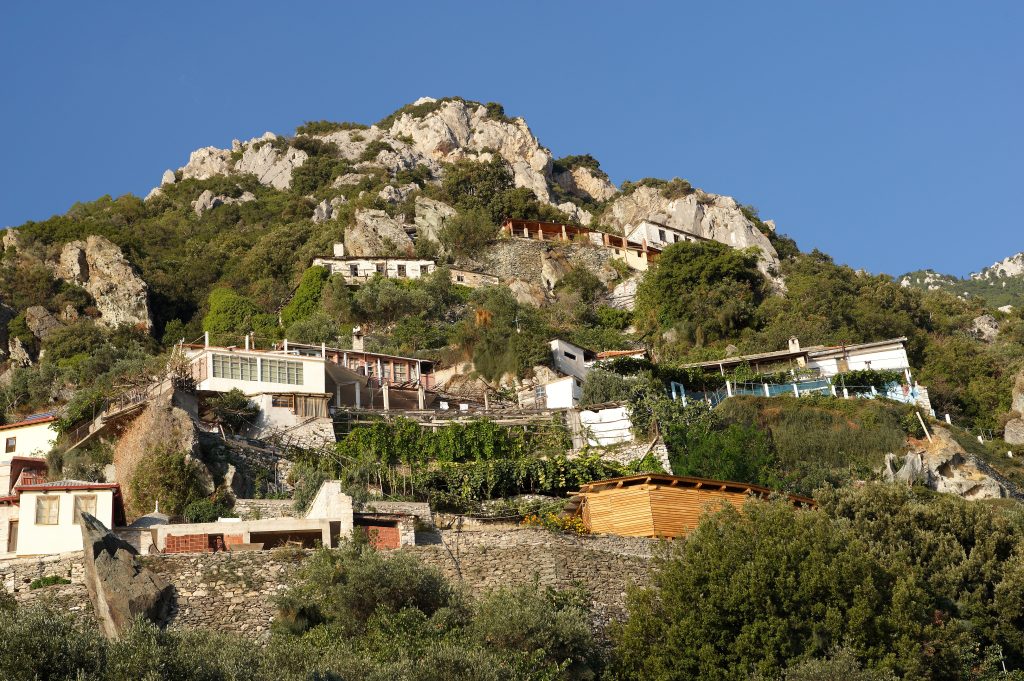
From the sea, narrow stairways and terraces become visible, connecting chapels and dwellings carved into the mountainside. This layered construction creates a striking visual rhythm, emphasizing both height and effort. The skete does not spread outward—it ascends, reinforcing the sense of physical and spiritual ascent.
Another element that stands out is the absence of large open spaces. Everything appears compact, purposeful and demanding. The visual impression suggests a life shaped by discipline and endurance, where movement itself becomes part of daily spiritual practice.
For many observers, this moment is one of the most memorable along the Mount Athos coastline. The Skete of Saint Anna conveys intensity and devotion through its very placement, offering a powerful glimpse into one of the most demanding expressions of Athonite monastic life.
The history and spiritual life of the Skete of Saint Anna Mount Athos
The Skete of Saint Anna Mount Athos developed gradually between the 16th and 17th centuries, as ascetics sought more secluded and demanding forms of monastic life beyond the large monasteries. Its growth was organic, shaped by individual hermits who settled along the cliffs and later formed small brotherhoods connected through shared worship.
Administratively, the skete belongs to Great Lavra Monastery, the oldest monastery on Mount Athos. This relationship provides spiritual oversight while allowing the skete to preserve its intense ascetic character and independence in daily life.
An extreme form of Athonite asceticism
Life in the Skete of Saint Anna is considered among the most demanding on Mount Athos. The steep terrain, long stairways and physical isolation require constant effort, making daily activities inseparable from ascetic discipline.
Monks live in small dwellings or cells grouped around chapels, dedicating their lives to:
- uninterrupted prayer
- fasting and silence
- manual labor, often in extremely challenging conditions
This environment reinforces humility and endurance, turning the landscape itself into a tool of spiritual formation.
Spiritual identity and devotion
The skete is dedicated to Saint Anna, the mother of the Virgin Mary, who is venerated as a powerful intercessor and protector. Devotion to Saint Anna shapes the spiritual identity of the skete, influencing both liturgical life and personal prayer.
This dedication emphasizes themes of patience, perseverance and spiritual preparation—virtues deeply reflected in the daily life of the monks who reside there.
Why this history matters to the visitor
Understanding the history and spiritual life of the Skete of Saint Anna adds depth to the experience of seeing it from the sea. The dramatic cliffside structures are not merely architectural feats, but the visible result of centuries of ascetic commitment.
For many readers, this knowledge transforms a striking visual encounter into an appreciation of one of the most intense spiritual landscapes on Mount Athos.
For readers interested in a broader understanding of Mount Athos, including its history, spiritual tradition and administrative structure, a detailed overview is available in our Visiting Mount Athos guide.
Sacred treasures and holy relics preserved at the Skete of Saint Anna Mount Athos
Despite its austere and demanding way of life, the Skete of Saint Anna Mount Athos preserves sacred treasures of deep spiritual significance, closely connected to its ascetic tradition and centuries of uninterrupted prayer. These treasures are not centralized in a single treasury, but are safeguarded within chapels and individual dwellings throughout the skete.
Holy relics of saints
The Skete of Saint Anna is particularly known for preserving specific holy relics associated with Saint Anna, the mother of the Virgin Mary. Among the most revered relics traditionally venerated within the skete are:
- The left foot of Saint Anna, one of the most important relics of the Holy Mountain
- Fragments of relics of Saint Stephen the Protomartyr
- Relics of Saint John Chrysostom
- Relics of Saint Basil the Great
These relics are approached through quiet veneration and prayer, in keeping with the skete’s deeply ascetic and inward-focused spiritual life.
Venerated and wonder-working icons
The skete is also closely associated with icons of Saint Anna, which hold a central place in its devotional life. Several of these icons are traditionally regarded by the monastic community as wonder-working, due to long-standing accounts of spiritual consolation, healing and answered prayers.
Icons of:
- Saint Anna holding the Virgin Mary
- The Virgin Mary as intercessor
- Christ Pantocrator
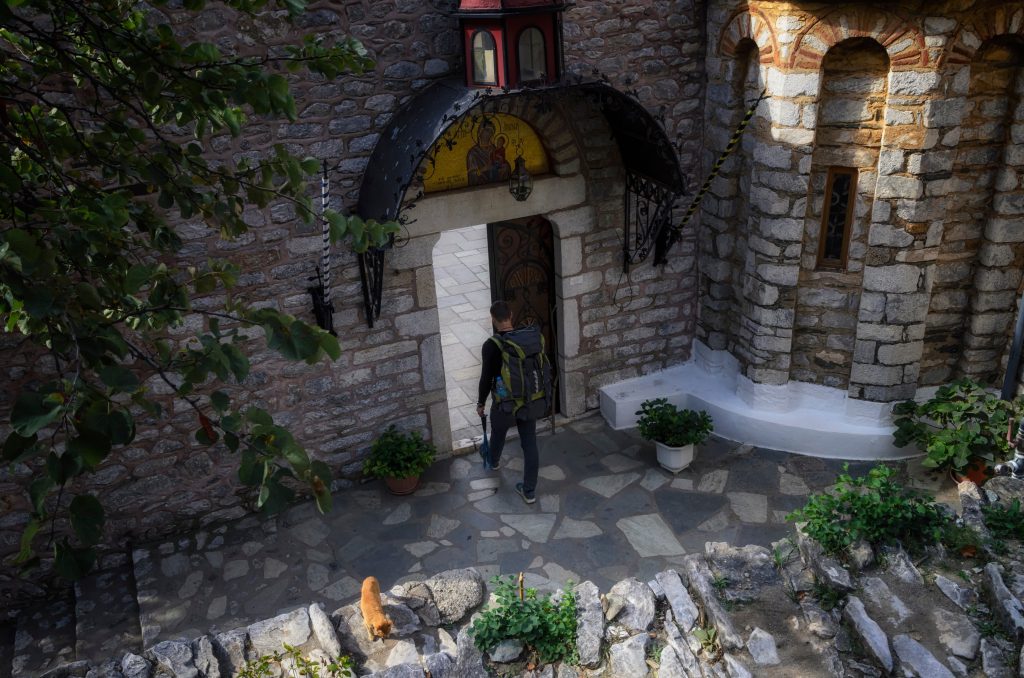
are preserved within chapels carved into the cliffs, reinforcing the intimate and prayer-centered atmosphere of the skete.
Manuscripts and spiritual heritage
Rather than maintaining a formal library, the Skete of Saint Anna preserves handwritten manuscripts and spiritual texts within individual dwellings and chapels. These include:
- handwritten prayer books
- ascetic writings and personal notes
- copied excerpts from patristic texts used for daily spiritual reading
This decentralized preservation reflects the skete’s emphasis on personal spiritual labor rather than institutional scholarship.
A treasure shaped by ascetic life
Beyond physical relics and icons, the greatest treasure of the Skete of Saint Anna lies in its living ascetic tradition. The extreme environment, continuous prayer and physical effort required of daily life have shaped a spiritual heritage that remains one of the most intense on Mount Athos.
For visitors observing the skete from the sea, understanding these sacred treasures adds depth to its dramatic appearance. What seems like a striking cliffside settlement conceals a profound inner world of devotion, endurance and faith.
How the Skete of Saint Anna Mount Athos fits into the Mount Athos cruise experience
Within the coastal journey along Mount Athos, the Skete of Saint Anna Mount Athos represents one of the most intense and memorable moments of the route. After observing monasteries and more gently structured sketes, its dramatic cliffside presence introduces a radically different expression of Athonite monastic life.
For visitors following the sea route, the skete highlights the extreme ascetic dimension of Mount Athos. Its vertical layout, narrow stairways and compact chapels demonstrate how monastic life adapts to the most demanding natural conditions, offering a powerful contrast to the architectural forms seen earlier along the coastline.
As part of the broader Mount Athos coastal sequence, the Skete of Saint Anna deepens the narrative of the journey. It reveals that the Holy Mountain is not defined solely by monasteries, but also by communities where faith is practiced through physical effort, endurance and uninterrupted prayer.
For readers who want a broader understanding of how monasteries, sketes and ports form a continuous coastal narrative, the Mount Athos cruises and sea tours guide provides an overview of the different routes and perspectives available along the Holy Mountain.
Contextual reference to the coastal route
Visitors who wish to understand how monasteries, sketes and key landmarks align along the southwestern coastline can refer to the Mount Athos coastal cruise from Ouranoupoli, which outlines the traditional sea route and the main points of observation from the water.
This reference helps place the Skete of Saint Anna Mount Athos within the broader coastal narrative without altering its spiritual or contemplative character.
Closing – Understanding the Skete of Saint Anna Mount Athos
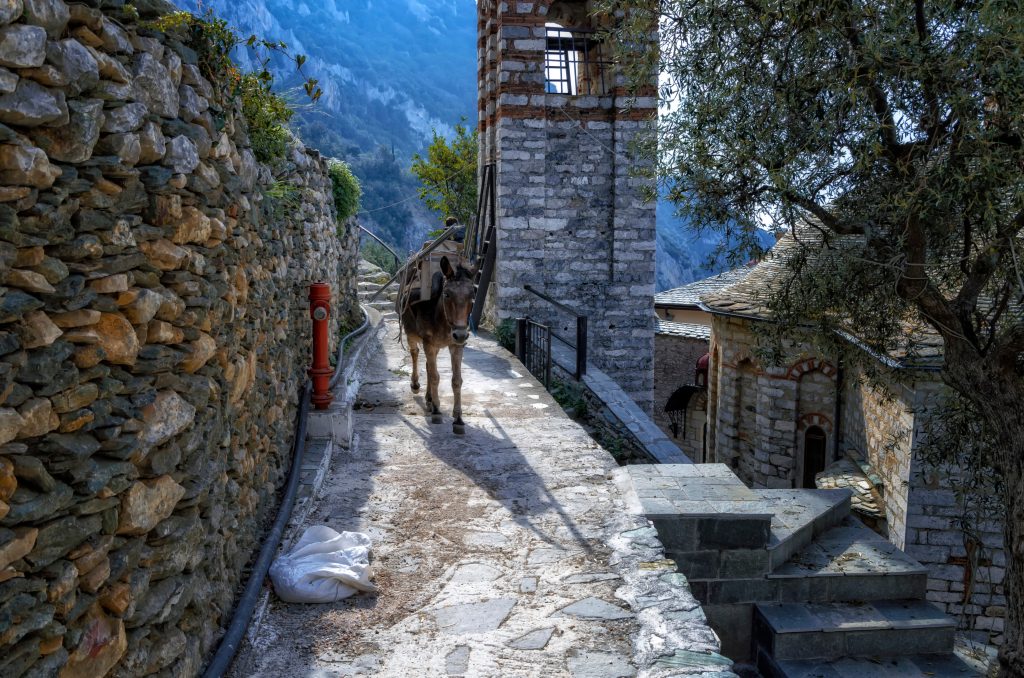
Seeing the Skete of Saint Anna Mount Athos from the sea leaves a lasting impression. Its dramatic cliffside construction, demanding terrain and scattered chapels reflect a form of monastic life shaped by absolute commitment and spiritual endurance.
Beyond its striking appearance lies a living ascetic tradition rooted in prayer, humility and devotion to Saint Anna. Understanding this background transforms the visual encounter into a deeper appreciation of one of the most intense spiritual landscapes on Mount Athos.
The Skete of Saint Anna Mount Athos stands as a powerful reminder that the Holy Mountain is not only a place of historic monasteries, but also a living environment where faith is practiced through perseverance and sacrifice.
Frequently Asked Questions about the Skete of Saint Anna Mount Athos
What is the Skete of Saint Anna Mount Athos?
It is a cliffside monastic settlement on Mount Athos, known for its intense ascetic life and dispersed chapels carved into steep terrain.
Is the Skete of Saint Anna a monastery?
No. It is a skete administratively connected to Great Lavra Monastery, functioning independently in daily ascetic life.
Can visitors enter the Skete of Saint Anna?
No. Visitors observe the skete exclusively from the sea unless they hold an official Mount Athos access permit.
Why is the Skete of Saint Anna considered unique?
Its extreme location, vertical construction and dedication to intense ascetic discipline make it one of the most demanding monastic communities on Mount Athos.
Did you find our post helpful?
- Was this post helpfull?
- Rate us on TripAdvisor
This article made by https://lnk.bio/Rodokalakis
