

Stavronikita Monastery is one of the smallest ruling monasteries of the Holy Mountain, yet it carries a strong spiritual identity and a striking coastal presence on the eastern side of Athos. Restored and renewed through centuries of change, Stavronikita Monastery Mount Athos is especially remembered for its refined artistic legacy and for the quiet intensity that often characterizes smaller Athonite communities.
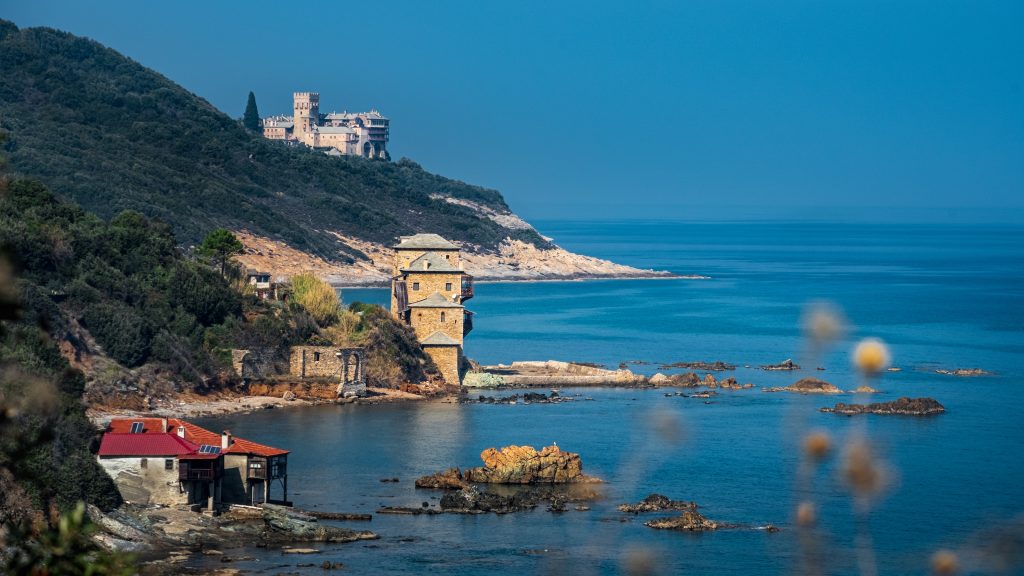
Table of Contents
Where Stavronikita Monastery is located
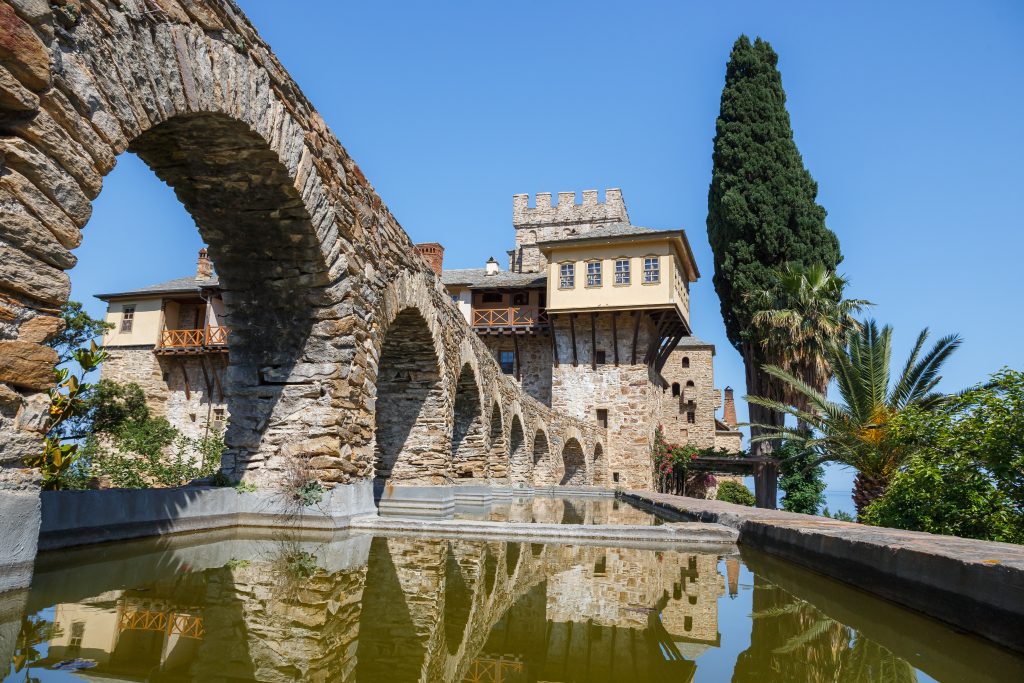
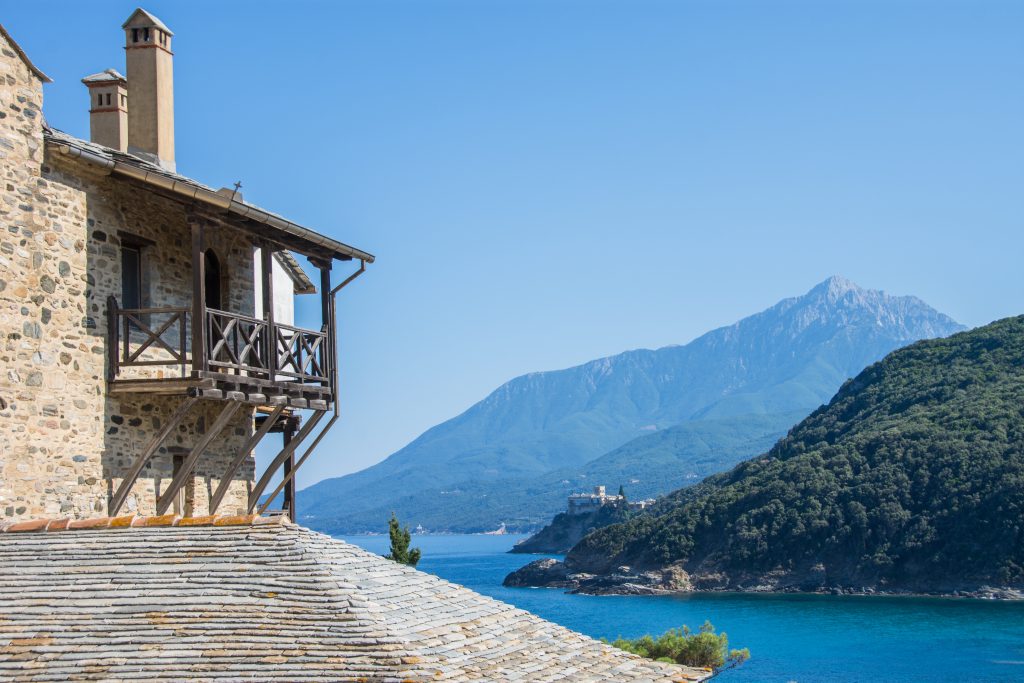
Stavronikita Monastery is set on the eastern coastline of the Athonite peninsula, facing the Aegean in a compact, clearly defined coastal setting. Its position along this shore places it naturally within the same east-coast sequence of major houses, yet its scale and layout feel more concentrated—an Athonite community shaped by limited space, steep terrain, and a strong inward focus.
For readers following the monasteries north to south, Stavronikita Monastery Mount Athos sits between neighboring eastern-coast communities in a landscape where distance is measured not only in miles, but in the character of each house.
What visitors notice first
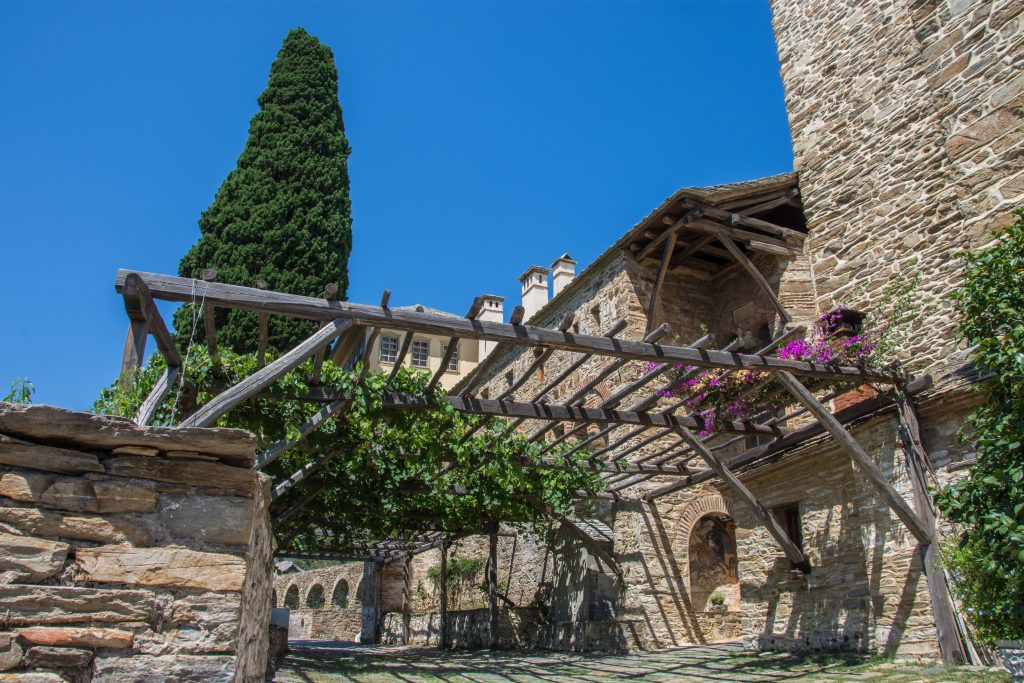
The first impression of Stavronikita Monastery is often its sense of concentration: a smaller monastic world with a compact footprint, where everything feels deliberately arranged around worship and quiet order. Along the eastern shore, the sea and the rock create a dramatic backdrop, but the monastery’s atmosphere tends to pull attention inward—toward stillness rather than scenery.
Many visitors also notice the refined “Athonite balance” that smaller monasteries can embody: less outward complexity, more clarity of rhythm. In Stavronikita Monastery Mount Athos, that can translate into a feeling of intimacy—fewer spaces, fewer distractions, and a stronger impression that the community is built around a single purpose.
A brief history of Stavronikita Monastery
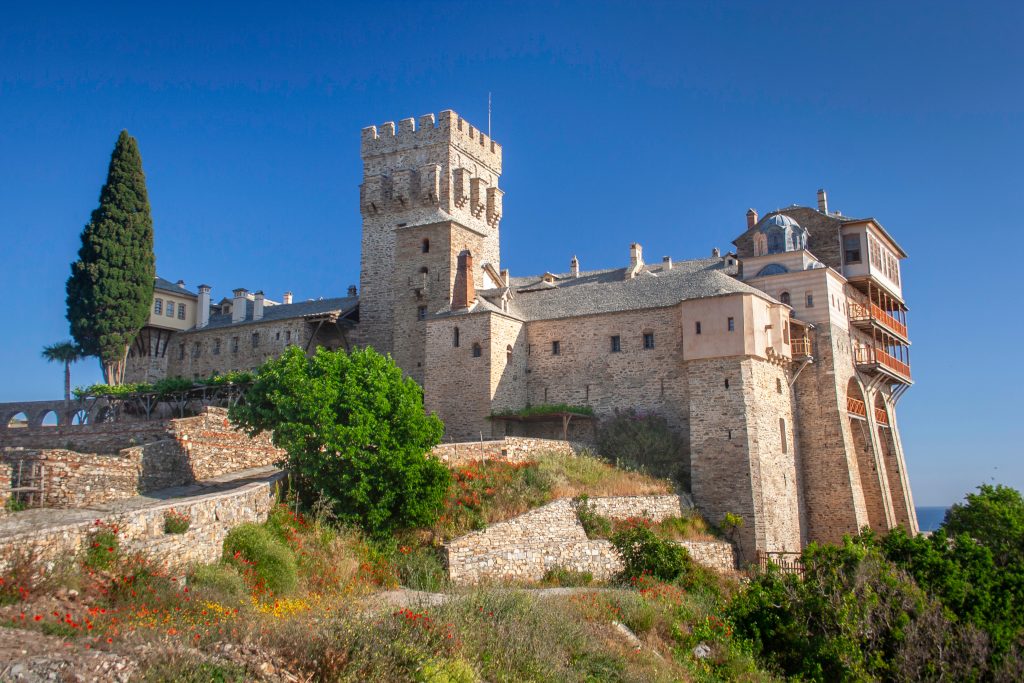
Stavronikita Monastery has roots that reach back to the 10th century, when Athonite monastic life was still forming its early map of coastal communities and hermitages. However, the monastery is especially known for a later “rebirth”: in the 1530s, it was effectively re-established and officially confirmed as a ruling Athonite monastery—often described as the last monastery to be added to the formal Athonite hierarchy (bringing the total to twenty). From that point, Stavronikita Monastery Mount Athos developed a clearer institutional shape, even as it remained one of the smaller communities in size.
A major milestone of that renewal was the construction of the monastery’s katholikon in the mid-16th century (completed in 1546 in many references), followed by the creation of its celebrated fresco program by Theophanes the Cretan, one of the most important painters associated with Athonite monumental art. Over the following centuries, the monastery endured repeated hardships—most notably a sequence of serious fires that damaged buildings and forced rebuilding—yet it continued as a living house of prayer on the eastern shore.
In the modern period, another defining change was the monastery’s return to a fully cenobitic (communal) life, formally recognized in 1968—a shift that strengthened daily organization around a shared rhythm of worship and obedience, and shaped how the community lives today.
The katholikon and architecture
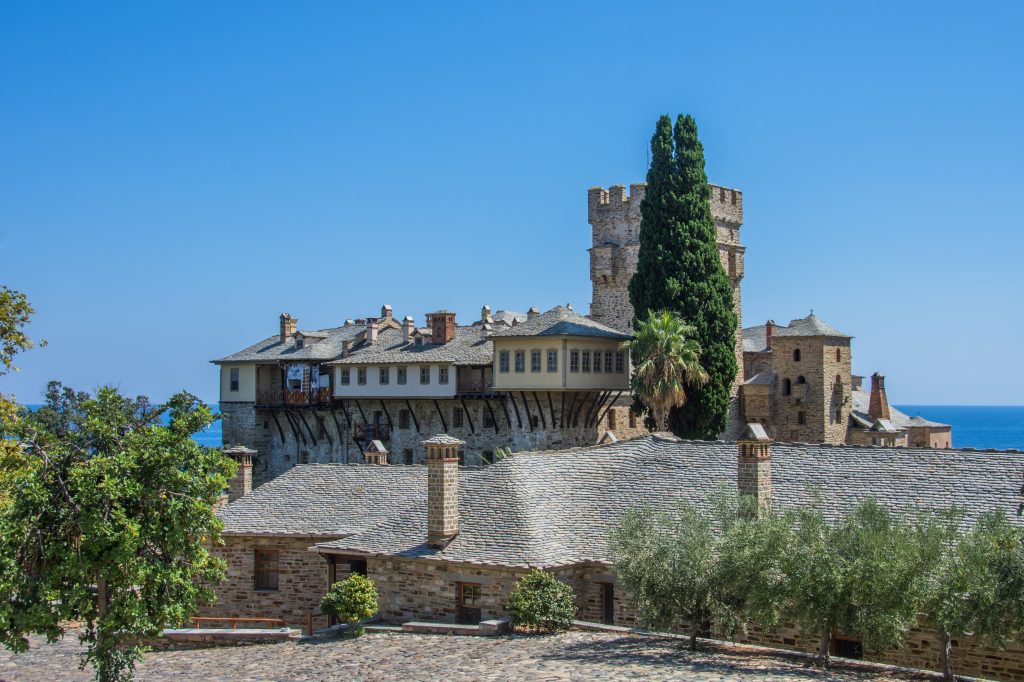
The katholikon (main church) of Stavronikita Monastery is dedicated to Saint Nicholas, and its compact scale reflects the monastery’s limited space—one of the reasons it feels especially “concentrated” compared with larger Athonite houses. The present katholikon is associated with the monastery’s 16th-century renewal, and references commonly note the completion of the new church in 1546.
A defining hallmark of the church is its fresco program by Theophanes the Cretan, widely regarded as one of the masterpieces of Athonite monumental painting. This artistic layer is a major part of how Stavronikita Monastery Mount Athos is remembered: the architecture provides the quiet structure, while the painting gives the interior its theological “voice.”
Treasures of Stavronikita Monastery
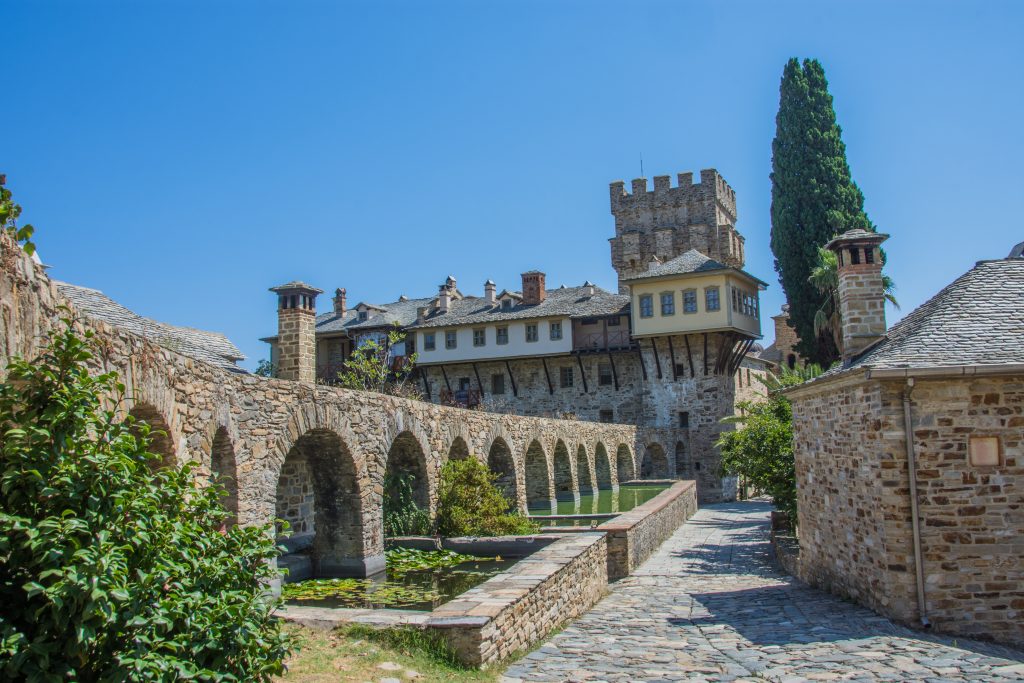
Although compact in size, Stavronikita Monastery is widely respected for a set of treasures that are unusually “signature” for one Athonite house: a famous icon of Saint Nicholas, a carefully kept collection of holy relics, and a library of manuscripts that reflects centuries of spiritual and intellectual continuity. In Stavronikita Monastery Mount Athos, these are not presented as exhibits—they belong to living worship and are approached through veneration.
Holy relics
The monastery keeps a notable collection of saintly relics preserved in its treasury and used within the devotional life of the community. Relics commonly associated with the monastery include those connected with Saint Anne, Saint John the Baptist, the 20,000 Martyrs of Nicomedia, and saints such as Charalambos, Tryphon, Christophorus, Panteleimon, Artemius, and Paraskevi. The exact way these relics are presented and venerated follows Athonite discretion: the emphasis is always on prayer and remembrance rather than on display.
Venerated icons
The best-known icon of Stavronikita Monastery is the mosaic icon of Saint Nicholas “Streidas” (Saint Nicholas of the Oyster)—a celebrated Athonite treasure tied to a well-known tradition about the icon’s discovery from the sea and the mark left on the saint’s forehead. This icon is one of the strongest “identity markers” of Stavronikita Monastery Mount Athos, frequently referenced whenever Athos’ most distinctive icons are discussed.
Beyond this signature mosaic, the monastery also preserves a collection of portable icons and liturgical objects of artistic and devotional value, consistent with the Athonite pattern where art is inseparable from worship.
Manuscripts and the library
Stavronikita’s library is often described as holding around 171 manuscripts, including parchment codices (with a significant portion dated from earlier centuries), along with smaller groups of manuscripts on other materials and a broader collection of printed books. Certain codices are singled out in descriptions for their decoration and careful script, reflecting the monastery’s role in preserving liturgical and theological memory over time.
At the center of Stavronikita Monastery is the classic Athonite priority: a steady cycle of worship that shapes everything else—work, silence, meals, and rest. Because the community is smaller and the space more compact, daily life can feel especially “focused,” with fewer distractions and a stronger sense that every part of the monastery exists to support prayer.
A distinctive feature of Stavronikita Monastery Mount Athos is how naturally its spiritual identity connects with Saint Nicholas, both through the katholikon’s dedication and through the monastery’s most famous icon tradition. In Athonite terms, this is not symbolic branding—it’s a living relationship expressed in feasts, hymns, personal prayer, and the way the community narrates its own memory.
More broadly, Stavronikita reflects an Athonite principle that often surprises readers: the deeper a place is rooted in tradition, the less it needs to explain itself. Many things remain understated on purpose, not because they lack importance, but because monastic life protects what is interior. Approached with respect, Stavronikita Monastery is best understood not as a “site,” but as a living spiritual environment.
Practical notes for pilgrims
If you are planning a pilgrimage that includes Stavronikita Monastery, start with the practical framework of Mount Athos: the diamonitirion permit, entry rules, and the basic procedures that shape movement and overnight stays on the peninsula. Our guide to Visiting Mount Athos lays out the essentials clearly so you can prepare properly and avoid last-minute confusion.
As with all Athonite communities, it’s wise to keep your plan flexible. Reception windows, service times, and monastery routines can vary by season, feast days, and internal needs—and the liturgical schedule always comes first. In Stavronikita Monastery Mount Athos, a respectful approach means confirming arrangements through the official channels before building a fixed itinerary around a specific day.
Finally, remember that Athos is a living monastic state rather than a conventional cultural attraction: quiet behavior, modest clothing, and patience are part of the experience. Approached in this spirit, Stavronikita Monastery often leaves visitors with a lasting impression of concentrated stillness and continuity.
Seeing Mount Athos as a whole
To place Stavronikita Monastery in context, it helps to step back and view Athos as a connected landscape: monasteries along the coast, paths inland, and a shared spiritual culture expressed through different local histories. If you’re following the eastern side north to south, Stavronikita Monastery Mount Athos becomes easier to understand when compared with neighboring houses—our overview of the Monasteries of Mount Athos helps you build that wider map.
It’s also common for many people to form a first visual impression of Athos from the sea, even if their deeper interest is the monasteries themselves. Our page on Mount Athos cruises & sea tours explains how sea-view routes work and why some monasteries are not typically included in standard coastal viewing routes—useful background that complements a monastery-focused guide to Stavronikita Monastery without turning this article into a “tour” piece.
Closing
Stavronikita Monastery may be among the smaller Athonite houses, yet its spiritual presence is remarkably concentrated—shaped by its coastal setting, its 16th-century renewal, and its deep connection to Saint Nicholas. For many readers, Stavronikita Monastery Mount Athos is especially memorable through the icon tradition of Saint Nicholas “Streidas,” which reflects how Athos preserves devotion as living prayer rather than distant history.
FAQ about Stavronikita Monastery
Where is Stavronikita Monastery located?
Stavronikita Monastery is located on the eastern coastline of Mount Athos, facing the Aegean Sea in a compact coastal setting.
What is Stavronikita Monastery dedicated to?
The katholikon (main church) of Stavronikita Monastery is dedicated to Saint Nicholas.
Why is Stavronikita Monastery famous?
Stavronikita Monastery Mount Athos is especially known for its artistic legacy—particularly the frescoes associated with Theophanes the Cretan—and for the celebrated mosaic icon of Saint Nicholas “Streidas.”
What are the main treasures of Stavronikita Monastery?
Stavronikita Monastery is known for revered relics, the famous icon tradition of Saint Nicholas, and a library of manuscripts that reflects centuries of monastic continuity.
How should pilgrims prepare for a visit?
Begin with the Athos essentials—permits, rules, and logistics—then confirm arrangements through the official channels. Our Visiting Mount Athos guide summarizes the key steps before you include Stavronikita Monastery in a fixed itinerary.
Did you find our post helpful?
- Was this post helpfull?
- Rate us on TripAdvisor
This article made by https://lnk.bio/Rodokalakis
