

Vatopedi Monastery is one of the best-known monastic communities on the Holy Mountain, respected for its long spiritual continuity and the richness of its heritage. Located on the eastern side of the Athonite peninsula, Vatopedi Monastery Mount Athos offers a clear window into the living tradition of Athos—where daily prayer, hospitality, and centuries of history meet in one of the most influential houses of the monastic state.
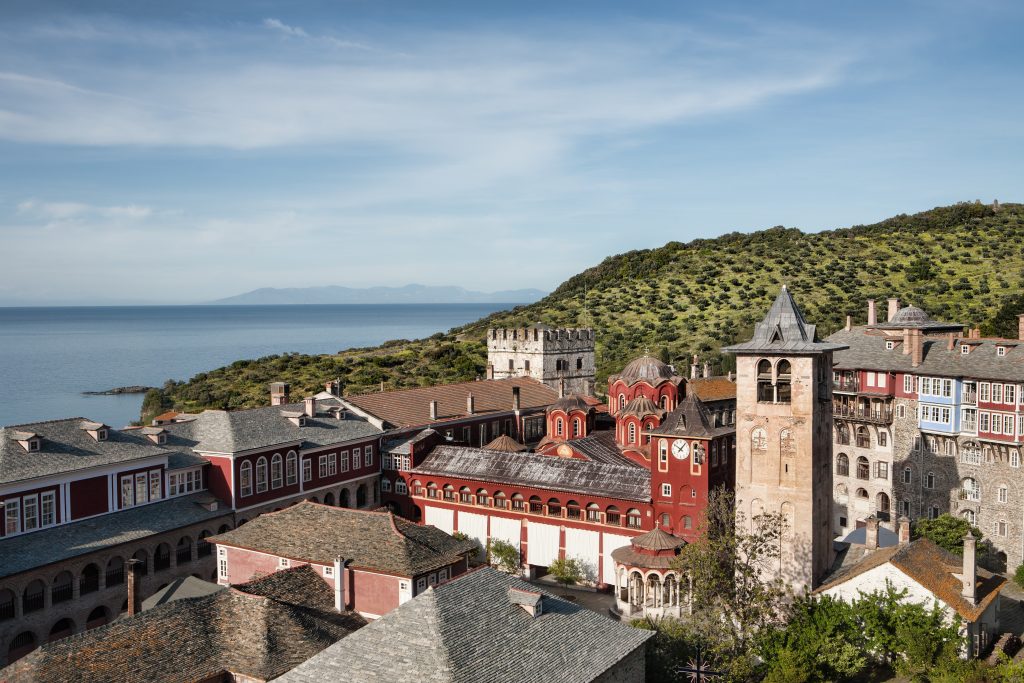
Table of Contents
Where Vatopedi Monastery is located
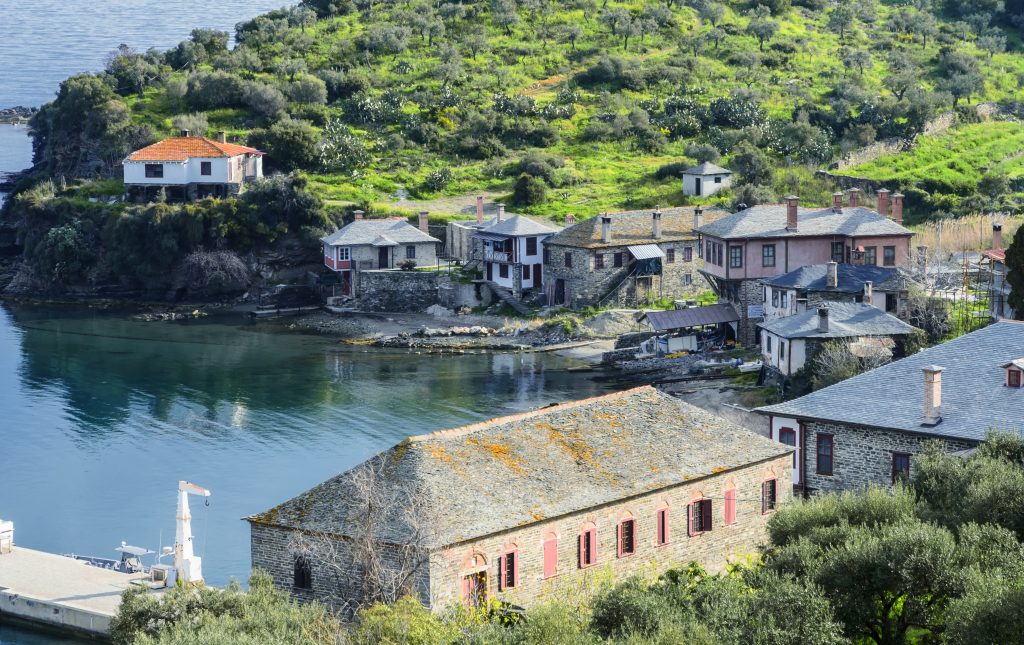
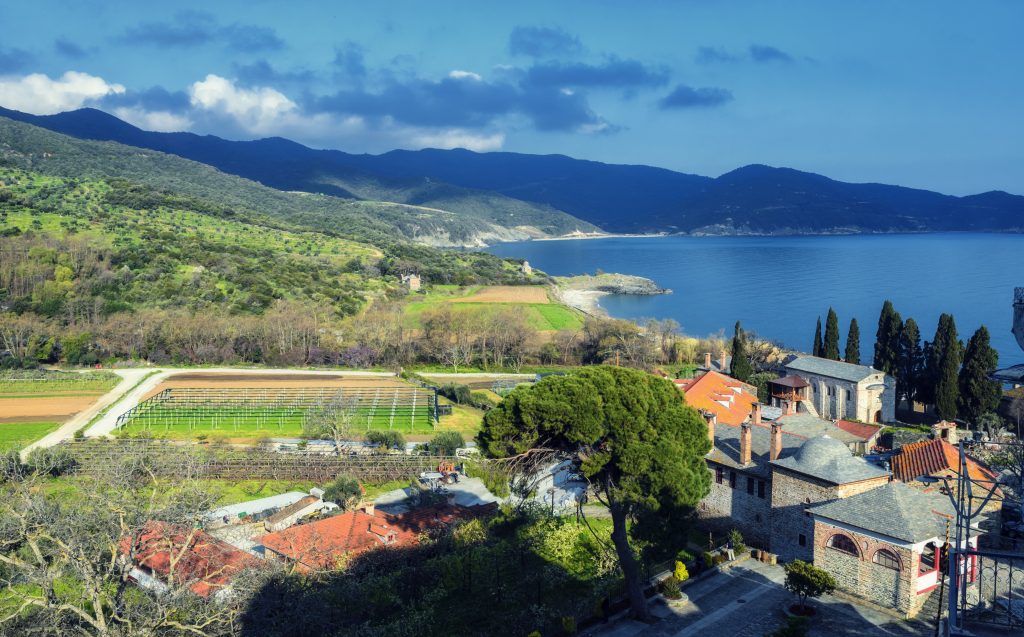
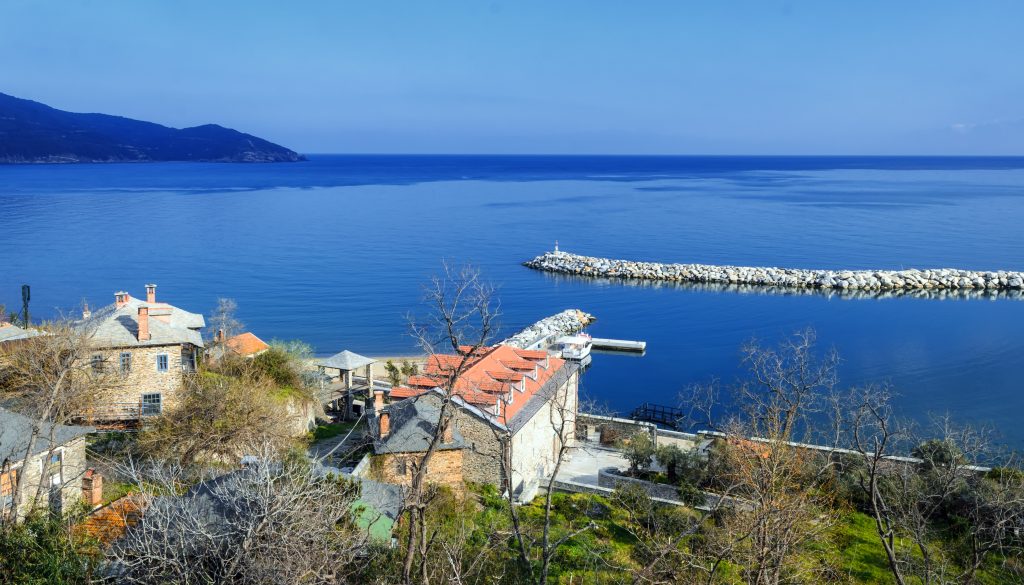
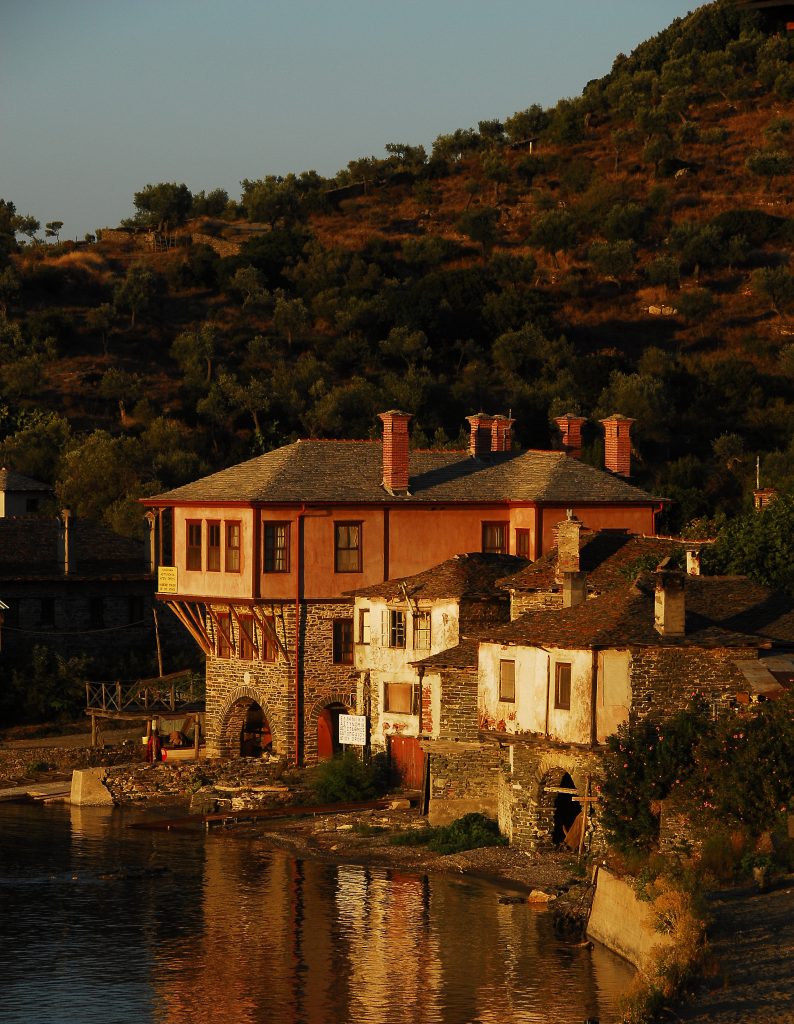
Vatopedi Monastery stands on the eastern side of the Athonite peninsula, in a coastal setting that links the community naturally to the shoreline routes while remaining deeply inward-looking in daily life. Because Vatopedi Monastery Mount Athos sits along the same eastern coastline where several major houses appear in sequence, it’s often studied as part of a north-to-south “chain” of monasteries—each with its own character, history, and spiritual emphasis.
What visitors notice first
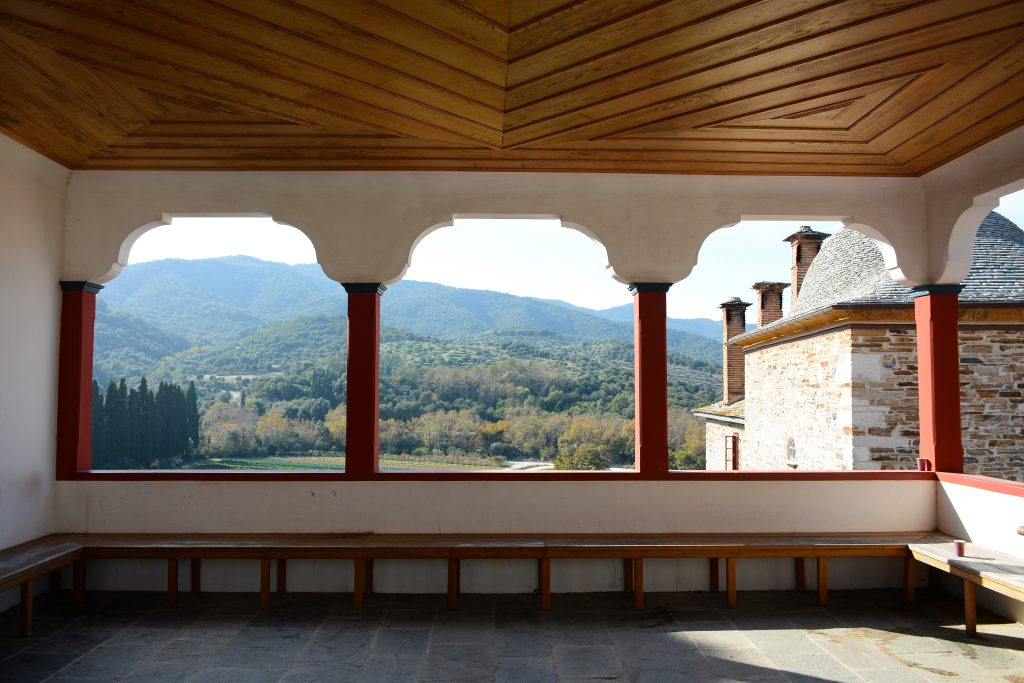
Even before you know the details, Vatopedi Monastery feels “large” in the Athonite sense—not only in scale, but in presence. The layout and shoreline setting create a strong first impression: a self-contained monastic world with clear boundaries, built to protect a rhythm of prayer rather than to welcome constant movement.
Another thing visitors often sense quickly is the monastery’s balance between order and warmth. Athonite hospitality is usually quiet and practical—simple guidance, clear rules, and an unspoken reminder that everything revolves around the liturgical schedule. In Vatopedi Monastery Mount Athos, that combination—structure on the outside, inner stillness at the center—helps explain why the community is so frequently mentioned when people speak about Athos as a living tradition.
A brief history of Vatopedi Monastery
The story of Vatopedi Monastery stretches back to the early centuries of organized Athonite life, and its long continuity is one of the reasons it holds such a prominent place on the Holy Mountain. Like many major communities on Athos, its identity was shaped by a mix of spiritual leadership, imperial and noble patronage, and the steady labor of generations who rebuilt, expanded, and safeguarded the monastery through changing historical eras.
Over time, Vatopedi Monastery Mount Athos became known not only as a place of prayer, but also as a center of Orthodox learning and preservation. The monastery’s archives, manuscripts, and sacred objects reflect a broader Athonite mission: to protect liturgical tradition and spiritual memory, even when the outside world was unstable.
What makes the monastery’s history especially meaningful to a reader today is that it doesn’t present itself as a “completed” past. Vatopedi Monastery is a living continuation—where history is felt in the daily cycle of services and the quiet continuity of monastic discipline, rather than in dates alone.
The katholikon and architecture
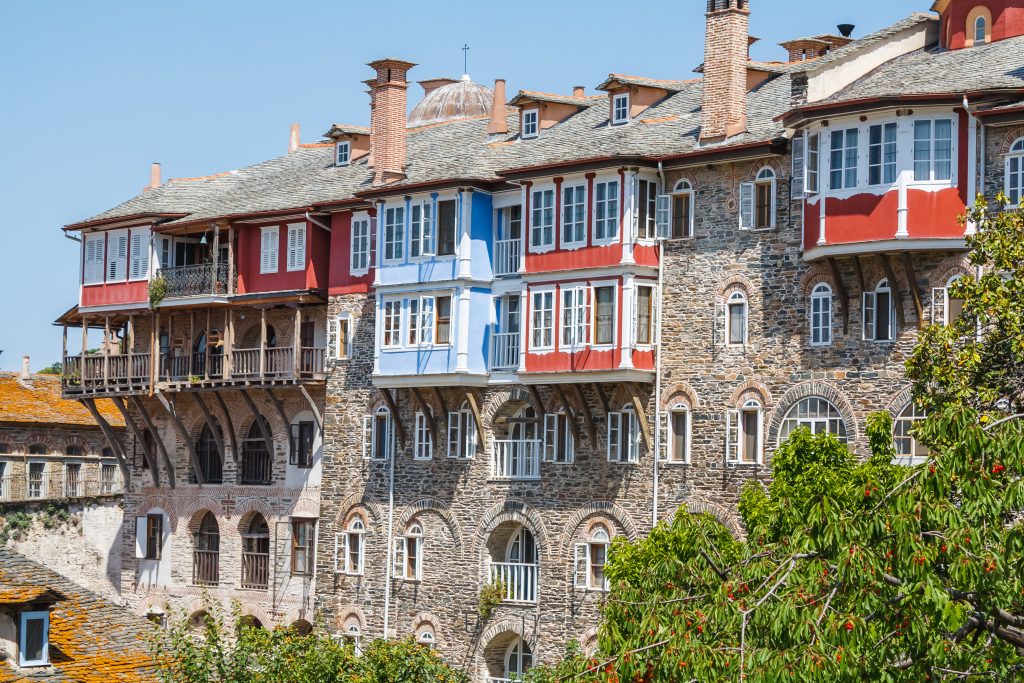
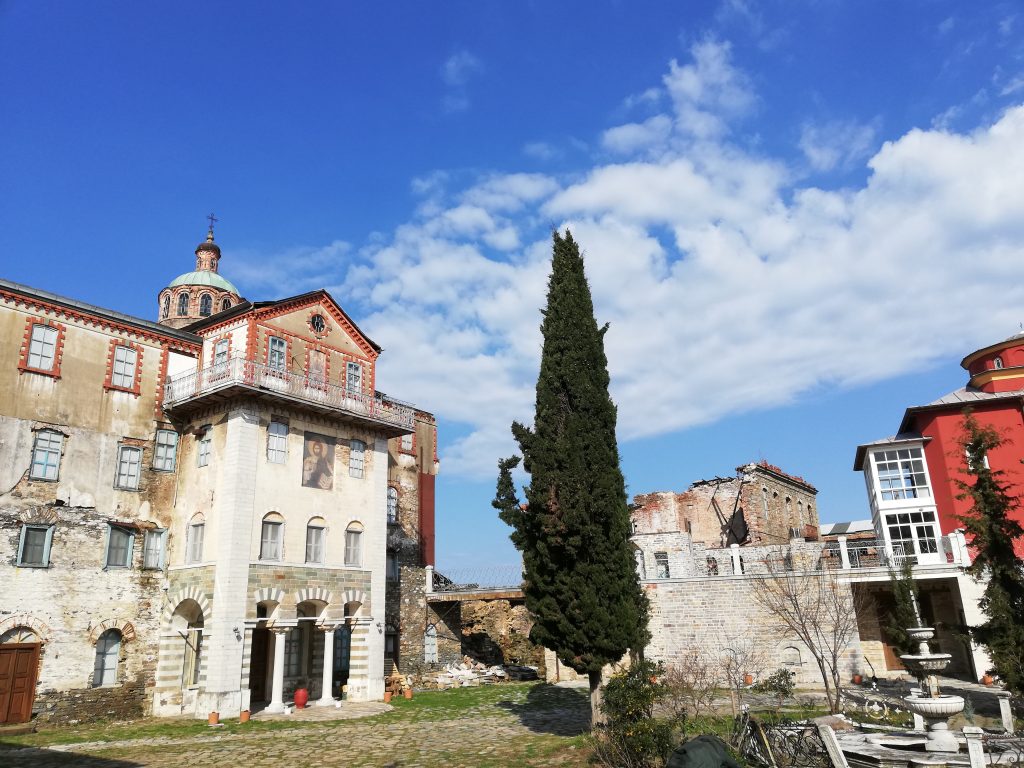
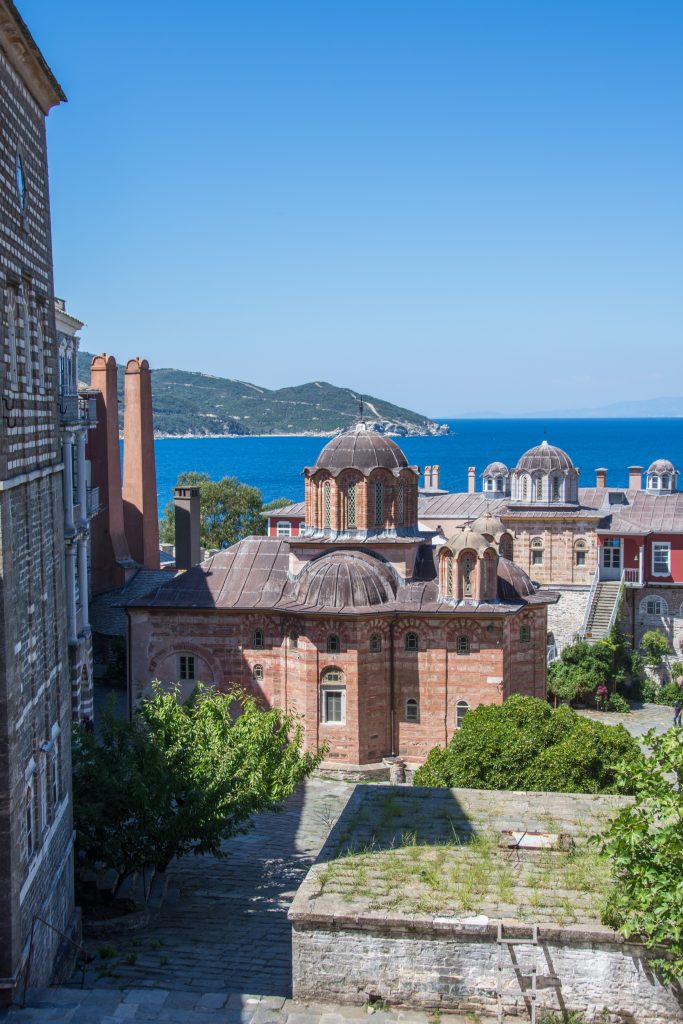
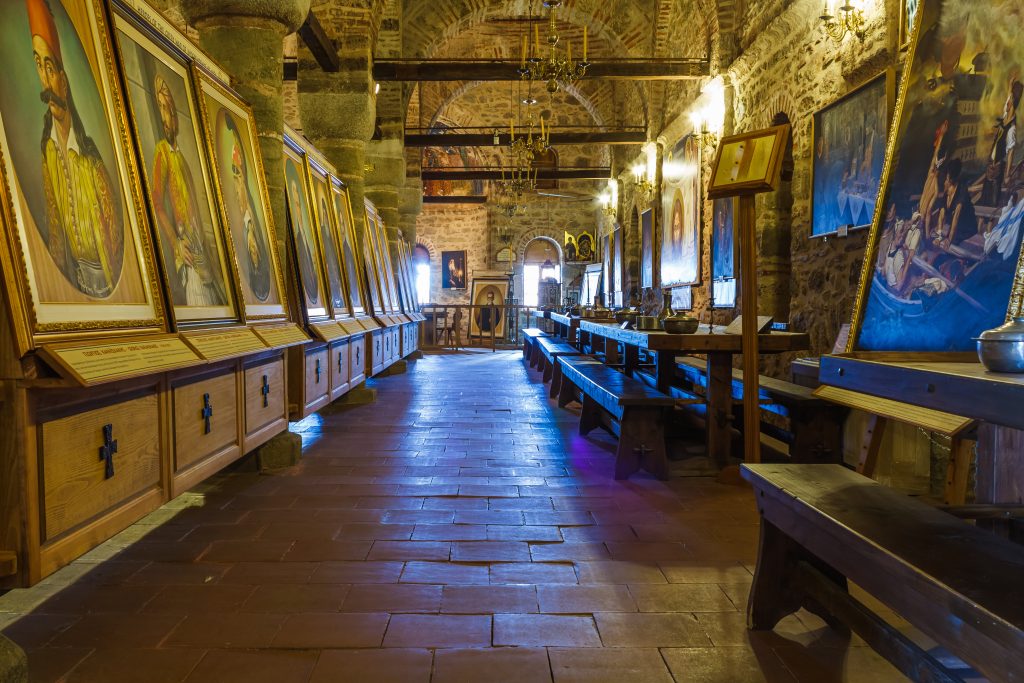
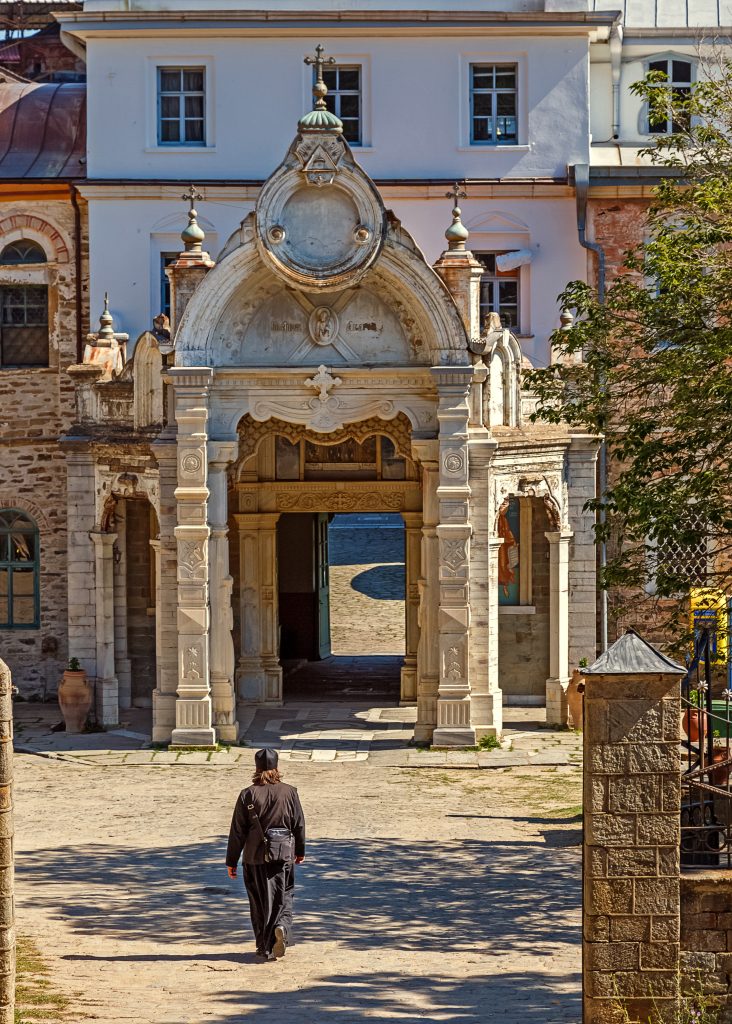
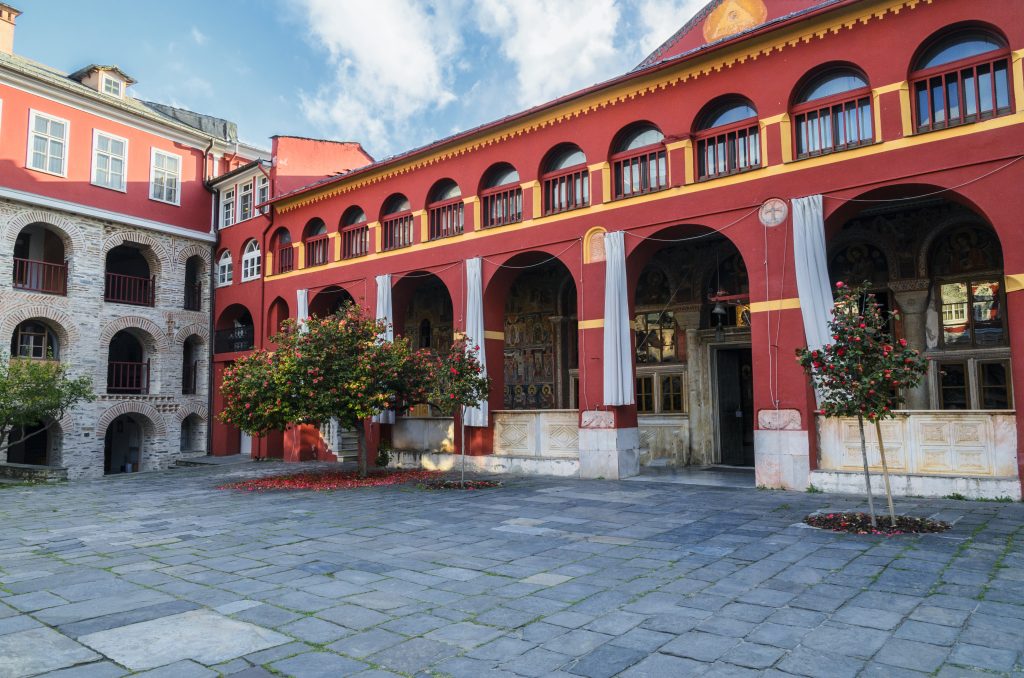
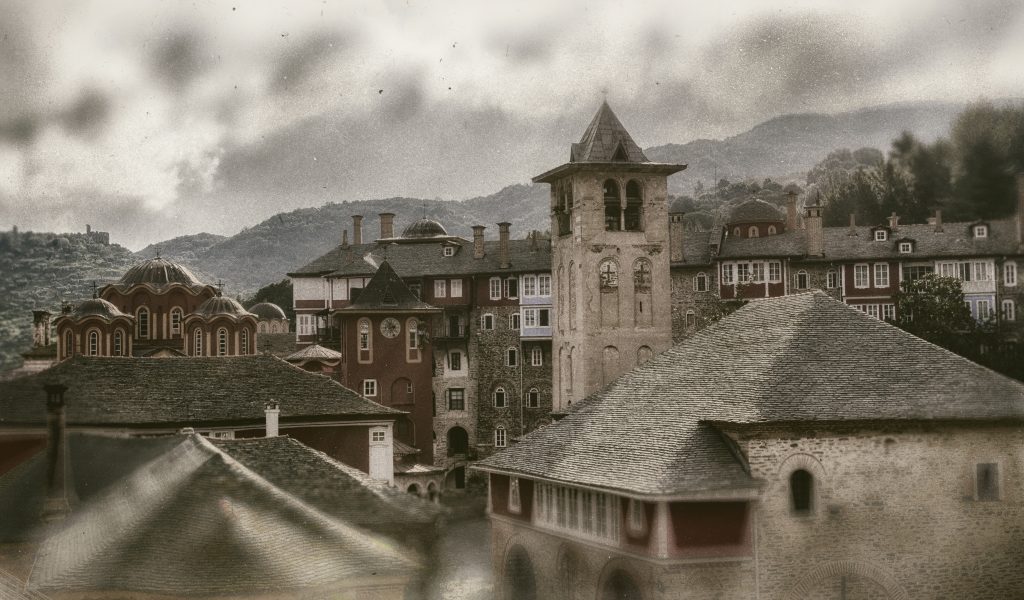
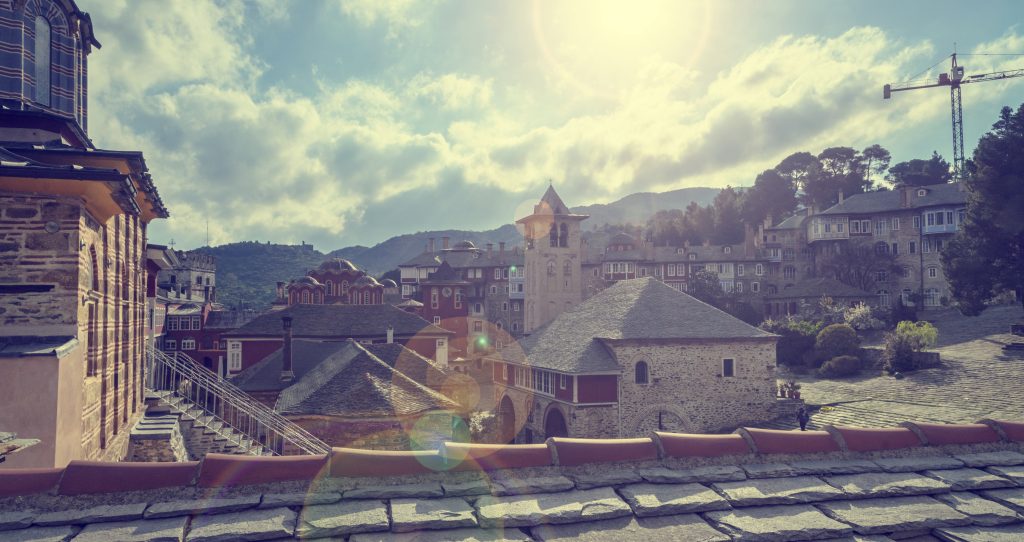
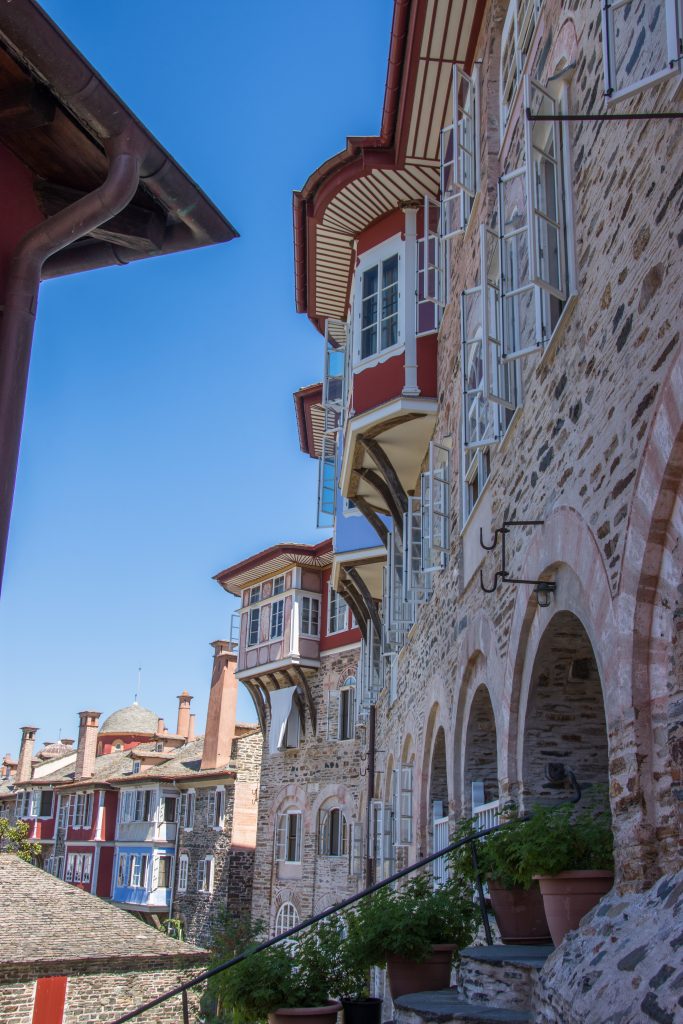
The architectural heart of Vatopedi Monastery is its katholikon (main church), around which the rest of the complex is organized in a distinctly Athonite way: prayer at the center, daily life arranged around it. In Vatopedi Monastery Mount Athos, the layout typically feels layered—courtyards, enclosed passages, and functional buildings that guide movement quietly, without turning the monastery into a “public” space.
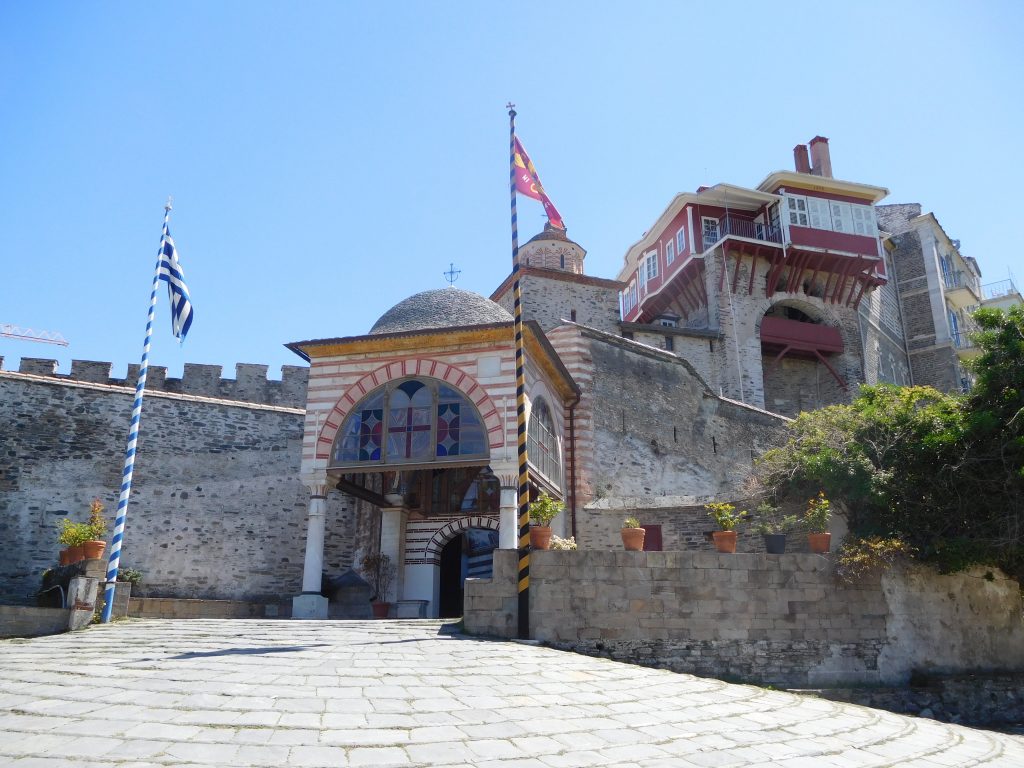
What visitors often read in the architecture is purpose. Defensive walls and inward-facing structures reflect centuries when coastal communities had to protect themselves, while chapels and smaller devotional spaces express the monastery’s liturgical density—many points of prayer within one enclosed world. In this sense, Vatopedi Monastery is not designed to impress as a monument, but to sustain a disciplined rhythm over time, where worship remains the fixed point and everything else supports it.
Treasures of Vatopedi Monastery (replace section)
Holy relics
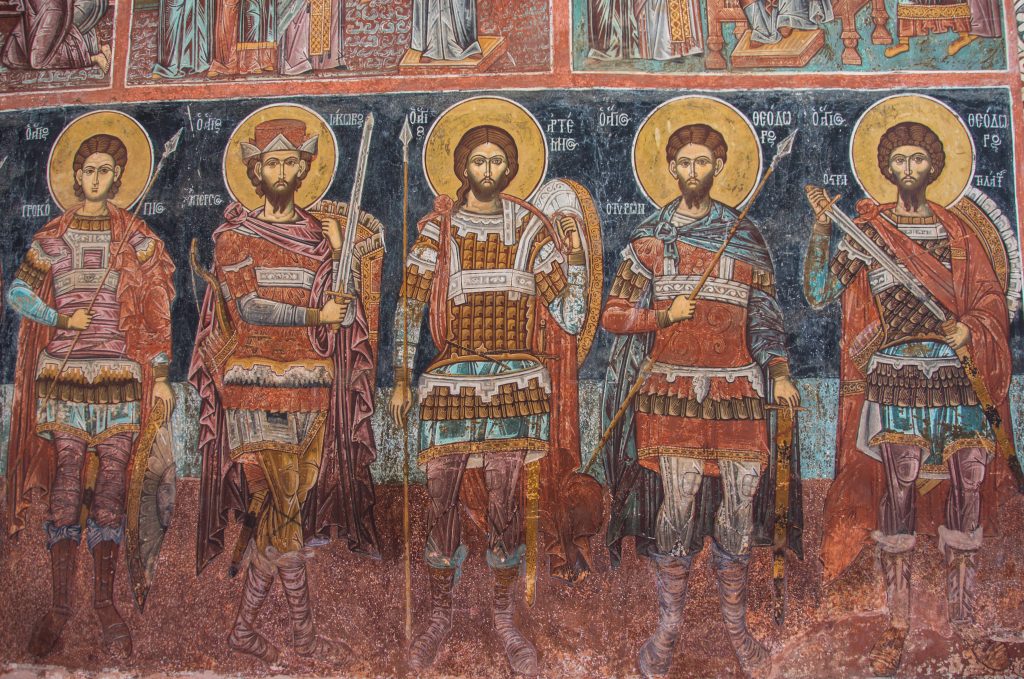
Among the best-known sacred relics preserved at Vatopedi Monastery is the Cincture (Holy Belt) of the Theotokos (Agia Zoni), revered in Orthodox tradition as the only surviving relic associated with the earthly life of the Virgin Mary. The monastery also keeps a fragment of the Life-Giving Cross, a form of relic veneration that has long been central to Athonite spiritual life.
Another relic closely linked with the monastery is the honourable skull of Saint John Chrysostom, which is frequently referenced in modern accounts of public veneration when the relic is occasionally brought outside Athos with ecclesiastical permission. Together, these relics help explain why Vatopedi Monastery Mount Athos is often described as a major pilgrimage point within the Holy Mountain’s living devotional landscape.
Venerated icons
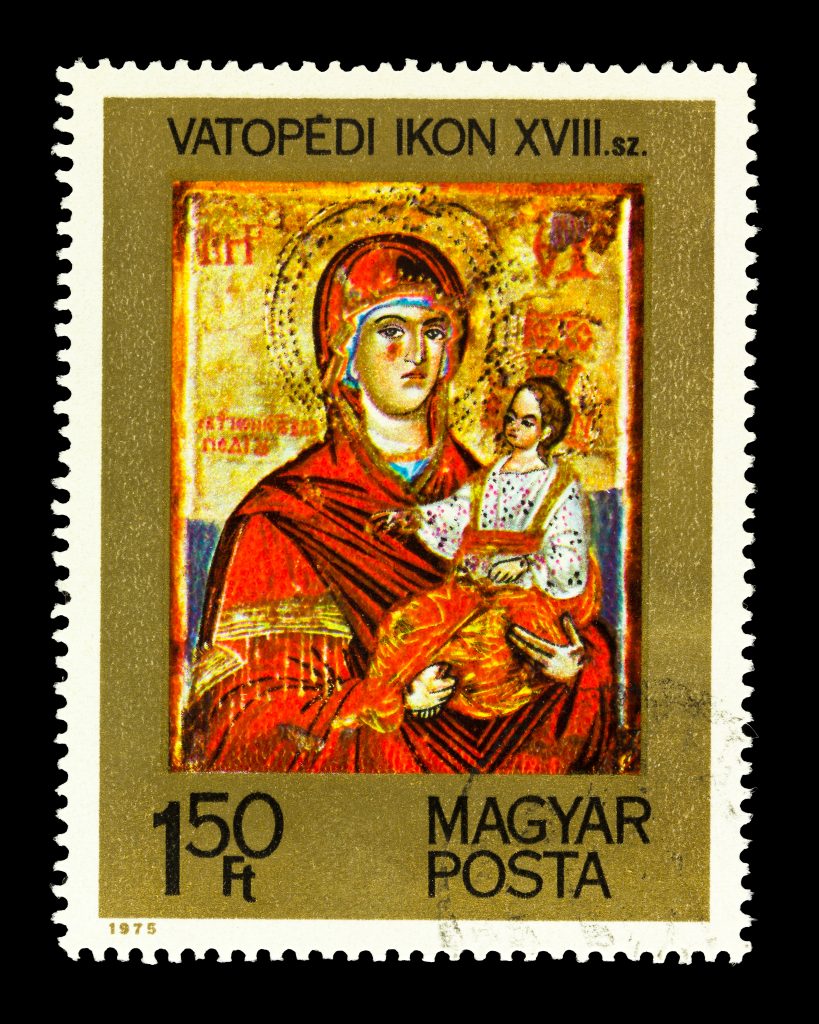
Vatopedi Monastery is especially associated with a group of celebrated icons of the Theotokos, each carrying a distinct Athonite story and devotional character. The most frequently cited icons include:
- Theotokos Vimatarissa (or Ktitorissa)
- Theotokos Paramythia
- Theotokos Esphagmeni
- Theotokos Antiphonetria
- Theotokos Eleovrytissa
- Theotokos Pyrovoletheisa
- Theotokos Pantanassa
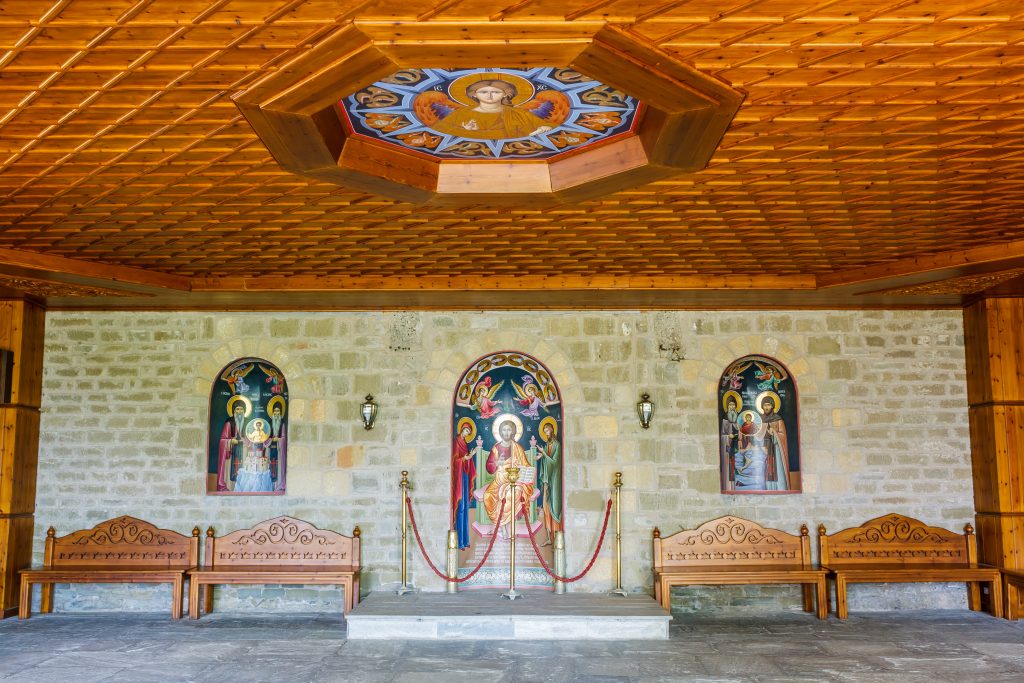
Rather than functioning as “named artworks,” these icons act as spiritual reference points: they shape feast-day memory, personal prayer, and the way the monastery’s history is transmitted within Athonite tradition. This Marian focus is one of the clearest reasons Vatopedi Monastery Mount Athos is repeatedly mentioned when people speak about the Holy Mountain’s icon heritage.
Manuscripts and the library
The library and archives of Vatopedi Monastery are consistently described among the most significant on Athos. Modern institutional summaries commonly place the manuscript collection at around 2,050 items, with roughly one-third on parchment, and mention about 25 parchment scrolls, alongside a major printed library (often described in the tens of thousands of volumes) and a very large archival corpus.
For readers, this matters because it shows a second “face” of Vatopedi Monastery Mount Athos: beyond liturgy and devotion, the monastery has also served as a guardian of texts—liturgical books, theology, historical records, and documents that help explain how Athonite life remained organized and continuous through centuries.
Spiritual life and traditions
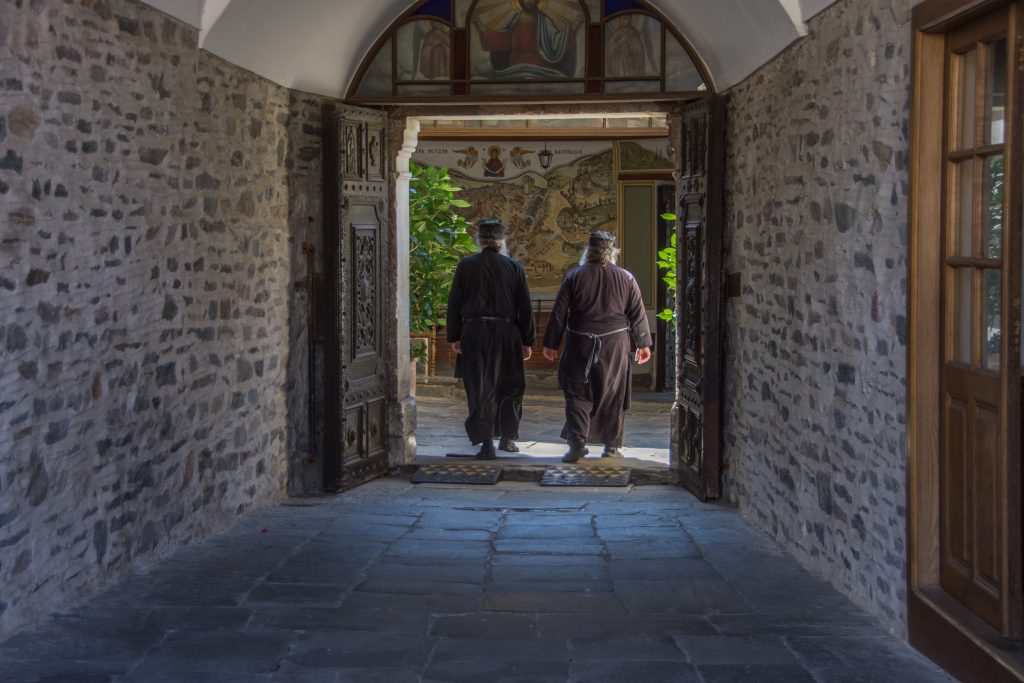
At the heart of Vatopedi Monastery is the Athonite rhythm of worship: services that structure the day, a steady balance of prayer and obedience (work), and a deliberate quiet that protects attention. This is the lens through which everything else in the monastery is meant to be understood—its architecture, its treasures, and even its history all exist to serve a living spiritual routine rather than a visitor’s itinerary.
One tradition that often shapes how people speak about Vatopedi Monastery Mount Athos is its strong Marian character. Beyond the famous icons, there is a wider “tone” of devotion expressed in feasts, hymns, and the way the community relates to the Theotokos as a personal protector of the monastery. For readers, that detail matters because it explains why Marian themes appear so consistently when Vatopedi is mentioned: the icon tradition is not an isolated feature, but an extension of daily monastic life.
A final point worth noting is that Athonite spirituality tends to be discreet by design. Many things that modern readers expect to be openly presented—detailed schedules, extensive public descriptions, or “official lists” of practices—are often kept minimal on purpose. In other words, the monastery’s life is meant to be lived first and described second, which is part of what gives places like Vatopedi Monastery their distinctive seriousness and continuity.
Practical notes for pilgrims
If you’re planning a pilgrimage that includes Vatopedi Monastery, it’s best to start with the practical framework of Mount Athos itself: the diamonitirion permit, entry rules, and the standard procedures that shape movement and overnight stays on the peninsula. Our guide to Visiting Mount Athos walks you through the essentials so you can prepare properly without missing key steps.
Even with good planning, it helps to keep expectations flexible. Reception practices, visiting windows, and monastery timetables can vary by season and day, and the monastic schedule always takes priority. In Vatopedi Monastery Mount Athos, as elsewhere on Athos, the safest approach is to confirm arrangements through the official channels before you build a fixed day-by-day plan.
If your interest is primarily cultural or historical, remember that Athos is first of all a living monastic state. The most rewarding visits are usually the ones approached with respect for the rhythm of silence, modesty, and the liturgical focus that defines Vatopedi Monastery.
Seeing Mount Athos as a whole
To place Vatopedi Monastery in context, it helps to zoom out from one community and see the Holy Mountain as a connected landscape—monasteries along the coast, paths inland, and a shared spiritual culture expressed in different local “voices.” If you’re following the eastern coastline north to south, Vatopedi Monastery Mount Athos is a key reference point, and our overview of the Monasteries of Mount Athos makes it easier to connect it with the neighboring houses you’ll encounter in the same region.
It’s also common for people to form a first visual impression of Athos from the sea, even if their deeper interest is the monasteries themselves. Our page on Mount Athos cruises & sea tours explains how sea-view routes work in practice and why some monasteries are typically viewed differently (or not at all) on standard coastal routes—helpful context that complements a monastery-focused reading of Vatopedi Monastery without turning the article into a “tour” piece.
Closing
Vatopedi Monastery is often remembered for its treasures, but its deeper identity is the steady continuity of Athonite life: worship at the center, tradition carried quietly from generation to generation, and a spiritual atmosphere shaped by Marian devotion and disciplined routine. Read as part of the eastern coastline, Vatopedi Monastery Mount Athos becomes more than a landmark—it becomes a key chapter in understanding how the Holy Mountain lives and endures today.
FAQ about Vatopedi Monastery
Where is Vatopedi Monastery located?
Vatopedi Monastery is located on the eastern side of the Athonite peninsula, along the Mount Athos coastline, as part of the sequence of major monasteries on the eastern shore.
What is Vatopedi Monastery best known for?
Vatopedi Monastery Mount Athos is widely known for its strong spiritual tradition, its Marian devotion, and its major treasury of relics, icons, and manuscripts.
Which icons are associated with Vatopedi Monastery?
Some of the best-known icons traditionally associated with Vatopedi Monastery include the Theotokos Vimatarissa (or Ktitorissa), Paramythia, Esphagmeni, Antiphonetria, Eleovrytissa, Pyrovoletheisa, and Pantanassa.
What relics are kept at Vatopedi Monastery?
The monastery is especially associated with the Cincture (Holy Belt) of the Theotokos (Agia Zoni), and it is also linked with other revered relics, including a fragment of the True Cross and notable saintly relics preserved in its treasury.
How should pilgrims prepare for a visit to Vatopedi Monastery?
tart with the essentials of Athos planning—permits, rules, and logistics—then confirm arrangements through the official channels. Our guide to Visiting Mount Athos summarizes the practical steps before you include Vatopedi Monastery in a fixed itinerary.
Did you find our post helpful?
- Was this post helpfull?
- Rate us on TripAdvisor
This article made by https://lnk.bio/Rodokalakis
