

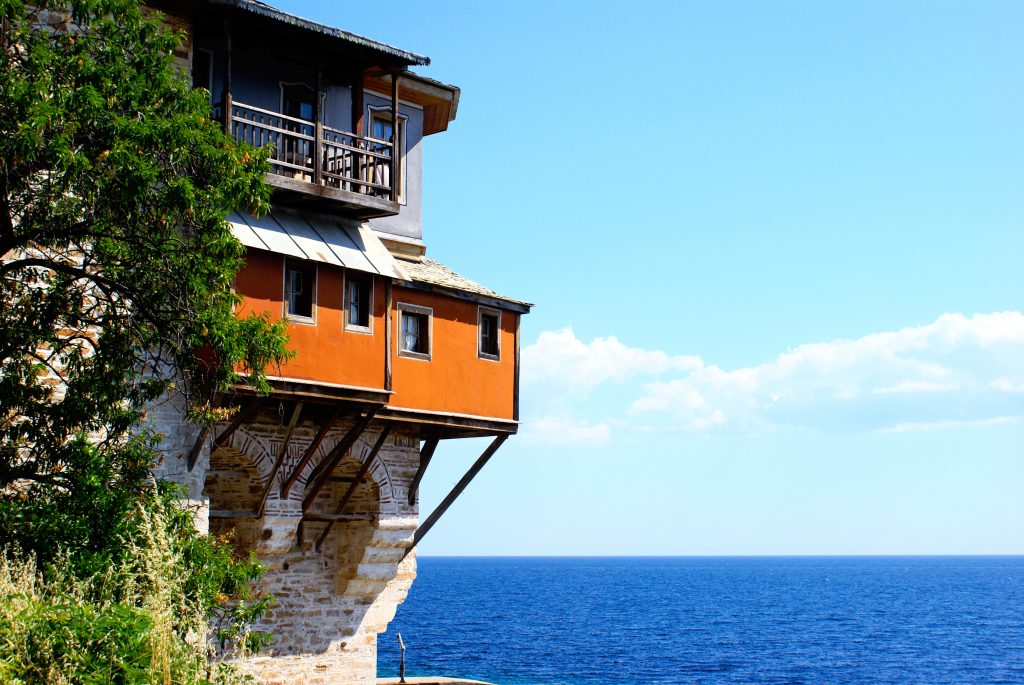
Xenophontos Monastery is one of the most distinctive monasteries visible along the southwestern coastline of Mount Athos, widely known for its rare architectural feature of housing two main churches. Often described as a monastery with twin katholika, it presents a layered and expansive appearance when viewed from the sea.
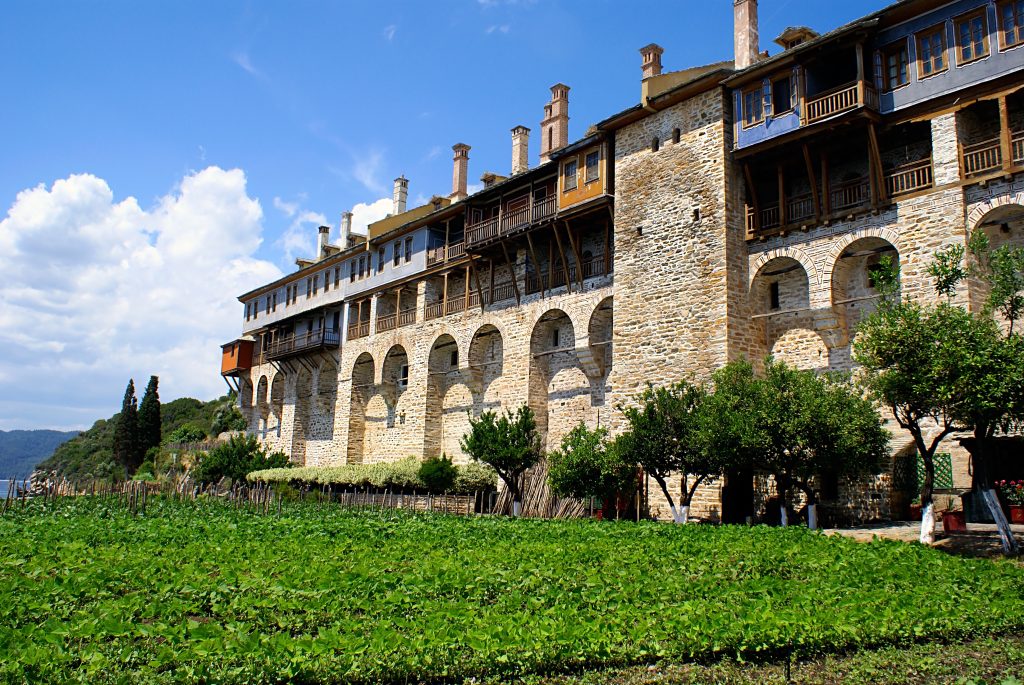
From the water, the monastery reveals a broader layout compared to others along the route, with its structures extending across the coastline and creating a sense of depth and continuity.
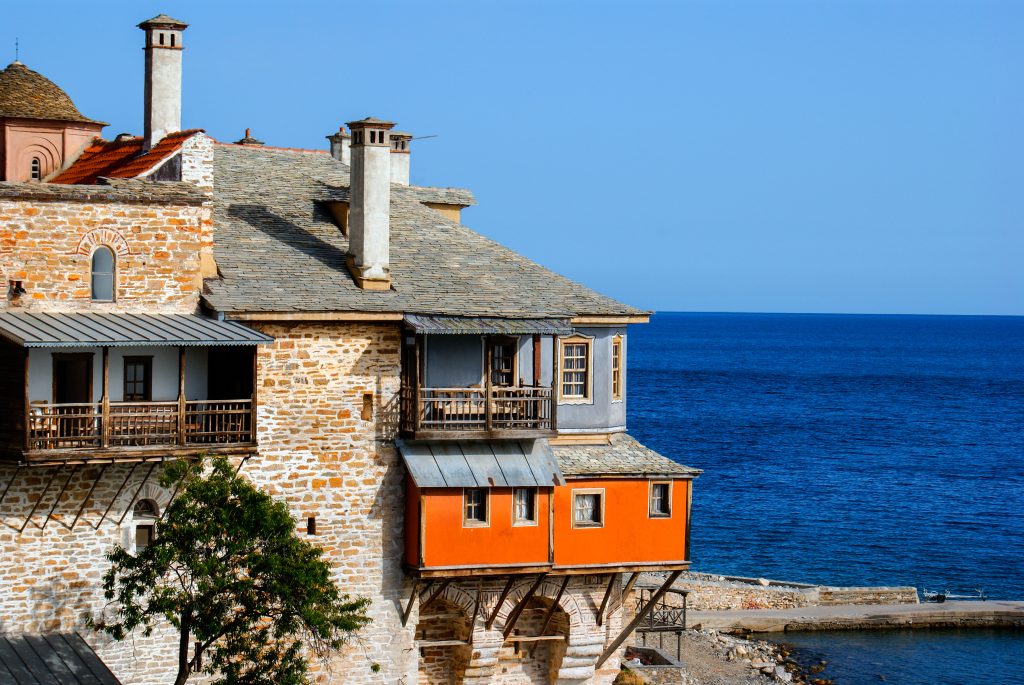
Because access to Mount Athos is restricted, Xenophontos Monastery is experienced by most visitors from the sea. During Mount Athos cruises, its coastal position allows for a clear and prolonged view, giving passengers the opportunity to distinguish the monastery’s architectural complexity and scale.
Seen from the vessel, the presence of two katholika adds a unique visual rhythm to the monastery’s silhouette, setting it apart from the surrounding monastic landmarks and reinforcing its distinctive character.
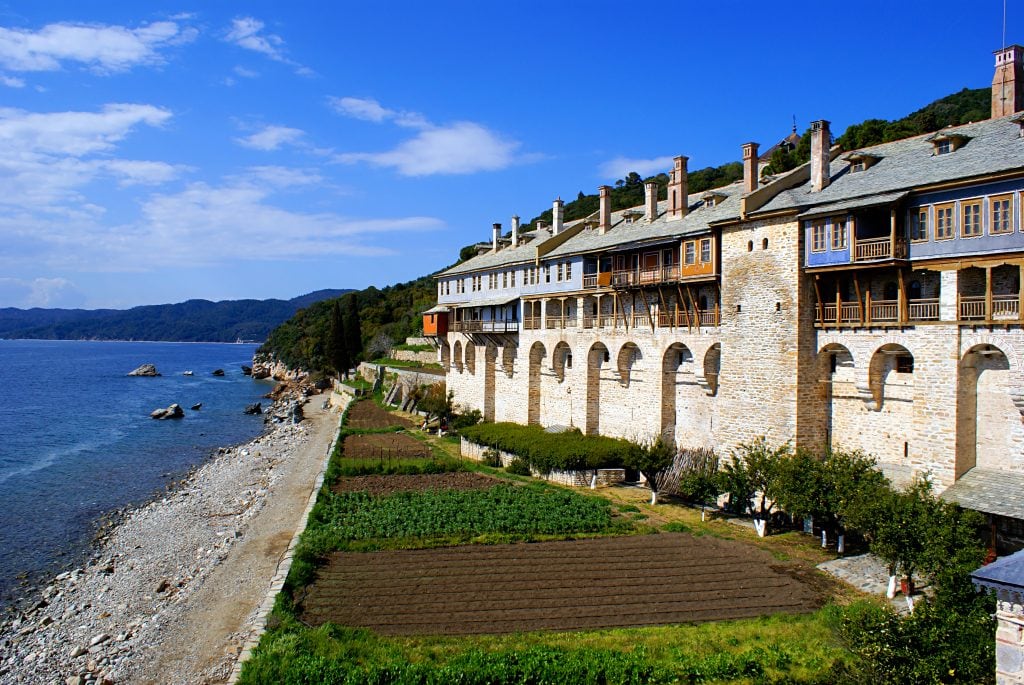
Table of Contents
Where Xenophontos Monastery appears on the Mount Athos sea route
During the coastal sea journey along Mount Athos, Xenophontos Monastery appears along the southwestern side of the peninsula, following Dochiariou and forming part of the central sequence of monasteries observed from the water. As the vessel approaches this section of the route, the monastery gradually comes into view, extending along the coastline with a noticeably broader layout.
From the sea, its position allows passengers to clearly observe the monastery’s scale and arrangement. The buildings unfold horizontally rather than vertically, giving a sense of openness and architectural depth. This placement provides a stable and continuous visual experience as the vessel passes, making it easier to distinguish individual structures.
For many visitors, this part of the route stands out because of the monastery’s size and compositional complexity. Xenophontos does not appear as a single compact structure, but as a layered monastic complex that reveals itself progressively along the coastline.
Why Xenophontos is known as a monastery with twin katholika
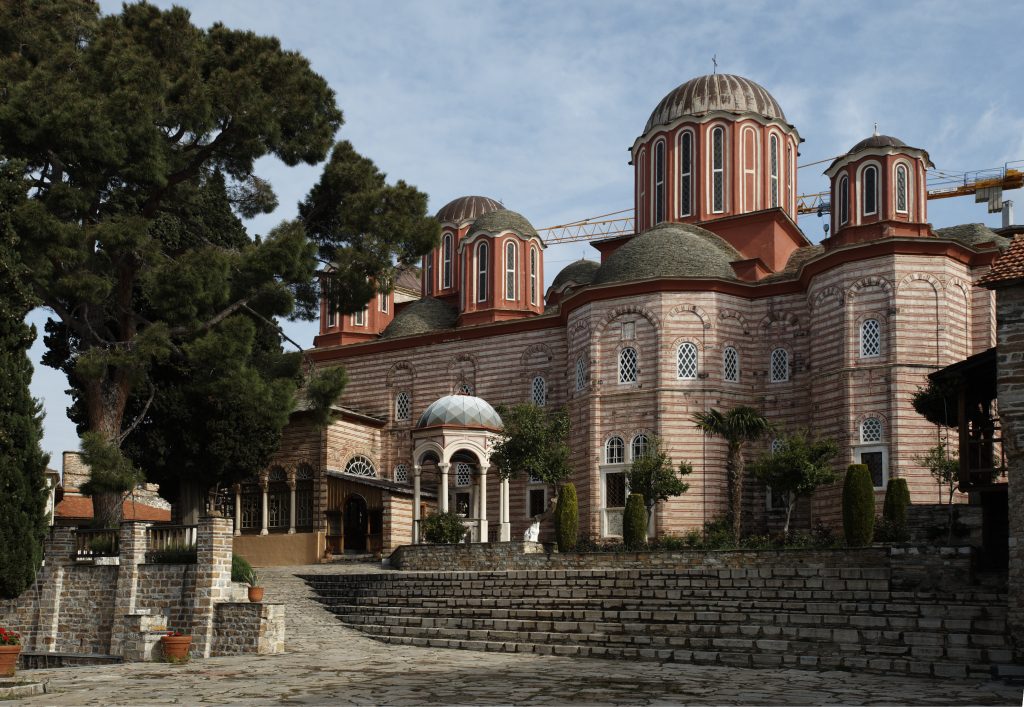
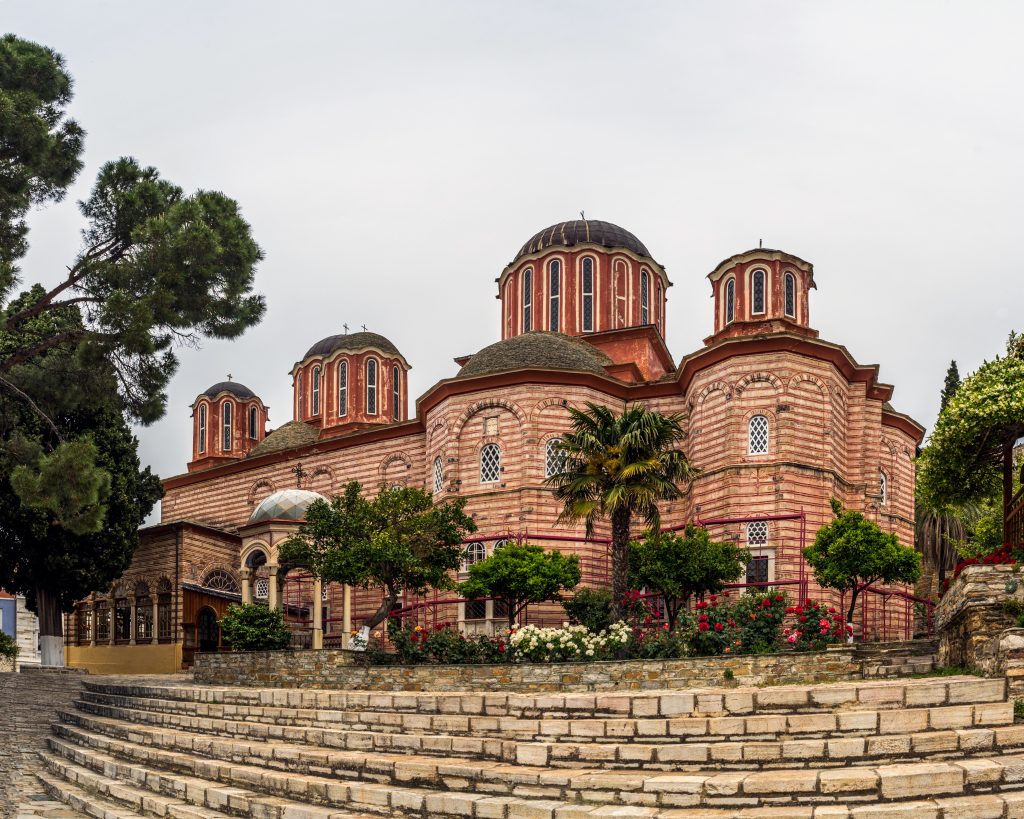
What makes Xenophontos Monastery truly unique among the monasteries of Mount Athos is the presence of two main churches (katholika) within the same monastic complex. This rare architectural feature immediately distinguishes it from other monasteries along the coastal route.
The older katholikon dates back to the 10th century and reflects the early monastic phase of the monastery. Centuries later, as the monastery grew in importance and population, a second, larger katholikon was constructed in the 19th century, allowing the community to accommodate expanded liturgical needs.
From the sea, this dual structure becomes subtly apparent through the monastery’s extended layout. Rather than presenting a single focal point, the complex appears layered and expansive, hinting at its historical evolution over time.
The existence of two katholika is not merely an architectural curiosity. It reflects the monastery’s continuity, resilience and ability to adapt while preserving its spiritual core. This characteristic firmly establishes Xenophontos as a monastery with twin katholika, a feature unmatched elsewhere on Mount Athos.
What visitors notice when viewing Xenophontos from the sea
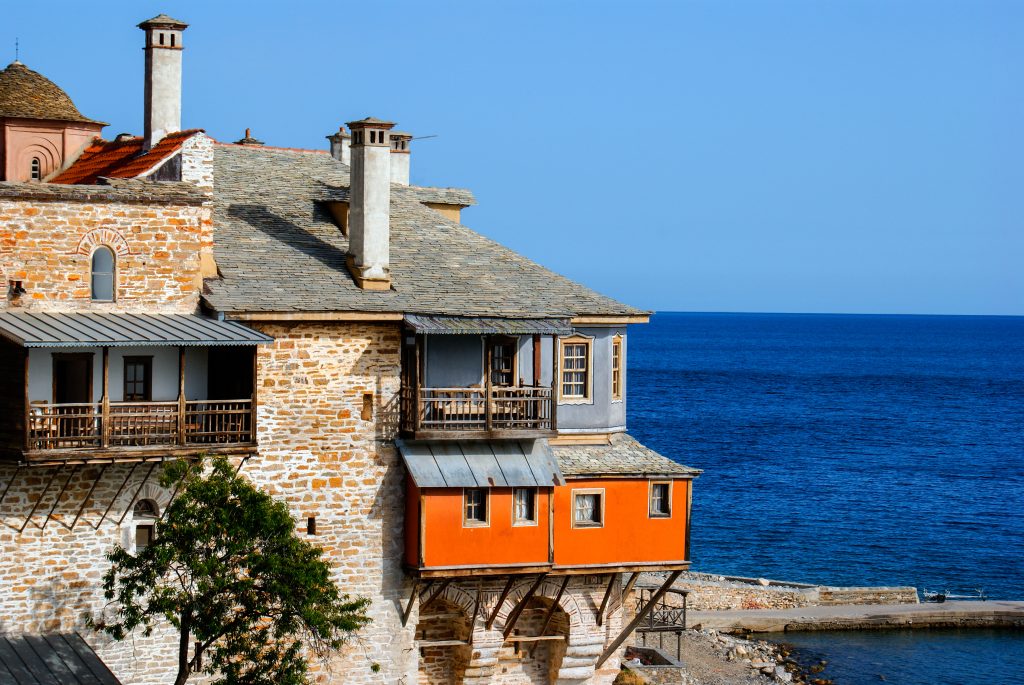
As the vessel moves along this part of the coastline, many visitors notice the sense of breadth and structure that defines Xenophontos monastery. The monastery does not present itself as a single compact mass, but as a wider complex that unfolds gradually along the shore.
From the sea, the layout feels organized and spacious. The buildings appear well distributed, allowing the eye to move naturally across the monastery rather than focusing on one dominant element. This creates a calm and balanced visual experience, different from monasteries that rely on height or defensive form.
Another detail that stands out is the clarity of the monastery’s silhouette. The horizontal arrangement and open spacing between structures make it easier to distinguish architectural lines and transitions as the vessel passes. This visibility reinforces the impression of a monastery that has grown organically over time.
For many passengers, this moment highlights Xenophontos as a place of continuity and expansion, where architectural evolution is visible even from the water, without overpowering the surrounding landscape.
How Xenophontos fits into the Mount Athos cruise experience
By the time the vessel reaches Xenophontos, visitors have already encountered monasteries with strong individual identities. Xenophontos contributes to the journey in a different way, offering a sense of continuity and development rather than contrast.
Within the flow of Mount Athos cruises, this monastery often feels expansive and welcoming. Its broader layout and layered structure allow passengers to observe how monastic communities evolved over time, adapting to growth while remaining connected to their original foundations.
This part of the route encourages a slower and more attentive form of observation. Instead of focusing on a single dramatic feature, visitors take in the monastery as a whole, recognizing it as a living complex shaped by centuries of spiritual life and architectural change.
Those who wish to understand how Xenophontos monastery fits into the broader coastal sequence can explore the complete overview of Mount Athos cruises, which explains the route and progression of monasteries visible from the sea.
The history and spiritual significance of Xenophontos Monastery
Xenophontos Monastery was founded in the 10th century by Saint Xenophon, a monk who established one of the earliest organized monastic communities along the southwestern coastline of Mount Athos. From its beginnings, the monastery developed steadily, benefiting from its accessible coastal position while maintaining strong spiritual discipline.
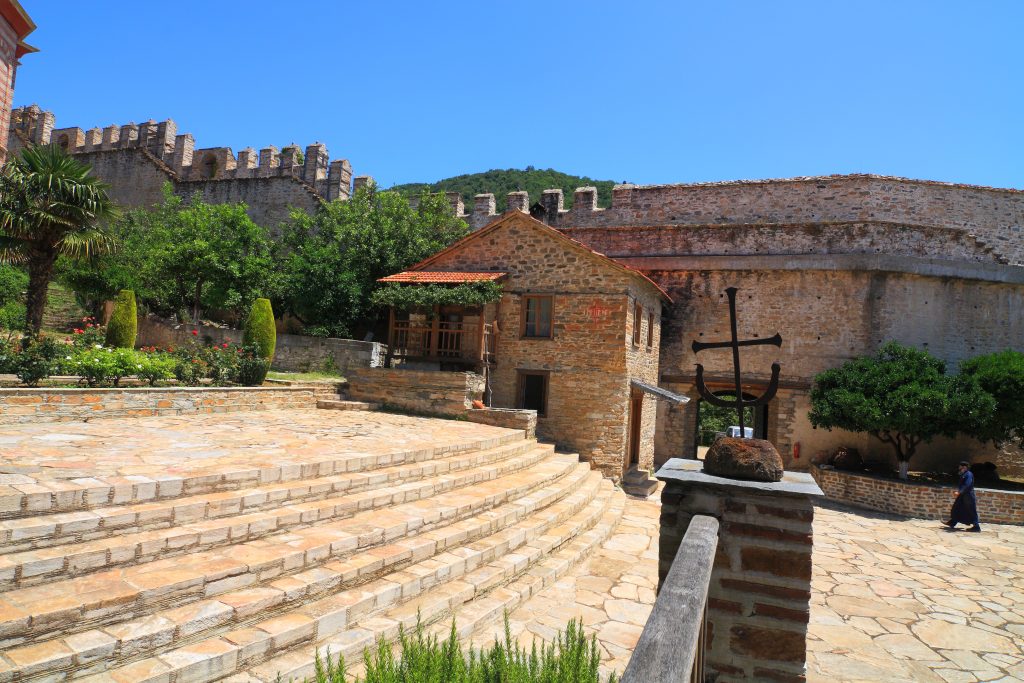
Over the centuries, Xenophontos experienced periods of growth, decline and renewal. Its expansion during later centuries reflects the monastery’s ability to adapt to changing historical conditions while preserving its monastic identity. This long continuity is still visible today in the structure and layout of the complex.
Monastic identity and daily life
Xenophontos is a Greek Orthodox monastery and remains an active spiritual community. It is home to a brotherhood of monks who follow the traditional Athonite way of life, centered on prayer, communal worship and daily responsibilities within the monastery.
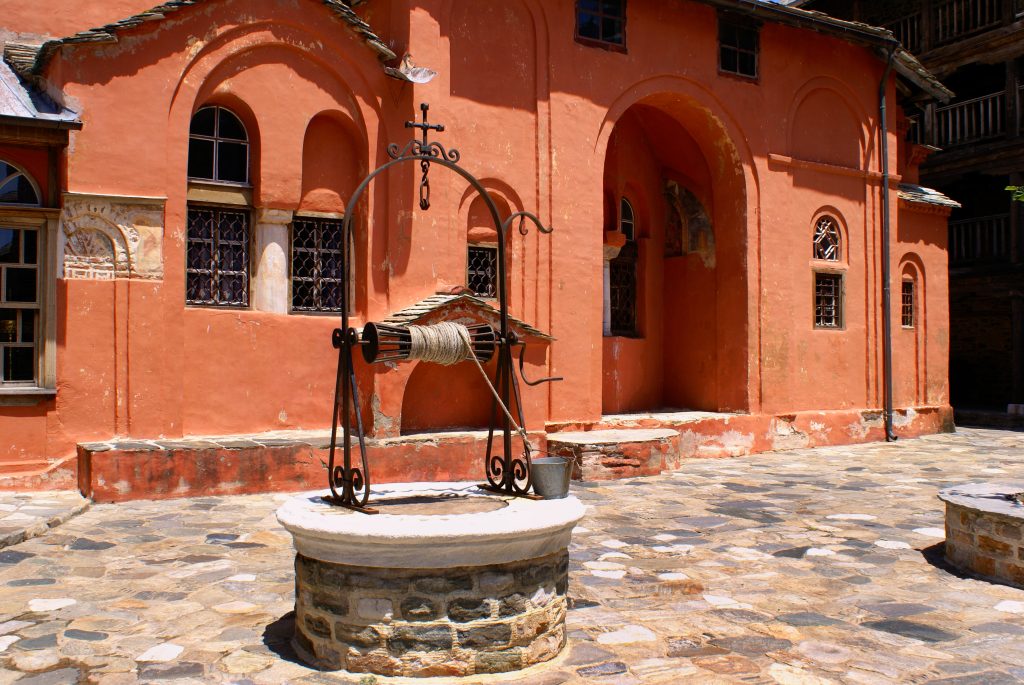
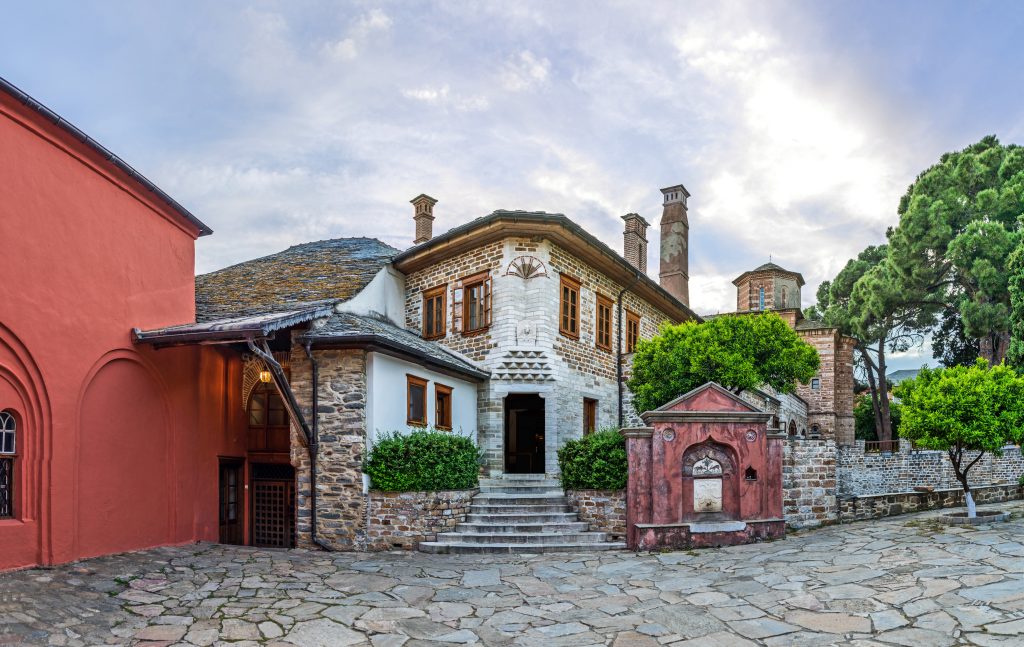
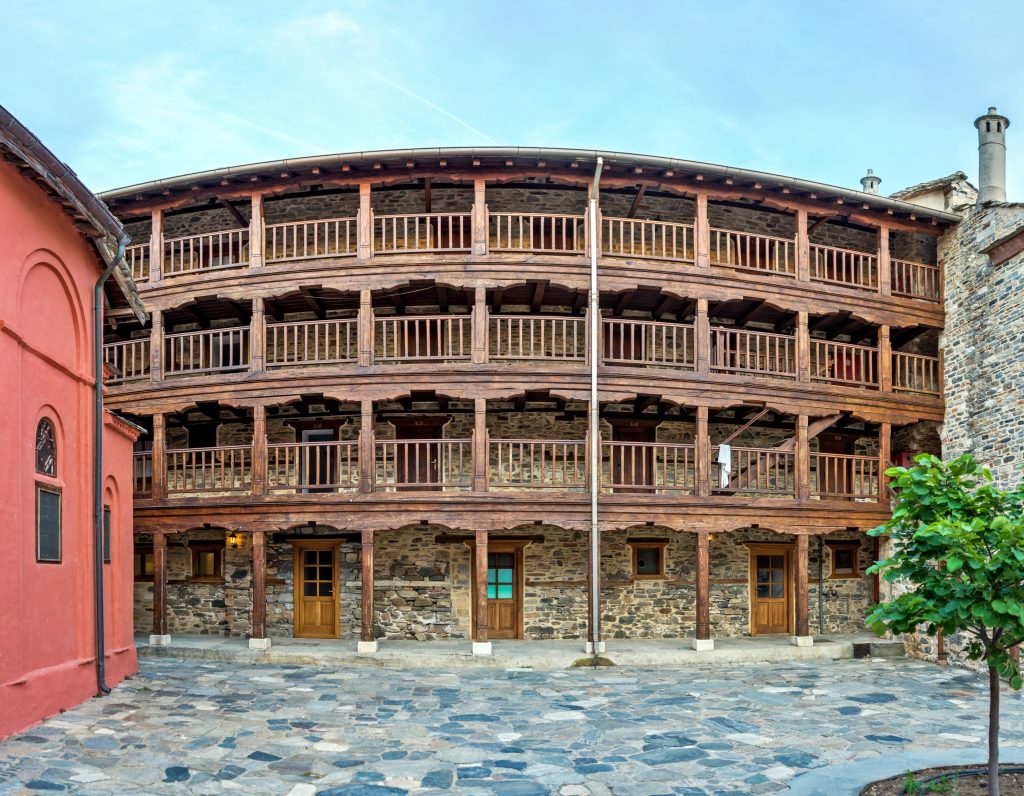
Although visitors observing from the sea cannot see the interior spaces, the monastery’s broad layout suggests a well-organized inner world. Chapels, communal halls, monastic cells and work areas support a rhythm of life shaped by stability, continuity and spiritual focus.
Sacred treasures and relics preserved at Xenophontos monastery
Xenophontos Monastery is not only distinguished by its architectural uniqueness, but also by the preservation of important sacred relics and religious treasures that hold a central place in Orthodox tradition and Athonite spiritual life.
Holy relics of saints preserved at Xenophontos
Alongside its architectural uniqueness, Xenophontos Monastery safeguards a respected collection of holy relics of saints, deeply integrated into its worship and monastic tradition.
Among the most notable relics preserved at Xenophontos are relics of:
- Saint George the Trophy-Bearer – the monastery’s patron saint and central figure of its spiritual identity
- Saint Stephen the Protomartyr – the first Christian martyr
- Saint Theodore the Stratelates – widely venerated military saint
- Saint Charalambos – honored for protection and healing
- Saint Nicholas – revered as a protector of sailors and travelers
These relics are venerated during feast days and major services, reinforcing Xenophontos’ role as a living spiritual community. Their presence connects the monastery directly with the early centuries of Christian faith and Orthodox tradition.
Venerated icons
Xenophontos houses several highly venerated icons, including important representations of the Virgin Mary and Saint George. These icons are not treated as historical artifacts alone, but as active elements of worship, integrated into the daily spiritual rhythm of the monastery.
Some of these icons are associated with long-standing traditions of prayer and intercession, making them focal points for monastic devotion. Their presence contributes to the monastery’s reputation as a place of spiritual continuity and protection.
Manuscripts and ecclesiastical heritage
The monastery also preserves a collection of Byzantine and post-Byzantine manuscripts, including:
- liturgical texts
- theological writings
- historical documents related to the administration and life of the monastery
These manuscripts reflect Mount Athos’ enduring role as a center for the preservation of Orthodox learning and spiritual tradition. Many of these texts are centuries old and are kept under strict conditions to ensure their survival.
Liturgical vessels and sacred objects
In addition to relics and manuscripts, Xenophontos monastery safeguards valuable liturgical objects, such as:
- hand-crafted chalices
- crosses and censers
- embroidered vestments used in major feast-day services
These items represent centuries of devotional craftsmanship and remain in active use, reinforcing the living character of the monastery rather than presenting it as a static historical site.
Why these treasures matter to the visitor
Although none of these sacred treasures are visible during a sea journey, understanding what is preserved within the walls of Xenophontos adds depth to the coastal viewing experience. The monastery seen from the water is not merely an architectural complex, but a living guardian of faith, memory and continuity.
For many readers, this awareness transforms the visual encounter into a deeper appreciation of Mount Athos as a spiritual landscape shaped not only by buildings, but by the sacred heritage they protect.
For a wider perspective on Mount Athos as a whole—including its organization, traditions and spiritual role—readers can consult a dedicated guide to the Holy Mountain.
Closing – Seeing Xenophontos with understanding
Viewing Xenophontos Monastery from the sea leaves an impression of continuity and balance. Its broad layout and layered structure reflect centuries of growth, adaptation and spiritual stability, revealing a monastery shaped by time rather than a single architectural moment.
Beyond what the eye can see from the water, Xenophontos stands as a living spiritual center, preserving sacred relics, icons and traditions that connect the present monastic community with the deep history of Mount Athos.
Readers interested in an overview of all monasteries of the Holy Mountain can explore a comprehensive guide covering the full monastic landscape of Mount Athos here.
How visitors can view Xenophontos from the sea
Visitors can observe Xenophontos as part of a coastal sightseeing journey along the Holy Mountain. One of the established sea routes departs from Ouranoupoli and follows the traditional southwestern passage, allowing clear views of the monastery from the water.
More details about the route, sailing schedule and availability can be found on the Mount Athos coastal cruise from Ouranoupoli.
Frequently Asked Questions about Xenophontos Monastery
Why is Xenophontos unique among Mount Athos monasteries?
Xenophontos is distinguished by the presence of two main churches (katholika), a rare architectural feature that reflects the monastery’s historical development over different periods.
Is Xenophontos an active monastery today?
Yes. Xenophontos is a Greek Orthodox monastery with an active monastic community that follows the traditional Athonite way of life.
What important treasures are preserved at Xenophontos Monastery?
The monastery preserves holy relics of saints, venerated icons—particularly of Saint George—and valuable manuscripts and liturgical objects.
Can visitors enter Xenophontos during a cruise?
No. Visitors observe the monastery exclusively from the sea. Entry to Mount Athos monasteries requires an official access permit.
Did you find our post helpful?
- Was this post helpfull?
- Rate us on TripAdvisor
This article made by https://lnk.bio/Rodokalakis
