

Mount Athos cruises offer one of the most unique experiences in Northern Greece: a sea journey along the sacred coastline of the Holy Mountain. These Mount Athos sea tours allow visitors to witness the monasteries, the dramatic landscape and the spiritual atmosphere of Mount Athos from the water, in a respectful way that follows local rules and long-standing tradition.
Unlike a typical sightseeing trip, Athos Sea Cruises combine cultural discovery, history and maritime heritage. For many travelers, they become the most memorable part of a visit to Halkidiki — a calm voyage where the sea becomes the viewpoint to one of the most significant spiritual destinations in Europe.
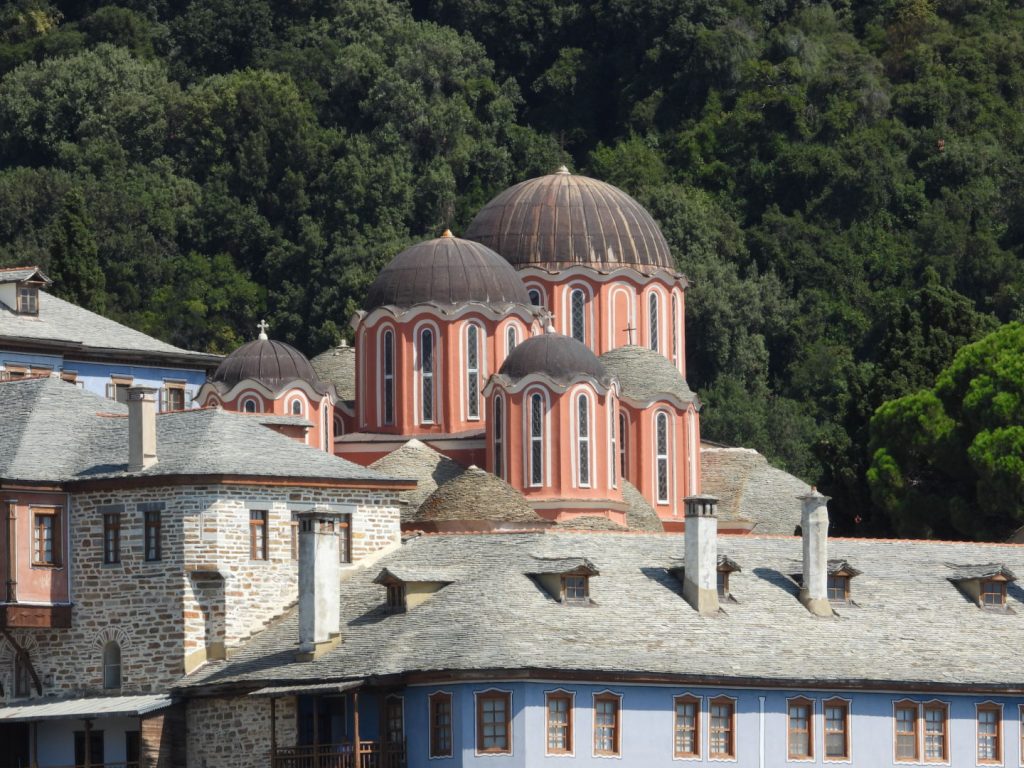
Table of Contents
What are Mount Athos cruises?
In simple terms, Mount Athos cruises are organized sea routes that sail along the coastline of the Holy Mountain, allowing passengers to view monasteries and sacred landmarks from the sea. Because access to Mount Athos is strictly regulated, Mount Athos sea tours provide a respectful and accessible way for visitors to experience the peninsula’s unique character without entering the monastic territory.
These cruises are typically operated from nearby ports in Halkidiki, and they may include:
- Coastal navigation with monastery viewpoints
- Guided narration (history, tradition, coastline landmarks)
- A calm sightseeing experience focused on respect and observation
Some routes are purely sightseeing, while others are closer in spirit to a pilgrimage experience, offering a more reflective atmosphere. In the next section, we’ll explain the key difference between Mount Athos cruises designed for sightseeing and those designed for pilgrimage-style travel.
Visitors looking for a structured coastal route departing from Ouranoupoli can explore the Mount Athos coastal cruise from Ouranoupoli, which follows the traditional southwestern sea passage.
Pilgrimage cruises vs sightseeing cruises
Although all Mount Athos cruises follow the same sacred coastline, they do not all serve the same purpose. In practice, Mount Athos sea tours can be divided into two distinct categories: pilgrimage cruises and sightseeing cruises. Understanding the difference helps visitors choose the experience that best matches their expectations.
Pilgrimage-style Mount Athos cruises
Pilgrimage cruises are designed for visitors who approach Mount Athos primarily as a spiritual and cultural destination. These Mount Athos cruises usually operate at a calm pace and focus on reflection, narration and respect for the monastic tradition.
They are often chosen by:
- organized pilgrimage groups
- cultural associations
- visitors seeking a quiet and meaningful experience
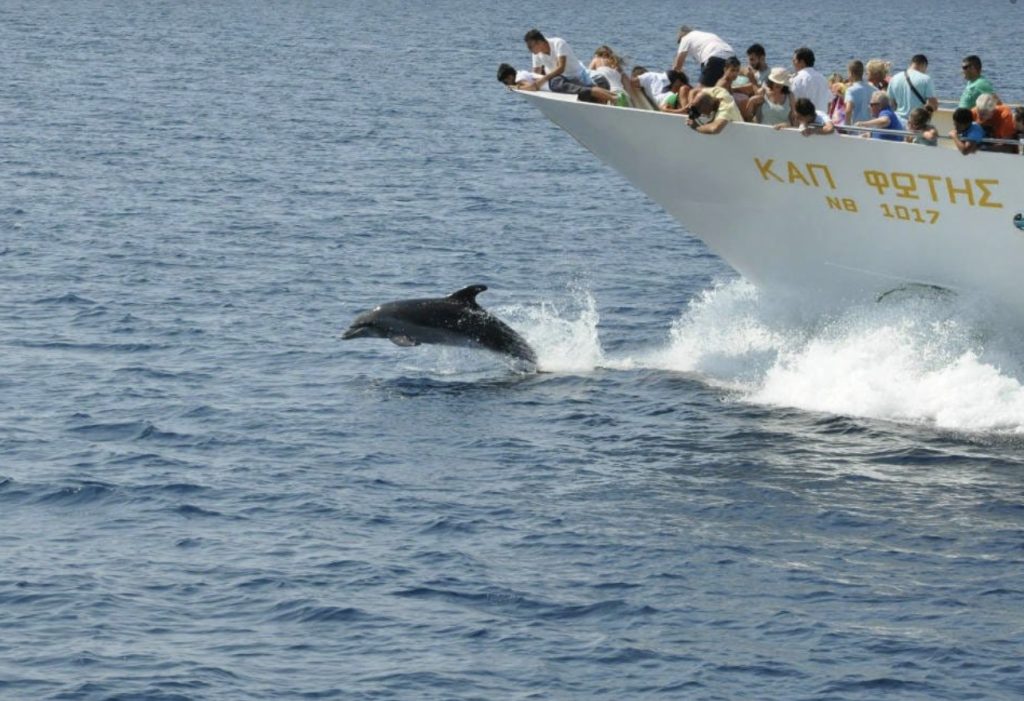
Vessels used for pilgrimage routes are typically larger and more stable, offering extensive seating and shaded areas. A representative example is Kapetan Fotis, a vessel dedicated to organized sea pilgrimages along the Mount Athos coastline.
Pilgrimage cruises do not include swimming or leisure stops. Instead, the emphasis is placed on observing monasteries from the sea, listening to historical and spiritual narration, and experiencing Mount Athos as a living spiritual presence.
Sightseeing Mount Athos cruises
Sightseeing cruises focus on observation, landscape and maritime experience, offering a more relaxed and visually driven approach to Mount Athos sea tours. While they still fully respect access regulations, these Mount Athos cruises are often combined with additional elements such as coastal exploration or mixed itineraries.
Sightseeing-style routes may appeal to:
- leisure travelers
- couples and families
- visitors combining Mount Athos with other destinations
Vessels such as Saint George, with its traditional wooden character, or Athos, offering a modern glass-bottom experience, are commonly used for this type of cruise.
In some cases, sightseeing cruises may be part of a broader daily excursion that also includes swimming or leisure stops elsewhere in Halkidiki, allowing visitors to combine cultural discovery with relaxation.
Choosing the right Mount Athos cruise
Choosing between pilgrimage and sightseeing Mount Athos cruises depends on the visitor’s expectations rather than the route itself. Both options follow the same coastline and offer views of the monasteries, but the atmosphere, pacing and onboard experience differ significantly.
In the following sections, we’ll explore:
- which monasteries can be seen from the sea
- the main departure ports for Mount Athos sea tours
- and which vessels are best suited for each type of experience
This will help you select the Mount Athos cruises option that best matches your interests and travel style.
What monasteries can be seen from the southwestern coastline of Mount Athos?
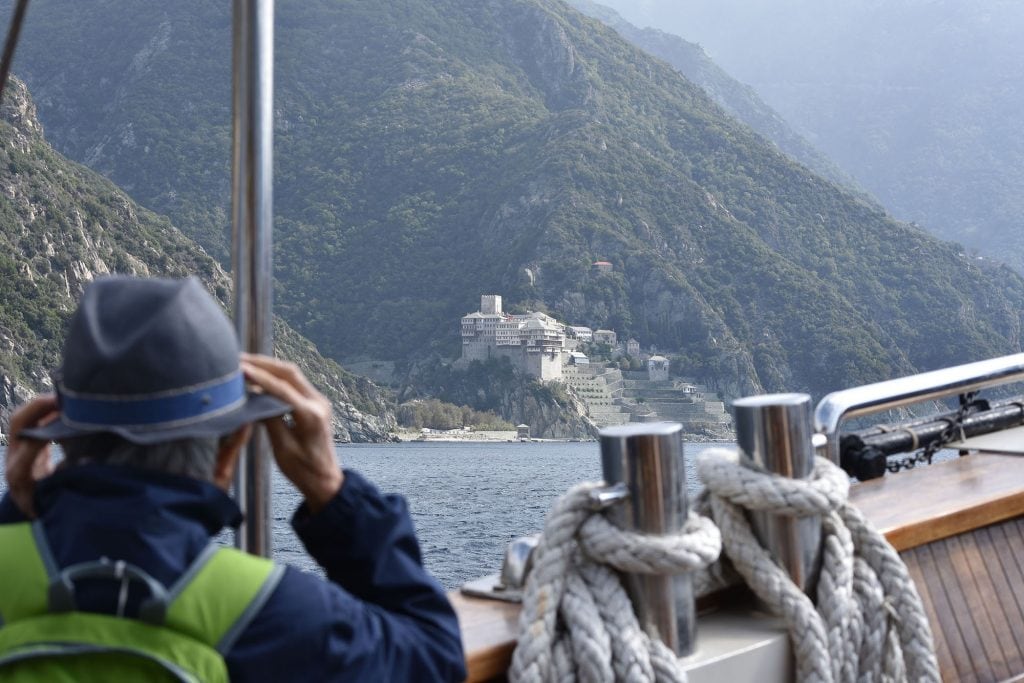
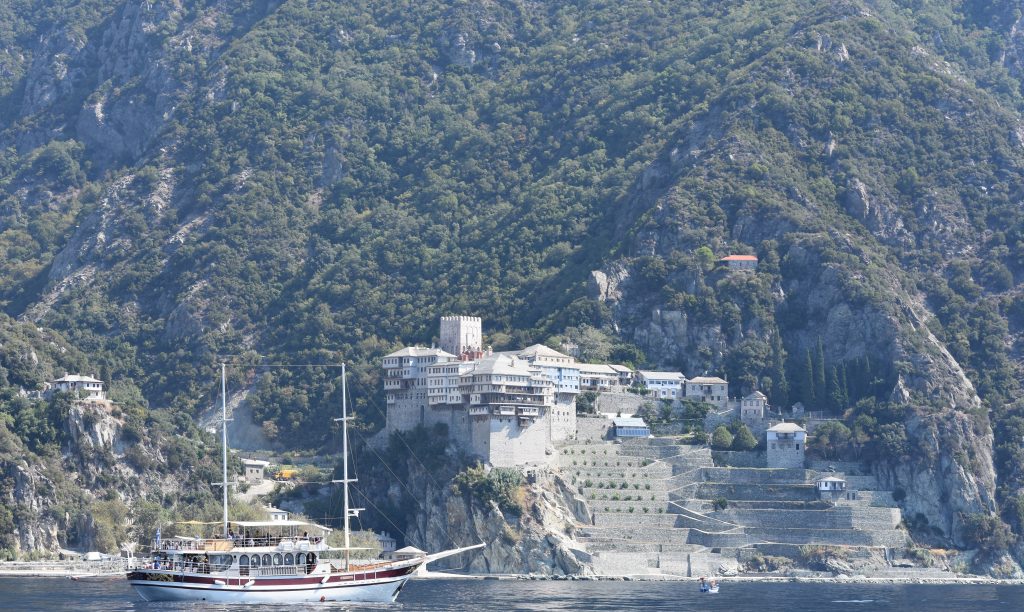
All Mount Athos cruises follow the southwestern coastline of the Athonite peninsula. This is the only side of Mount Athos that can be visited by sea tours, offering a continuous and historically significant route that reveals monasteries, sketes and ports directly connected to the maritime life of the Holy Mountain.
This coastal route allows passengers on Mount Athos sea tours to observe a carefully defined sequence of monastic landmarks, each one with a distinct role in the Athonite tradition.
Monasteries and landmarks visible during Mount Athos cruises
During navigation along the southwestern side of Mount Athos, Athos Sea Cruises typically offer sea views of the following monasteries and sites, in order of appearance along the route:
- Docheiariou Monastery – one of the first major monasteries visible from the sea
- Xenophontos Monastery – located close to the coastline, easily observed during cruising
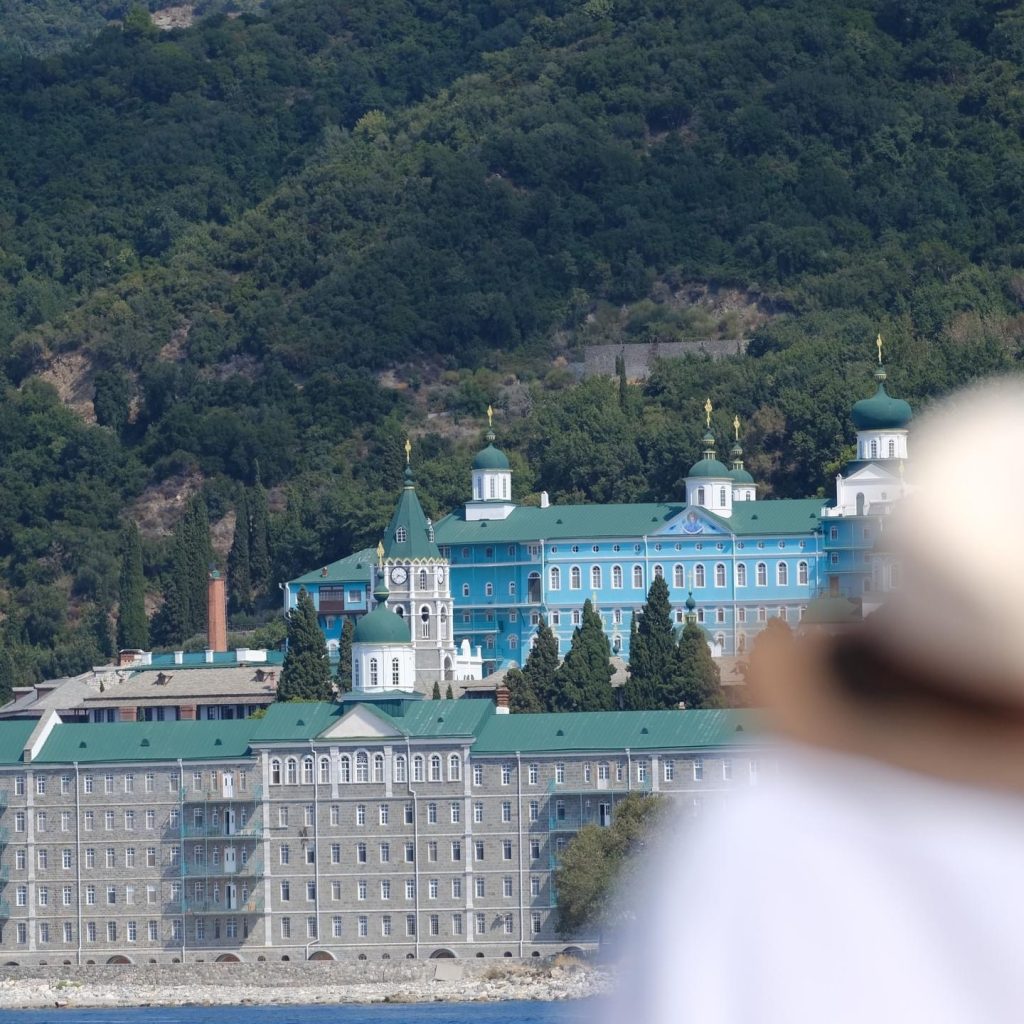
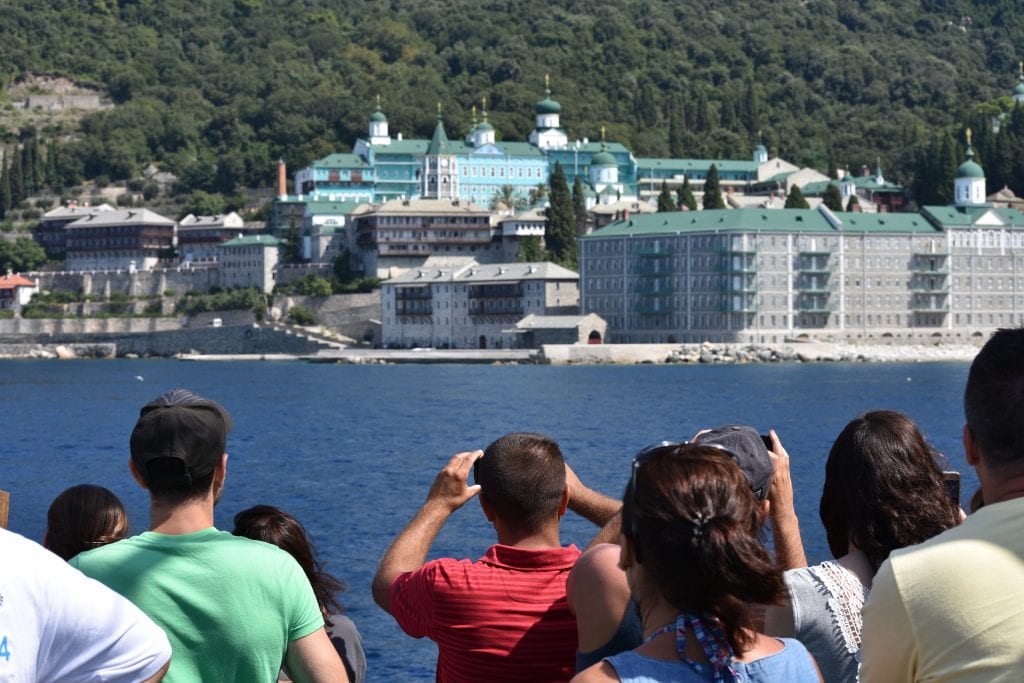
- Saint Panteleimon Monastery – the Russian monastery, known for its size and distinctive architecture
- Xiropotamou Monastery – visible slightly inland, connected historically with coastal access
- Dafni Port – the central harbor of Mount Athos and the main maritime gateway to the Holy Mountain
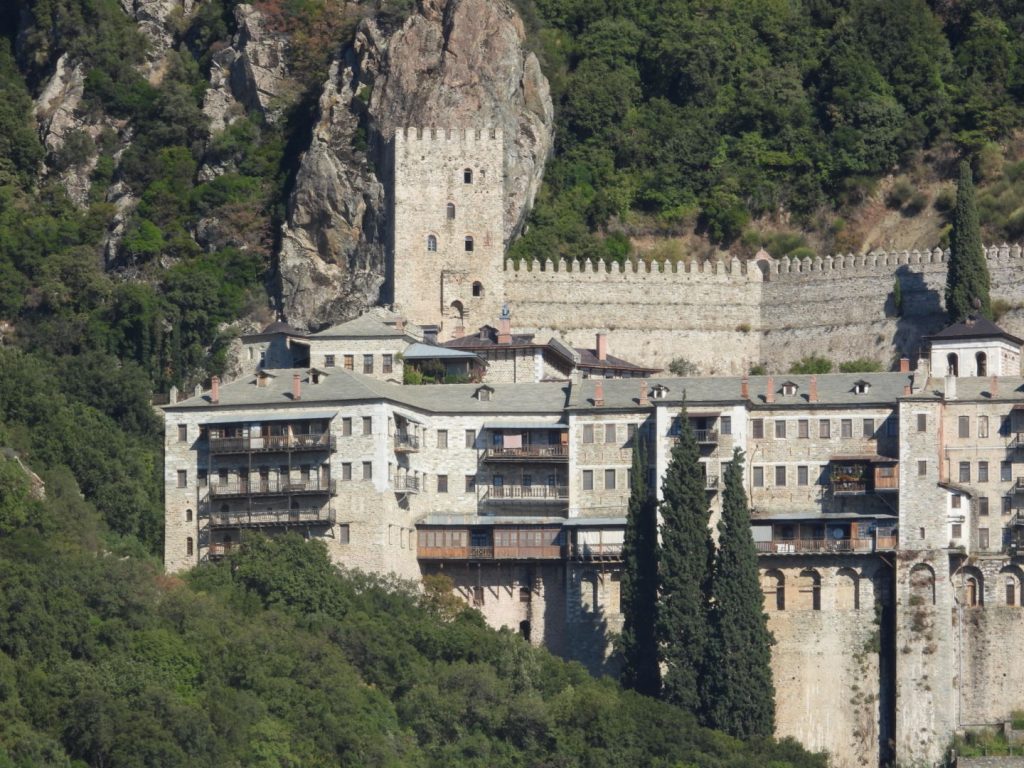
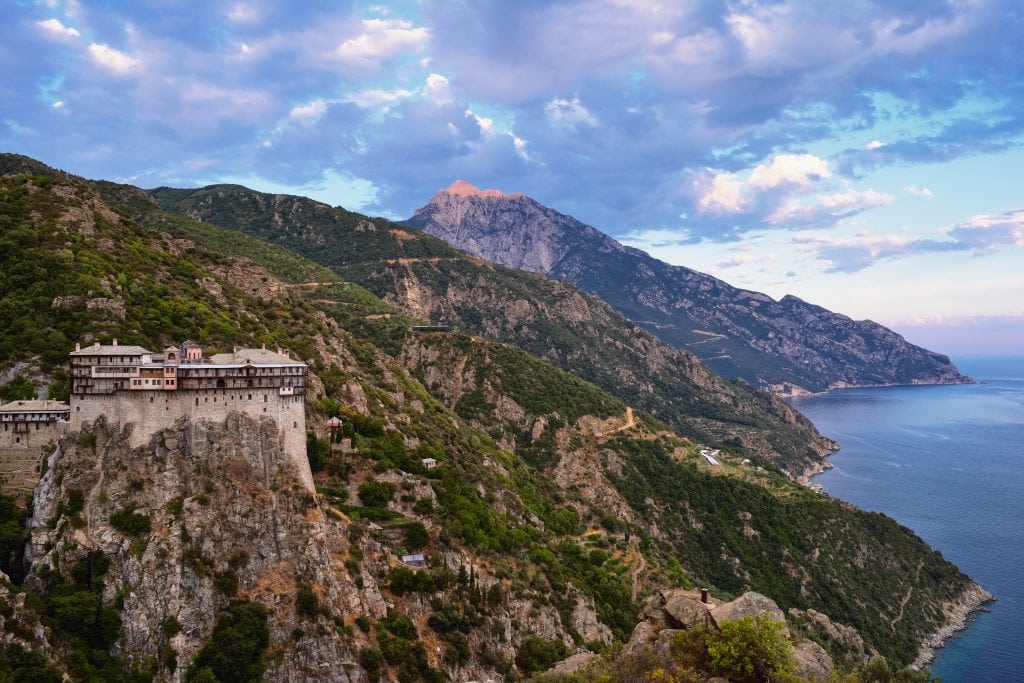
- Simonopetra Monastery – dramatically built on a steep cliff, one of the most iconic sea views
- Gregoriou Monastery – positioned close to the water, creating a strong visual connection with the sea
- Dionysiou Monastery – recognizable from afar, standing between rock and coastline
- Agios Pavlos Monastery – marking the southern limit of the standard coastal route
At Agios Pavlos Monastery, the three-hour Mount Athos cruise typically reaches its turning point and begins the return journey.
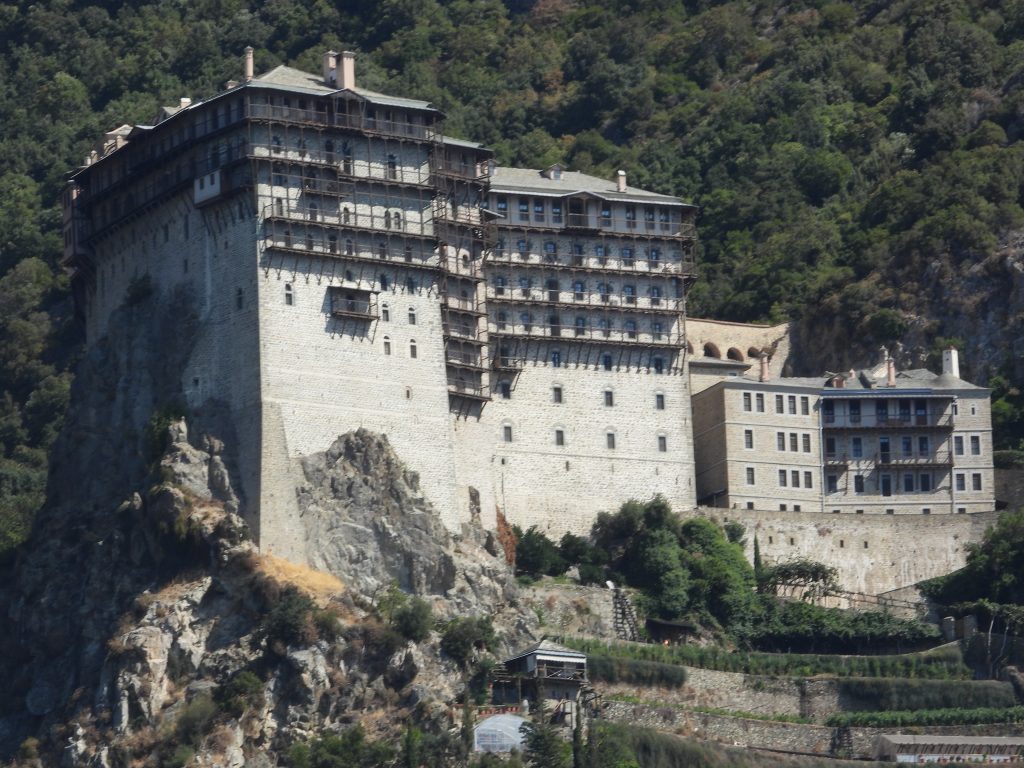
Sketes and coastal structures visible along the route
Beyond the main monasteries, Mount Athos sea tours also reveal important sketes and maritime structures that highlight the everyday life of the Holy Mountain.
Shortly after passing Agios Pavlos Monastery, passengers may distinguish:
- Nea Skete
- Skiti of Saint Anna, one of the most significant sketes of Mount Athos
Earlier along the route, before reaching Docheiariou Monastery, attentive observers may also notice:
- Gournoskiti, an abandoned Russian skete
- the arsanas (harbor) of Zografou Monastery
- the arsanas of Konstamonitou Monastery
These coastal structures underline the importance of the sea as a lifeline for Mount Athos, connecting monasteries and sketes through centuries of maritime activity.
For travelers interested in a full coastal experience starting from Ouranoupoli, this traditional Mount Athos sea route offers a complete overview of the southwestern coastline.
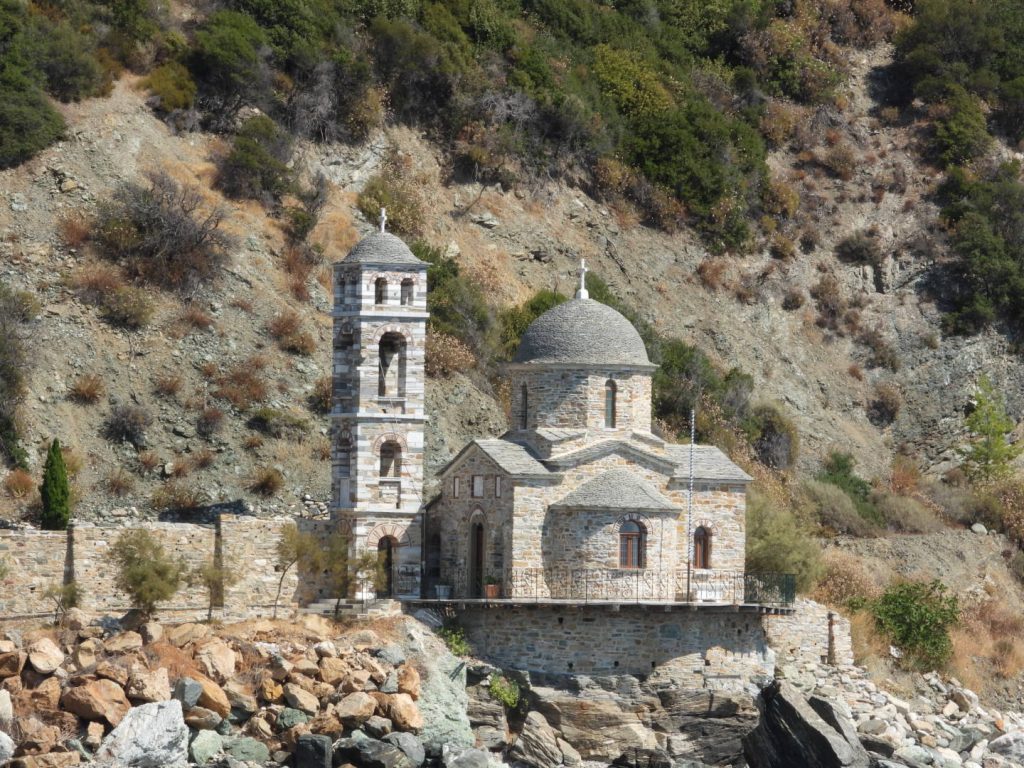
Understanding the limits of the sea route
It is important to note that Mount Athos cruises do not circle the entire peninsula. Navigation is limited strictly to the southwestern coastline, ensuring respect for monastic rules and access restrictions.
This clearly defined route is what gives Mount Athos sea tours their structure and authenticity, allowing visitors to experience Mount Athos from the sea without disrupting the spiritual rhythm of the Holy Mountain.
In the next section, we’ll explain where these cruises depart from and how different ports in Halkidiki connect to this unique maritime route.
Departure ports for Mount Athos cruises
All Athos Sea Cruises tours depart from specific ports in Halkidiki that have historically served as maritime gateways to the Holy Mountain. Each departure point has a distinct role, depending on the type of cruise, the vessel used and the overall experience offered.
Understanding the departure ports helps visitors choose the most suitable Mount Athos sea tours based on location, duration and itinerary.
Ouranoupoli – The traditional gateway to Mount Athos
Ouranoupoli is the most well-known and historically established departure point for Mount Athos tours. Located at the entrance of the Athonite peninsula, it has long served as the main gateway for pilgrims and visitors traveling toward Mount Athos.
Cruises departing from Ouranoupoli typically focus on:
- pilgrimage-style sea routes
- calm coastal navigation
- extended observation of monasteries
This port is commonly associated with organized pilgrimage cruises and vessels designed for larger groups, offering a more reflective and structured Mount Athos sea tours experience.
Those seeking a calm and immersive journey along the Holy Mountain can discover a coastal cruise that departs directly from Ouranoupoli.
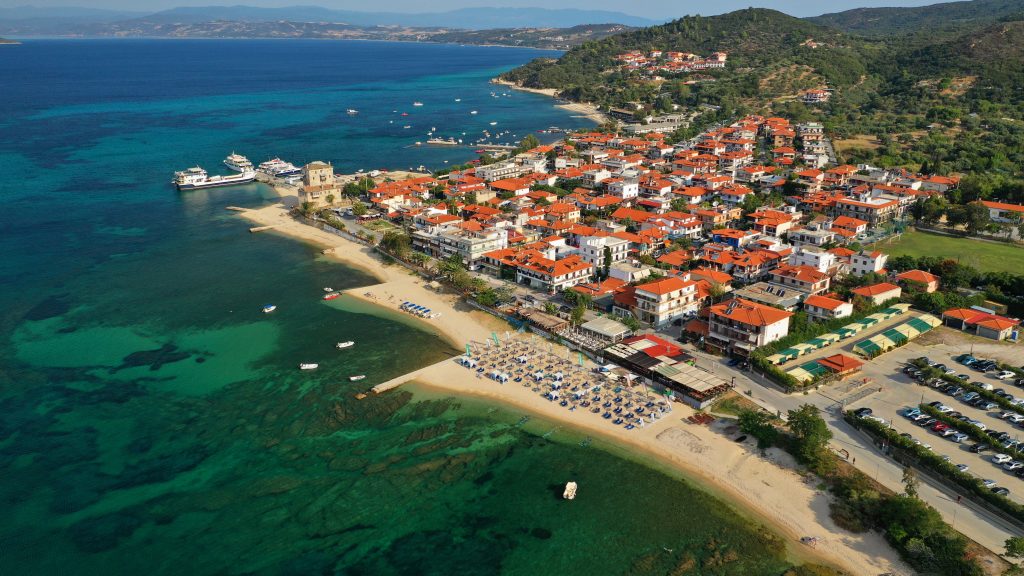
Ormos Panagias – A strategic departure from Sithonia
Ormos Panagias, located in Sithonia, serves as an alternative departure point for Mount Athos tours, particularly for mixed or combined itineraries.
Cruises departing from Ormos Panagias often combine:
- coastal navigation near Mount Athos
- leisure or swimming stops elsewhere in Halkidiki
- sightseeing-focused itineraries
This port provides flexibility for visitors staying in Sithonia and is frequently used for Mount Athos sea tours that balance cultural discovery with relaxation.
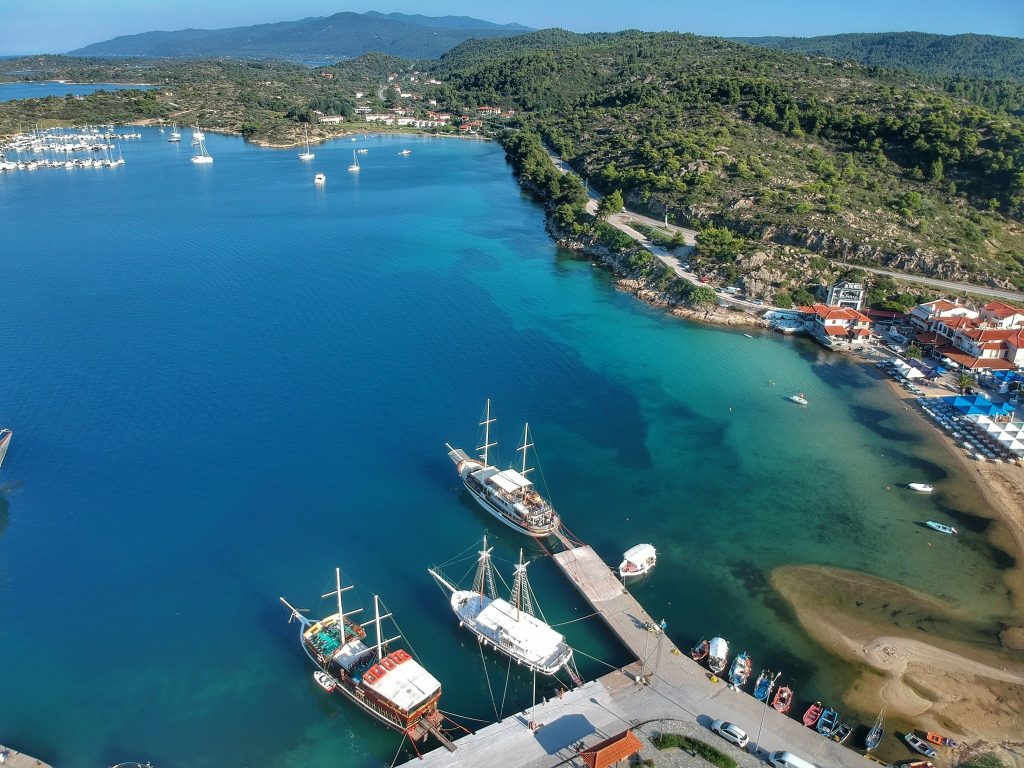
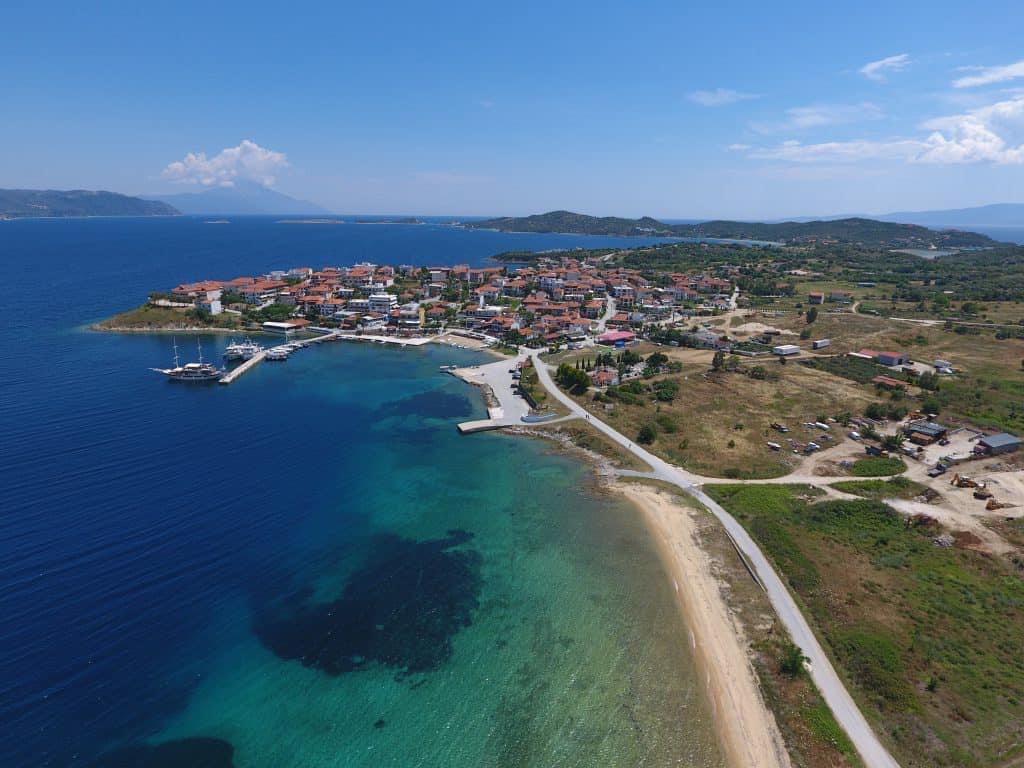
Ammouliani – Island-based departures and connections
Ammouliani, the only inhabited island near Mount Athos, also plays a role in selected Mount Athos tours. Island-based departures or intermediate stops allow visitors to combine Mount Athos sightseeing with island exploration.
Cruises connected with Ammouliani may include:
- short sea passages along the Athonite coastline
- connections with island day trips
- mixed experiences combining culture and leisure
This option is ideal for travelers who wish to integrate Mount Athos sea tours into a broader island-focused itinerary.
Choosing the right departure port
Selecting the right departure port for Mount Athos cruises depends on:
- accommodation location
- preferred cruise duration
- pilgrimage vs sightseeing focus
While all routes follow the same southwestern coastline of Mount Athos, the departure point influences the overall structure and rhythm of the Mount Athos sea tours experience.
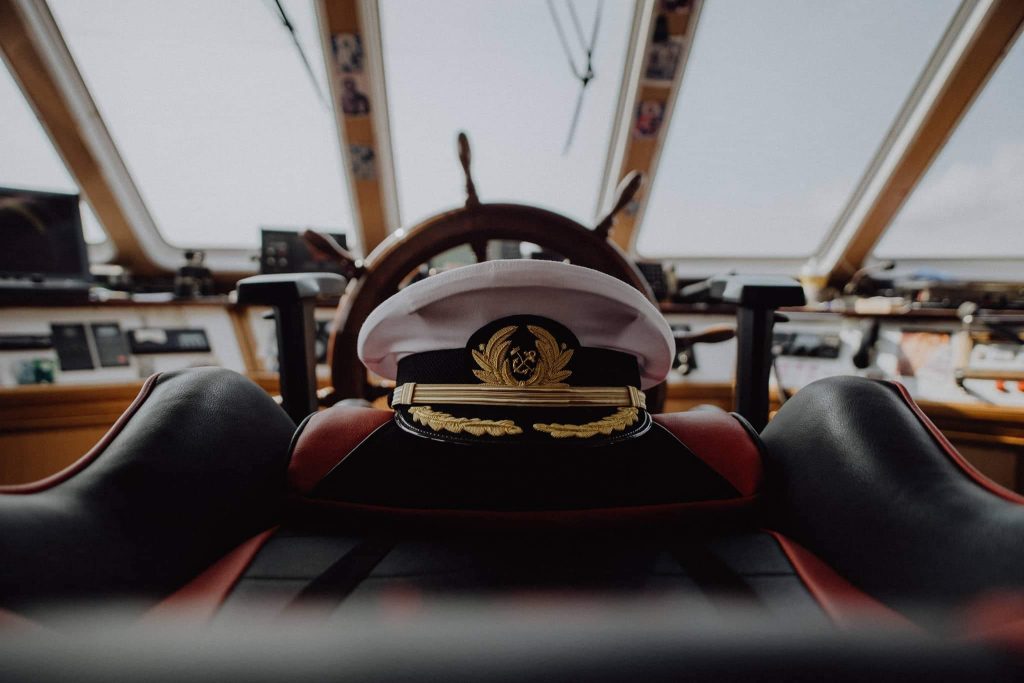
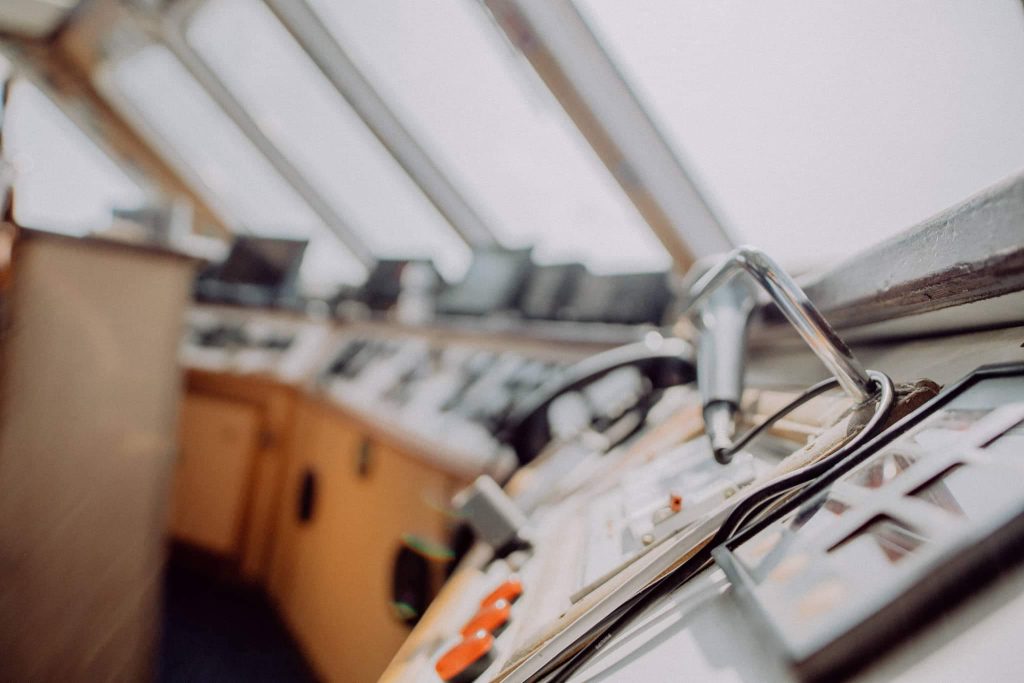
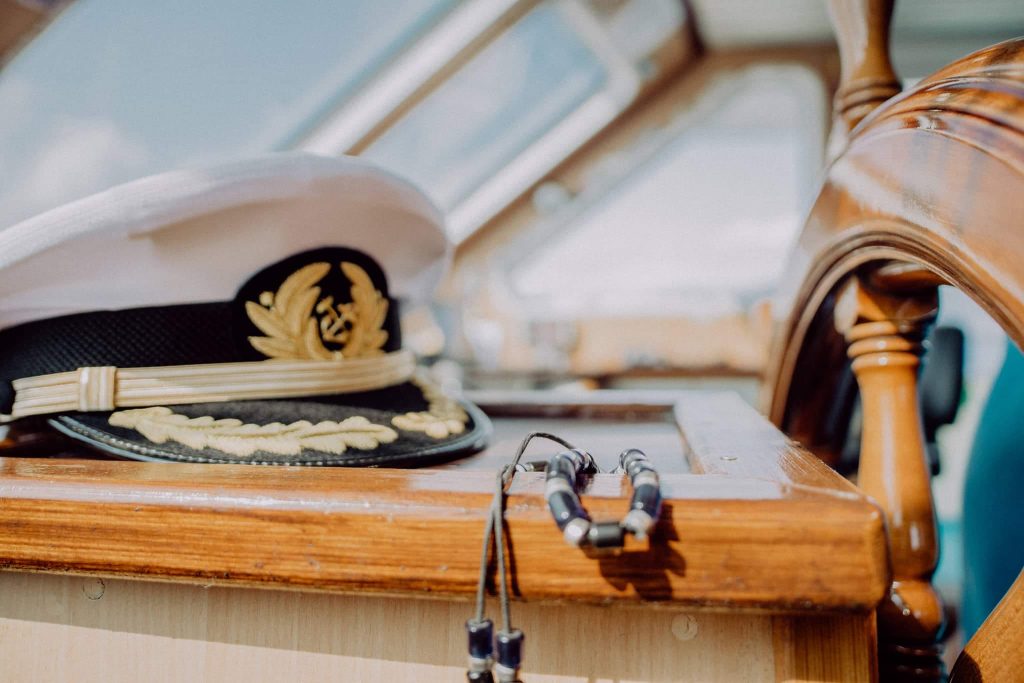
Which vessels are used for Mount Athos cruises?
Different Mount Athos tours require different types of vessels. The choice of ship affects the pace of the journey, the onboard atmosphere and the overall experience offered during Mount Athos sea tours.
Rather than using a single vessel for all routes, Mount Athos cruises are operated by ships specifically suited to the character of each itinerary — from pilgrimage-focused journeys to sightseeing and mixed experiences.
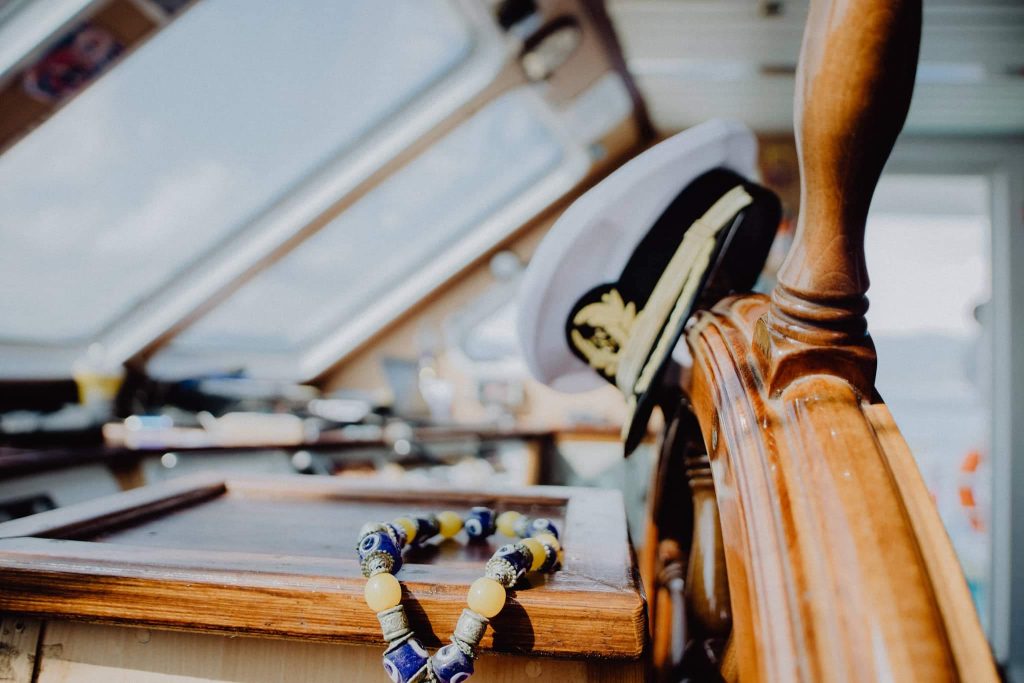
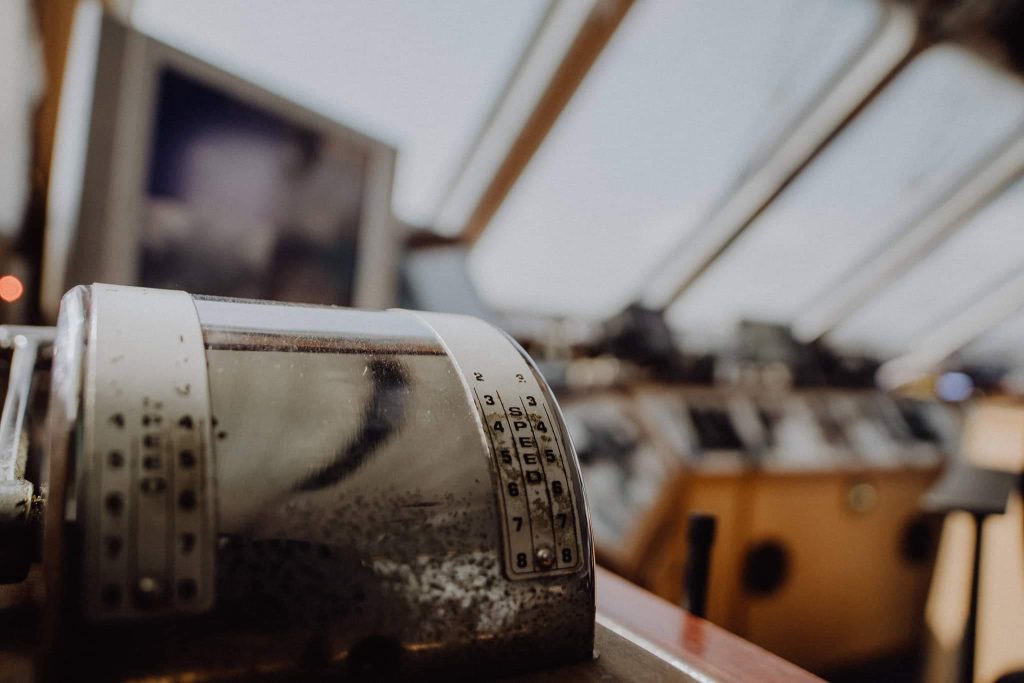
Kapetan Fotis – Dedicated to pilgrimage-style cruises
Kapetan Fotis is primarily used for pilgrimage-oriented Mount Athos cruises, offering a calm and structured environment ideal for cultural and spiritual travel.
With large passenger capacity, extensive shaded areas and a layout designed for group seating, this vessel is well suited for:
- organized pilgrimage groups
- cultural associations
- extended coastal observation
Its operational focus aligns closely with traditional Mount Athos sea tours, where narration, reflection and respect for the monastic environment are central to the experience.
🔗 Learn more about Kapetan Fotis
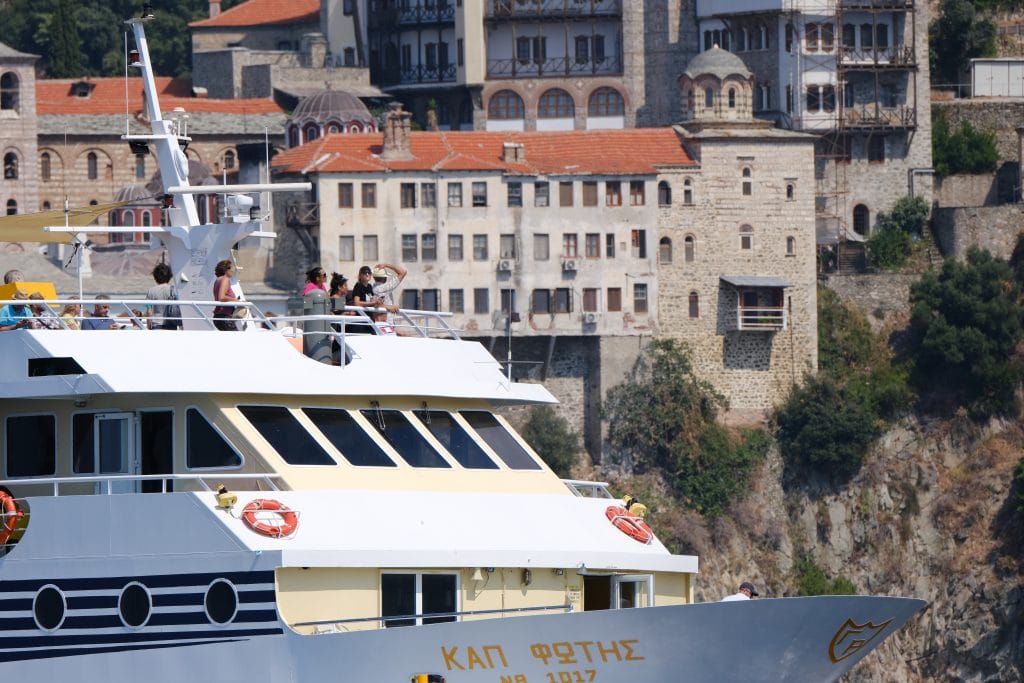
Ioanna – Flexible cruises combining culture and leisure
Ioanna plays a versatile role in Mount Athos tours, supporting itineraries that combine coastal sightseeing with additional leisure elements.
Thanks to its balanced layout, indoor salon and comfortable open deck seating, Ioanna is suitable for:
- Mount Athos sightseeing cruises
- mixed itineraries with swimming or beach stops
- visitors seeking a relaxed but structured experience
This flexibility allows Ioanna to serve Mount Athos sea tours that blend cultural discovery with enjoyment of the wider Halkidiki coastline.
🔗 Learn more about Ioanna
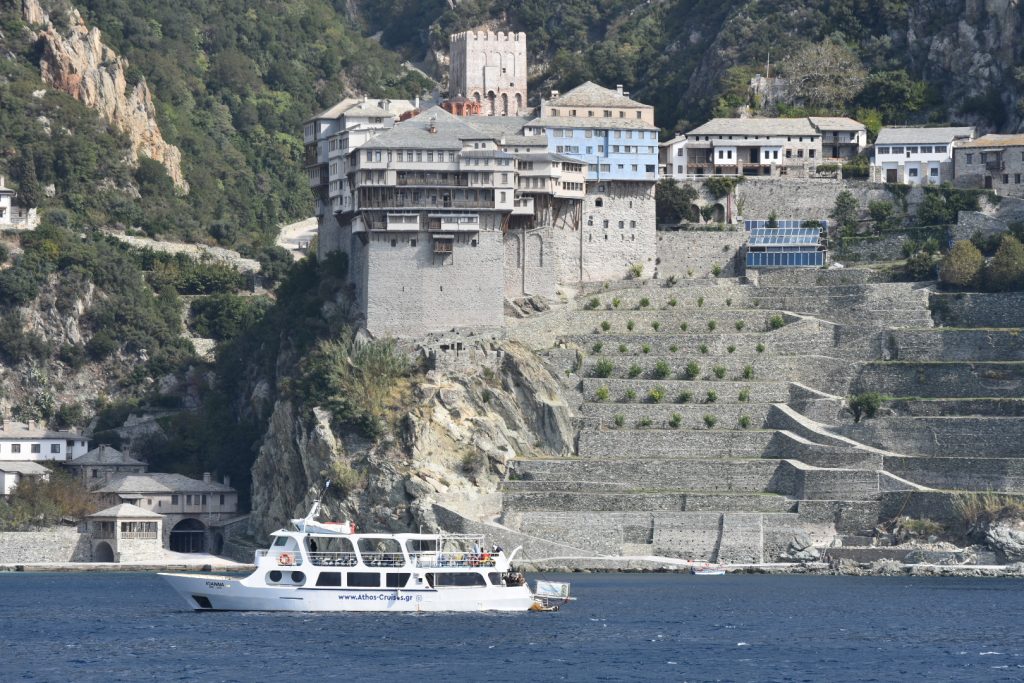
Saint George – Traditional character and heritage cruising
Saint George is a traditional wooden vessel used for Mount Athos tours that emphasize heritage, atmosphere and authentic maritime experience.
Its design offers:
- open deck spaces
- close visual contact with the sea
- a slower cruising pace
These features make Saint George ideal for sightseeing-focused Mount Athos sea tours, where passengers appreciate both the monasteries and the journey itself.
🔗 Discover Saint George
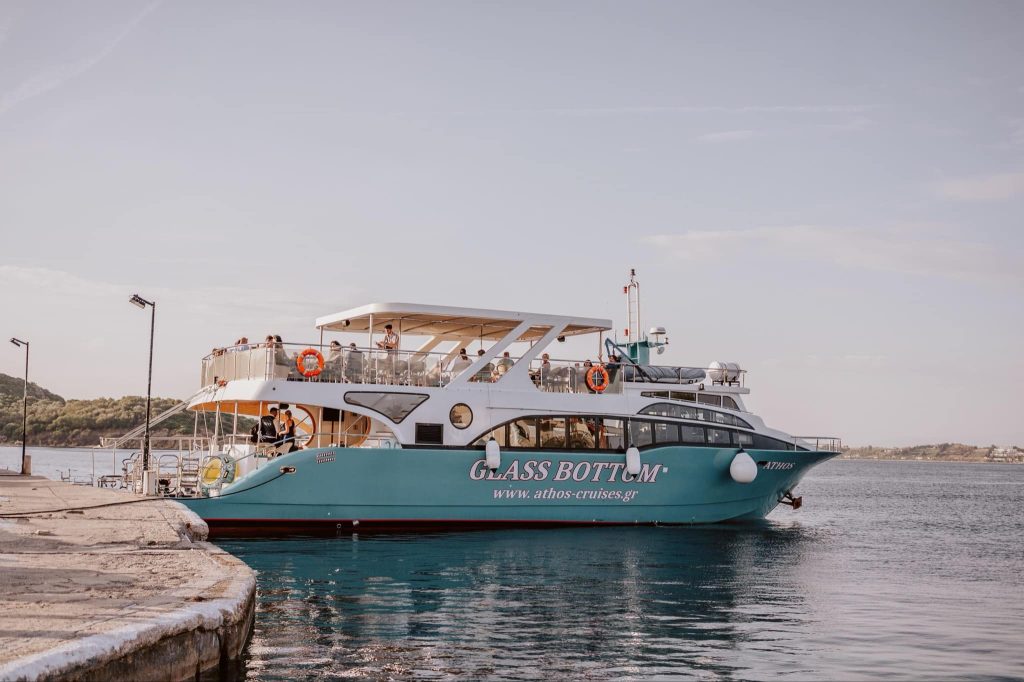
Athos – Modern sightseeing with enhanced visibility
Athos represents a more modern approach to Mount Athos cruises, combining contemporary vessel design with enhanced onboard features.
Its glass-bottom sections and modern layout allow passengers to enjoy Mount Athos sea tours with increased visual engagement, making it particularly appealing to leisure travelers and families seeking a dynamic sightseeing experience.
🔗 Explore the Athos vessel
Matching the vessel to the experience
Each vessel used for Mount Athos cruises serves a distinct role. While all follow the same southwestern coastal route, the onboard environment, pacing and overall atmosphere vary significantly.
Understanding these differences helps visitors choose the Mount Athos sea tours experience that best matches their interests — whether spiritual reflection, cultural observation or relaxed sightseeing.
In the next section, we’ll explore the rules, access limitations and important considerations visitors should know before joining Athos Sea Cruises.
Rules, access & what visitors should know
All Mount Athos cruises operate under strict regulations designed to protect the spiritual character of the Holy Mountain. While Mount Athos sea tours allow visitors to observe the monasteries from the sea, they do not grant access to the monastic territory.
Understanding these rules in advance ensures a respectful and well-informed experience during Mount Athos cruises.
No disembarkation at Mount Athos
Passengers participating in Mount Athos tours do not disembark at the monasteries or ports of the Holy Mountain. Even though the vessels pass close to the coastline, access to Mount Athos remains strictly controlled.
Disembarkation is permitted only to individuals holding the official Diamonitirion, which is not issued as part of standard Mount Athos sea tours.
Distance from the coastline
During Mount Athos tours, vessels maintain a regulated distance of 500 meters from the coastline, in accordance with maritime and monastic guidelines. This distance ensures:
- respect for monastic privacy
- protection of the coastal environment
- safe and consistent navigation
Despite this distance, the monasteries remain clearly visible, offering excellent viewing conditions during Mount Athos sea tours.
Photography and onboard behavior
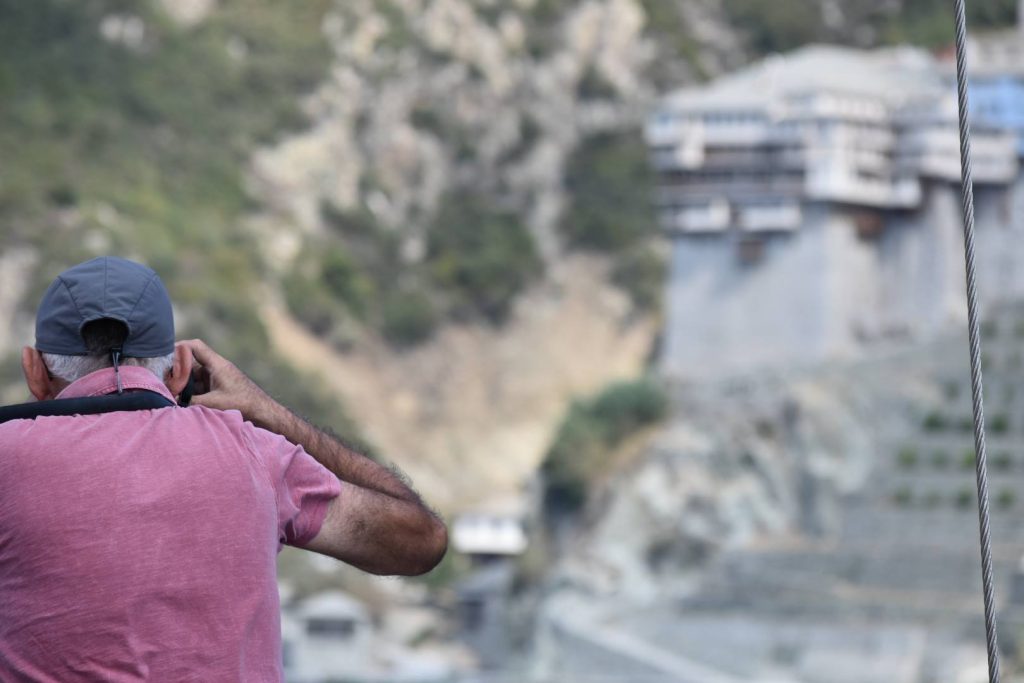
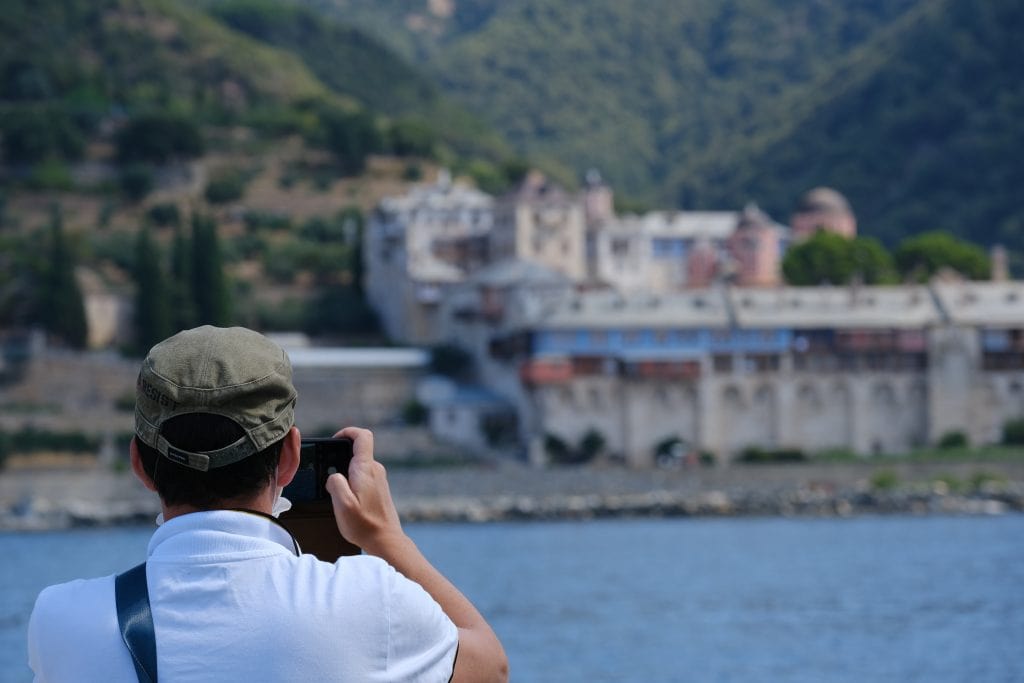
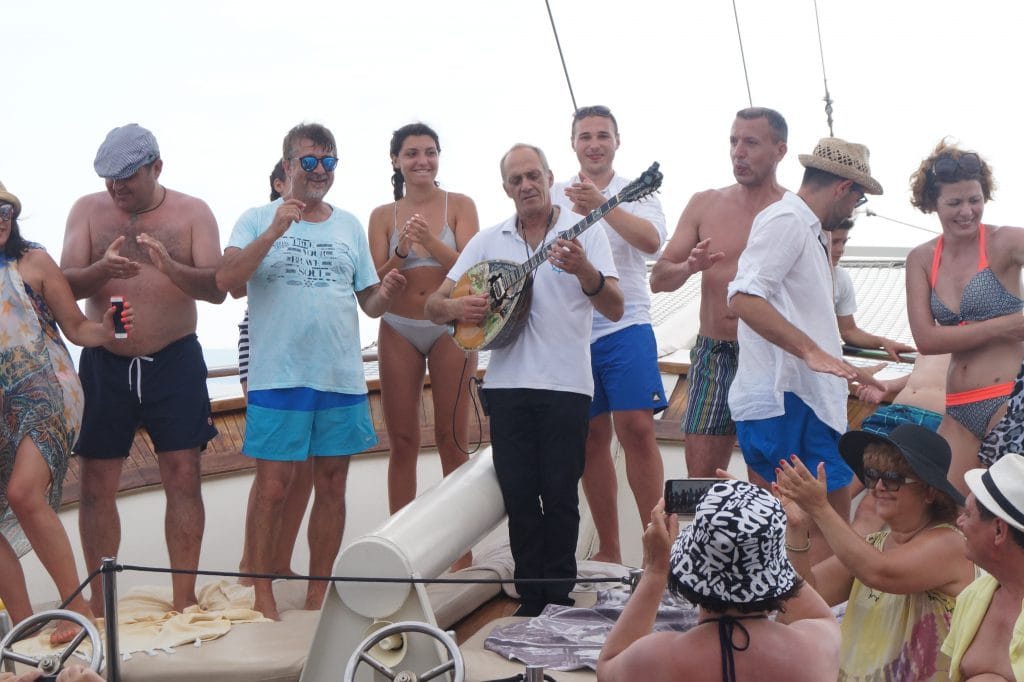
Photography is generally permitted during Mount Athos cruises, but visitors are expected to behave respectfully. Loud music, inappropriate behavior or actions that disrupt the spiritual atmosphere are discouraged.
Passengers are encouraged to approach Mount Athos sea tours as a cultural and historical experience rather than a typical leisure cruise.
Weather and route adjustments
Weather conditions in the Athonite Gulf can affect navigation. For safety reasons, Mount Athos cruises may adjust:
- cruising speed
- distance from the coastline
- overall route duration
These adjustments ensure passenger safety while maintaining the integrity of Mount Athos sea tours.
Respecting a living monastic community
Mount Athos is not an open-air museum but a living monastic community. The rules governing Mount Athos cruises exist to preserve daily monastic life and centuries-old traditions.
Visitors who understand and respect these boundaries tend to have a more meaningful experience during Mount Athos sea tours, appreciating the Holy Mountain as a place of continuity rather than spectacle.
Why Mount Athos cruises are a unique experience
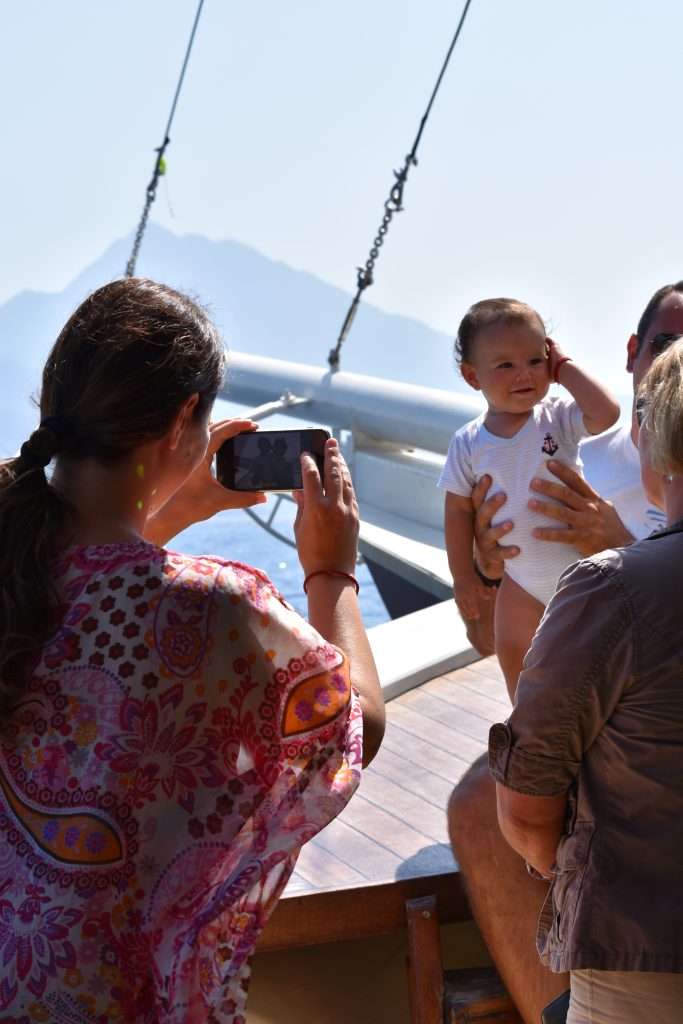
There are many coastal cruises in Greece, but Mount Athos cruises stand apart as a truly distinctive sea experience. What makes them unique is not only the scenery, but the combination of history, spirituality and maritime tradition that unfolds gradually along the route.
Unlike typical leisure excursions, Mount Athos sea tours offer a journey shaped by centuries of monastic life, where the sea has always been the primary connection between the outside world and the Holy Mountain.
A coastline shaped by history and faith
The southwestern coastline of Mount Athos tells a story that cannot be experienced from land. Monasteries, sketes and harbors were built in direct relationship with the sea, forming a landscape where architecture, faith and nature coexist.
During Mount Athos tours, passengers witness:
- monasteries rising directly from the shoreline
- cliffs shaped by time and isolation
- maritime routes used for centuries by monks and pilgrims
This perspective allows Mount Athos sea tours to communicate history visually, without the need for physical access.
A calm and reflective journey at sea
Another defining element of Mount Athos cruises is their atmosphere. The pace is calm, the narration is measured, and the focus remains on observation rather than entertainment.
For many visitors, Mount Athos sea tours offer:
- a break from crowded tourist activities
- a reflective experience connected to culture and faith
- a sense of respect toward a living spiritual community
This atmosphere is carefully preserved across all Mount Athos cruises, regardless of vessel type or departure port.
An experience that remains memorable
What visitors often remember most about Mount Athos boat tours is not a single monastery or landmark, but the overall feeling of the journey. The slow movement of the vessel, the continuous presence of the coastline and the knowledge that Mount Athos remains largely unchanged all contribute to a lasting impression.
For many travelers to Halkidiki, Mount Athos sea tours become a defining memory — an experience that adds depth and meaning to their visit beyond typical sightseeing.
Choosing Mount Athos cruises with understanding
When approached with the right expectations, Athos Sea Cruises offer more than visual discovery. They provide insight into a place governed by continuity, discipline and tradition, viewed from the only perspective accessible to most visitors: the sea.
In the final section, we’ll answer common questions travelers have before joining Mount Athos sea tours, helping you prepare for a respectful and well-informed experience.
Eastern monasteries of Mount Athos and offshore areas
While most coastal sea routes around Mount Athos focus on the southwestern shoreline, the eastern side of the peninsula presents very different natural conditions. This part of Mount Athos faces the open Aegean Sea, where exposure to strong winds and rough waters makes regular coastal sightseeing by boat impractical and often unsafe.
As a result, monasteries located on the eastern and northeastern side of Mount Athos are not included in standard coastal cruise itineraries. These areas are traditionally accessed by land routes, footpaths or internal monastic transport, rather than organized sea-based observation.
Despite this, the eastern side of Mount Athos holds significant spiritual and historical importance. Several monasteries and monastic communities located there form an essential part of the Athonite landscape, even though they are not visible from coastal cruises.
Understanding this distinction helps visitors form a complete picture of Mount Athos: a peninsula shaped both by sheltered coastal routes suitable for sea observation and by more exposed regions where access follows different traditions and practical limitations.
Several monasteries on the eastern side of Mount Athos are explored in more detail through individual guides focusing on their history, location and spiritual life.
Monasteries located on the eastern coastline of Mount Athos
The eastern and southeastern coastline of Mount Athos hosts a series of monasteries with direct access to the sea. Although this side of the peninsula faces the open Aegean and is not suitable for regular coastal cruises, these monasteries play a fundamental role in the spiritual and historical landscape of the Holy Mountain.
Esphigmenou Monastery
Located on the northeastern shoreline, Esphigmenou is one of the most distinctive monasteries of Mount Athos, known for its strong monastic identity and uninterrupted presence along the coast.
Vatopedi Monastery
One of the largest and most influential monasteries on Mount Athos, Vatopedi combines a prominent coastal position with a rich spiritual, historical and cultural heritage.
Pantokrator Monastery
Built above the eastern shoreline, Pantokrator Monastery is recognized for its imposing architecture and long-standing role within the Athonite monastic tradition.
Stavronikita Monastery
Among the smaller monasteries of Mount Athos, Stavronikita occupies a refined coastal location and is especially noted for its artistic and spiritual legacy.
Iviron Monastery
Positioned directly on the coast, Iviron Monastery holds deep historical significance and preserves strong ties to the Georgian Orthodox tradition.
Filotheou Monastery
Although slightly elevated above the shoreline, Filotheou is closely connected to the eastern coastal zone and is known for its spiritual life and serene setting.
Karakallou Monastery
Located near the southeastern coast, Karakallou combines proximity to the sea with a quieter monastic environment and important spiritual traditions.
Great Lavra
At the southern end of the eastern coastline stands Great Lavra, the oldest monastery on Mount Athos and one of the most historically significant centers of Orthodox monasticism.
Frequently Asked Questions about Mount Athos Cruises
Do Mount Athos boat tours allow passengers to enter the monasteries?
No. Mount Athos boat tours do not include disembarkation at monasteries or ports of the Holy Mountain. Visitors observe the monasteries exclusively from the sea, in accordance with monastic regulations.
Is a special permit required to join Mount Athos boat tours?
No special permit is required for Mount Athos tours. The official Mount Athos access permit (Diamonitirion) is only needed for visitors entering the monastic territory, which is not part of standard cruises.
Which side of Mount Athos is visible during the cruise?
All Mount Athos boat tours follow the southwestern coastline of the peninsula. This is the only side accessible by sea tours and includes monasteries, sketes and the central port of Dafni.
How long do Mount Athos cruises usually last?
The duration varies depending on the route and departure port. Most Mount Athos sea tours last between 2.5 and 7 hours, with three-hour routes typically reaching as far as Agios Pavlos Monastery before returning.
From which ports do Mount Athos cruises depart?
Mount Athos cruises mainly depart from Ouranoupoli, Ormos Panagias and, in selected cases, Ammouliani, depending on the itinerary and vessel.
Are Mount Athos cruises suitable for families and children?
Yes. Mount Athos sea tours are suitable for families, provided children are comfortable with longer sea journeys and a calm onboard atmosphere.
Did you find our post helpful?
- Was this post helpfull?
- Rate us on TripAdvisor
This article made by https://lnk.bio/Rodokalakis
